
Reginald Love Powell
Murderer Brian Kevin Rosenfeld
Murderer · USA · 1985
Brian Kevin Rosenfeld Brian Kevin Rosenfeld was sentenced to three concurrent l…
23 victims
Brian Kevin Rosenfeld
Murderer · USA · 1985
Brian Kevin Rosenfeld Brian Kevin Rosenfeld was sentenced to three concurrent l…
23 victims
 Yahweh ben Yahweh
Murderer · USA · 1980
Yahweh ben Yahweh was born and legally named Hulon Mitchell Jr. (October 27, 19…
23 victims
Yahweh ben Yahweh
Murderer · USA · 1980
Yahweh ben Yahweh was born and legally named Hulon Mitchell Jr. (October 27, 19…
23 victims
 Russell Ellwood
Murderer · USA · 1991
Russell Ellwood was a former taxi driver. Authorities suspected him of killing…
20 victims
Russell Ellwood
Murderer · USA · 1991
Russell Ellwood was a former taxi driver. Authorities suspected him of killing…
20 victims
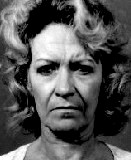 Betty Lou Beets
Murderer · USA · 1981
Betty Lou Beets was convicted of the capital offense of the murder of her husba…
2 victims
Betty Lou Beets
Murderer · USA · 1981
Betty Lou Beets was convicted of the capital offense of the murder of her husba…
2 victims
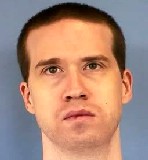 Larry Matthew Puckett
Murderer · USA · 1995
October 14, 1995 — Rhonda Hatten Griffis, age 28, was found lying in a large po…
1 victim
Larry Matthew Puckett
Murderer · USA · 1995
October 14, 1995 — Rhonda Hatten Griffis, age 28, was found lying in a large po…
1 victim
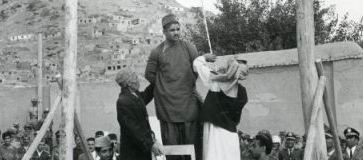 Abul Djabar
Serial killer · Afghanistan · 1960
Abul Djabar died on October 21, 1970. He was an Afghan serial killer who had ki…
65 victims
Abul Djabar
Serial killer · Afghanistan · 1960
Abul Djabar died on October 21, 1970. He was an Afghan serial killer who had ki…
65 victims
 Gerald Gallego
Serial killer · USA · 1978
Gerald Armond Gallego (July 17, 1946 – July 18, 2002) was an American serial ki…
10 victims
Gerald Gallego
Serial killer · USA · 1978
Gerald Armond Gallego (July 17, 1946 – July 18, 2002) was an American serial ki…
10 victims
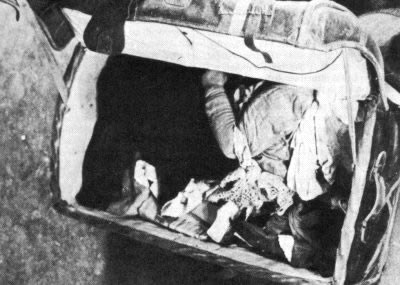 George Russell
Murderer · United Kingdom · 1948
George Russell was described as 45 years old at the time his prints were traced…
1 victim
George Russell
Murderer · United Kingdom · 1948
George Russell was described as 45 years old at the time his prints were traced…
1 victim
- Gender
- male
- Country
- USA
- Location
- St. Louis, Missouri, USA
- Date of birth
- J uly 23, 1968
- Age at first offence
- 18
- Characteristics
- alcohol, drugs, drug addict, robbery, rape?
- Victim profile
- Freddie L. Miller, 39, and Lee Arthur Miller, 29 (brothers)
- Method of murder
- St abbing with knife
- Date(s) of murder
- November 14, 1986
- Years active
- 1986
- Date of arrest
- Next day
- Status
-
Executed
Executed by lethal injection in Missouri on February 25, 1998
Case identifiers and participants
Reginald Love Powell was the defendant.
Freddie Miller and Lee Miller were the victims.
Marianne Marxkors was Powell’s trial lawyer and later became his lover.
Bruce Livingston was Powell’s lawyer.
Gov. Mel Carnahan was the governor approached for clemency.
Timeline
- 1986-06-22 — Reginald Love Powell was arrested for receiving stolen property in St. Louis City; the sentence was suspended and he received six months probation.
- 1986-11-14 — Reginald Powell went to a liquor store with three other companions to obtain alcohol; they met with Freddie and Lee Miller, and Powell asked the two brothers to purchase liquor for him and his companions since they were all under age; the Miller brothers refused.
- 1986-11-14 — Later that evening, Powell and the four men again encountered the Miller brothers in the backyard of a friend of Powell’s; the Miller brothers were drinking and were intoxicated, and Powell had been drinking earlier in the evening; Powell made a derogatory remark to the brothers and called for his companions to rob them; one of the Millers called the group “punks”; the group attacked the brothers and knocked them to the ground; the Millers were brutally beaten by the group, who kicked them and hit them with bricks, boards and tree branches; Lee Miller begged for his life.
- 1986-11-14 — Following the beating, Reginald Powell jumped up and down on the chest of the two victims who were still laying on the ground, breaking most of their ribs.
- 1986-11-14 — Powell and two others searched the victims for valuables and recovered only three dollars and a pack of cigarettes; the rest of the group left the scene leaving Powell alone with the two battered brothers.
- 1986-11-14 — Powell stabbed Freddie and Lee Miller three times each in the chest and abdomen with a martial arts butterfly knife; both brothers died from internal bleeding caused by the stab wounds.
- 1986-11-14 — After stabbing the victims, Powell caught up with the others carrying a bloody knife which he wiped off by sticking the blade in the ground; he told the others that he had “stuck” and “stabbed” the victims and said “Don’t bring no knife if you ain’t going to use it.”
- 1986-11-15 — Powell was arrested the next day after the police learned of his involvement in the murders from his step-brother.
- 1986-11-15 — Under questioning, Powell admitted that he had committed the murders.
- 1986-12-02 — Powell was charged in an indictment by the St. Louis City Circuit Court with two counts of murder first degree, two counts of robbery first degree and one count of armed criminal action.
- 1988-03-16 — Powell’s trial began in St. Louis Circuit Court on two counts of murder first degree; the other charges were not prosecuted.
- 1988-03-25 — The jury found Powell guilty of each count of murder first degree but was unable to agree on a punishment.
- 1988-04-15 — The trial court sentenced Powell to death on each count of murder first degree.
- 1988-12-01 — Powell filed a motion for post-conviction relief in the St. Louis City Circuit Court.
- 1989-04-10 — A hearing was held in St. Louis Circuit Court on Powell’s motion for post-conviction relief.
- 1989-04-11 — A hearing was held in St.
- 1989-04-18 — A hearing was held in St.
- 1989-10-13 — The Court denied Powell’s motion of post-conviction relief.
- 1990-11-20 — The Missouri Supreme Court affirmed Powell’s convictions and sentences and the denial of post-conviction relief.
- 1991-06-28 — The United States Supreme Court declined discretionary review.
- 1991-07-05 — Powell filed a petition for writ of habeas corpus in the U.S. District Court for the Eastern District of Missouri.
- 1995-08-15 — The U.S. District Court denied Powell’s habeas corpus petition.
- 1997-05-01 — The U.S. Court of Appeals affirmed the District Court’s denial of Powell’s habeas corpus petition.
- 1998-01-12 — The U.S. Supreme court declined discretionary review.
- 1998-01-22 — The Missouri Supreme Court set Powell’s execution for February 25, 1998.
- 1998-02-25 — Reginald Love Powell was executed by lethal injection in Missouri.
- 1998-02-25 — Powell was pronounced dead at 12:04 a.m. at the Potosi Correctional Center in southeast Missouri.
- 1998-02-25 — As the first drug was administered, Powell blinked 4 times, puffed a couple of times then coughed twice.
- 1998-02-25 — Powell’s final words were “I love my family.”
- 1998-02-25 — Powell had unsuccessfully argued he did not receive an adequate defense from an attorney who became his lover.
The offence
On November 14, 1986, Powell went to a liquor store with three other companions to obtain alcohol. When they arrived at the store, the quartet met with Freddie and Lee Miller. Powell asked the two brothers to purchase some liquor for him and his companions since they were all under age. The Miller brothers refused.
Later that evening, Powell and the four men ran into the Miller brothers in the backyard of a friend of Powell’s. The Miller brothers had been drinking and were intoxicated, as was Powell who had been drinking earlier in the evening. Upon seeing the Miller brothers, Powell made a derogatory remark to them and called for his companions to rob them. One of the Millers called the group “punks” at which time the group attacked the brothers and knocked them to the ground.
The Millers were brutally beaten by the group. They were kicked and hit with bricks, boards and tree branches. Lee Miller begged for his life.
Following the beating, Powell jumped up and down on the chest of the two victims who were still laying on the ground, breaking most of their ribs. Powell and two others searched the victims for valuables, recovering only three dollars and a pack of cigarettes. The rest of the group left the scene leaving Powell alone with the two battered brothers.
Powell stabbed Freddie and Lee Miller three times each in the chest and abdomen with a martial arts butterfly knife. Both brothers died from internal bleeding caused by the stab wounds.
After stabbing the victims, Powell caught up with the others carrying a bloody knife which he wiped off by sticking the blade in the ground. He told the others that he had “stuck” and “stabbed” the victims and said “Don’t bring no knife if you ain’t going to use it.”
Powell had been high on PCP and drunk and wanted more alcohol when he encountered Freddie L. Miller, 39, and Lee Arthur Miller, 29. Powell was 18 and underage for buying liquor, so he asked them to get some for him. Later that day, Powell attacked them and stabbed the brothers to death and robbed them of $3 and a pack of cigarettes.
Investigation and arrest
The police learned of Powell’s involvement in the murders from his step-brother. Powell was arrested the next day and, under questioning, admitted that he had committed the murders.
Trial
Powell was charged in an indictment by the St.
Powell’s trial began in St. Louis Circuit Court for two counts of murder first degree on March 16, 1988. The other charges were not prosecuted.
On March 25, 1988, the jury found Powell guilty of each count of murder first degree but was unable to agree on a punishment.
On April 15, 1988, the trial court sentenced Powell to death on each count of murder first degree. Even without hearing from Powell, the jury could not agree on a death sentence, so the trial judge alone made the sentencing decision.
Sentencing and post-conviction proceedings
Powell filed a motion for post-conviction relief in the St. Louis City Circuit Court on December 1, 1988. Hearings were held in St. Louis Circuit Court on April 10-11 and April 18, 1989. On October 13, 1989, the Court denied Powell’s motion of post-conviction relief.
Appeals
On November 20, 1990, the Missouri Supreme Court affirmed Powell’s convictions and sentences and the denial of post-conviction relief.
On June 28, 1991, the United States Supreme Court declined discretionary review.
On July 5, Powell filed a petition for writ of habeas corpus in the U.S.
On August 15, 1995, the U.S.
On May 1, 1997, the U.S.
On January 12, 1998, the U.S.
On January 22, 1998, the Missouri Supreme Court set Powell’s execution for February 25, 1998.
Clemency and execution
Powell’s clemency petition was connected to “State of Missouri v. Reginald Love Powell 798 S.W. 2d 709 (Mo. Banc 1990).”
Powell’s current lawyer, Bruce Livingston, asked Gov. Mel Carnahan to commute the sentence, claiming Marxkors’ relationship with Powell kept her from providing an adequate defense.
Marianne Marxkors pleaded unsuccessfully Tuesday with Gov. Mel Carnahan for the life of a man she called her “soul mate.” She said:
“had he had a fair trial, and the jury decided to kill him, that would be 1 thing. But I took that away from him. This verdict is colored by my lack of objectivity and my mistakes.”
Marianne Marxkors admitted she began falling in love with Powell soon after she was appointed as a public defender to handle his case. She had said her judgment was clouded by the relationship. She stated that prosecutors have said Powell’s affair did not interfere with the verdict and there was not evidence that the plea bargain had not been offered to him.
Marianne Marxkors did not dispute criticism and argued that her efforts fell into a situation beyond her control. She was warned by the bar association that her conduct was “inappropriate,” but she was not formally admonished or disbarred.
Powell grew up virtually without parental supervision in rough St. Louis neighborhoods. One test put his IQ at 65. Prosecutors said Powell was mildly retarded and was severely impaired by an Auditory Selective Attention Disorder. Testing also indicated Powell was severely impaired by an Auditory Selective Attention Disorder. Powell had a history of drug and alcohol abuse and had been previously placed in a public school special education program.
Marianne Marxkors said:
“It was my first death-penalty case, and I spent a lot of time with him to gain his trust,”
“I came to know a lot about where he came from, what his life had been. Yet, he was always caring toward me.”
“It was such an intense sort of thing,”
“It became physical when the judge told me he was going to sentence Reggie to death. I went and told him, and I cried and he kissed me, and we ended up making love.”
“At the next hearing, when the sentence was formally issued, they again made love in the holding room.”
“It was several months before I began to ask myself, ‘What the hell am I doing?’ ”
“Reggie would talk about wanting to testify,”
“but it wasn’t the way I had planned to do it, so I pooh-poohed that idea.”
“I didn’t even tell him he had a right to testify.”
Powell said:
“I love my family.”
Powell said in a telephone interview from prison that his death sentence was unfair because his lawyer “didn’t have the skills to get me a life sentence.”
Bruce Livingston said:
“The U.S. Supreme Court,” he added, “sees its job as correcting the mistakes of the state courts. But if lawyers make mistakes in presenting information to state courts, that does not get reviewed.”
Bruce Livingston also said:
“to make a persuasive case that this woman is troubled.”
Powell was executed by lethal injection in Missouri on February 25, 1998. He blinked 4 times, puffed a couple of times then coughed twice as the first drug was administered. He was pronounced dead at 12:04 a.m. His final words were “I love my family.”
Other details
The jury convicted Powell of each count of murder first degree on March 25, 1988.
Three of the youths took off with a few stolen dollars.
The case involved an affair between Powell and his original trial lawyer, Marianne Marxkors.
Marianne Marxkors admitted she and Powell had their first sexual encounter in a holding cell near a St. Louis courtroom.
Marianne Marxkors later gave up law but continued to see Powell often.
Marianne Marxkors said:
“I don’t want him to be there alone. I can’t imagine having all these people staring at you and not seeing one face of somebody who cares.”
Marianne Marxkors said she would be there on Powell’s execution night if he wanted her to be.
Bruce Livingston became Powell’s lawyer in 1995 as the case was going into the Federal appeals process.
Bruce Livingston said Powell became unduly dependent on Marxkors because he was mentally slow and had little support from his destitute family, with his mother and grandmother dead.
Bruce Livingston said:
“I was outraged that a well-educated woman of a mature age could not better handle her dealings with a vulnerable young man who ‘doesn’t have a real comprehension of the mistakes she made.’ ”
Marianne Marxkors stated:
“Love and emotions can be so powerful,”
“Anyone can be blinded.”
“The initial physical part was very emotional and driven by vulnerability and this shared thing.”
“It certainly wasn’t anything I ever planned.”
Marianne Marxkors said she approached the case from the position that the two killings were not premeditated and that conviction would be for manslaughter, not first-degree murder.
Marianne Marxkors said:
“When I first interviewed him and noticed his retardation I thought that he couldn’t even premeditate going to the bathroom.”
Marianne Marxkors said she had not put him on the stand to testify in his own behalf and plead remorse because she used his mental impairment as an important aspect of her defense and feared that while on the stand he might not seem as impaired as he was.
Marianne Marxkors said she had not tried to plea bargain for a lesser sentence because the state delayed a considerable time before making an offer and when it was made, it was for four consecutive life sentences.
Marianne Marxkors said she opposed the offer, believing Powell would be convicted only of manslaughter, which would have resulted in a lesser sentence.
Marianne Marxkors recalled:
“Even the prosecutor told me at one point not to worry so much because they would never kill this kid,”
Marianne Marxkors said it was not Powell who brought the knife that night, but another youth who handed it to Powell at some point in the fight.
Bruce Livingston said the state public defender who took over the case after the trial challenged the effectiveness of her representation.
Bruce Livingston also emphasized Powell’s difficult childhood and said:
“He was born to a 14-year-old mother,”
“His grandmother, who was 30, wouldn’t go to the hospital for his birth because the bars were still open.”
Bruce Livingston said:
“As a child, Mr. Powell was given marijuana even before he became a teen-ager and eventually was placed in a state home for boys ‘in response to the impassioned plea of a school principal,”
“But he was put out a year later because of overcrowding,”
“He changed schools 16 times.”
Bruce Livingston said he tried “to make a persuasive case that this woman is troubled,” and that the petition was accompanied by a videotape of her talking with an Illinois state psychiatrist.
Bruce Livingston said:
“A stack of amazing letters from her was confiscated from Reggie’s death-row cell,”
“They varied in tone from that of a junior high school romance to the smutty and obscene things you might read in Penthouse or some other magazine.”
Powell told the New York Times that his death sentence was unfair because his lawyer “didn’t have the skills to get me a life sentence.”
Powell told the others that he had “stuck” and “stabbed” the victims, and said “Don’t bring no knife if you ain’t going to use it.”
Powell’s execution followed unsuccessful arguments about inadequate defense from an attorney who became his lover.
Spotted an error, or have more information about this case?