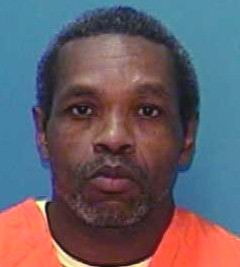
Ahmad Fawzi Issa
Murderer Russell Ellwood
Murderer · USA · 1991
Russell Ellwood was a former taxi driver. Authorities suspected him of killing…
20 victims
Russell Ellwood
Murderer · USA · 1991
Russell Ellwood was a former taxi driver. Authorities suspected him of killing…
20 victims
 Robert Martines Perez
Murderer · USA · 1994
Name: Robert Martines Perez · Other name used in proceedings: Robert Martinez P…
15 victims
Robert Martines Perez
Murderer · USA · 1994
Name: Robert Martines Perez · Other name used in proceedings: Robert Martinez P…
15 victims
 Billy Frank Vickers
Murderer · USA · 1993
Billy Frank Vickers Vickers was executed by lethal injection in Texas on Januar…
14 victims
Billy Frank Vickers
Murderer · USA · 1993
Billy Frank Vickers Vickers was executed by lethal injection in Texas on Januar…
14 victims
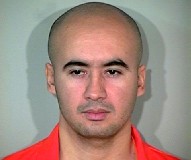 Martin Raul Soto-Fong
Homicide · USA · 1992
Martin Raul Soto-Fong was sentenced to death on February 3, 1994. Soto-Fong and…
3 victims
Martin Raul Soto-Fong
Homicide · USA · 1992
Martin Raul Soto-Fong was sentenced to death on February 3, 1994. Soto-Fong and…
3 victims
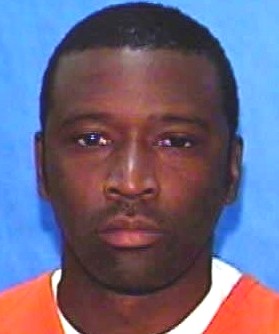 Maurice Lamar Floyd
Murderer · USA · 1998
Maurice Lamar Floyd was born on 11/29/76. He was tried in the Seventh Judicial…
1 victim
Maurice Lamar Floyd
Murderer · USA · 1998
Maurice Lamar Floyd was born on 11/29/76. He was tried in the Seventh Judicial…
1 victim
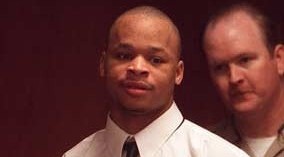 Terrell Young
Murderer · USA · 1998
Terrell Young was convicted in the 1998 slayings of four young men and was sent…
4 victims
Terrell Young
Murderer · USA · 1998
Terrell Young was convicted in the 1998 slayings of four young men and was sent…
4 victims
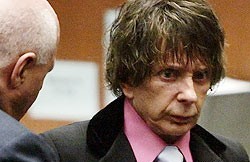 Phil Spector
Murderer · USA · 2003
Harvey Phillip Spector (born December 26, 1939) was an American record producer…
1 victim
Phil Spector
Murderer · USA · 2003
Harvey Phillip Spector (born December 26, 1939) was an American record producer…
1 victim
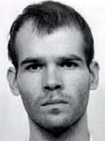 Larry Keith Robison
Mass murderer · USA · 1982
August 10, 1982 (4:30 p.m.) — Junett Bryant arrived at the home of her adult so…
5 victims
Larry Keith Robison
Mass murderer · USA · 1982
August 10, 1982 (4:30 p.m.) — Junett Bryant arrived at the home of her adult so…
5 victims
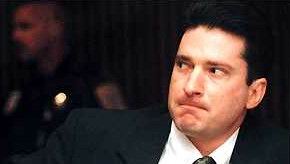 Lawrence Russell Brewer
Murderer · 1998
Lawrence Russell Brewer was a white male born 03/13/1967. His TDCJ number was 9…
1 victim
Lawrence Russell Brewer
Murderer · 1998
Lawrence Russell Brewer was a white male born 03/13/1967. His TDCJ number was 9…
1 victim
- Gender
- male
- Country
- USA
- Location
- Westwood, Ohio, USA
- Date of birth
- ???
- Characteristics
- murder-for-hire, rape, rapist
- Victim profile
- Maher Khrais, 35, and Ziad Khrais, 49 (jordanian brothers)
- Method of murder
- Shooting
- Date(s) of murder
- November 22, 1997
- Years active
- 1997
- Date of arrest
- —
- Status
-
Sentenced to death
Sentenced to death on October 16, 1998
Case information
Ahmad Fawzi Issa was convicted of aggravated murder and sentenced to death in 1998 in Hamilton County. The conviction involved a murder-for-hire plot.
Status and charges
Issa was charged with aggravated murder and a death penalty specification that the offense was committed for hire. The conviction cited R.C. 2903.01(A) and 2929.04(A)(2). The trial court sentenced Issa to death and an additional one-year term for a gun specification.
Victims
The murder victims were Maher Khrais and Ziad Khrais (also referred to as Maher Khriss and Ziad Khriss). Two people were killed.
Timeline
- 11/14/1997 — Dwyane Howard went to Issa’s apartment to wake him for work; Issa showed a military-style rifle and Howard asked what he was going to do with it.
- 11/20/1997 — Joshua Willis told Bonnie Willis about Miles’s conversation.
- 11/21/1997 — Linda, Maher, Gammoh, and Hayes worked late at Save-Way; Miles arrived and asked for Issa.
- 11/22/1997 — At approximately 1:30 a.m., Andre Miles confronted Maher and Ziad in a parking lot in front of Save-Way II Supermarket in Cincinnati, Ohio and demanded money; the brothers were shot and killed.
- 11/23/1997 — Miles came to the Willises’ home and described the killings and the payment arrangement.
- 11/25/1997 — While working at Save-Way, Hayes saw Linda hand Issa two $1,000 packets in cash and “some other money.”
- 12/4/1997 — Police learned Miles had admitted to Bonnie and Joshua that he committed the murders; police arrested Miles and he confessed and sketched a map of where he disposed of the murder weapon.
- 12/5/1997 — Police executed a search warrant on Issa’s apartment and found a single live 7.62 caliber bullet in a nightstand drawer in Issa’s bedroom.
- 10/16/1998 — Issa was sentenced to death.
- 05/21/1998 — Reporting described Issa’s trial in the Cincinnati Enquirer.
- 08/29/2001 — The Ohio Supreme Court decided the direct appeal and affirmed Issa’s conviction and death sentence.
- 03/27/2001 — The Ohio Supreme Court submitted the matter.
- 04/17/2003 — Issa filed in federal district court a petition for a writ of habeas corpus.
- 10/25/2005 — The district court partially granted Issa’s motion for an evidentiary hearing.
- 03/06/2006; 03/07/2006; 06/13/2006 — The district court held evidentiary hearings.
- 10/11/2006 — Issa filed his post evidentiary hearing brief.
- 11/13/2006 — The State filed its brief.
- 11/27/2006 — Issa filed his reply brief.
Background
Ahmad Fawzi Issa worked at Save-Way, a convenience store run by Maher Khriss and his wife, Linda Khriss. The investigation implicated three people: Linda Khriss, Andre Miles, and Issa. Police believed Linda conceived and bankrolled the plan, Miles was the shooter, and Issa recruited Miles and provided the murder weapon.
Issa was a Jordanian national. His brother Jamal Issa provided mitigation testimony. Appellant’s mother was Sara Abdel Satchsaad, and one of his brothers was also named Jamal Issa. The court noted that Jamal testified that appellant had four brothers and two sisters and that the family members were Jordanian citizens. Jamal testified that when Issa was born the family lived in Kuwait and that in 1977 Issa moved with his mother and siblings back to Jordan, while Issa’s father stayed in Kuwait and visited the family in Jordan for one month each year.
Jamal testified that, with financial assistance from Issa’s father, Issa studied engineering in college in Jordan from 1988 through 1990. In 1990, Issa immigrated to the United States to continue his studies, but after his father died he was unable to continue his education and had to work to support himself and to help support his family in Jordan.
Sara testified that Issa was born in 1969 and corroborated the family history given by Jamal. She testified that Issa sent money to his family from time to time before his arrest. Prior to the murders, Sara traveled from Jordan to the United States to visit Issa. She testified that she was surprised to hear of the charges because Issa “was of good character and quiet” and she said he was not the sort of man to do such things. She also testified that she suffers because of her son’s situation and did not want him executed.
In an unsworn statement, Issa reiterated his family history and noted that he came to the United States in 1990 to continue his college studies. He stated that because of his father’s death he went to work while living in New York and Chicago. In 1992, he moved to Cincinnati and got married, but the marriage did not work out. He worked at two other stores before he started working for Maher. Issa stated that he liked both Maher and Ziad and that he had a good relationship with them and their families. He stated that Maher and Ziad were like brothers to him and that Ziad and he had been roommates. He also stated that Maher frequently permitted him to use his car and that Issa thought Maher was a “very, very, very nice person.” Issa stated that he felt sorry for Maher and Ziad’s family for what happened but that he had “nothing to do with” the murders and that he was shocked when he heard about it.
The offence
Murder-for-hire plot and shootings
At approximately 1:30 a.m. on November 22, 1997, Andre Miles, armed with a high-powered assault rifle, confronted brothers Maher and Ziad Khriss in a parking lot in front of Save-Way II Supermarket in Cincinnati, Ohio and demanded money. As Maher and Ziad put money on the ground and pleaded for their lives, Miles shot and killed them.
Cincinnati police concluded that Miles had been hired to kill Maher. Police theorized that Linda Khriss had offered to pay Issa to kill Maher, that Issa then enlisted Miles to do the killing, that Issa supplied the weapon, and that Issa arranged the opportunity. Appellant, Miles, and Linda were each charged with aggravated murder.
The court described the State’s theory as involving a murder-for-hire plot against Issa’s employer, with Issa supplying the weapon and arranging time and place. On the night of the murders, Miles hid behind the Save-Way, which was owned by Maher. When Maher returned with his brother, Ziad, Miles robbed them of their money and shot them both in the head.
Pre-murder interactions involving a rifle
In the two weeks preceding the murders, two witnesses saw Issa with a rifle in his apartment.
- On November 14, Dwyane Howard, Hayes’s husband, went to Issa’s apartment to wake him for work. Issa invited Howard in and showed him a military-style rifle. When Howard asked Issa what he was going to do with the rifle, Issa’s only response was “a little sneer.” After the murders, Issa called Howard and told him not to tell anyone that he had seen Issa with a gun. At Issa’s trial, Howard identified the murder weapon as being identical to the rifle Issa had shown him.
- No more than two weeks before the murders, Issa’s coworker and friend Gammoh, while visiting at Issa’s apartment, also saw Issa with a rifle.
Joshua Willis went to Save-Way shortly before the murders and saw Miles standing out in front of the store. Joshua and Miles started talking, and Miles told Joshua that Issa was going to pay him to kill somebody. Miles asked Joshua if he wanted to take part in the crime for half of the money. Joshua did not take Miles seriously and told him he was crazy. On November 20, Joshua told Bonnie about his conversation with Miles. Bonnie also did not believe Miles would kill someone because Miles “had a tendency to * * * talk big,” and Bonnie described Miles as talking “about doing a lot of things and never did it.”
Events on the night of the murders
Linda, Maher, Gammoh, and Hayes worked late at Save-Way on the evening of November 21. At approximately 10:00 p.m., Miles arrived at the store and asked for Issa. Issa was scheduled to work at 10:00 p.m. but was not yet there. Linda drove to Issa’s apartment to wake him and then returned to the store. Issa arrived around 11:15 p.m., and Miles was waiting at the store for Issa. Issa and Miles went outside together to talk.
Around midnight, Maher left Save-Way with a friend to check on another store owned by Maher. Maher left his truck in the Save-Way parking lot and instructed Linda and Issa to place the keys to the truck near the right front tire and that Maher would come back later to get the truck.
At approximately 1:09 a.m., Save-Way employees closed the store for the night. Issa placed the keys near Maher’s truck. Issa’s mother was visiting from Jordan and was with Issa at the store when it closed. Issa, his mother, and Gammoh left the store in Issa’s car. Issa drove his mother to his apartment, and then he drove Gammoh home. When Issa dropped Gammoh off at approximately 1:20 a.m., Issa told Gammoh he was going back home to check on his mother but might come back later and take Gammoh to a bar.
Approximately twenty-five to thirty-five minutes later, Issa returned to Gammoh’s apartment, and they went to a bar together. After Gammoh heard about the murders, he asked Issa where he went before he returned to Gammoh’s apartment. Issa told Gammoh: “Don’t tell the police. Tell them that we were together all the time.”
Sherese Washington was driving near Save-Way at approximately 1:26 a.m. and heard gunshots. Sherese stopped her car, turned off the headlights, and saw a man run from the Save-Way parking lot and down Iroll Street. Sherese went home and called 911. Within four minutes of the shooting, Cincinnati police officers arrived at Save-Way and discovered Maher’s and Ziad’s bodies in the parking lot. Medical personnel arrived shortly thereafter but were unable to revive the Khriss brothers.
Investigation
Crime-scene investigators found six 7.62 caliber rifle casings, a broken beverage bottle, and several $1 bills. A small crater in the blacktop near Ziad’s body and a fresh gouge in the dirt near Maher’s body were noted as possibly having been made by gunfire. Officers also documented that three milk crates had been arranged like steps behind a dumpster in the parking lot. Investigators found this noteworthy because other items behind the dumpster were in disarray, and officers speculated that the perpetrator may have arranged the milk crates.
Dr. Lawrence Schulz, a deputy coroner for Hamilton County, performed autopsies and testified.
- Schulz found that a single bullet struck the palm of Maher’s left hand, traveled through his back of his hand and then entered his chest. The bullet perforated Maher’s lungs and his aorta, causing death within a few minutes.
- Ziad had been shot in the palm of his right hand and twice in his left arm. Each bullet that struck his arm traveled through to his chest.
Joshua testified that around 5:00 p.m. on November 22, Miles called him and told him that he had killed Maher and Ziad and had put the gun in Bonnie and Joshua’s backyard in a white plastic bag. Miles told Joshua not to touch the gun.
Following the map Miles sketched, police recovered a MAK-90, 7.62 caliber, semiautomatic rifle. Expert testimony established that the rifle fired the fatal bullet extracted from Maher’s body, confirming it was the murder weapon. Police found a banana-style magazine clip in the same vicinity that fit the murder weapon. The clip contained twelve 7.62 caliber hollow-point rifle bullets. The court described that the same foreign manufacturer made all of the shells found at the crime scene and the bullets in the clip. There were no fingerprints on the rifle, the clip, or the ammunition.
Police also found a single live 7.62 caliber bullet in a nightstand drawer in Issa’s bedroom. The manufacturer of this bullet differed from the manufacturer of the bullets found in the murder weapon’s clip and from the casings found at the crime scene.
An attempt to determine who had purchased the weapon was unsuccessful.
Arrest and confession
On December 4, 1997, police learned that Miles had admitted to Bonnie and Joshua that he committed the murders. Police arrested Miles that evening, and he confessed to the crime and sketched a map depicting where he had disposed of the murder weapon. After following the map, police recovered the rifle and related ammunition.
Miles told the Willises about the payment arrangement. He stated that Issa was going to pay him $2,000 for killing Maher, and “[s]ince [Maher’s] brother also got killed that night he had to throw in an extra $1,500.”
Miles also told Bonnie and Joshua that on the night of the shooting Issa gave Miles the rifle described as an M-90. Miles then sat on milk crates behind a dumpster outside the store and waited for Maher to come back for his truck. When Maher returned with Ziad, Miles confronted them and demanded money. Maher and Ziad pulled money from their pockets, dropped it on the ground, and pleaded with Miles not to shoot. Miles said that when he reached down for the money, “the gun went off and the beverage bottle that Maher was holding shattered.” Miles said he “got trigger happy. He freaked. He shot them once. He might as well kill them.” While Maher was “still squirming,” Miles said he shot him in the head and then shot Ziad in the head.
Miles picked up the money they had thrown down but left two $100 bills on the ground. He said after the shooting he ran down Iroll Street, put the rifle in the Willises’ back yard in a white plastic bag, and met Issa in a nearby parking lot where Issa drove him home. Miles told them he had “bought the new clothes with the money that he got from the two victims.” Miles showed “no remorse at all. He was actually bragging.” Miles also told Bonnie and Joshua: “If anybody knows about this or tells, I’ll kill them.” Miles reiterated that the rifle was in a white plastic bag in their back yard and that neither Bonnie nor Joshua should touch it. Miles promised to come back and remove the gun.
Bonnie and Joshua saw an object wrapped in a white bag in their back yard, and Joshua described it as “shaped like a gun.” A few days later, Joshua went to Save-Way and, once Issa saw him, Issa asked, “Does anybody know?” Joshua answered, “No, not that I know of.” Joshua told Issa that he needed to come and get the gun and that Joshua did not want his family in this situation. Issa responded: “Okay. I’ll talk to Andre [Miles] and if Andre don’t come and get it, I will.”
After a few days, Joshua noticed the white bag was still in his yard. Joshua confronted Issa again about it, and Issa promised either Issa or Miles would remove the gun. Bonnie went to the store and told Issa the gun needed to be removed. Issa told her the same thing he told Joshua. Issa also told Bonnie to “[t]ell [Miles] not to come around the store because the police were investigating, that he would get in touch with him.” Miles later removed the gun.
Witnesses and relationships
Bonnie Willis and her brother Joshua Willis lived with their mother about one block from Save-Way and often shopped at Save-Way, so they were familiar with the store employees. Miles previously had lived with the Willises’ family and was a close friend of Bonnie and Joshua.
The court discussed that Miles did not speak directly to Mrs. Khriss and that his information came from Issa, who was also awaiting trial on charges of aggravated murder. In exchange for Miles’s testimony at the trial of Linda Khriss, prosecutors would testify that Miles cooperated and helped in Linda’s case. The court record described that Miles did not receive deals or reduction in charges for his testimony.
Dwyane Howard and Gammoh testified that they saw Issa with a rifle and that Howard had been shown the rifle in Issa’s apartment. Howard testified that he later identified the murder weapon as identical to the rifle shown to him by Issa.
The court also described that Renee Hayes and Souhail Gammoh worked at Save-Way. In addition to Linda, Maher, and Issa, Renee Hayes and Souhail Gammoh worked at the store.
Physical evidence and corroboration
Crime-scene investigators found rifle casings, a broken beverage bottle, several $1 bills, and items arranged behind a dumpster, including milk crates arranged like steps. After Miles’s confession, police recovered a MAK-90, 7.62 caliber, semiautomatic rifle and a banana-style magazine clip with twelve 7.62 caliber hollow-point bullets. Expert testimony tied the fatal bullet recovered from Maher’s body to the rifle. Police found a single live 7.62 caliber bullet in Issa’s apartment; its manufacturer differed from those involved in the murder weapon’s clip and the casings found at the crime scene.
Trial
Charged offence and specifications
A jury convicted Issa of the aggravated murder of Maher with a death penalty specification that the offense was committed for hire, under R.C. 2903.01(A) and 2929.04(A)(2).
Evidence presented at trial
The court described evidence presented to the jury as follows: Gammoh and Howard saw Issa with a rifle in his apartment within two weeks before the murders, Howard identified the murder weapon as the rifle Issa had shown him, and after the murders Issa attempted to persuade Howard not to tell anyone about seeing him with the weapon.
Before the murders, Miles told Joshua that Issa hired him “to kill somebody for some money.” Less than four hours before Maher and Ziad were killed, Miles met with Issa at Save-Way and waited outside with a rifle for Maher to return. Miles shot Maher and Ziad when they returned.
Miles’s identity as the shooter was not questioned because he confessed, told police the location of the murder weapon, and knew details such as the type of weapon used, the stacked milk crates near the dumpster, the location of money and a shattered beverage bottle near the bodies, and the manner and direction in which the shooter fled.
Miles told Bonnie and Joshua that he shot and killed Maher and Ziad and related details, including that Issa hired him to kill Maher and supplied the rifle and drove him home after the murders. Miles also told them he left the murder weapon in their back yard in a white bag. Bonnie and Joshua saw the white bag, and Joshua testified it was shaped like a gun.
Bonnie and Joshua told Issa they wanted the rifle removed from their yard. Issa told them that if Miles did not remove the rifle, Issa would. Issa also told Bonnie to tell Miles not to come around the store because police were investigating and that Issa would get in touch with Miles.
Hayes testified that three days after the murders, she saw Linda hand Issa $2,000 in cash along with some other money. The defense argued the money was deposited later but did not produce evidence of such a deposit.
Gammoh testified that Issa asked him to tell police that he was with Issa around the time of the murders. The court characterized this as trying to create a false alibi and said it strongly indicated consciousness of guilt.
When police searched Issa’s apartment they recovered a 7.62 caliber rifle shell from a nightstand in his bedroom. The court found this was the same caliber ammunition as that used to kill Maher and Ziad.
Photographs
Appellant argued that gruesome and cumulative photographs of the victim were improperly admitted. The court reviewed nine photographs of the murder victims introduced by the State and described them as showing the victims lying on their backs in the Save-Way parking lot, with medical personnel having cut clothing on the victims’ upper bodies so that bare chests were visible.
Six photographs were described as not gruesome and as illustrating witness testimony describing the crime scene. Exhibit 29 was described as a duplicate of exhibit 5, and the court stated the trial court erred in admitting exhibit 29 but concluded the repetition did not prejudice Issa and was harmless error.
Exhibits 7 and 8 were described as close views of Maher’s body. The court said Exhibit 7 showed the wound to Maher’s left hand described in the coroner’s testimony and that this wound was not visible in any other photograph. Exhibit 8 showed the fatal wound to Maher’s chest and was described as illustrative of coroner’s testimony and as assisting the finder of fact in evaluating a defense theory regarding the shooter’s intent. The court stated the photographs were not cumulative and, with the exception of exhibit 29, not repetitive.
The court also described appellant’s claim that the prosecutor’s closing argument combined with the photographs rendered the trial unfair, but appellant did not specify portions of closing argument being challenged. The court said the prosecutors made only a few references to the photographs and those references were unobjectionable.
During closing argument, defense counsel stated:
"I want to take a look at the pictures. I want you to take a good look and pass it around of the body of Maher Khriss as it was found at the scene. Take a look where the bullet hole is in that body. Remember the testimony Dr. Schulz that this is the only bullet hole, this is the only bullet that struck Maher Khriss. The one you see is there, which went through his hand into his shoulder. You can look at that. I am not exaggerating. That bullet hole is in his shoulder. "You tell me if his only purpose was to kill Maher Khriss, and the only way you're going to get paid, would you rely on that to get the job done? "Take a look at that shot. Would you rely on one bullet hole in the shoulder to kill a person? Look at that shot. I would never have guessed that that would be the fatal shot, looking at the picture."
The prosecutor’s closing argument references to the photographs included:
"In regards to the bullets and the shots that were in Maher Khriss's body, well, you look at the pictures. There is a hole. It's that big (indicating). Do you think that would not kill someone? When you see the bullets, they are like torpedoes. "Why would you think that one shot couldn't or wouldn't kill someone?"
and "I think you can believe that Andre Miles thought he did shoot them in the head when you look at one of those photos. Here is State's Exhibit Number 31. It's a little extreme; but when you look at it later, you will see that it sure looks like Ziad got shot in the eye. It really looks like he was shot in the eye--Hardly blame Miles for thinking he did shoot him in the head. That wasn't what the Coroner said. I think we'd all believe this guy got it in the head; but the coroner said, `No, he wasn't shot in the head.' We have to accept that from all appearances that's what it looks like it is."
Sentencing
The jury recommended the death penalty after the penalty hearing.
The court considered sentencing under R.C. 2929.05(A) and conducted an independent sentence evaluation. It determined the aggravating circumstance was proven beyond a reasonable doubt and weighed it against mitigating factors.
The court stated that the nature and circumstances of the offense offered no mitigating value. It said Issa offered Miles money to kill Maher and supplied the murder weapon and provided transportation after the murder. It said the only statutory mitigating factors found relevant to apply were those describing appellant’s “history, character, and background” and that appellant was not the principal offender, but it gave no weight to the mitigating factor that the offender was a participant but not the principal offender because it concluded Issa was nevertheless a crucial participant.
The court stated beyond a reasonable doubt that aggravating circumstance outweighed the mitigating factors. It then conducted proportionality review and stated the death sentence was not excessive or disproportionate compared with other capital cases in which aggravated murder was committed for hire.
Appeals
Direct appeal to the Ohio Supreme Court
The Ohio Supreme Court affirmed Issa’s conviction and death sentence on direct appeal. The court described fourteen propositions of law raised by Issa and stated that none justified reversal.
Among the propositions, Issa argued:
- violation of Vienna Convention on Consular Relations rights because arresting officers failed to inform him of consular access rights, and he sought suppression of his postarrest statement;
- admission of accomplice Andre Miles’s pretrial statements through Bonnie and Joshua and violation of confrontation rights;
- ineffective assistance of counsel for failing to raise issues including cultural competency, failing to request funds for investigators and a firearms expert, and failing to file a motion to suppress evidence of the 7.62 caliber bullet;
- denial of reasonable bond;
- admission of gruesome and cumulative photographs;
- sufficiency and manifest weight of evidence;
- constitutional challenges to Ohio capital sentencing and procedure, including capital indictment procedures, foremen selection processes, mitigation proof standards, and reasonable doubt instructions at penalty phase;
- challenges to the constitutionality of Ohio’s death penalty statutes.
The court overruled Issa’s first and second propositions of law, and it overruled the other propositions described in its decision, including the tenth, eleventh, twelfth, thirteenth, fourteenth, and fifteenth propositions of law. The court also affirmed the conviction and death sentence, stating: “Judgment affirmed.”
Vienna Convention dispute and posture
Issa asserted in his first proposition of law that his rights under the Vienna Convention on Consular Relations were violated. The court quoted Article 36(1)(b):
"1. With a view to facilitating the exercise of consular functions relating to nationals of the sending State: "* * * "(b) if he so requests, the competent authorities of the receiving State shall, without delay, inform the consular post of the sending State if, within its consular district, a national of that State is arrested or committed to prison or to 1. The record does not reflect whether the police advised appellant of his right to consular access. For the purposes of this appeal, we assume that he was not advised of that right. custody pending trial or is detained in any other manner. Any communication addressed to the consular post by the person arrested, in prison, custody or detention shall also be forwarded by the said authorities without delay. The said authorities shall inform the person concerned without delay of his rights under this sub-paragraph. "* * * "2. The rights referred to in paragraph 1 of this Article shall be exercised in conformity with the laws and regulations of the receiving State, subject to the proviso, however, that the said laws and regulations must enable full effect to be given to the purposes for which the rights accorded under this Article are intended." (Emphasis added.)
The court assumed without deciding that Issa had an individually enforceable right under Article 36 and that the appropriate remedy would be suppression of postarrest statement, but it concluded Issa was not entitled to relief and that the outcome would not clearly have been otherwise.
Confrontation clause and statements against interest
On Issa’s second proposition, the court held Miles’s statements were admissible under Evid.R. 804(B)(3) as statements against interest if corroborating circumstances clearly indicated trustworthiness and that Miles was unavailable as a witness because he refused to testify despite subpoena obligations. The court also held that admission of Bonnie and Joshua’s testimony about Miles’s confession did not violate the Confrontation Clause.
Outcome
The Ohio Supreme Court affirmed Issa’s conviction for aggravated murder and his death sentence.
Aftermath
After Issa’s direct appeal, the case proceeded with federal habeas corpus litigation. On April 17, 2003, Issa filed a petition for a writ of habeas corpus. On October 25, 2005, the district court partially granted a motion for an evidentiary hearing. The district court held evidentiary hearings on March 6, 2006, March 7, 2006, and June 13, 2006. On October 11, 2006, Issa filed his post evidentiary hearing brief; the State filed its brief on November 13, 2006, and Issa filed his reply brief on November 27, 2006.
Other details
Alternative trial outcomes mentioned for other defendants
The narrative portion stated that Linda Khriss was exonerated when a jury found her not guilty earlier this year. It also stated that Miles received life imprisonment without chance for parole based on a jury recommendation of life rather than death.
Additional mitigation testimony
The decision stated that Sara and Jamal did not want Issa executed, and it described Issa’s employment and family circumstances. It also described a claim that Issa offered proof he completed schooling and behaved well in school; it addressed an amicus curiae argument that the Jordanian consulate could have provided educational transcripts and assistance obtaining a visa for a brother to provide mitigation testimony.
Quotes included from the proceedings and decision
Defense counsel during closing arguments:
Prosecutor during closing argument:
Prosecutor during closing argument (additional reference):
Spotted an error, or have more information about this case?