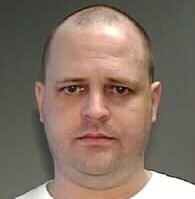
Troy Burkhart
Murderer Russell Ellwood
Murderer · USA · 1991
Russell Ellwood was a former taxi driver. Authorities suspected him of killing…
20 victims
Russell Ellwood
Murderer · USA · 1991
Russell Ellwood was a former taxi driver. Authorities suspected him of killing…
20 victims
 Robert Martines Perez
Murderer · USA · 1994
Name: Robert Martines Perez · Other name used in proceedings: Robert Martinez P…
15 victims
Robert Martines Perez
Murderer · USA · 1994
Name: Robert Martines Perez · Other name used in proceedings: Robert Martinez P…
15 victims
 Billy Frank Vickers
Murderer · USA · 1993
Billy Frank Vickers Vickers was executed by lethal injection in Texas on Januar…
14 victims
Billy Frank Vickers
Murderer · USA · 1993
Billy Frank Vickers Vickers was executed by lethal injection in Texas on Januar…
14 victims
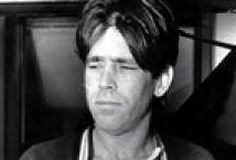 George Stephenson
Mass murderer · United Kingdom · 1986
George Stephenson — defendant · John Daly — co-defendant · George Daly — co-def…
5 victims
George Stephenson
Mass murderer · United Kingdom · 1986
George Stephenson — defendant · John Daly — co-defendant · George Daly — co-def…
5 victims
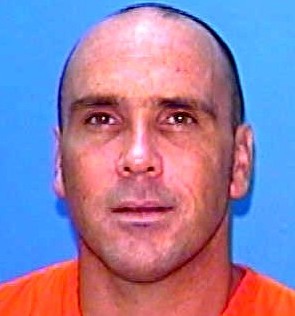 John Buzia
Murderer · USA · 2000
John Buzia was sentenced to death on March 11, 2004. · 03/14/00 — John Buzia di…
1 victim
John Buzia
Murderer · USA · 2000
John Buzia was sentenced to death on March 11, 2004. · 03/14/00 — John Buzia di…
1 victim
 Henry Francis Hays
Murderer · USA · 1981
Henry Francis Hays Henry Francis Hays was a member of the Ku Klux Klan in Alaba…
1 victim
Henry Francis Hays
Murderer · USA · 1981
Henry Francis Hays Henry Francis Hays was a member of the Ku Klux Klan in Alaba…
1 victim
 Michael James McNeely
Murderer · USA · 1993
Michael James McNeely was the defendant in a criminal case before the Supreme C…
1 victim
Michael James McNeely
Murderer · USA · 1993
Michael James McNeely was the defendant in a criminal case before the Supreme C…
1 victim
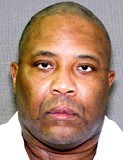 Gary Green
Murderer · USA · 2009
Gary Green was sentenced to death on November 22, 2010. Gary Green was a Black…
2 victims
Gary Green
Murderer · USA · 2009
Gary Green was sentenced to death on November 22, 2010. Gary Green was a Black…
2 victims
 Michael Ronning
Murderer · USA · 1986
Michael Ronning was an inmate in Arkansas serving life in prison without parole…
7 victims
Michael Ronning
Murderer · USA · 1986
Michael Ronning was an inmate in Arkansas serving life in prison without parole…
7 victims
- Gender
- male
- Country
- USA
- Location
- Anderson County, South Carolina, USA
- Date of birth
- J une 5, 1967
- Age at first offence
- 30
- Characteristics
- drugs
- Victim profile
- Shane, 27, and Stacy Walters, 21, half-brothers, and Sonya Cann, 21
- Method of murder
- Shooting
- Date(s) of murder
- November 17, 1997
- Years active
- 1997
- Date of arrest
- Same day (surrenders)
- Status
-
Life imprisonment
Sentenced to death in 2000; resentenced to three life sentences without parole on July 27, 2007
Background
Troy Alan Burkhart was convicted of three counts of murder and three counts of possession of a firearm during the commission of a violent crime. He was sentenced to death after a jury recommended death. He later received resentencing to three life sentences without parole.
Burkhart admitted to shooting and killing Shane Walters, Stacy Walters, and Sonya Cann, but he pled not guilty at trial and claimed he killed them in self-defense.
Burkhart was associated with a bar called Traditions. The Walters brothers set up mobile homes for a living.
The offence
Burkhart became acquainted with brothers Shane Walters and Stacy Walters on a Friday when they met at the mutual friend’s home. Burkhart asked the brothers for help with the septic tank at his restaurant, and they worked together and socialized over the course of the weekend. From Friday until late into the night on Sunday, all three used methamphetamine repeatedly.
At about 5:00 a.m. Monday morning, the three men went to pick up Shane’s girlfriend, Sonya Cann, at her home. The four of them drove off in Shane’s extended-cab “dually” truck.
The victims were not seen alive again. Later that morning, at about 8:15 a.m., Burkhart came to the Seneca police department and told police he had killed three people in self-defense. He led police to a secluded kudzu field where police found the bodies of Shane Walters, Stacy Walters, and Sonya Cann on the ground.
Forensic evidence indicated that all three victims had been shot in the head at close range while seated in the cab of the truck and that their bodies had been dragged onto the ground. The State also produced evidence that Stacy and Shane had been stomped while on the ground and that Sonya was shot in the head while lying there. The only weapon used was Burkhart’s semi-automatic pistol which could hold eight rounds, seven in the magazine and one in the chamber. Two empty magazines were at the scene indicating Burkhart had reloaded. Experts estimated up to eleven shots could have been fired.
The victims’ ages were given as:
- Shane Walters: twenty-seven
- Stacy Walters: twenty-two
- Sonya Cann: twenty-one
Burkhart’s account of events included a statement that he believed the brothers had been hired to kill him by his uncle, Ronnie Burkhart, who was described as an infamous drug-dealer with whom Burkhart was on bad terms. Burkhart testified that when they arrived at the kudzu field, Shane was holding Burkhart’s gun because Burkhart had given it to shoot at a deer earlier. Burkhart testified that Shane asked him if he had ever wronged “Uncle Ronnie,” and that after Shane pointed the gun and ordered him out of the truck, Stacy said, “We’re going to make you squeal like a pig, boy,” which Burkhart took to mean they were going to rape him. Burkhart testified that he grabbed the gun from Shane and began shooting. When it was over, he pushed the bodies out of the truck and put the second magazine in the gun because he thought someone else may have been out in the field. Burkhart testified that a shot went off outside the truck, and that he finally drove off in Shane’s truck. He testified that he then went to pick up his wife and his father because he was afraid Ronnie would hurt them. He further testified that after parking Shane’s truck at his father’s house, he went to the police.
Burkhart’s testimony before the police was described as including a threat in which someone said “Make him squeal like a pig.” The State’s pathologic evidence and arguments included contrary theories about the sequence and conduct of the shooting, and that the shots that killed Shane and Sonya were fired after they were already incapacitated while lying on the ground outside the truck, and that Burkhart had stomped Sonya and Stacy with his boot after he shot them. A defense pathologist testified that the shootings could have occurred exactly as Burkhart described.
Investigation
After Burkhart came to the Seneca police department and told police he had killed three people in self-defense, he led police to the kudzu field. Police found the bodies there.
The truck was recovered from where Burkhart had parked it at his father’s house, and its interior was covered with blood.
A sheriff’s helicopter later located the three bodies off Old Denver Road near Pearman Dairy Road.
Arrest
Burkhart was in custody in Anderson.
Trial
Burkhart’s convictions were described in two appellate decisions and included multiple trials.
First trial and convictions
On January 13, 1998, the grand jury for Anderson County indicted Burkhart for the murders of Shane and Stacy Walters, half-brothers, and Sonya Cann. In addition to the three counts of murder, Burkhart was indicted on three counts of possession of a firearm during the commission of a violent crime.
A two week trial beginning on March 6, 2000 ended with the jury convicting Burkhart on all three counts of murder and all three counts of possession of a firearm during commission of a violent crime.
The following day, the jury recommended Burkhart be sentenced to death, citing the murder of two or more persons pursuant to one scheme or course of conduct as the statutory aggravator. The trial judge affirmed the recommendation and sentenced Burkhart to death.
Burkhart testified at trial, describing the episode as a self-defense incident. He denied accusations that he stomped anyone and that he shot anyone on the ground. On cross-examination, he unequivocally denied the State’s accusations and testified, “I did not stomp anyone and I did not shoot anyone on the ground.”
The opinion described Burkhart as having purchased a Colt .45 automatic - the gun he shot Shane, Stacy, and Sonya with - at a pawn shop a few years before the episode.
Appeals on the first convictions
The South Carolina Supreme Court reversed and remanded. The opinion stated that the trial judge did not instruct the jury that the prosecution had to disprove self-defense beyond a reasonable doubt. It also described that the trial judge had charged the jury that the defendant was not required to prove self-defense and that all burdens of proof in the case were on the State and remained with the State. The trial judge did not charge the reasonable doubt instruction submitted by the defense. Defense counsel objected that the charge given did not comport with State v. Wiggins, requiring the State to disprove self-defense beyond a reasonable doubt.
The Supreme Court concluded that the trial judge erred by not charging under Wiggins as requested by defense counsel immediately after the charges were given. It held that the failure to properly instruct the jury on burden of proof was prejudicial and constituted reversible error. The opinion concluded with:
Based on the foregoing reasons, we REVERSE and REMAND this case for a new trial on each of Appellant's convictions.
Second trial and sentencing
After the first conviction was overturned, Burkhart was again convicted and sentenced to death in March 2004.
In the second trial, during the sentencing phase, testimony described prison conditions and did not focus solely on the defendant or the crime, resulting in reversal of the death sentence and remand for resentencing.
The South Carolina Supreme Court affirmed Burkhart’s convictions but reversed and remanded for resentencing. It did so based on the admission of evidence regarding prison conditions during the sentencing phase. It stated that such evidence injected an arbitrary factor into the jury’s sentencing considerations, and that a capital jury may not impose a death sentence under the influence of any arbitrary factor. It cited S.C. Code Ann. § 16-3-25(C)(1) (2003) and reversed the death sentence and remanded for resentencing.
A Director of Inmate Classification for the Department of Corrections, James Sligh, testified regarding the privileges available to an inmate who receives a sentence of life without parole. The privileges described included access to the yard, work, education, meals, canteen, phone, library, recreation, mail, television, and outside visitors. On cross-examination, Sligh acknowledged that prison life is “very regimented” and “is not a country club.” The opinion also noted that Burkhart presented evidence through his own witness that prison is a harsh environment with violent predators where one’s freedom is severely curtailed.
Self-defense burden of proof
The Supreme Court’s analysis described current law requiring the State to disprove self-defense beyond a reasonable doubt once self-defense was properly raised by the defendant. It referenced State v. Davis and Wiggins and addressed a requested jury charge that the State must disprove self-defense beyond a reasonable doubt.
It included verbatim quoted statements from Burkhart’s testimony as well as quoted jury instruction language. The opinion included the trial judge’s instruction:
The defendant, ladies and gentlemen, is not required to prove the defense of self-defense. All burdens of proof in this case are on the State and remain with the State.
The opinion also included Burkhart’s earlier closing argument quote:
you must find the defendant not guilty unless the State proves to you beyond a reasonable doubt that each of the elements of self-defense do not exist in this case
Statements and testimony about threats
Burkhart’s account included the statement attributed to Stacy Walters:
“We’re going to make you squeal like a pig, boy,” which appellant took to mean they were going to rape him.
The opinion’s other version also described someone saying:
“Make him squeal like a pig.”
Sentencing
Death sentences
Burkhart was sentenced to death after the first trial ended in death recommendations. After his second conviction in March 2004, he was again sentenced to death.
Resentencing
On July 27, 2007, Judge J.C. Buddy Nicholson sentenced Burkhart to three life sentences without parole. It was described as three life sentences without parole by Judge J.C. Buddy Nicholson on Friday. The hearing was described as sentencing only, and Judge Nicholson denied Burkhart’s motions, including a motion that the judge step down and a request to be relieved of his attorneys.
The prosecutor, Chrissy Adams, stated that Burkhart had been offered life in prison before the second trial and turned down the offer. She also stated she was prepared to seek a third death sentence but the victims’ families needed closure. Burkhart was to be sent to a maximum-security prison.
Appeals
The South Carolina Supreme Court decisions described the appellate outcomes as:
- Reversed and remanded the first convictions for a new trial on each of the convictions, based on the failure to instruct the jury that the State had the burden to disprove self-defense beyond a reasonable doubt.
- Affirmed Burkhart’s convictions but reversed his death sentence and remanded for resentencing based on the admission of evidence regarding prison conditions during the sentencing phase.
In the concurring and dissenting opinions, the justices discussed whether reversal required a harmless error analysis and whether violations of S.C. Code Ann. § 16-3-25(C)(1) are subject to harmless error analysis.
Outcome
On July 27, 2007, Burkhart received three life sentences without parole.
In prior appellate history, the Supreme Court reversed and remanded the first convictions and later affirmed the convictions but reversed and remanded for resentencing after the second death sentence.
Aftermath
Families of the murder victims, including relatives of Shane and Stacy Walters and Sonya Cann, were described as sitting in the jury box of the fourth floor courtroom during the resentencing hearing.
Statements were read to the court by the prosecutor. Juanita Shead, Shane Walters’ mother, was described as calling Burkhart a “sorry” human being and said she now finds herself crying for hours. Deborah Byrum, Sonya Cann’s mother, was described as saying she hoped when Burkhart closes his eyes at night he will relive that cold November night again. Dana Albertson, Shane Walters’ sister, was described as reading a statement including:
“He should sit in a small cell and think about what he did,”
and further:
“He took my brother and uncle. … Why is he even given a choice? The Bible should be our law, an eye for an eye. Something’s wrong when the murderer has more rights than the victim.”
During the coverage of later proceedings, it was also described that Burkhart could appeal the resentencing on Friday, and that for now he would be sent to a maximum-security prison.
Burkhart stated that Ronnie Burkhart and another person were in the kudzu field the night of the killings. Former Anderson Sheriff Gene Taylor testified that Ronnie Burkhart was the target of an extensive local and federal drug investigation, including ties to area attorneys and Florida lawyers. Ronnie Burkhart died of cancer in April 2000 shortly after Burkhart was sentenced to death. Ronnie Burkhart never testified, but defense witnesses said he was someone to fear.
Shortly after marrying Ronnie Burkhart, Janice Burkhart was arrested a month after his death from cancer. She pleaded guilty to giving false information to a federal agent about a $390,000 cashier’s check. The state also targeted $1.3 million that was left in the control of various attorneys and more than 260 acres in land parcels throughout Oconee County that were identified as purchases for drug money laundering. Some of the property included lots in such subdivisions as Keowee, Townville Lakes Plantation, Keowee Inlet, Clemson Forest, Calhoun Point and Loran Pointe.
Burkhart insisted that his knowledge of his uncle’s operations put him in his uncle’s sights. He said his uncle’s own stepson as well as another employee testified that they all worked for his uncle and that he in fact wanted him killed. Burkhart’s sister Lori Burkhart said it was an uphill battle to find those who believe her brother and that apathy was their biggest hurdle.
Other details
Burkhart’s sister Lori and his wife Michelle were described as proclaiming Burkhart’s innocence based on self-defense. Lori Burkhart said:
“I pray their families will have peace,” and she also said: “Apathy is our biggest hurdle,” and: “It all seems so beyond our control, and it is so frustrating.”
Michelle Burkhart said:
“We were engaged for one year and married five years,” and: “I pray for mercy and grace every day,” and that Troy Burkhart had told her that when he was sentenced to life he would be killed in jail. Michelle Burkhart also stated: “Troy has told the truth from day one.”
Burkhart was described as being offered life in prison before the second trial and turning it down.
The opinions described various named individuals including:
- Paul Zastrow, a mutual friend
- Tammy Steele and Danielle (names connected to testimony during the trial’s self-defense narrative)
- Vicky, Shane Walters’ wife
- Warren Burkhart, Burkhart’s father, who was the person to whom Burkhart drove after the killings
- Michelle Burkhart, Burkhart’s wife
- Andy Potter, Burkhart’s court-appointed attorney at the resentencing
- Chrissy Adams, a Tenth Judicial Circuit Solicitor
- J.C. Buddy Nicholson, circuit judge who handled the second death sentence and resentencing hearing
- Gene Taylor, former Anderson Sheriff, who testified as a defense witness
- James Sligh, Director of Inmate Classification for the Department of Corrections, who testified about prison privileges during sentencing
The Supreme Court opinion included a list of citations and footnotes, including a statement that at the time of trial Burkhart was entitled to the charge he requested, as discussed by Justice Pleicones.
The Supreme Court opinion included quoted literary reference material:
James Dickey, Deliverance, Boston: Houghton Mifflin, 1970.
and it included verbatim quoted threats and Burkhart’s testimony language about fearing rape and being ordered out of the truck as part of the self-defense account.
A Supreme Court decision caption included:
The State, Respondent, v. Troy Alan Burkhart, Appellant.
Spotted an error, or have more information about this case?