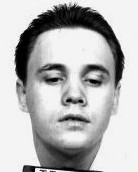
Charles Douglas Raby
Murderer Brian Kevin Rosenfeld
Murderer · USA · 1985
Brian Kevin Rosenfeld Brian Kevin Rosenfeld was sentenced to three concurrent l…
23 victims
Brian Kevin Rosenfeld
Murderer · USA · 1985
Brian Kevin Rosenfeld Brian Kevin Rosenfeld was sentenced to three concurrent l…
23 victims
 Russell Ellwood
Murderer · USA · 1991
Russell Ellwood was a former taxi driver. Authorities suspected him of killing…
20 victims
Russell Ellwood
Murderer · USA · 1991
Russell Ellwood was a former taxi driver. Authorities suspected him of killing…
20 victims
 Robert Martines Perez
Murderer · USA · 1994
Name: Robert Martines Perez · Other name used in proceedings: Robert Martinez P…
15 victims
Robert Martines Perez
Murderer · USA · 1994
Name: Robert Martines Perez · Other name used in proceedings: Robert Martinez P…
15 victims
 Billy Frank Vickers
Murderer · USA · 1993
Billy Frank Vickers Vickers was executed by lethal injection in Texas on Januar…
14 victims
Billy Frank Vickers
Murderer · USA · 1993
Billy Frank Vickers Vickers was executed by lethal injection in Texas on Januar…
14 victims
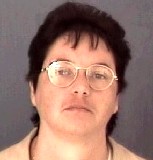 Kelly Gissendaner
Murderer · USA · 1997
Kelly Gissendaner was convicted in 1998 of recruiting her lover to kill her hus…
1 victim
Kelly Gissendaner
Murderer · USA · 1997
Kelly Gissendaner was convicted in 1998 of recruiting her lover to kill her hus…
1 victim
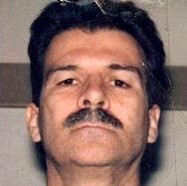 William Mentzer
Murderer · USA · 1983
William Mentzer was a contract killer with ties to drug syndicates. He was also…
5 victims
William Mentzer
Murderer · USA · 1983
William Mentzer was a contract killer with ties to drug syndicates. He was also…
5 victims
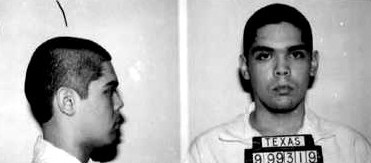 Richard Vasquez
Murderer · USA · 1998
Richard Vasquez was a Texas death row inmate. He stated: "Not Giving Up" My nam…
1 victim
Richard Vasquez
Murderer · USA · 1998
Richard Vasquez was a Texas death row inmate. He stated: "Not Giving Up" My nam…
1 victim
 Joseph M. Harris
Spree killer · USA · 1991
Joseph M. Harris committed a series of attacks after he was fired from his Post…
4 victims
Joseph M. Harris
Spree killer · USA · 1991
Joseph M. Harris committed a series of attacks after he was fired from his Post…
4 victims
 Joseph Ray Ries
Murderer · USA · 1999
Fall of 1998 — Joseph Ray Ries formed a friendship with Robert Ratliff and move…
1 victim
Joseph Ray Ries
Murderer · USA · 1999
Fall of 1998 — Joseph Ray Ries formed a friendship with Robert Ratliff and move…
1 victim
- Gender
- male
- Country
- USA
- Location
- Harris County, Texas, USA
- Date of birth
- March 22, 1970
- Age at first offence
- 22
- Characteristics
- attempted rape, robbery
- Victim profile
- Edna Mae Franklin, 72
- Method of murder
- St abbing with knife
- Date(s) of murder
- October 15, 1992
- Years active
- 1992
- Date of arrest
- —
- Status
-
Sentenced to death
Sentenced to death; appeal granted as to DNA testing of underwear, fingernail clippings, and the nightshirt if it could be found
Case record: Charles Douglas Raby
Timeline
- October 15, 1992 — Charles Douglas Raby was convicted of killing Edna Franklin; Edna Franklin was found dead in the living room of her small house with her two grandsons, Eric Benge and Lee Rose.
- October 16, 1992 — Police obtained a warrant for Raby’s arrest and went to the home of his girlfriend, Mary Gomez, recovering a black jacket belonging to him.
- October 19, 1992 — Raby signed a statement at the Houston Police Department homicide division dated Monday, October 19, 1992, at approximately 1:25 p.m.
- June 29, 2005 — The Court delivered its en banc opinion.
- June 29, 2005 — The Court granted Raby’s motion for DNA testing as to the underwear, fingernail clippings, and the nightshirt, if it could be found.
Background
Charles Douglas Raby appealed from a trial-court order denying post-conviction DNA testing under Tex. Code Crim. Proc., Ch. 64 (2001). He sought testing of four items:
- bloody ladies’ underwear found next to the victim’s body;
- the nightshirt worn by the victim at the time of the murder;
- victim’s fingernail clippings;
- a hair found on the victim’s hand, identified as belonging to the victim’s grandson.
Raby contended that DNA testing could prove his innocence. He attached affidavits of Dr. Elizabeth A. Johnson and Dr. Paul Radelat.
The state conceded that three of the four items were in its possession but argued that Chapter 64 requirements were not met, including arguments that identity was not an issue and that Raby had not established a reasonable probability that he would not have been prosecuted or convicted if exculpatory results had been obtained through DNA testing. The state also argued that the request was made to delay the execution of Raby’s sentence.
The appeal in capital cases under Chapter 64 was directly to this court under Tex. Code Crim. Proc., Article 64.05.
The offence
Raby was convicted of killing Edna Franklin. Franklin lived in a small house with her two grandsons, Eric Benge and Lee Rose.
Benge and Rose testified that they left Franklin at home alone shortly before 4:00 p.m. on October 15, 1992. Benge later returned and found the front door unlocked and open, the back door open, the lights out, and Franklin dead in the living room.
Franklin was nude from the waist down and had been stabbed to death. Hair was recovered from each of her hands. The medical examiner could not determine if Franklin had been sexually assaulted. The house had been ransacked, and contents of Franklin’s purse and other personal items were scattered around her bedroom.
Sergeant Allen testified that the home was dilapidated and had not been cleaned in some time. Benge testified that the back door was kept closed and the front door was always locked.
Investigation
Investigators recovered physical evidence and made conclusions about entry:
- Benge had nailed a screen over a window in his bedroom that was sometimes used as an entrance by the grandsons, Raby, and at least one other person, Edward Bangs.
- On the day of the murder, Benge found that the screen had been removed from the window.
- Police found footprints below the window, a screwdriver on the window, and a fresh wood chip, leading them to conclude that the killer entered Franklin’s home through the bedroom window.
Shirley Gunn testified that Raby came by her house around 5:00 p.m. looking for Gunn’s son and another man. Gunn stated that Raby used a pocketknife to clean his fingernails and that he smelled of alcohol, and that he asked if she thought her son might be at Franklin’s home.
Mary Alice Scott testified that she saw the back of a person in her driveway sometime between 7:00 p.m. and 7:45 p.m.; she believed it was Raby. Scott described the lighting as “dusk.” She testified that she had seen Raby in her living room a week or two before the murder, and that prior to that it had been more than two years since she had seen him. She described confidence in her identification: “[N]one of those boys were built exactly like [him] . . . I'm talking about his size and his legs, the way he walks, low-built in the back end.”
Leo Truitt lived in a house directly behind Franklin’s. At about 8:00 p.m. on October 15, Truitt’s brother-in-law, Martin Doyle, saw a man walk through Truitt’s yard, jump over the front fence, and walk away. Doyle and Truitt pursued the man in Truitt’s car. Truitt confronted the man, inquiring what he was doing in Truitt’s yard. Doyle saw only half of the man’s face, and after this conversation the unidentified man left on foot.
Martin Doyle testified that the man was a white male, 6 feet or slightly under, maybe 510 with a medium build. Doyle could not positively identify Raby as the man he saw that evening.
At a suppression hearing, Houston Police Department Homicide Sergeant Bill Stephens stated that Truitt told him: “[H]e had observed a white male that he described as early 20's, 5-7 to 5-8, 155 to 165 pounds, with dark-colored hair but not black; medium-short, as far as the hair. No glasses, no facial hair.”
Truitt neither named appellant nor picked him out of a lineup.
Sergeant Allen testified that Raby was approximately 5 7 with a medium build, and that his “guesstimate” was that the defendant weighed between 150 and 160 pounds.
Benge named both Raby and Edward Bangs as possible perpetrators. Investigators included the information from Benge in their reports. Benge testified that it may have been Edward Bangs, W/M 21-23, who was a drug addict and who had been helping to paint the house. Benge stated that Bangs stole his paycheck and shotgun a while ago and that Bangs was the only other person he could think of who may have done this. Benge testified that Bangs and Raby would be the only ones who would know about the SE bedroom window facing East that had a broken pane and could be easily opened.
An officer spoke to a witness across the street who saw someone by the SE bedroom window: “she did not think anything of it because [complainant] had been having house painted and that she thought that was what [suspect] was doing . . . she did not get a good look at all at [suspect].”
Benge described Bangs relative to Raby: “Q: [PROSECUTION] And compared to the Defendant, is he [Bangs] bigger or smaller? A: [BENGE] He's bigger. Q: About how big is Mr. Banks [sic]? A: I'd say he's about -from Mr. Raby himself, he's probably about 4 inches taller. Q: How big is Mr. Banks [sic]? A: He's a big person. He's ever [sic] bit as big as I am. Q: And how tall are you? A: I'm 6-1. Q: Now, for the record, how tall is Mr. Raby, if you know? A: I don't know. I'd say approximately maybe 5-11. [The Court has Mr. Raby and Mr. Benge stand facing one another.] Q: How much taller than he [Raby] would you say you are, Mr. Benge? A: I'd say probably about 3 inches, 4 inches taller than he is. Q: Okay. You can have a seat. A: (Complies.) Q: And how much do you weigh? A: I weigh 255. Q: For the record, would you agree that Mr. Raby is considerably lighter than you? A: Yes, sir.”
Hair and blood evidence collected at the scene included:
- Hair recovered from each of Franklin’s hands. The hair on Franklin’s right hand was consistent with her own hair. The hair in her left hand was consistent with the hair of one of her grandsons.
- Hair samples were collected from the crime scene. None were consistent with appellant’s hair.
- The blood under Franklin’s fingernails was typed and showed types AB and B. Franklin’s blood type was A, while appellant’s blood type was O.
- Sergeant Allen testified that Franklin’s injuries were inflicted with a knife blade as short as two inches long and sharpened on only one side.
- A paring knife was found in Eric Benge’s bedroom. The knife was dusted for prints but none were recovered. There was no blood visible on the knife and no further analysis was conducted on it.
Police found no blood evidence elsewhere in the home beyond the immediate vicinity of the body, including:
- Sergeant Allen’s testimony that the suspect had wiped or cleaned his hands because there was was no blood found on scattered items, no blood on the purse, no blood on papers, credit cards, or other items within the bedroom area.
- Sergeant Allen’s testimony that no blood was located at the rear door in Franklin’s bedroom that police believed the suspect had left through.
Benge told police that he had washed his hands after attempting to revive Franklin.
The only physical description of Bangs was provided by Benge in court.
Arrest
Police obtained a warrant for Raby’s arrest on October 16, 1992, the day after the murder.
In an attempt to find Raby, they went to the home of his girlfriend, Mary Gomez. At her home, they recovered a black jacket belonging to appellant. No evidence connecting appellant to the crime was recovered from the jacket.
Statement
On October 19, 1992, Raby signed the following statement at the Houston Police Department’s homicide division:
“I am at the Houston Police Department's homicide division. Today is Monday, October 19, 1992, and it is approximately 1:25 p.m. Sergeant Allen read me my rights on two occasions this afternoon. I fully understand my rights and I have gave up [sic] my right to remain silent and right to an attorney. I have not been threatened or promised anything in return to make a statement. I told Sergeant Allen that I not [sic] been at Lee's house on Westford Street on Thursday night. I was not telling the truth at first, because I was scared. I decided to tell the truth and get this over with. I am living with my mother at 3414 Cedar Hill in Houston, Texas. My telephone number is 987-1418 and 987-8869. I am unemployed at the present time. I can read and write the English language. I can see this statement as it is being typed by Sergeant Allen on the monitor. On Thursday, October 15, 1992 I had gotten up that morning and I had gone over to my little brother Robert Butler. Robert is living at 3215 Sparks with his father, Bob Butler. Robert's telephone number is 695-5259. Robert was in school and I visited with a friend by the name of Anthony. Anthony is a Hispanic male, about 25-26 years old. Anthony lives next door to Robert. My little brother came home after school and I stayed at his house until some time that afternoon. My little brother, Robert gave me a ride on his bicycle to Jimmie's house. We call Jimmie, "Crawdead [sic]." Jimmie lives off of Laura Koppe street. Jimmie was not there. I visited with his mother for awhile. I had a little pocket knife and I was cleaning my fingernails on Jimmie's front porch. I believe my pocket knife was an "old timer." I stayed there at Jimmie's for an hour. I left there and walked over [sic] my ex-mother-in-laws house. They live at 7719 W. Hardy. I talked to Barbara, Dusty and Blane. I left their house and walked over to a friend of mine named Larry. Larry lives off of Irvington. I had been drinking beer and whiskey. I only talked to Larry for a few minutes. I left Larry's house and walked over to Melody's house on Post street. I talked to her mother and I left there. I walked over to John Phillips house on Wainwright street. I asked John's grandmother if he was at home and she told me, John was not there. I walked over off of Crosstimbers street to locate a friend named Pookie. Pookie had moved. I went to a little store and bought some wine. I think it was some Mad Dog 20/20. I drank the bottle of wine and then I walked over to Lee's house on Westford Street. Lee lives there with his grandmother, Edna and his cousin Eric. There is an old Volkswagon [sic] in the drive way at their house. I walked up to the front door. The front door has a screen type door in front of a wooden door. I knocked on the door. I did not hear anyone answer. I just went inside. I sat down for a little bit on the couch. I called out when I got inside but I did not hear anyone say anything. I heard Edna in the kitchen. I walked into the kitchen and grabbed Edna. Edna's back was to me and I just grabbed her. I remember struggling with her and I was on top of her. I know I had my knife but I do not remember taking it out. We were in the living room when we went to the floor. I saw Edna covered in blood and underneath her. I went to the back of the house and went out the back door that leads into the back yard. Shortly after I had left Lee's house on Westford I was approached by a man and this man told me something like "I had better not catch you in my yard," "jumping his fences." Or something like that. I woke up later on the ground near the Hardy Toll Road and Crosstimbers. I walked home, on Cedar Hill from there. I remember feeling sticky and I had blood on my hands. I washed my hands off in a water puddle that is near the pipe line by the Hardy Toll Road. I do not remember what I did with my knife. The next day I knew I had killed Edna. I remembered being at her house and struggling with her and Edna was covered with blood when I left. I think I was wearing a black concert shirt, the blue jeans Im [sic] wearing and my Puma tennis shoes. I also had on a black jacket.”
Trial
Benge testified that he returned later the evening of October 15 and discovered Franklin’s body at approximately 10:00 p.m. Benge testified that the front and back doors were open and that the sheet hung between the living room and the kitchen was still in place and he had to push it aside to walk into the kitchen.
Benge testified that when he turned Franklin over he got blood on his hands, and that he was pretty sure he left blood on the phone. Police testified that the only blood at the scene was near the body. They stated their belief that the suspect had wiped his hands or cleaned his hands, because there was no blood found on the purse, papers, credit cards, or the other items scattered on the bed and within the bedroom area. Police found no blood on the telephone.
Sergeant Allen testified that Benge told police he had washed his hands after attempting to revive Franklin.
In testimony about access, Benge testified that he had last entered the house through the window three days before trial, and that Lee Rose had used the window as an entrance “on several occasions.” Rose testified that he was at work during the murder. Mary Alice Scott testified that her grandson and Lee Rose “were together, running in and out” on the day of the murder.
At trial, the state argued on appeal that identity was not an issue because Raby did not deny the voluntariness and truthfulness of his statement and because defense counsel ultimately admitted the killing at trial and relied on an elements argument. The lower court’s order was later reviewed under the standards described by the court.
Post-conviction DNA testing motion (Chapter 64)
Raby’s motion sought DNA testing of four items: the bloody ladies’ underwear, the nightshirt worn by Franklin at the time of the murder, Franklin’s fingernail clippings, and a hair found on Franklin’s hand identified as belonging to Franklin’s grandson.
The state argued that Raby failed to satisfy the Chapter 64 requirements, including the claim that identity was not an issue, and that he did not show a reasonable probability that he would not have been prosecuted or convicted if exculpatory DNA results had been obtained. The state also argued that the request was for delay, noting the timing relative to Raby’s execution schedule.
The court described its standard of review as articulated in Guzman v. State and Rivera v. State, including:
- deference to the lower court’s findings of fact and credibility/demeanor-related applications of law to fact;
- de novo review for other applications of law to fact, including whether a reasonable probability exists that exculpatory DNA tests would prove innocence.
Identity as an issue
The court held that identity was, or was, an issue as required under Article 64.03 given the facts of the case.
Adequacy of evidence and consideration of affidavits
The court explained that while a hearing was not required under Article 64.03, affidavits submitted by the appellant should be considered.
The court noted that the record did not allow it to determine whether the trial court had not considered Raby’s evidence, while also stating that the trial court had adopted the state’s proposed findings of fact verbatim and that the findings did not mention Raby’s affidavits.
The affidavits described:
- Dr. Elizabeth Johnson’s affidavit stated that:
- “It is common in cases of direct assault with a knife that there will be a struggle in which biological material from the attacker can be transferred to the fingernails of the victim,” and
- “If found, large clumps of skin under the nails would indicate considerably more contact than could be explained by the transfer of DNA by an innocent handshake or common use of a towel.”
- Johnson’s affidavit further stated that Houston Police Department’s crime lab blood typing results suggested the fingernails may hold blood other than Raby’s or the decedent’s, asserting:
- “The decedent's blood type was B, while Mr. Raby's is type O, which means that his blood lacks both A and B blood group substances.”
- “Two samples were taken from the decedent's fingernails, each representing one hand: one showed consistent results of blood type AB, while the other revealed B type activity.”
- “These results could indicate the presence of blood group substance A on the nails, which is foreign both to the decedent and to Mr. Raby.”
- Johnson’s affidavit also stated that:
- “the blue panties found near the body at the crime scene could yield probative evidence as to the identity of the victim's attacker.”
- “The homicide report described these, saying that they "appeared to have blood smeared on them . . ."”
- “ [i]f the attacker himself were cut, and if he used the panties to wipe his hands after the attack, then some of the blood on the panties could be the attacker's.”
- “DNA testing can detect DNA of multiple individuals that has been mixed and can be very definitive in eliminating someone as a donor, even in a mixed sample.”
- “If blood other than Ms. Franklin's is found on the panties, that could indicate the identity of the attacker.”
- “If blood other than Ms. (The affidavit was presented with these verbatim assertions within the opinion.)
The court also described other evidence included in Raby’s motion to the trial court, including a police report, indictment, and plea bargain of Edward Bangs.
The court described the punishment history of Bangs:
- Bangs was sentenced to eight years in the institutional division of Texas Department of Criminal Justice for robbing a 63-year-old acquaintance in August of 1993, during which he threatened to kill her if she did not give him her purse.
Court’s reasoning about whether DNA testing would assist
The court addressed when DNA testing should not be ordered, citing Kutzner v. State, and stated that DNA testing should not be ordered if results would “merely muddy the waters.”
The court distinguished Kutzner based on the present case’s circumstances:
- This crime involved Franklin in a private home.
- Franklin was ill and rarely left the house or had contact with anyone other than her grandsons.
- There were a maximum of four items to be tested and few suspects for comparison, so the court found that the waters would not be muddied by exculpatory DNA evidence.
The court also addressed Raby’s request for re-testing the hair:
- The court stated that testing of this hair would not assist, because the grandsons lived in the house and it would be highly unusual if their hair was absent, and because both Raby and Bangs were in the home on a number of occasions before the murder, so finding hairs from either or both would not be remarkable.
Delay argument
The court addressed whether the DNA request was made to delay execution or administration of justice.
The record showed the trial court had never set an execution date for Raby. Raby originally filed his motion for DNA testing in November 2002, when his right to appeal was not yet exhausted. The motion remained pending in the trial court for one year and nine months. Based on these facts, the court did not find that the request was made for the purpose of delay.
The court also considered narrative facts about delay, including:
- the trial court’s decision to appoint an attorney other than Raby’s current federal habeas corpus counsel despite the announcement that current attorneys were willing to represent him pro bono;
- the appointed attorney not being on a capital appellate-appointment list and not receiving notice of the January 29, 2003 oral argument.
Appeals / Opinions
The opinion was delivered by Johnson, J., joined by Meyers, Price, and Holcomb, J.J. Hervey, J., filed a dissenting opinion, joined by Keller, P.J., Keasler, and Cochran, J.J. Cochran, J., filed a dissenting opinion. Womack, J., concurred in the result. Keller, P.J., Keasler, Hervey, and Cochran, J.J., dissented.
The Court also described that in reviewing the convicting court’s order on a motion for DNA testing, it used the bifurcated standard of review articulated in Guzman v. State and referenced Rivera v. State.
Sentencing
Raby had been sentenced to death. The court considered whether the motion for DNA testing related to delay of the execution of his sentence.
Outcome
The court concluded that:
- The evidence against Raby comprised testimony placing him in the vicinity at the approximate time of death, his statement, and the jacket he had been wearing on the day of the murder.
- No blood or other physical evidence connecting Raby to the scene was recovered.
- In his statement, Raby did not say he stabbed Franklin.
- Some aspects of Raby’s statement contradicted testimony of police officers about physical evidence from the crime scene.
- Sergeant Allen testified that there was no physical evidence connecting Raby to the crime, and he agreed that DNA testing would be useful.
The court held that Raby had shown a reasonable probability existed that DNA tests would be exculpatory.
The Court overruled the denial by the convicting court of Raby’s motion for DNA testing under Chapter 64.
The Court granted Raby’s motion for DNA testing as to:
- the underwear;
- the fingernail clippings; and
- the nightshirt, if it could be found.
The Court’s conclusion stated: “Johnson, J. En banc Delivered: June 29, 2005”
Other details
- During oral arguments, Raby’s counsel stated that if access to the requested items was given, Raby would pay the costs of the testing.
- Dr. Elizabeth Johnson stated in an affidavit that PCR testing became available in the first half of 1994 in the Harris County labs and that she did not know whether DNA testing of any kind was available to an indigent defendant in Harris County. She stated that while she was employed from 1991 to 1996, the Harris County Medical Examiner’s Office, along with the HPD lab, performed the majority of DNA testing for criminal cases brought in Harris County. She stated she could not recall a single instance in which biological evidence was sent for DNA testing by a defendant at the expense of the State or the court, and she stated she could recall several instances in which defendants with privately retained attorneys paid for DNA testing in the mid-1990s at their own expense.
- The state was unable to locate the nightshirt, missing since trial; recently discovered boxes in the property room of the Houston Police Department prompted Raby to continue to request testing for the nightshirt if it was found in the boxes.
- Police recovered a black jacket from the home of Raby’s girlfriend, Mary Gomez, and no evidence connecting Raby to the murder was found on the jacket.
- In the affidavit materials discussed, the court recounted that Raby challenged the “microscopic hair analysis” technology used to make the hair identification and sought DNA testing on the hair; the court noted that the presence of hair from a resident was not strong evidence of involvement in the crime.
- The court recounted that Raydun Hilleman, a Houston Police Department chemist, did not find that any hairs from the crime scene were consistent with Raby’s hair, nor did he find any of Franklin’s hair on the clothes recovered from Raby’s home.
- Dr. Johnson concluded in her affidavit that DNA results could prove Raby’s innocence and that the state did not present controverting evidence.
- The trial court’s findings were quoted as stating it had considered the defendant’s post-conviction motion for DNA testing and the State’s motion requesting that DNA testing be denied, along with affidavits of Elena Siurna, Reidun Hilleman, K.L. McGinnis, Jerry Werner, Melchora Vasquez, John R. Thorton, and Roberto Gutierrez; the findings did not mention Raby’s affidavits.
- A hearing was not prohibited under the version of the relevant article discussed, and the court quoted the standard for results being favorable if it was reasonably probable that the person would not have been prosecuted or convicted.
- Sergeant Allen’s supplemental report dated October 29, 1992 stated: “We are requesting D.N.A. [sic] be done if possible in this case.”
- The Court’s record included references to where trial transcript passages supported description and numbering, including Trial transcript volume XXVIII pages 310 and 304 and 190, and Transcript of suppression hearing volume XXV page 8, and Trial transcript volume XXVII page 156, but the opinion did not set additional independent facts beyond those already described.
Spotted an error, or have more information about this case?