
Kelly Gissendaner
Murderer Megan Huntsman
Murderer · USA · 1996
Megan Huntsman was 40 at sentencing. She was a mother of three children who wer…
6 victims
Megan Huntsman
Murderer · USA · 1996
Megan Huntsman was 40 at sentencing. She was a mother of three children who wer…
6 victims
 Angela Johnson
Murderer · USA · 1993
Angela Jane Johnson was convicted in federal court of aiding and abetting the m…
5 victims
Angela Johnson
Murderer · USA · 1993
Angela Jane Johnson was convicted in federal court of aiding and abetting the m…
5 victims
 Catherine May Wood
Murderer · USA · 1987
Catherine May Wood was an American caregiver who worked at the Alpine Manor Nur…
5 victims
Catherine May Wood
Murderer · USA · 1987
Catherine May Wood was an American caregiver who worked at the Alpine Manor Nur…
5 victims
 Michele Kalina
Murderer · USA · 1996
Michele Kalina pleaded guilty to murder for one of five infants she initially w…
5 victims
Michele Kalina
Murderer · USA · 1996
Michele Kalina pleaded guilty to murder for one of five infants she initially w…
5 victims
 Tiffany Hall
Murderer · USA · 2006
Tiffany Hall was 24 when she was charged in September 2006. She later entered a…
5 victims
Tiffany Hall
Murderer · USA · 2006
Tiffany Hall was 24 when she was charged in September 2006. She later entered a…
5 victims
 Banita Jacks
Murderer · USA · 2007
Banita Jacks was a Washington, DC resident convicted of murdering her four daug…
4 victims
Banita Jacks
Murderer · USA · 2007
Banita Jacks was a Washington, DC resident convicted of murdering her four daug…
4 victims
 Christiana Edmunds
Murderer · United Kingdom · 1871
Christiana Edmunds (3 October 1828–1907) was an Englishwoman known as The Choco…
1 victim
Christiana Edmunds
Murderer · United Kingdom · 1871
Christiana Edmunds (3 October 1828–1907) was an Englishwoman known as The Choco…
1 victim
 Carroll Edward Cole
Serial killer · USA · 1948
Carroll Edward Cole, also known as “Eddie,” was born in Sioux City, Iowa on May…
15 victims
Carroll Edward Cole
Serial killer · USA · 1948
Carroll Edward Cole, also known as “Eddie,” was born in Sioux City, Iowa on May…
15 victims
 Rudy Bladel
Serial killer · USA · 1963
Rudy Bladel was a laid off railroad worker who used a shotgun to kill railroad…
7 victims
Rudy Bladel
Serial killer · USA · 1963
Rudy Bladel was a laid off railroad worker who used a shotgun to kill railroad…
7 victims
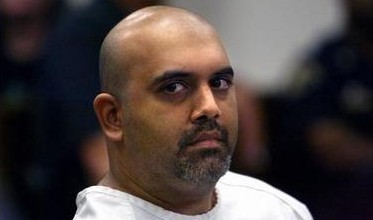 Naveed Afzal Haq
Murderer · USA · 2006
Name: Naveed Afzal Haq Naveed Afzal Haq was an American man of Pakistani descen…
1 victim
Naveed Afzal Haq
Murderer · USA · 2006
Name: Naveed Afzal Haq Naveed Afzal Haq was an American man of Pakistani descen…
1 victim
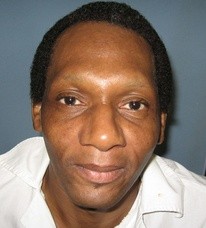 Jimmy Lee Dill
Murderer · USA · 1988
Jimmy Lee Dill was the defendant and death row inmate. · Leon Shaw was the vict…
1 victim
Jimmy Lee Dill
Murderer · USA · 1988
Jimmy Lee Dill was the defendant and death row inmate. · Leon Shaw was the vict…
1 victim
- Gender
- female
- Country
- USA
- Location
- Gwinnett County, Georgia, USA
- Date of birth
- 1968
- Age at first offence
- 29
- Characteristics
- —
- Victim profile
- Doug Gissendaner, 30 (her husband)
- Method of murder
- Stabbing with knife
- Date(s) of murder
- February 7, 1997
- Years active
- 1997
- Date of arrest
- —
- Status
-
Sentenced to death
Sentenced to death on November 20, 1998
Case details
Kelly Gissendaner was convicted in 1998 of recruiting her lover to kill her husband. The case concerned the murder of her husband, Doug Gissendaner, age 30.
Timeline
- February 7, 1997 — Kelly Gissendaner drove her lover, Gregory Owen, to her family's home, gave him a nightstick and a large knife, and left him inside to wait for the victim; Owen confronted Doug Gissendaner from behind, forced him to drive to a remote location, forced him to walk into the woods and kneel, and then killed him by striking him with the nightstick and stabbing him repeatedly in the back and neck with the knife.
- February 8, 1997 — After Doug Gissendaner disappeared, Gissendaner professed to be at a “total loss” and said she was racking her brain to figure out what happened.
- February 9, 1997 — Doug Gissendaner’s torched car was found in Dacula.
- April 30, 1997 — Gissendaner was indicted by the Gwinnett County Grand Jury for malice murder and felony murder.
- May 1, 1997 — Kelly Gissendaner and co-defendant Gregory Owen were indicted in the Superior Court of Gwinnett County on one count of malice murder and one count of felony murder.
- May 6, 1997 — The State filed its notice of intent to seek the death penalty against Kelly Gissendaner.
- November 2, 1998 — Gissendaner’s trial began.
- November 18, 1998 — The jury found Gissendaner guilty of malice murder and felony murder.
- November 19, 1998 — The jury fixed Gissendaner’s sentence at death.
- November 20, 1998 — Sentenced to death.
- July 5, 2000 — The Georgia Supreme Court decided Gissendaner v. The State.
- July 28, 2000 — Reconsideration denied.
- January 8, 2001 to January 15, 2001 — Gissendaner was scheduled to be put to death between these dates according to an execution order.
- December 13 and 14, 2004 — An evidentiary hearing was held in the Superior Court of DeKalb County.
- February 16, 2007 — The Superior Court of DeKalb County denied the habeas petition.
- January 9, 2009 — Gissendaner petitioned the federal court for a writ of habeas corpus.
- May 28, 2009 — The petition was amended.
- February 22, 2010 — The federal court dismissed some claims as procedurally defaulted and dismissed some as unexhausted.
- March 21, 2012 — The federal court denied the amended petition for a writ of habeas corpus.
Other details
U.S. Supreme Court: The U.S. Supreme Court denied Gissendaner’s petition for a writ of certiorari and her motion for rehearing. Court order: A federal district court order denied the amended petition for habeas corpus.
Background
Gissendaner and her husband had been married, divorced, remarried, separated, and reunited between 1989 and 1997. Gissendaner was in a relationship with Gregory Bruce Owen. At one point, she stated to a co-worker that she was unhappy with her husband and in love with Owen.
Before Gissendaner’s trial, Owen entered an agreement not to seek parole within 25 years, pled guilty, and received a sentence of life in prison. Owen testified at Gissendaner’s trial that it was she who first raised the idea of murder and that she later raised the idea again several other times. Owen suggested divorce as an alternative, but Gissendaner insisted upon murder because she believed she would receive insurance money from her husband’s death and because she believed he “wouldn't leave [her] alone by just divorcing him.”
Gissendaner previously stated to Owen’s sister that she intended to use the victim’s credit to get a house and then “get rid of him.”
Telephone records showed that Gissendaner and Owen made many contacts in the days leading up to the murder: she made 47 telephone calls to Owen and paged him 18 times; telephone records also showed that the pair were together at a bank of payphones several hours before the murder.
The offence
On the evening of February 7, 1997, Gissendaner drove Owen to her family’s home, gave him a nightstick and a large knife, and left him inside the home to wait for the victim. Gissendaner then drove to a friend’s house; she insisted that the group keep their plans for the evening, and she and her friends went out to a nightclub.
The victim arrived home shortly after 10:00 p.m. Owen confronted the victim from behind, held a knife to his throat, forced him to drive to a remote location, forced him to walk into the woods and kneel, and then killed him by striking him with the nightstick and then stabbing him repeatedly in the back and neck with the knife.
As instructed by Gissendaner, Owen took the victim’s watch and wedding ring before killing him to make the murder appear like a robbery. After the murder, Gissendaner returned home from the nightclub around the time the murder was being carried out, paged Owen with a numeric signal, and then drove to the crime scene. After inquiring if her husband was dead, she took a flashlight and went toward the body to inspect it.
Owen burned the victim’s automobile with kerosene provided by Gissendaner, and the pair returned to their respective homes in Gissendaner’s automobile.
Owen disposed of the nightstick, the knife, a pair of his own jeans, and the victim’s stolen jewelry by placing them in the garbage. A pair of Owen’s sweat pants also worn on the night of the murder was recovered, and DNA analysis of blood found on them showed a likely match with the victim’s and Owen’s blood.
The Georgia Supreme Court noted that the murder was a “malice murder” conviction, and the jury also fixed the sentence at death based on statutory aggravating circumstances.
Statutory aggravating circumstances found
The jury fixed Gissendaner’s sentence at death, finding as statutory aggravating circumstances that:
- the murder was committed during the commission of kidnapping with bodily injury, a capital felony; and
- Gissendaner caused or directed another to commit the murder.
Investigation and arrest
After the murder, Gissendaner concealed her relationship with Owen from police and claimed not to have initiated contact with him for some time. Telephone records, Owen’s testimony, and other witness testimony proved otherwise.
After her arrest, Gissendaner called her best friend and confessed to her active and willing role in the murder; she later called again and claimed she was coerced into participating.
Gissendaner wrote a letter while in jail in an effort to hire someone to give perjured testimony and to rob and beat witnesses.
In her police interview, her police interview statements were described as inadmissible for trial purposes because the Georgia Supreme Court ruled detectives illegally questioned her without a lawyer; her statements before her arrest were described as introduced.
Trial
Charges and convictions
Gissendaner was indicted on counts of malice murder and felony murder. After trial, the jury found her guilty of malice murder and felony murder. The felony murder conviction was vacated by operation of law.
The jury returned the death sentence after deliberating for 2 hours. Jurors rejected defense arguments that she should receive no worse than the actual killer and rejected arguments based on the needs of her children.
The lead prosecutor Phil Wiley told the jury:
- “Yes, Greg Owen took a knife and stabbed Doug Gissendaner to death, but Kelly Gissendaner is more responsible,” lead prosecutor Phil Wiley said.
- “She got him to do it. Why? Greed. Pure and simple greed. ”
- “Greg was Kelly's weapon in this case, her instrument.”
Gissendaner’s mother, Maxine Wade, said:
- “I beg all of you and I pray to God, don't give her the death sentence,” said Gissendaner's mother, Maxine Wade.
- “I think the death sentence would just destroy them.”
During voir dire, Gissendaner challenged rulings on motions related to change of venue and juror disqualification. The Georgia Supreme Court reviewed those issues and found the trial court acted within its discretion in denying a change of venue and in qualifying multiple jurors and rejecting other requests.
Motion for change of venue
The trial court reserved its ruling until after voir dire had been completed and denied the motion. The trial court excused 13 jurors upon Gissendaner’s motion based primarily upon their exposure to pretrial publicity: Waldrip; Myers; Krug; Jones; Chapman; Chappell; Henderson; Bullock; Teehan; Moreno; Hill; Hoffman; and Jackson. The trial court excused juror Foster based upon two defense arguments, one being exposure to pretrial publicity. The Georgia Supreme Court concluded that the number of excusals was not indicative of an inherently prejudicial environment requiring a change of venue.
Other pretrial and evidentiary rulings addressed on appeal
The Georgia Supreme Court discussed multiple additional trial issues, including:
- exclusion of certain hearsay testimony by a victim’s co-worker,
- admission of photographs and a videotape depicting the victim’s body as it was found at the crime scene and prior to autopsy,
- denial of a motion to have the jury view the crime scene,
- limitations on parts of closing argument,
- restrictions on voir dire questions on certain topics,
- rejection of a challenge to jury pool selection methods based on claimed racial discrimination.
Closing argument and prosecutorial remarks addressed on appeal
During closing argument, Gissendaner’s counsel stated:
- “[T]hrough the evidence, we have learned a lot about Doug Gissendaner. We know he was a healthy, strong individual. We know he outweighed Mr. Owen. We know he was tall. We know he worked as a mechanic, and we know that Doug Gissendaner had recently served in the United States Army. We know that in the United States Army he went through basic combat training. We know that he trained in combat arms. He was combat arms qualified. We know he was a tanker in the Army corps. We know he served in a combat theater in Desert Storm. And, therefore, we know that he had escape and evasion training.”
The trial court sustained an objection and stated:
- “Counsel can only comment on what's in evidence.”
Defense counsel also argued:
- “I would suggest to you as a reasonable inference from his service in the army and from his having served in a combat theater he was trained in how to defend himself in the woods.”
The trial court sustained the objection and stated:
- “That's testimony. It's not permissible.”
The Georgia Supreme Court discussed prosecutorial argument at sentencing and other asserted improper personal attacks, along with claimed prosecutorial references to “evil,” and concluded that the sentence should not be disturbed.
Sentencing
At the sentencing phase, Gissendaner sought to admit letters from her children to show their love for her. The trial court excluded the letters as hearsay but allowed the children’s grandmother to testify that the children had written letters to their mother in jail.
The Georgia Supreme Court reviewed the sentencing-phase evidentiary rulings and jury instructions on mitigating circumstances and concluded that the trial court did not err in excluding the letters. The Georgia Supreme Court also reviewed claims about sentencing-phase prosecutorial statements and found no harm and no basis to disturb the sentence.
Execution by electrocution was challenged under constitutional grounds. The Georgia Supreme Court stated that execution by electrocution was not cruel and unusual punishment and that Georgia’s death penalty statute was not unconstitutional.
Appeals
Georgia Supreme Court
Gissendaner v. The State was decided on July 5, 2000, with reconsideration denied on July 28, 2000. The Georgia Supreme Court affirmed both the conviction and the death sentence.
The opinion included a dissent by Chief Justice Benham, who concurred with the majority’s affirmance of guilt but dissented to Division 15 and the sentence based on reasons stated by Justice Sears in her dissent in Wilson v. State.
United States Supreme Court
The U.S. Supreme Court denied certiorari and denied a motion for rehearing.
Outcome
Gissendaner’s conviction for malice murder and her death sentence were affirmed on direct appeal by the Georgia Supreme Court.
Aftermath
A habeas corpus action was filed in federal court. The federal district judge denied the amended petition for writ of habeas corpus.
In the federal habeas proceedings, the court addressed:
- claims of ineffective assistance of counsel relating to mitigating evidence investigation, including alleged history of sexual abuse and mental health problems,
- claims challenging forensic evidence and crime scene/pathology/DNA evidence,
- claims about alleged failure to challenge Gregory Owen’s testimony adequately,
- claims of prosecutorial misconduct based on alleged Brady and Giglio violations,
- claims challenging proportionality review and other constitutional aspects of Georgia’s death penalty scheme,
- claims related to jury selection and jury instructions,
- claims related to victim impact evidence,
- claims related to admission of photographs and video evidence,
- claims challenging lethal injection procedures under the Eighth Amendment,
- and a claim of actual innocence.
The federal court denied the amended petition for a writ of habeas corpus.


Spotted an error, or have more information about this case?