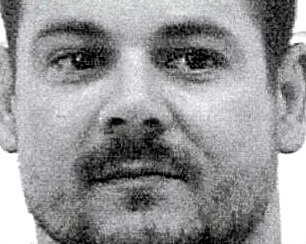
George Quesinberry
Murderer Brian Kevin Rosenfeld
Murderer · USA · 1985
Brian Kevin Rosenfeld Brian Kevin Rosenfeld was sentenced to three concurrent l…
23 victims
Brian Kevin Rosenfeld
Murderer · USA · 1985
Brian Kevin Rosenfeld Brian Kevin Rosenfeld was sentenced to three concurrent l…
23 victims
 Yahweh ben Yahweh
Murderer · USA · 1980
Yahweh ben Yahweh was born and legally named Hulon Mitchell Jr. (October 27, 19…
23 victims
Yahweh ben Yahweh
Murderer · USA · 1980
Yahweh ben Yahweh was born and legally named Hulon Mitchell Jr. (October 27, 19…
23 victims
 Russell Ellwood
Murderer · USA · 1991
Russell Ellwood was a former taxi driver. Authorities suspected him of killing…
20 victims
Russell Ellwood
Murderer · USA · 1991
Russell Ellwood was a former taxi driver. Authorities suspected him of killing…
20 victims
 Robert Martines Perez
Murderer · USA · 1994
Name: Robert Martines Perez · Other name used in proceedings: Robert Martinez P…
15 victims
Robert Martines Perez
Murderer · USA · 1994
Name: Robert Martines Perez · Other name used in proceedings: Robert Martinez P…
15 victims
 Ernest Marvin Carter
Murderer · USA · 1990
Ernest Marvin Carter was executed by lethal injection in Oklahoma on December 1…
1 victim
Ernest Marvin Carter
Murderer · USA · 1990
Ernest Marvin Carter was executed by lethal injection in Oklahoma on December 1…
1 victim
 Robert Lee Faulkner
Murderer · USA · 1999
Robert Lee Faulkner was convicted of first degree premeditated murder of his wi…
1 victim
Robert Lee Faulkner
Murderer · USA · 1999
Robert Lee Faulkner was convicted of first degree premeditated murder of his wi…
1 victim
 Eleanor Jarman
Murderer · USA · 1933
Eleanor Jarman was born in 1904. She was the youngest of eight children born to…
1 victim
Eleanor Jarman
Murderer · USA · 1933
Eleanor Jarman was born in 1904. She was the youngest of eight children born to…
1 victim
 Robert Rimmer
Murderer · USA · 1998
Robert Rimmer was indicted in a case involving 11 counts: two counts of First-D…
2 victims
Robert Rimmer
Murderer · USA · 1998
Robert Rimmer was indicted in a case involving 11 counts: two counts of First-D…
2 victims
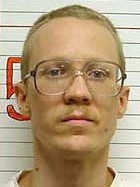 Paul Kreutzer
Murderer · USA · 1992
Paul Kreutzer lived less than a quarter of a mile from the Hemphill residence i…
1 victim
Paul Kreutzer
Murderer · USA · 1992
Paul Kreutzer lived less than a quarter of a mile from the Hemphill residence i…
1 victim
- Gender
- male
- Country
- USA
- Location
- Chesterfield County, Virginia, USA
- Date of birth
- 1961
- Age at first offence
- 28
- Characteristics
- robbery, murder for hire, abuse, rape
- Victim profile
- Thomas L. Haynes, 63
- Method of murder
- Shooting ( .45-cal. Remington semi-automatic)
- Date(s) of murder
- September 24, 1989
- Years active
- 1989
- Date of arrest
- Same day
- Status
-
Executed
Executed by lethal injection in Virginia on March 9, 1999 after Gov. Jim Gilmore declined clemency and the U.S. Supreme Court denied a stay
Case record: George Quesinberry
Status
George Adrian Quesinberry Jr. was executed by lethal injection at the Greensville Correctional Center in Virginia on March 9, 1999; he was pronounced dead at 9:07 p.m. The U.S. Supreme Court denied a stay and Gov. Jim Gilmore declined to grant clemency.
When asked for a final statement, Quesinberry said: "I just want my family to know I love them, and to the victim's family I am sorry for what I've done."
Background
George Quesinberry was born into a childhood marked by family violence, including the following accounts and statements:
- When he was 2 years old, his mother shot herself to death in front of him, and relatives said he was covered with her blood.
- Relatives said he was raped by his paternal grandfather before he was 4 years old.
- Relatives said he was beaten during a childhood spent shuttling between Texas and Virginia, including being beaten with a belt at times so severely it drew blood.
- His childhood included physical and mental abuse described by family members and by counsel in clemency materials.
- A maternal aunt, Lana David, gave a deposition that accompanied the clemency petition. David said she attended Shirley's funeral and learned from George Sr. and other family members what had happened. She said George and his sister Rhonda had seen their mother when she was killed, and that George was found covered with blood.
- David said that when George and Rhonda came to live with her, they “were in terrible condition. They were filthy and malnourished. They both woke up screaming in the middle of the night from nightmares, and they carried on imaginary conversations with their mother.”
- A clinical neuropsychologist, Robert P. Hart, gave an affidavit. Hart stated that “Mr. Quesinberry witnessed his mother's violent death when he was about 2 years and 3 months old.” Hart also wrote: “He was reportedly raped by his paternal grandfather before he was four years old.” Hart wrote that he “suffered physical abuse that was sometimes severe at the hands of his stepgrandfather and father throughout early childhood and adolescence,” and that “The records I have received indicate that Mr. Quesinberry suffered extensive emotional, physical and sexual abuse and trauma during childhood.”
- Quesinberry had an undiagnosed learning disability and dropped out of school in 1978 after completing the 8th grade.
- In 1976, when he was 14 years old, he was shot in the abdomen in a hunting accident.
- Quesinberry later suffered two serious head injuries.
- His lawyer, A. Peter Brodell, sought clemency and argued that Quesinberry had been abused as a child; Brodell wrote: "He is not a sociopathic killer," and "Instead, he is a man who suffered horrible physical and mental abuse throughout his childhood."
- Brodell also argued that Quesinberry’s traumatic experiences contributed to his response when confronted by Thomas Haynes, and that trial counsel failed to have mental health experts testify.
The offence
Offence setting and intent
In the late night/early morning hours of September 24, 1989, George Quesinberry visited a friend at a trailer court in Prince George County. Eric Hinkle also was present. The three got drunk drinking rum. Quesinberry suggested breaking into the office and warehouse of the Tri-City Electric Supply Co. in Chesterfield County.
Quesinberry bought electrical supplies at the business and was familiar with its premises.
Entry and weapon retrieval
Quesinberry and Eric Hinkle drove to Quesinberry's stepmother's home and picked up a handgun, a .45-cal. Remington semi-automatic. They arrived at the business at approximately 6 a.m.
Quesinberry pried open a rear door with a screwdriver, and the two entered and began rummaging through offices.
Theft during the burglary
They found a desk with a locked drawer. Quesinberry fired a shot, breaking the lock. They found a box of money in a cabinet.
In the warehouse, Quesinberry and Hinkle stole:
- a pair of walkie-talkies
- three rolls of stamps
- rolls of coins
Investigation and arrest
Thomas L. Haynes, 63, arrived at the office, turned on the lights, and discovered Hinkle and Quesinberry. Haynes, who was unarmed, fled.
Quesinberry chased Haynes, firing as he ran. One gunshot wound severed Haynes' spinal cord. Another shot was fired with the muzzle pressed against Haynes' back.
Later, when Haynes tried to push himself up, Quesinberry struck him a hard blow in the head with the handgun, fracturing his skull.
Quesinberry and Hinkle learned of Haynes' death from a television report.
Hinkle turned himself in to police at 7 that night and implicated Quesinberry. When police confronted Hinkle, Quesinberry told them where they could find the murder weapon and his share of the $200 in coins that had been taken from the business.
Quesinberry was arrested and, after being advised of his rights, gave a detailed statement to the police describing his role in the murder.
Trial
Charges
Quesinberry was convicted of:
- capital murder
- breaking and entering with the intent to commit larceny and robbery
- the use of a firearm in the commission of a burglary, robbery, and capital murder
He was also described as being tried for capital murder and robbery.
Indictment and verdicts
On January 22, 1990, a Chesterfield County, Virginia, grand jury indicted Quesinberry for capital murder, breaking and entering with the intent to commit larceny and robbery, and the use of a firearm in the commission of burglary, robbery, and murder.
On May 2, 1990, Quesinberry was convicted of all charges.
Penalty phase
During the penalty phase of the trial, the jury found that the statutory aggravating circumstances of "future dangerousness" and "vileness" applied to Quesinberry.
On May 4, 1990, Quesinberry was sentenced to death.
Jury instructions issue (right not to testify)
The court record included the trial judge’s instructions about Quesinberry’s right not to testify.
The state judge told the jury at the beginning of the trial that Quesinberry might not testify and that if he did not testify "the Fifth Amendment of the Constitution prevented the jury from considering that." Quesinberry, 241 Va. at 375, 402 S.E.2d at 225.
During the course of the proceedings, defense counsel presented an instruction that stated: "[t]he defendant does not have to testify. The exercise of that right cannot be considered by you." Quesinberry, 241 Va. at 375 n.4, 402 S.E.2d at 225 n.4.
Quesinberry chose not to testify.
When the trial judge read the jury instructions, he inadvertently omitted the instruction that Quesinberry's failure to testify could not be held against him. The trial judge also reminded the jury not to talk among themselves at lunch in the custody of the sheriff: "[B]ecause the case is still going on and there are other mat-ters of such severity that you must consider, do not talk among yourselves; do not let anybody talk to you; do not let anybody approach you; do not respond to any comments; try to avoid what would be inadvertent communication from anyone of any source."
After realizing the omission, the trial judge notified counsel of the omitted instruction. Quesinberry moved for a mistrial, and the judge denied the motion. The judge then told the jury: "You are instructed that the defendant does not have to testify. The exercise of that right cannot be considered by you."
The judge also told the jury to consider this instruction along with the other instructions and the evidence, and asked them to retire and state their verdict in written form; about 15 minutes later, the jury returned a verdict finding Quesinberry guilty.
Sentencing
Quesinberry received a sentence of death after the jury found that "future dangerousness" and "vileness" applied.
The Virginia Supreme Court affirmed the convictions and sentence of death. The U.S. Supreme Court denied certiorari.
Appeals
Direct appeal and post-conviction overview
Quesinberry appealed to the Supreme Court of Virginia. The record referenced that he did not allege ineffective assistance of trial counsel on the direct appeal.
State habeas
Quesinberry filed his state habeas corpus petition on April 20, 1993 with the help of two court-appointed attorneys. The petition was denied on March 3, 1994. The Supreme Court of Virginia denied his appeal on December 8, 1994, and his petition for rehearing on January 13, 1995. The U.S. Supreme Court denied certiorari on June 19, 1995 (Quesinberry v. Murray).
Federal habeas and appeal to the Fourth Circuit
On April 19, 1996, Quesinberry filed his first federal petition for a writ of habeas corpus with assistance of court-appointed counsel.
On October 20, 1997, the district court dismissed the petition, issuing a 53-page memorandum opinion, and it subsequently granted a certificate of probable cause. The appeal followed to the U.S. Court of Appeals for the Fourth Circuit.
The Fourth Circuit identified the case as: UNITED STATES COURT OF APPEALS FOR THE FOURTH CIRCUIT No. 98-3 GEORGE ADRIAN QUESINBERRY, JR., Petitioner-Appellant, v. JOHN TAYLOR, Warden, Sussex I State Prison, Respondent-Appellee.
The appeal included information on the lower court: Appeal from the United States District Court for the Eastern District of Virginia, at Richmond. Robert E. Payne, District Judge. (CA-95-883-3)
The panel included NIEMEYER and MOTZ, Circuit Judges, and BUTZNER, Senior Circuit Judge.
The case dates included: Argued: September 21, 1998 Decided: December 7, 1998
The court’s disposition was: VI The judgment of the district court is affirmed.
The opinion described four issues raised by Quesinberry:
- Whether the district court erroneously held that Quesinberry could not establish cause to explain procedural default resulting from refusal of state habeas counsel to pursue meritorious claims.
- Whether the district court erred when it applied a procedural bar to Quesinberry’s claim that the trial court violated his Fifth Amendment rights relating to jury instructions about his right not to testify and related procedures.
- Whether the district court erred in holding that trial counsel were not ineffective for failing to interview Eric Hinkle or otherwise discover information he possessed.
- Whether the district court erred in finding that good cause had not been shown to grant discovery-related motions.
Fifth Amendment instruction issue (procedural default)
The opinion stated that during the trial, the judge read instructions about the defendant’s Fifth Amendment rights, omitted the “cannot be held against him” instruction, later reinstructed the jury after lunch, denied a mistrial motion, and the jury returned a guilty verdict.
The Fourth Circuit held that the claim was procedurally defaulted, based on failure to exhaust a federal constitutional claim in state court when it had been framed differently on direct appeal.
Ineffective assistance and Eric Hinkle issue
The opinion stated that the Commonwealth used Eric Hinkle only in the penalty stage of the trial and that Hinkle’s testimony did not substantially deviate from Quesinberry's confession. It also stated that Quesinberry’s counsel conducted a private investigator interview with Hinkle twice; additional interviews were objected to by Hinkle’s counsel. It also stated that counsel moved for discovery and the Commonwealth opened its files, providing the transcript of Hinkle’s interview with the police.
The opinion described that Hinkle testified that he saw Quesinberry strike the victim with a pistol once and heard more blows. Hinkle admitted on cross-examination that he had previously stated Quesinberry hit Haynes only once, that Hinkle had been drinking the night of the murder, and that Hinkle expected to benefit from his testimony.
The opinion stated that Hinkle’s testimony was consistent with the medical examiner’s; based on autopsy and photographs, the Supreme Court found at least two blows to the victim’s head.
The opinion stated that Quesinberry failed to establish prejudice under the Strickland standard.
Discovery good cause issue
The opinion stated that Rule 6(a) of the Rules Governing Section 2254 Cases requires a habeas petitioner to show good cause before an opportunity for discovery. It stated that the district court’s decision on good cause is reviewed for abuse of discretion. It concluded that Quesinberry’s requests for discovery were without merit and that the district court did not abuse its discretion in denying them.
Outcome
Clemency petition and executive decision
A clemency petition was filed with Gov. Jim Gilmore and lawyers sought clemency and an interview with representatives of the governor.
Quesinberry’s lawyer, A. Peter Brodell, asked Gilmore for clemency and wrote: "He is not a sociopathic killer." "Instead, he is a man who suffered horrible physical and mental abuse throughout his childhood."
Brodell also complained that Quesinberry's trial lawyers had failed to have mental health experts testify on behalf of their client. Brodell wrote: "After the shooting Mr. Quesineberry was devastated by what he had done. . . . Mr. Quesinberry was so upset he contemplated committing suicide, but he did not do so because he had been taught that suicide was an unforgiveable sin."
Brodell argued: "the jury would have learned that Mr. Quesinberry suffers from neurological and psychological dysfunctions that inhibit his ability to openly express remorse." "The jury would have understood that Mr. Quesinberry's fear when he was unexpectedly confronted by Mr. Haynes triggered an extreme response traceable to Mr. Quesinberry's traumatic experiences of violence."
Brodell continued: "Such information is not simply something that could have made the jury 'feel sorry' for Mr. Quesinberry. Rather, the patterns of abuse that he suffered and the resulting behavioral dysfunctions . . . are absolutely essential to understanding the tragic confluence of events that confronted Mr. Quesinberry in Tri-City,"
Brodell also wrote that Quesinberry was “Crippled by undiagnosed (though curable) psychological dysfunction, a lack of formal education, and substance abuse,” and that he nevertheless had never hurt anyone until confronted by Tommy Haynes.
Gilmore declined to intervene. Gilmore said: "Upon a thorough review of the Petition for Clemency, the numerous court decisions regarding this case and the circumstances of this matter, I decline to intervene,"
Gilmore was described as noting that Quesinberry admitted to killing Haynes and that there had never been any question as to the condemned man’s guilt.
Statement by Governor Jim Gilmore regarding the execution
In a statement titled “Statement by Governor Jim Gilmore Regarding the Execution of George Quesinberry,” Gov. Jim Gilmore said: "After violating his probation for a prior conviction, George Quesinberry shot and murdered Thomas L. Haynes during a robbery at Mr. Haynes' place of business in Chesterfield County. Quesinberry shot Mr. Haynes twice in the back. The first bullet severed Mr. Haynes' spine and he fell to the ground unable to walk but still alive. Quesinberry then placed his .45 caliber pistol against Mr. Haynes' back and shot him a second time as he lay on the floor. Mr. Haynes was still alive when Quesinberry hit him in the head with his gun before leaving. Mr. Haynes subsequently died of the gunshot wounds.
"Quesinberry was tried for capital murder and robbery. Quesinberry admitted to the murder. A jury convicted Quesinberry on both counts and sentenced him to death. After reviewing all of the evidence, the judge imposed the death sentence. The convictions and death sentence were upheld on multiple appeals. There never has been any question as to Quesinberry's guilt.
Victim family statements
Haynes' relatives described Haynes as kind and community-oriented and always willing to help people who felt they had not been given a chance.
Haynes' widow, June Haynes-Garrett, said: "He was a fantastic person." "He would have given those jerks (who killed him) probably a job or some money, you know, if they really needed it."
June Haynes-Garrett said her husband was killed three days before their 40th wedding anniversary and that: "We had planned a trip,'' "We were going to Cancun."
One of Haynes’ daughters, Elizabeth Fabian, said: "I don't think that his background is an excuse for what he did," "I just don't feel that that's an excuse."
Aftermath
Quesinberry was baptized a few hours before he was put to death.
Among his last visitors were his father, stepmother, 2 sisters and 2 brothers, prison officials said.
The execution took place after the U.S. Supreme Court voted 7-2 to deny Quesinberry’s appeal and request for a stay, and after Gov.
Spotted an error, or have more information about this case?