John James Alcott
Murderer Ernesto Picchioni
Murderer · Italy · 1944
March 12, 1949 — He was sentenced to life in prison. · 2016 — The case record l…
16 victims
Ernesto Picchioni
Murderer · Italy · 1944
March 12, 1949 — He was sentenced to life in prison. · 2016 — The case record l…
16 victims
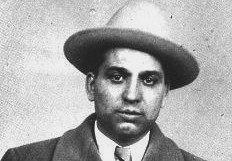 Harry Maione
Murderer · USA · 1937
Harry “Happy” Maione (1908 – February 19, 1942) was a New York mobster who serv…
12 victims
Harry Maione
Murderer · USA · 1937
Harry “Happy” Maione (1908 – February 19, 1942) was a New York mobster who serv…
12 victims
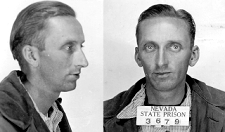 Luther Jones
Murderer · USA · 1936
Luther Jones Luther Jones was executed by asphyxiation-gas in Nevada on January…
4 victims
Luther Jones
Murderer · USA · 1936
Luther Jones Luther Jones was executed by asphyxiation-gas in Nevada on January…
4 victims
 Albert Dyer
Murderer · USA · 1937
Albert Dyer was a 32-year-old WPA crossing guard and traffic guard at Centinela…
3 victims
Albert Dyer
Murderer · USA · 1937
Albert Dyer was a 32-year-old WPA crossing guard and traffic guard at Centinela…
3 victims
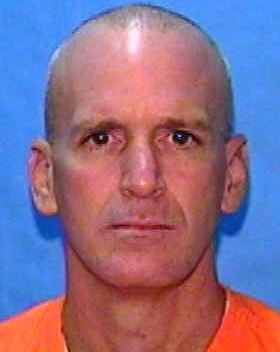 Bryan Frederick Jennings
Murderer · USA · 1979
Bryan Frederick Jennings was born on 12/09/58 and was tried in the Eighteenth J…
1 victim
Bryan Frederick Jennings
Murderer · USA · 1979
Bryan Frederick Jennings was born on 12/09/58 and was tried in the Eighteenth J…
1 victim
 George Ochoa
Murderer · USA · 1993
Name: George Ochoa · Age: 38 (at execution) · Place: Oklahoma State Penitentiar…
2 victims
George Ochoa
Murderer · USA · 1993
Name: George Ochoa · Age: 38 (at execution) · Place: Oklahoma State Penitentiar…
2 victims
 Hélène Jégado
Serial killer · France · 1833
Hélène Jégado (1803–1852) was a French domestic servant and poisoner. She was e…
23 victims
Hélène Jégado
Serial killer · France · 1833
Hélène Jégado (1803–1852) was a French domestic servant and poisoner. She was e…
23 victims
 Robert Vannoy Black
Murderer · USA · 1985
Robert Vannoy Black, Jr. was convicted in a Texas court of hiring a man to kill…
1 victim
Robert Vannoy Black
Murderer · USA · 1985
Robert Vannoy Black, Jr. was convicted in a Texas court of hiring a man to kill…
1 victim
 Christina Marcum
Murderer · USA · 2011
Christina Marcum was sentenced to 30 years in prison for her role in the murder…
1 victim
Christina Marcum
Murderer · USA · 2011
Christina Marcum was sentenced to 30 years in prison for her role in the murder…
1 victim
- Gender
- male
- Country
- Germany/United Kingdom
- Location
- Germany/United Kingdom
- Date of birth
- 1925
- Age at first offence
- 20
- Characteristics
- robbery
- Victim profile
- Peter Helm / Geoffrey Charles Dean, 28
- Method of murder
- Beating with a fire extinguisher and empty whisky bottle / St abbing with knife
- Date(s) of murder
- 1945 / 1952
- Years active
- 1945–1952
- Date of arrest
- —
- Status
-
Executed
Executed by hanging at Wandsworth Prison on 2nd January 1953
Identity
John James Alcott was the accused.
Background
Alcott was born in 1925. His early life was rather strange. His father left home to serve in the abroad army during World War II and young John would leave home and wander around the countryside for days. During his adolescence he managed to acquire a couple of convictions for petty offences including one which earned him a spell in an approved school. He later joined the Grenadier Guards and was posted to Germany. He claimed to experience black-outs and, following one such attack, he wandered off into the German countryside. He was joined by a Czech who was trying to reach France. One evening during their travels they stopped at a small lodging-house.
According to Alcott, the night watchman there, Peter Helm, offered the pair coffee and then threw the boiling coffee over them. Alcott responded by attacking the man. The Czech then joined in and smashed Helm over the head with a fire extinguisher and empty whisky bottle. The pair fled. They were picked up a couple of days later when they discovered that the watchman had died.
Alcott was charged with murder and was tried by court martial. He was found guilty but, because his mother, as next-of-kin, had not been informed that he was being tried, he was given a pardon and freed. He was discharged from the army and returned to England. He became a fireman and married, living in Hither Green.
The offence
In August 1952 Alcott was due to go on holiday to France with his wife. He told his wife that he was going to pick up his holiday pay, but went to Aldershot instead. He found lodgings and spent several days shopping for clothes in the town. He also visited Ash Vale railway station. Here he introduced himself to the clerk, 28-year-old Geoffrey Charles 'Dixie' Dean, as a fellow railway worker. Alcott visited Dean on several days. One of Dean's duties was to count the money taken by the fares office before locking the money in the station's safe. It is likely that Alcott was present during one of these counting sessions.
At 9pm on August 22nd a porter noticed that there was still a light on in the station office. When he looked in through the window he saw the bleeding body of Dean on the floor. Police broke down the office door and found that Dean had been stabbed over twenty times. About £168 was missing from the safe. Police enquiries centred on boarding houses. At one of them they found a blood-stained jacket that had two bloody ten shilling notes in a pocket. In another pocket was a passport in the name of John James Alcott.
The incident was also described as occurring on the night of Friday, 22nd August, 1952, when Geoffrey was brutally murdered in the booking office whilst on duty. Dean was stabbed by his assailant 20 times and the sum of £160 was stolen by the murderer from the office. The booking clerk handed over the tickets and date stamps to the senior porter at about 7.45 pm and said he would be working late on his accounts.
It was established that about 8.45 pm, a soldier went to the booking office, found it closed, and heard shuffling of feet inside described as “like two men larking about in a barrack room”, and what he thought was “two voices”. The soldier rapped on the ticket window and then saw the notice on the window informing passengers that tickets were issued by the porter on the platform after 8 pm. The murder was discovered at about 8.55 pm by a young junior porter. He noticed a light still on in the booking office, climbed on the outside sill of the booking office window, and saw the legs of a man lying on the floor in a pool of blood. He also saw that the safe was open. The Station Master was called and upon arrival at about 9.20 pm ordered the door of the booking office to be forced open. Upon entering, he saw the body of young Dean lying face upwards, covered with blood, and large pools of blood on the floor. The office safe was wide open and on the floor near to the safe was a bunch of keys and some paper bags containing coppers and other articles.
Investigation
In a short time Divisional Superintendent ROBERTS and other officers, including B.T.C. Police, arrived at the station about 9.45 pm. Intensive and widespread enquiries were set on foot. A waiting room at Ash station was commandeered and a Police Incident Room was set up there.
Early the next morning (Saturday, 23rd August, 1952), G.P.O. engineers connected a special telephone line to the room. One of the lines of enquiry initiated was a systematic check of all hotels, lodging houses, etc. in the neighbourhood, including the town of Aldershot.
During the Saturday morning two officers visited a house in Victoria Road, Aldershot, the occupier of which was known to occasionally take in lodgers. As a result of this visit, the officers went to a first floor bedroom of the house. On the bed they found a blood-stained jacket. In the pocket of this jacket they discovered, inter alia, a blood-stained wallet containing a British passport and two 10/- Treasury notes badly stained with blood. The Superintendent in charge of the Incident H.Q. at Ash Vale station was immediately informed and the officers were instructed to remain at the premises and question the owner of the jacket, should he return.
The police direction of investigations into the murder was under Detective Superintendent ROBERTS of the Surrey Constabulary, with the co-operation of the Hampshire Constabulary, and the B.T.C. Police.
Superintendent Roberts’ report to the Director of Public Prosecutions included the statement:
"Many of the Hants officers, as well as our own men worked from the early hours of the morning of the 23rd August until after midnight on the 24th with very little respite and they all did it willingly, readily doing anything asked of them"
Chief of Police Walter E. WOOD and Detective Superintendent John SHEARING attended the scene and put themselves and other officers at disposal for any enquiry.
With their help, and the assistance of the G.P.O., a large waiting room on the station platform was turned into an office and was ready for use by 8 am on the morning of the 23rd. By 10 am the G.P.O. had installed the telephone. Although only required for forty-eight hours, it enabled contacts and interviews right on the spot, described as difficult without the facilities.
Investigators included Dr. Arthur Keith MANT of the Department of Forensic Medicine, Guy’s Hospital, who gave evidence on the autopsy of the body. He said he found:
- a stab wound behind the right ear which had severed the jugular vein and the lingual artery
- nine stab wounds in the back of the chest
- seven in the front of the chest, one of which had been done with great violence and had passed through the breast bone and the heart
- wounds on the face, in the abdomen, arms and legs
The Director of the Metropolitan Police Laboratory gave evidence that the blood stains on the jacket, trousers and shoes of the accused, on the sheath knife and towel in the booking office were all of the same group “O” as that of the deceased. He also said maroon-coloured fibres found on the knife were similar to the fibres of the pullover which DEAN was wearing when he was murdered.
Apart from admission, a long chain of evidence was built up and twenty-four witnesses, including the soldier, bus conductors, tradesmen, etc., were called to give evidence at the trial.
Arrest
At 11.15 pm on Saturday, 23rd August, 1952, Alcott returned to the room and was arrested. In his pocket was found a roll of Treasury notes (£109 l0s.0d.), secured with an elastic band. Alcott said:
"That's some of the money"
He made a statement implicating himself in the crime.
Whilst awaiting transport to take him to the Police Station he told officers that the knife with which he had committed the crime was hidden in the chimney of the room he had occupied. The chimney was searched, and the knife in a leather sheath and a number of Railway documents were found there.
Alcott had been in Aldershot all the time between the murder and his arrest. During that day he purchased a new sports jacket, a pair of grey flannel trousers and a pair of shoes. These articles replaced those worn when the crime was committed. The jacket was found at his lodging, the trousers had been hidden in some gorse bushes in the neighbourhood, and the shoes had been left at a local shop for repairs. Persistent search and enquiry traced them all.
Trial
Alcott’s trial began at Kingston Assizes on 18th November. He was tried before Mr. Justice FINNEMORE. He was found guilty and sentenced to death.
Alcott claimed he had experienced another black-out and had no idea why he had killed the man, or even why he was in Aldershot. His defence failed to convince the jury and they returned a guilty verdict.
He was also described as having appealed on the grounds of insanity, and his appeal was dismissed.
Sentencing
Alcott was sentenced to death.
Appeals
His appeal on the grounds of insanity was dismissed.
Outcome
Alcott was hanged at Wandsworth Prison on 2nd January 1953.
Other details
Alcott’s wife had last seen him prior to his arrest. He did not return home after leaving for the Depot to collect holiday pay.
A porter and a Station Master were involved in discovering the murder and forcing entry to the booking office.
The passport found during the investigation was in the name of John James Alcott. About £168 was missing from the safe; about £160 was described as stolen from the office; and Alcott turned over £109 that he had in his pockets. The jacket contained two bloody ten shilling notes.
Before the Ash Vale murder, Alcott was tried by court martial for the killing of Peter Helm, was found guilty, but received a pardon because his mother had not been informed that he was being tried.


Spotted an error, or have more information about this case?