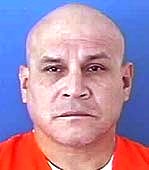
John Walter Castro
Murderer Brian Kevin Rosenfeld
Murderer · USA · 1985
Brian Kevin Rosenfeld Brian Kevin Rosenfeld was sentenced to three concurrent l…
23 victims
Brian Kevin Rosenfeld
Murderer · USA · 1985
Brian Kevin Rosenfeld Brian Kevin Rosenfeld was sentenced to three concurrent l…
23 victims
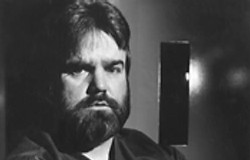 Marvin Gray
Murderer · USA · 1975
Marvin Gray was convicted killer who claimed responsibility for 23 slayings and…
23 victims
Marvin Gray
Murderer · USA · 1975
Marvin Gray was convicted killer who claimed responsibility for 23 slayings and…
23 victims
 Yahweh ben Yahweh
Murderer · USA · 1980
Yahweh ben Yahweh was born and legally named Hulon Mitchell Jr. (October 27, 19…
23 victims
Yahweh ben Yahweh
Murderer · USA · 1980
Yahweh ben Yahweh was born and legally named Hulon Mitchell Jr. (October 27, 19…
23 victims
 Russell Ellwood
Murderer · USA · 1991
Russell Ellwood was a former taxi driver. Authorities suspected him of killing…
20 victims
Russell Ellwood
Murderer · USA · 1991
Russell Ellwood was a former taxi driver. Authorities suspected him of killing…
20 victims
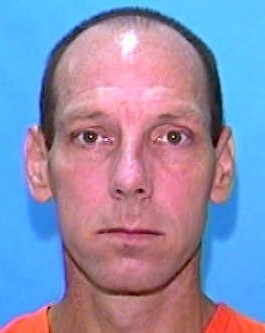 William Happ
Murderer · USA · 1986
Name: William Happ · Prisoner number / identifier: DC# 117027 · Date of birth:…
1 victim
William Happ
Murderer · USA · 1986
Name: William Happ · Prisoner number / identifier: DC# 117027 · Date of birth:…
1 victim
 Martha Freeman
Murderer · USA · 2005
Martha Freeman was convicted, together with Rafael DeJesus Rocha-Perez, of firs…
1 victim
Martha Freeman
Murderer · USA · 2005
Martha Freeman was convicted, together with Rafael DeJesus Rocha-Perez, of firs…
1 victim
 Carl Chichester
Murderer · USA · 1991
Carl Chichester · Carl Hamilton Chichester — defendant; was convicted of capita…
1 victim
Carl Chichester
Murderer · USA · 1991
Carl Chichester · Carl Hamilton Chichester — defendant; was convicted of capita…
1 victim
- Gender
- male
- Country
- USA
- Location
- Oklahoma, USA
- Date of birth
- 1961
- Age at first offence
- 22
- Characteristics
- robbery, drugs
- Victim profile
- Beulah Grace Sissons Cox, 31 (Oklahoma State University student) and Rhonda Pappan, 29 (restaurant employee)
- Method of murder
- Shooting / St abbing with knife
- Date(s) of murder
- April/June 1983
- Years active
- 1983
- Date of arrest
- June 6, 1983
- Status
-
Executed
Executed by lethal injection on January 7, 1999 in Oklahoma
Case details
John Walter Castro was executed by lethal injection in Oklahoma on January 7, 1999.
Timeline
- April 18, 1983 — John Walter Castro murdered Oklahoma State University student Beulah Grace Sissons Cox.
- June 6, 1983 — John Walter Castro entered Hobo-T’s restaurant in Ponca City, Oklahoma, and murdered employee-manager Rhonda Pappan during a robbery.
- April 17, 1984 — A jury in Kay County, Oklahoma found John Walter Castro guilty of armed robbery and felony-murder.
- July 6, 1983 — Counsel filed a “Motion to Obtain Medical Examination of Defendant.”
- July 15, 1983 — Just prior to being admitted to Eastern State Hospital, John Walter Castro began a 3-day fast as a suicide attempt.
- July 20, 1983 — After admission to Eastern State Hospital, John Walter Castro made suicide threats.
- July 21, 1983 — John Walter Castro refused to eat or take medication.
- July 22, 1983 — John Walter Castro became combative over cigarettes and was placed in four-point restraints; he was administered Vistaril.
- July 27, 1983 — John Walter Castro was involved in an escape attempt at Eastern State Hospital; he was again placed in four-point restraints and given two injections of Thorazine.
- December 14, 1983 — A pretrial motion hearing addressed the need for psychiatric/mental-health expert assistance.
- January 3 — Trial was set for “January 3rd or shortly thereafter.”
- 12:22 a.m. — John Walter Castro was declared dead at the Oklahoma State Penitentiary.
- February 4 — Sean Sellers faced execution after being convicted in 1986 killings at age 16.
- More than a month before execution — The U.S. Supreme Court rejected Castro’s last appeal.
- Last month before execution — The Oklahoma Pardon and Parole Board voted 4-0 to deny clemency.
Background
John Walter Castro met Beulah Grace Sissons Cox near an Oklahoma City bus station and she agreed to give him a ride. John Walter Castro was hitchhiking. He was also awaiting resentencing after receiving the death penalty for the June 6, 1983, stabbing death of Rhonda Pappan, 29, a Ponca City restaurant employee whom he killed during a robbery.
Castro later stated, “If I hadn't been caught and stopped, I probably would have killed someone else,” and he said he was “not sure why” he killed the women. During remarks near execution, Castro turned to look toward a room where relatives of his victims were watching and said:
“I don't who's behind that one-way glass but whoever is here from the Cox family, I am sorry for what I did. And anybody who is here from the Pappan family I am sorry. For the people who are here for me, thank you.”
Castro also made mention of death penalty opponents praying for him outside the prison, and of Sean Sellers:
“My son wanted to be here. They say he can't because he's 16 and that's too young to witness an execution. If that is so, why can the state of Oklahoma convict, sentence to death and execute a 16-year-old child. I just don't understand.”
Castro then glanced at his witnesses and said:
“I love you. Let's do it.”
Moments later, Castro said:
“I feel it,” and closed his eyes before being pronounced dead several minutes after that.
The offence
Murder of Beulah Grace Sissons Cox
John Walter Castro was sentenced to die for the April 18, 1983, murder of Oklahoma State University student Beulah Grace Sissons Cox. Cox was 31.
Castro stole Cox’s car at gunpoint after meeting her near an Oklahoma City bus station and she agreed to give him a ride. Castro assured Cox that he wouldn’t kill her but shot her in the head several times. Cox’s body was found 4 months later in rural southern Noble County near Lake McMurtry.
A joint statement by members of the victims’ families said Cox left behind children ages 6 and 10:
“These 4 young children were forced to grow into young adults without the love, care and understanding of the mothers whom they loved very much,” and: “Although nothing can change the fact that our loved ones are gone, we can feel some form of closure in the fact that the judicial process has finally concluded.”
Murder of Rhonda Pappan during robbery at Hobo-T Restaurant
Castro killed Rhonda Pappan, 29, about 3 months after the Cox killing, while robbing the Hobo-T Restaurant in Ponca City. Pappan was the owner-manager. Pappan picked up a knife but was overpowered by Castro. Castro stabbed Pappan in the neck, back and chest.
Pappan’s body was not described as being found in the provided material, and the case record contained references to the bodies not being found elsewhere; however, the specific “body was never found” / “the bodies were never found” phrases were not tied to this case outcome within the provided content.
Investigation and arrest
On June 6, 1983, Castro entered Hobo-T’s restaurant in Ponca City, Oklahoma. He purchased a soft drink, played a video game, and spoke with the employee-manager Rhonda Pappan. Later that same afternoon, Castro returned to the restaurant. After again talking to Pappan, Castro asked her if they “needed help.” When she turned around to retrieve a job application, Castro pulled an unloaded .25 pistol from his pocket and demanded she open the cash register.
According to Castro, while he was rummaging through either the register or Pappan’s purse, Pappan pulled a knife on him and they struggled. During the struggle, Castro stabbed Pappan multiple times killing her.
That night, the police apprehended Castro at his home. After he consented to a search, the police found a .25 pistol, bloody clothing, and other forensic evidence of the crime. At the police station, after changing his story three times, Castro ultimately confessed to Pappan’s murder.
Trial
Guilty verdict and penalty-phase findings
Castro was found guilty by a jury in Kay County, Oklahoma, on April 17, 1984, of armed robbery and felony-murder. He received sentences of death for the felony-murder and life imprisonment for the armed robbery.
The jury rejected counsel’s argument during closing argument that Castro was only guilty of second degree murder because he never formed the requisite intent to kill Pappan. The jury found Castro guilty of armed robbery and first degree felony-murder.
During the bifurcated penalty phase, the State presented evidence of two aggravating factors to justify the imposition of a death sentence:
- the murder was especially heinous, atrocious or cruel; and
- Castro constituted a continuing threat to society.
Castro testified extensively during the penalty phase. He admitted killing Pappan, the prior murder of Beulah Grace Cox, and his two prior armed robberies. Castro testified about his lack of motivation for killing Pappan and said:
“I think I deserve to die.”
Castro also offered a potential explanation:
“that he thought there was something wrong with his mind.”
Counsel’s strategy during the penalty phase was to have Castro admit to murder but to avoid a death sentence by having him accept his culpability and attempt to explain why he committed the crime.
Castro presented no witnesses in his defense during the guilt/innocence stage, but counsel challenged the voluntariness of Castro’s confession. After conducting a hearing, the trial court admitted the confession into evidence.
Defense counsel requests for expert psychiatric assistance
Counsel filed a motion titled, “Motion to Obtain Medical Examination of Defendant” on July 6, 1983. Counsel stated:
“[W]hile the Defendant was incarcerated in the County Jail of Kay County Oklahoma and from said interview [counsel] developed serious doubts as to the ability of the Defendant to assist counsel in the preparation of the Defendant's defense herein because the Defendant's extremely depressed emotional condition and general confusion relating to the alleged acts with which he has been accused. In addition, at a pretrial hearing Mr. Castro acted bizarrely.”
The trial court ordered Castro transferred to Eastern State Hospital in Vinita, Oklahoma, for a psychiatric evaluation. Dr. R.D. Garcia reported the hospital staff’s consensus that Castro was competent to stand trial because he was able to comprehend both the proceedings and the charges against him. Dr. Sandra Petrick, Ph.D. reached a somewhat different conclusion, noting Castro exhibited:
“symptoms of depression, if not alleviated to some extent, could render [him] unable to actively assist counsel in the preparation of a defense.”
Petrick concluded Castro’s competency was:
“dependent upon him receiving information from his lawyer re: court procedures.”
Petrick’s analysis was not included in Garcia’s report, and her notes were contained in Castro’s hospital records but were not submitted to the trial court. Based on Garcia’s report, the trial court found Castro competent to stand trial, and it never held a formal competency hearing.
Castro continued to exhibit bizarre behavior prior to trial. The district court described these events:
“On July 15, 1983, just prior to being admitted to Eastern State Hospital, the Petitioner began a 3-day fast as a suicide attempt. On July 20, 1983, after his admission to the hospital, the Petitioner made suicide threats. The next day he refused to eat or take medication. On July 22, 1983 the Petitioner became combative over cigarettes and was placed in four-point restraints. The Petitioner was also administered Vistaril, a drug used for relief of anxiety and tension associated with psychoneurosis. On July 27, 1983 the Petitioner was involved in an escape attempt at Eastern State Hospital, and was again placed in four point restraints, and was given two injections of Thorazine.”
Castro initially pled guilty, and the trial court conducted a hearing to determine whether Castro understood the charges, their factual predicate, and that by pleading guilty he would be waiving all his legal defenses. The trial court allowed the guilty plea, finding him competent to waive his Sixth Amendment right to a jury trial. Castro was later allowed to withdraw his guilty plea, and the trial began.
During the December 14, 1983 pretrial motion hearing, counsel explained the need for expense money for psychiatric evaluation and assistance, stating:
“This is a very complex situation requiring a great deal of work on the part of Counsel. You are aware that I am court-appointed in this case. No expense money has been provided with which to pursue the defense of the Defendant. What funds are being used are being expended directly from my own pocket or from my firm as the case may be. We have trial commencing on January 3rd or shortly thereafter. We would like to apply to the Court for some expense money in order to continue the interview of witnesses and the preparation for trial. You are aware that we arranged for and employed Dr. Hamilton, William Hamilton, to provide a psychiatric evaluation for Mr. Castro. He and I discussed the fee situation and I told him that there was none allowed at this time. I think it is an infringement upon the Defendant's rights for us to have to predicate his defense upon the absence of any money whatsoever to pursue his defense. The State has those funds and resources available. I think it's a denial of equal protection under the law. I think it's a denial of his rights under the Federal and State Constitution.”
Counsel described the court’s denial and a prior denial to another attorney, saying:
“You do need to know that one attorney turned down the defense of this case because he could not get expense money and Judge Doggett looked into the matter at that time--he being, for the record, the Presiding Judge--and I, therefore, think that the issue will stand with your ruling, Your Honor.”
The court responded:
“I know of no provision to do that, but those matters--and I will deny your Application at this time for the record, but if you feel that there is some relief that might be afforded to you under the statute, then I recommend that you make a written application to the Presiding Judge and let him consider that because those matters--I think he should be the one to rule on those matters, particularly, the way the court fund and the court budget stands at this time.”
Counsel later raised the expert-psychiatric-assistance issue again during trial while discussing difficulty presenting a viable defense due to lack of funds. Counsel explained:
“I have earlier made application to Judge Doggett orally as to the necessity of obtaining funds in [sic] which to obtain relevant testimony to that issue of his mental state at the time these acts were, in fact, committed, and the alleged acts were committed. I was told that such funds were not available to me at the time and, in fact, Mr. Royce Hobbs declined acceptance of this case because he was not afforded that also.”
Counsel stated that the family was without funds and described consequence as a “very brief Part 2 proceeding,” and apologized to Castro and to the court:
“The family is without funds.... Consequently, we will have a very brief Part 2 proceeding, and I apologized to Mr. Castro and I do to the Court for the situation I find myself in, but the record needs to reflect it.”
Counsel also raised the issue during his closing argument in the sentencing phase:
“We do not know whether John Walter Castro can and will be the beneficiary of psychological treatment, therapy. We do not know what his life holds for him in the future. We do know that each of you with your individual vote does, in fact, hold in your hands a chance for him to benefit from what he has apparently been denied all of his life, a decent opportunity in this life to have a chance to grow up and to be a decent human being.”
Counsel said:
“That is not an excuse for the deaths of those two people.”
He quoted Castro:
“That is no excuse.”
Counsel further said jurors were entitled to know Castro had sought counseling, testing, and guidance without availability due to system funding:
“You have heard that. Finally, the expert psychiatric assistance issue was raised during counsel's request for a new trial.”
In counsel’s motion for a new trial, counsel stated:
“[A] very significant thing occurred in this case, in my opinion, which was brought to the attention of the Court and which admittedly you had no control over nor did Judge Doggett based upon the statutes, but it is for that reason that I am again raising it.”
Counsel added:
“Between the time that Mr. Castro was examined at Vinita and the time that I had him privately examined by Dr. Hamilton, which I advised the State of and the Court, he came to me with an explanation of some difficulties that he was having concerning what happened to him when Mrs. Pappan's death occurred, and I think that perhaps had some influence on the Court in permitting him to withdraw his plea; I don't know about that, but in any event, we sought funds from Judge Doggett who is here at the time we are making these statements concerning the examination of Mr. Castro on the issue of temporary insanity.”
Counsel stated the court denied funds and described Castro’s distress about awareness:
“The Court, under the statute, properly denied those and I discussed it with Your Honor here and you indicated that you had no basis for granting those funds. Mr. Castro on numerous occasions raised the point with me that he lost awareness of what he was doing and why he was doing it, and was deeply troubled by his own inability at that time to understand himself and his carryings on.”
Counsel described it as a commentary on lack of funds:
“I think that crucial time period of his life should have been carefully and professionally reviewed.”
Counsel’s affidavit attached to Castro’s habeas petition summarized requests for funding and stated that counsel hired a child psychiatrist at his own expense. Counsel said the psychiatrist’s evaluation was limited and that the psychiatrist accepted the request on condition he not be called to testify:
“his evaluation of Mr. Castro was very limited, brief and cursory. Further, the psychiatrist accepted my request to render an informal opinion on condition that he not be called to testify at trial on Mr. Castro's behalf.”
Counsel concluded:
“Consequently, the lack of funds to hire a mental health expert made it impossible for me to adequately present to the jury the full range of Mr. Castro's psychological impairments.”
Counsel stated that new counsel in habeas preparation asked two expert mental health professionals to examine Castro:
- Phillip J. Murphy, Ph.D., and
- Fran St. Peter.
Sentencing
Castro was sentenced to death and life imprisonment. He received sentences of death for the felony-murder and life imprisonment for the armed robbery after being found guilty on April 17, 1984.
During sentencing-related proceedings in the federal appeal, the U.S. Court of Appeals for the Tenth Circuit vacated Castro’s death sentence after agreeing that the State had no obligation to provide psychiatric assistance, and it held that the district court erred in concluding due process did not require appointment of an expert psychiatrist during the sentencing phase.
The U.S. Court of Appeals concluded that the denial of funds was not harmless. It discussed jury deliberations and cited a jury note:
“Exactly what is meant by a life sentence? (We didn't understand 999 years as stated by Mr. Wideman).”
The court responded:
“You may assess a specific number of years but not less than the minimum, or you may specify life.”
Appeals and post-conviction
Direct appeal and state post-conviction
Castro’s direct appeal and state post-conviction review of the felony-murder conviction and death sentence were denied by Oklahoma courts.
The Oklahoma Court of Criminal Appeals struck down the “especially heinous, atrocious or cruel” aggravating circumstance on insufficient evidence grounds on direct appeal. However, after reweighing, the court upheld the death sentence and relied on three factors supporting the continuing threat aggravating circumstance: Castro’s pretrial escape from Kay County Jail; his confession to committing a prior murder; and his confession to committing two earlier armed robberies in Ponca City.
Castro’s robbery conviction was vacated on double jeopardy grounds because it was the predicate offense for his felony-murder conviction. Both Castro’s felony-murder conviction and his subsequent death sentence were affirmed.
Castro’s petition for rehearing was denied, and as described, his applications for state post-conviction review were denied, including Castro v. State, 814 P.2d 158 (Okla.Crim.App.1991), cert. denied, and Castro v. State, 871 P.2d 433 (Okla.Crim.App.1994), cert. denied.
Federal habeas corpus appeal (Tenth Circuit)
Castro filed a 28 U.S.C. Sec. 2254 petition for habeas corpus raising thirteen claims and requesting an evidentiary hearing. The district court denied the petition without holding a hearing, issued a certificate of probable cause, and the appeal ensued.
The Tenth Circuit addressed only one issue raised by Castro: whether the district court erred in holding the State had no obligation to provide him with expert psychiatric assistance. The appellate court agreed with Castro, vacated the death sentence, and remanded. It concluded the denial of expert psychiatric assistance at sentencing was not harmless and that the district court erred in concluding due process did not require appointment of an expert psychiatrist during the sentencing phase.
The Tenth Circuit’s disposition stated:
“The district court's order denying the writ of habeas corpus is AFFIRMED IN PART AND REVERSED IN PART. The case is REMANDED to the district court to grant the writ on the ground petitioner's death sentence is invalid under the Due Process Clause of the Fourteenth Amendment to the United States Constitution.”
The mandate included staying the writ for ninety days to allow the State to elect between a new sentencing trial with expert psychiatric assistance or resentencing under Oklahoma law.
The federal opinion included case details: 71 F.3d 1502, John Walter CASTRO, Sr., Petitioner-Appellant, v. STATE OF OKLAHOMA; Daniel Reynolds, Warden, Oklahoma State Penitentiary; and Larry Fields, Director, Oklahoma Department of Corrections, Respondents-Appellees. No. 94-6430. United States Court of Appeals, Tenth Circuit. Dec. 4, 1995.
Outcome
Castro’s death sentence was ultimately carried out by lethal injection in Oklahoma on January 7, 1999. He was declared dead at 12:22 a.m. at the Oklahoma State Penitentiary.
Aftermath
Before the execution began, Castro expressed apologies to the Cox family and the Pappan family and gratitude to witnesses, and he commented on prayer by death-penalty opponents and on Sean Sellers’ situation and age.
Castro requested five witnesses, including his attorney, Robert Jackson, and Vicki Werneke and Kim Marks of the federal public defender’s office. He also requested two women he had corresponded with: Karen Woo of England and Patricia Peck of West Virginia.
Castro had children-related family statements attributed to the victims’ families, saying Cox left behind children ages 6 and 10 and Pappan’s children were 8 and 11.
Castro also made remarks indicating he likely would have killed more people had he remained free, including:
“If I hadn't been caught and stopped, I probably would have killed someone else,” and he said: “I don't know who's behind that one-way glass...”
Castro’s execution occurred as the third killer executed in Oklahoma in a month and the 14th put to death by the state since the death penalty was reinstated in 1977.
Other details
- During the penalty phase, Castro testified extensively and was described as having troubled youth, including being raised by poor grandparents, discovering his mother was a prostitute, being seduced by his mother as an adolescent, and witnessing his brother bludgeon his father to death.
- Castro’s great aunt, Laura Tucker, testified about his traumatic childhood, experiences with police as a youth, and placement four times in juvenile reform institutions.
- Dr. Hamilton, William Hamilton, agreed to examine Castro because of personal friendship with counsel, but he refused to testify on Castro’s behalf in either phase of the trial.
- Fran St. Peter was described as a Registered Nurse, Licensed Master Social Worker—Advanced Clinical Practitioner, Certified Chemical Dependency Specialist, and Licensed Chemical Dependency Counselor, working as a psychotherapist, forensic social worker and mitigation specialist.
- St. Peter concluded that absence of a “comprehensive biopsychosocial life history outline or evaluation” deprived the jury of the ability to understand Castro’s crime in the context of his entire life and that jurors were denied this opportunity as no one presented this evidence to them.
- St. Peter identified five issues not raised at trial or sentencing that would have been part of her evaluation: pervasive addiction to drugs and alcohol among members of Castro’s immediate and extended family; possibility of fetal alcohol syndrome or effect; male role models setting an example of alcoholism and battery toward women; exposure to aggressive, hostile, domineering women who abused drugs and alcohol; and meeting diagnostic classification for Paranoid Personality Disorder.
- Phillip J. Murphy, Ph.D. described psychiatric assessment findings including a “thought disorder of an encapsulated paranoid nature,” depressive and organic features, and brain damage described with an “Impairment Index of .42,” plus findings supporting right hemisphere deficits, and he summarized a dual-diagnosis disorder including paranoid thought disorder and probable organic brain disorder of a right frontal type.
- A described triggering stimulus in the assessment was Castro’s view of Cox’s bare buttocks translating to his viewing them as his mother’s bare buttocks and completing an incest scenario, and his fear of both victims being used as a similarity.
- The record included discussion that certain notes were not included in the competency report and that disagreements among the treatment team members were addressed through a hospital policy, as described in Dr. Petrick’s statement.

Spotted an error, or have more information about this case?