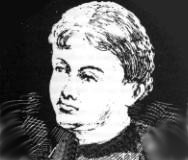
Louisa Jane Taylor
Murderer Jessie King
Murderer · United Kingdom · 1887
Jessie King was executed in Edinburgh on March 11, 1889, and she was described…
2 victims
Jessie King
Murderer · United Kingdom · 1887
Jessie King was executed in Edinburgh on March 11, 1889, and she was described…
2 victims
 Mary Pearcey
Murderer · United Kingdom · 1890
Mary Pearcey (Mary Eleanor Wheeler; also known as Mary Eleanor) was born in 186…
2 victims
Mary Pearcey
Murderer · United Kingdom · 1890
Mary Pearcey (Mary Eleanor Wheeler; also known as Mary Eleanor) was born in 186…
2 victims
 Catherine Flannagan
Murderer · United Kingdom · 1883
Catherine Flannagan and her sister Margaret Higgins used arsenic to poison peop…
1 victim
Catherine Flannagan
Murderer · United Kingdom · 1883
Catherine Flannagan and her sister Margaret Higgins used arsenic to poison peop…
1 victim
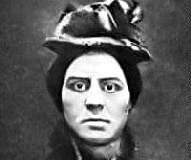 Kate Webster
Murderer · United Kingdom · 1879
Kate Webster was executed by hanging at Wandsworth Prison on July 29, 1879. · 2…
1 victim
Kate Webster
Murderer · United Kingdom · 1879
Kate Webster was executed by hanging at Wandsworth Prison on July 29, 1879. · 2…
1 victim
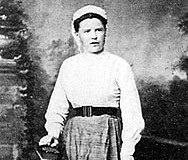 Marguerite Dixblanc
Murderer · United Kingdom · 1872
Marguerite Dixblanc was a Belgian cook. She entered the Park Lane household of…
1 victim
Marguerite Dixblanc
Murderer · United Kingdom · 1872
Marguerite Dixblanc was a Belgian cook. She entered the Park Lane household of…
1 victim
 Gwenda Sloane
Murderer · New Zealand · 2012
Gwenda Leigh Sloane, also known as Pluss, was a Rotorua process worker aged 44…
1 victim
Gwenda Sloane
Murderer · New Zealand · 2012
Gwenda Leigh Sloane, also known as Pluss, was a Rotorua process worker aged 44…
1 victim
 Stephen A. Marshall
Murderer · USA · 2006
Stephen A. Marshall committed suicide by shooting himself in the head when corn…
2 victims
Stephen A. Marshall
Murderer · USA · 2006
Stephen A. Marshall committed suicide by shooting himself in the head when corn…
2 victims
 Jeffrey Tokar
Murderer · USA · 1992
March 11, 1992 — Jeffrey Tokar picked up his girlfriend, Sandra Stickley, share…
1 victim
Jeffrey Tokar
Murderer · USA · 1992
March 11, 1992 — Jeffrey Tokar picked up his girlfriend, Sandra Stickley, share…
1 victim
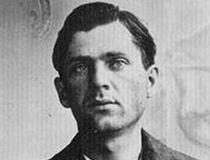 Leon Frank Czolgosz
Assassin · USA · 1901
Leon Frank Czołgosz (1873 – October 29, 1901) was the assassin of U.S. Presiden…
1 victim
Leon Frank Czolgosz
Assassin · USA · 1901
Leon Frank Czołgosz (1873 – October 29, 1901) was the assassin of U.S. Presiden…
1 victim
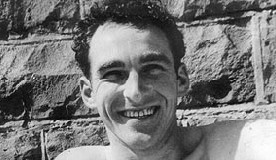 Elmer Crawford
Mass murderer · Australia · 1970
Elmer Crawford was accused of murdering pregnant mother Therese Crawford and he…
4 victims
Elmer Crawford
Mass murderer · Australia · 1970
Elmer Crawford was accused of murdering pregnant mother Therese Crawford and he…
4 victims
- Gender
- female
- Country
- United Kingdom
- Location
- Plumstead, Kent, England, United Kingdom
- Date of birth
- 1846
- Age at first offence
- 36
- Characteristics
- poisoner, financial gain
- Victim profile
- Mary Ann Tregellis, 82
- Method of murder
- Poisoning (lead acetate)
- Date(s) of murder
- October 23, 1882
- Years active
- 1882
- Date of arrest
- Same day
- Status
-
Executed
Executed by hanging at Maidstone prison on January 2, 1883
Case record: Louisa Jane Taylor
Background
Louisa Jane Taylor was widowed in 1882 and had a small pension to survive on. She took a live-in job as a nurse to the wife of a friend of her former husband, William Tregellis. William Tregellis and Louisa’s husband had been work colleagues, both working for HM Customs. The two couples had got to know each other, although there was a substantial age difference between them: the Tregellis were in their 80’s and Louisa was 34 or 36, with reports varying. Louisa and Mary Ann shared a room while William moved into the front room. Louisa slept in Mary Ann’s bed while William Tregellis slept in the other room.
The offence
Louisa was convicted of the murder by poisoning of Mrs Mary Ann Tregellis at Plumstead in the Borough of Greenwich.
Mary Ann Tregellis became poorly first about three months after Louisa arrived. The doctor ordered medicine. Louisa always gave Mary Ann the medicine. Mary Ann testified that the medicine was poured out from “this bottle—two tablespoonfuls,” and that it caused her to be very sick after taking it. Mary Ann testified that a doctor ordered one bottle at a time to be used every four hours. She testified that she saw “some white powder put in by Mrs. Taylor;” that she tasted it and said: “I can't take that; it is nauseous stuff, and as sour as vinegar. ” She testified that she took one dose and that she “don't know whether it was two or not;” and that she only saw Louisa mix it once with the powder. Mary Ann testified that it made her quite ill and quite in a stupor. She testified that “In about an hour” after she felt “a burning heat in my throat” and that “black vomit came up about an hour after I took the medicine.”
Mary Ann testified that she was sick again two months ago after taking the medicine.
Investigation
On Friday, the 6th of October (year consistent with the rest of the narrative), Louisa was arrested by PC Edward Glanville for stealing two dresses, a petticoat, a shawl, and a pair of boots. She admitted to having pawned them.
On arrival at Woolwich police station, she was searched and found to have 10 pawn tickets on her.
A day or two later, Mary Ann Tregellis was found in a state of collapse and near to death. She recovered enough to give a deposition (statement). Louisa was taken by the magistrate to hear the deposition being given.
Mary Ann Tregellis on oath saith as follows:
I live at 3, Naylor's Cottages, Plumstead . I am the wife of William Tregellis . Prisoner has been living in the house about six months, not as a servant. She has slept with me all the time she has been in the house. I was always in good health before she came. I became poorly first about three months ago. I felt queer and sick, and the doctor ordered me some medicine. Mrs. Taylor always gave me the medicine; I could not say whether she took it out of a bottle; she took it out of this bottle—two tablespoonfuls. It caused me to be very sick after taking it. I felt sick three months ago after taking the medicine. I saw two bottles used at a time, both of this size. The doctor ordered me one bottle at a time to be used every four hours. I saw some white powder put in by Mrs. Taylor; I tasted it, and said 'I can't take that; it is nauseous stuff, and as sour as vinegar. 'I took it, one dose; I don't know whether it was two or not; I won't say for certain. I know now it was two doses. I went to take some more. I said 'I can't take that; it will kill me. 'I saw it was a kind of a white mixed powder. I feel sure it was two doses. I only saw her mix it once with the powder. I haven't seen her do anything to the medicine after the occasion I mentioned. It made me quite ill, and quite in a stupor. In about an hour after I felt a burning heat in my throat. I was very sick indeed; black vomit came up about an hour after I took the medicine. I thought I tasted the same medicine again afterwards, but not so strong. I was sick again two months ago after taking the medicine. "
Arrest
Louisa was remanded in custody at Woolwich Magistrates Court on a charge of systematically administering sugar of lead or some other poison.
Trial
Louisa was housed at Her Majesty's Gaol of Clerkenwell to await trial. The trial took place at the Old Bailey before Mr. Justice Stephen on the 11th of December 1882.
Messrs. Poland and Montagu Williams prosecuted with Messrs. Walton and White for the defence.
William Tregellis gave evidence of the thefts and of his wife’s deteriorating health and eventual death.
Matilda Stubberfield Smith, whose husband was Dr. John Smith and who had treated Mary Ann, told the court that Louisa had purchased sugar-of-lead from their shop in the second week of August and that it was clearly labelled as poison. She made further purchases and also got a friend named Edward Martin to buy some on her behalf in mid September.
A number of other witnesses, including policemen, were called to testify against her over the course of the two-day trial, and forensic evidence was presented by Dr. Thomas Stevenson regarding the amount of lead in Mary Ann’s organs.
On Friday, the 15th of December, the jury convicted Louisa after just twenty minutes of deliberation without a recommendation to mercy, unusual in the case of a woman at this time.
Mr. Justice Stephen sentenced her to death and told her that the murder was “cruel, treacherous and hypocritical.”
Louisa was duly returned to Maidstone Prison as Plumstead was in Kent at that time, rather than in Greater London as now.
Sentencing
Mr. Justice Stephen sentenced Louisa to death.
Appeals
No appeal information was provided.
Outcome
The execution took place at Maidstone prison.
Aftermath
As was usual in poisoning cases, there was no reprieve and the execution was set for Tuesday, the 2nd of January 1883.
Other than her solicitor, Louisa had no visitors in the condemned cell. She reportedly told Miss Davis, the matron in charge of her, that she was prepared to die.
On the Tuesday morning, she was moved from the female wing to a cell near the gallows. She was visited by the chaplain, the Rev. Mr. Leighton. Her courage failed her when she was led out into the prison yard and saw the gallows, and she had to be supported on the drop while William Marwood made the preparations.
Her last words were “Lord Jesus receive my spirit.” He gave her a drop of around eight feet and death was “instantaneous”. The black flag was displayed above the prison. After hanging for an hour, her body was taken down for inquest and burial.
It was reported that very few members of the public were outside the prison to see the death notice put up.
Footnote: William Tregellis went to Woolwich Police Court on the day Louisa was executed and sought an order for the return of his property from various pawnbrokers. This was granted by the magistrate who sent a policeman with him to help regain the various items.
Spotted an error, or have more information about this case?