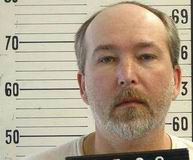
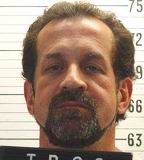
Gary Wayne Sutton
Murderer Brian Kevin Rosenfeld
Murderer · USA · 1985
Brian Kevin Rosenfeld Brian Kevin Rosenfeld was sentenced to three concurrent l…
23 victims
Brian Kevin Rosenfeld
Murderer · USA · 1985
Brian Kevin Rosenfeld Brian Kevin Rosenfeld was sentenced to three concurrent l…
23 victims
 Russell Ellwood
Murderer · USA · 1991
Russell Ellwood was a former taxi driver. Authorities suspected him of killing…
20 victims
Russell Ellwood
Murderer · USA · 1991
Russell Ellwood was a former taxi driver. Authorities suspected him of killing…
20 victims
 Robert Martines Perez
Murderer · USA · 1994
Name: Robert Martines Perez · Other name used in proceedings: Robert Martinez P…
15 victims
Robert Martines Perez
Murderer · USA · 1994
Name: Robert Martines Perez · Other name used in proceedings: Robert Martinez P…
15 victims
 Billy Frank Vickers
Murderer · USA · 1993
Billy Frank Vickers Vickers was executed by lethal injection in Texas on Januar…
14 victims
Billy Frank Vickers
Murderer · USA · 1993
Billy Frank Vickers Vickers was executed by lethal injection in Texas on Januar…
14 victims
 William Boliek
Murderer · USA · 1983
In August 1983, William T. Boliek lived in Linda Turner’s home. Other residents…
1 victim
William Boliek
Murderer · USA · 1983
In August 1983, William T. Boliek lived in Linda Turner’s home. Other residents…
1 victim
 David Ivy
Murderer · USA · 2001
David Ivy was on parole in June 2000, with parole status scheduled to terminate…
1 victim
David Ivy
Murderer · USA · 2001
David Ivy was on parole in June 2000, with parole status scheduled to terminate…
1 victim
 Leon Jermain Winston
Murderer · USA · 2002
Leon Jermain Winston was a male identified as Black. He was an inmate on Virgin…
2 victims
Leon Jermain Winston
Murderer · USA · 2002
Leon Jermain Winston was a male identified as Black. He was an inmate on Virgin…
2 victims
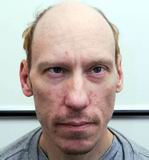 Stephen Port
Serial killer · United Kingdom · 2014
Stephen Port (born 1975) was a convicted British rapist and serial killer who m…
4 victims
Stephen Port
Serial killer · United Kingdom · 2014
Stephen Port (born 1975) was a convicted British rapist and serial killer who m…
4 victims
 Richard Pryde Boggs
Murderer · USA · 1988
Richard Pryde Boggs (born 1933; died March 6, 2003) was a California neurologis…
1 victim
Richard Pryde Boggs
Murderer · USA · 1988
Richard Pryde Boggs (born 1933; died March 6, 2003) was a California neurologis…
1 victim
- Gender
- male
- Country
- USA
- Location
- Blount/Sevier counties, Tennessee, USA
- Date of birth
- March 24, 1969
- Age at first offence
- 23
- Characteristics
- arson
- Victim profile
- Tommy Griffin, 24, and his sister Connie Branam, 34
- Method of murder
- Shooting
- Date(s) of murder
- February 21/22, 1992
- Years active
- 1992
- Date of arrest
- —
- Status
-
Sentenced to death
Sentenced to life in prison in 1993; sentenced to death on September 3, 1996
Background
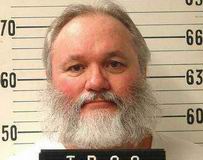
Gary Wayne Sutton was one of the defendants convicted of killing Tommy Griffin and his sister Connie Branan in February 1992. Sutton was convicted with James Henderson Dellinger.
Sutton’s co-defendant was James Henderson Dellinger.
The offence
On the afternoon of February 21, 1992, Dellinger, Sutton, and Tommy Griffin spent several hours at Howie’s Hideaway Lounge on Highway 321 in Maryville, Tennessee. The three men drank beer and played pool until approximately 7:00 p.m., when they left the bar in a dark-blue Camaro. Witnesses testified there was no evidence of hostility among the men while they were in the bar.
Around 7:00 p.m., a couple traveling north on Alcoa Highway near the Hunt Road exit observed three men who appeared to be fighting in a dark-colored Camaro on the side of the road. Two of the men were standing outside the car attempting to forcibly remove the third man from the back seat. They used a portable radio to report the incident to the dispatcher for Rural Metro Blount County Ambulance.
A woman driving north on Alcoa Highway around the same time observed a shirtless and shoeless man stumbling down the side of the road near the Hunt Road exit. When she passed the same area about thirty or forty minutes later, she saw two men standing outside of a dark-colored Camaro on the side of the road. They appeared to be looking for something.
At 7:11 p.m., a dispatcher for Blount County 911 received a complaint about an altercation involving three men in a dark Camaro at the intersection of Alcoa Highway and Hunt Road. Officer Steve Brooks with the Alcoa Police Department was dispatched to the scene. While making an unrelated traffic stop, Officer Brooks noticed a vehicle with flashing headlights parked on the side of Hunt Road and sent backup, Officer Drew Roberts, to investigate.
Officer Roberts found two men, not Dellinger and Sutton, standing next to a pickup truck. A shirtless man sitting on the bed of the truck identified himself as Tommy Griffin. Griffin told the officer his friends had put him out of a car. Griffin would not identify his friends or tell the officer what had happened. Officer Roberts arrested Griffin for public intoxication. Griffin was booked at the Blount County jail at 7:40 p.m.
Dellinger arrived about forty-five minutes to an hour later to ask about Griffin’s release. Sergeant Ray Herron explained that department policy required a minimum four-hour detention for public intoxication and advised Dellinger to come back at 10:30 or 11:00 p.m.
At approximately 9:00 p.m., a resident of Bluff Heights Road, where Dellinger and Tommy both lived, looked out of his trailer window and saw Dellinger’s white Dodge pickup truck. He saw someone enter the passenger side of the truck. The truck drove up the road and pulled into Dellinger’s driveway. The resident then noticed fire shooting from Griffin’s trailer down the road. His wife reported the fire to the 911 operator at 9:02 p.m.
Arson investigator Gary Clabo concluded that the fire was set intentionally with the use of a liquid-type accelerant and an open flame such as a match, candle, or cigarette lighter.
Tommy’s niece Jennifer ran to Dellinger’s trailer when she learned that Tommy’s trailer was on fire. Just as Dellinger’s wife was telling Jennifer that Dellinger was not home, Dellinger and Sutton walked down the hall from the living room. The two men were still wearing their jackets and their pants were wet up to the knees.
Jennifer asked them if Tommy was in his burning trailer, and Sutton told her that Tommy was in Blount County with a girl. When Jennifer asked the men to accompany her to the trailer, Dellinger responded that they were already in enough trouble.
After returning home, Jennifer looked out the window and saw Dellinger remove an object wrapped in a sheet from his truck and place it into the back of his wife’s Oldsmobile. Jennifer testified the object resembled a shotgun. A relative of Jennifer also observed Dellinger moving an object from his truck to his wife’s car shortly after 10:00 p.m.
Dellinger and Sutton then left in the Oldsmobile. At around 11:25 p.m., Dellinger and Sutton returned to the Blount County jail. Dellinger paid a cash bond for Tommy Griffin. Officers in the jail lobby overheard one of the defendants tell Griffin that they needed to get him back to Sevier County.
At 11:55 p.m., two people heard two gunshots fired from an area on the Little River in Blount County called the Blue Hole, approximately five hundred yards down the hill from their residence.
The next morning, February 22, Jennifer saw Dellinger leave his trailer, remove the object he had placed in his wife’s car the night before, and place the object under his trailer.
On February 22 around noon, Connie Branam, Jennifer’s mother and Tommy Griffin’s sister, informed her daughter Sandy of her intent to go to Blount County to look for Tommy.
At about 2:00 p.m., Connie went to Jerry Sullivan’s grocery store in Townsend asking if anyone had seen her brother. Sullivan then saw Connie speaking with two men in a white Dodge pickup truck in the grocery store parking lot. Later that afternoon, Connie accompanied Dellinger and Sutton to Howie’s Hideaway Lounge. Connie told the afternoon bartender at Howie’s she was looking for her brother. The bartender repeatedly told them she remembered Dellinger, Sutton, and Tommy Griffin from the night before.
When Dellinger asked if she remembered with whom Griffin left, she responded that they were still at the bar when her shift ended. Dellinger told the bartender they last saw Griffin with a short, dark-haired, ugly woman. When the bartender’s shift ended at 5:00 p.m. on February 22, Connie, Dellinger, and Sutton were still drinking beer in the bar. Another woman worked the next shift at Howie’s. When she approached Connie, Dellinger, and Sutton to ask if they needed anything, Dellinger asked her if she remembered them from the night before. She responded she recalled seeing Dellinger and Sutton with another man drinking beer and playing pool.
Connie explained she was looking for her brother and asked with whom he had left the bar. The woman became confused because she knew Griffin had left with Dellinger and Sutton. Dellinger asked the woman if she remembered them returning to Howie’s after they bailed Griffin out of jail. She knew the three had not returned to Howie’s because she had worked until closing.
After unsuccessfully attempting to convince her to join them in their search for Griffin, Sutton asked her if she was married. When the woman responded she was married, Sutton stated, “Well, your husband is going to be surprised whenever you’re missing one morning, when he wakes up and you’re missing.”
Dellinger, Sutton, and Connie left Howie’s around 6:30 p.m.
About 8:00 p.m. on February 22, a couple observed a fire in the woods near the Clear Fork area of Sevier County. The following morning, the woman watched a white truck occupied by two men leave the woods and head toward the main road. She testified the truck was traveling rapidly and came from the general area where they had observed the fire the night before.
On Monday, February 24, around 3:30 p.m., Tommy Griffin’s body was discovered lying face-down on a bank at the Blue Hole. He had been shot in the back of the neck at the base of the skull with a shotgun. Two 12-gauge shotgun shell casings and beer cans were found near the body. The shotgun shells were fired from the same gun that fired shells later found in Dellinger’s yard.
Forensic pathologist Dr. Charles Harlan opined that Griffin had died between 6:00 p.m. on February 21 and 8:00 a.m. on February 22. Dr. Eric Ellington with the Blount County Medical Examiner’s Office conducted the autopsy on Griffin’s body. He concluded the cause of death was destruction of the brain stem from the shotgun wound. Ellington retrieved two metal pellets and two pieces of shotgun wadding from Griffin’s brain. The pellets were consistent with pellets loaded in the 12-gauge “00” buckshot casings found near Griffin’s body.
On Friday, February 28, Connie Branam’s body was discovered in her burned vehicle in the wooded area where the couple had observed the fire on February 22. Arson investigator Gary Clabo determined the fire had been set by human hands, started by an outside ignition source with the use of an accelerant.
Connie’s body was so badly burned that forensic anthropologist Dr. William Bass was unable to determine the cause or time of death. Dental records were necessary to identify the body. Investigators discovered a rifle shell in the burned vehicle fired from the .303 rifle later found in Dellinger’s trailer.
Investigation and evidence
The first investigation involved responding to the altercation and arresting Tommy Griffin for public intoxication.
Arson evidence included conclusions by arson investigator Gary Clabo that the fire involving Griffin’s trailer was intentionally set with a liquid-type accelerant and an open flame such as a match, candle, or cigarette lighter.
The investigation later included discovery of Tommy Griffin’s body at the Blue Hole and forensic findings from Dr. Charles Harlan and Dr. Eric Ellington, including autopsy conclusions about the cause of death and the retrieval of pellets and wadding.
Connie Branam’s body was discovered in her burned vehicle, and arson investigator Gary Clabo determined the fire was set by human hands using an accelerant and an outside ignition source. Dr. William Bass was unable to determine the cause or time of death due to the level of burning, and dental records were required for identification. A rifle shell in the burned vehicle was discovered and was fired from the .303 rifle later found in Dellinger’s trailer.
Arrest and confinement events
Tommy Griffin was arrested for public intoxication and booked at the Blount County jail at 7:40 p.m.
Dellinger asked about Griffin’s release and was advised of a policy requiring a minimum four-hour detention for public intoxication.
Dellinger later paid a cash bond for Tommy Griffin.
Jail lobby officers overheard one of the defendants tell Griffin they needed to get him back to Sevier County.
Trial
A jury convicted Dellinger and Sutton of first degree premeditated murder of Griffin based on the evidence presented.
At the penalty stage, the State presented evidence that Dellinger and Sutton were previously convicted of first degree premeditated murder of Connie Branam in Sevier County in 1993. The State also presented proof that Sutton was convicted of aggravated assault in Cobb County, Georgia in 1983. The defense presented mitigation witnesses, including family members, friends, acquaintances, and clinical psychologists.
Dellinger mitigation included evidence that he was raised in a large family with eight children, that his parents were loving but harsh disciplinarians, and that the family was very poor. Dellinger left school when he was ten and never learned to read or write. He became a carpenter and had testimony showing he was a good employee until 1990 when he sustained a back injury forcing him to quit work.
Dellinger had four children and two stepchildren from his two marriages. Two children had died tragically: an eighteen-year-old daughter in a car accident and a fifteen-month-old son when a stove fell on him.
Dellinger presented evidence he was non-violent, religious, helpful, and kind-hearted. He had been a well-behaved prisoner and had prevented another prisoner from committing suicide. Clinical psychologist Dr. Peter Young testified that Dellinger had an IQ between 72 and 83 and had borderline personality disorder. Young testified that due to a lack of family nurturing, Dellinger was distrustful of others and opined that although Dellinger was not violent, he could flare up when drunk and angry. Young opined Dellinger would do well in a structured prison environment.
Sutton mitigation included evidence that he had been a good employee and a well-behaved prisoner. His parents divorced when he was a toddler, and he dropped out of school in the eighth grade. Sutton had one daughter, and witnesses testified that he got along well with children.
Witnesses testified Sutton was generous and a good family man who provided assistance to his sister-in-law and her son when his sister-in-law had surgery. Witnesses also testified Sutton saved his niece’s life by rescuing her from a fire. Sutton was described as a good artist, drawing well and making woodwork items as gifts and to earn money.
Sutton’s brother testified that the aggravated assault conviction was based on an incident in which Sutton was merely present when his brother fired a gun into a car and the bullet bounced into a mobile home and struck a woman in the leg.
Clinical psychologist Dr. Eric S. Engum testified Sutton’s IQ was between 77 and 83 and that his intellect, social judgment, abstract reasoning, and vocabulary were limited. Engum testified Sutton had suffered undiagnosed learning disabilities. Engum stated Sutton’s father was an alcoholic and Sutton began abusing alcohol at the age of twelve.
Engum testified Sutton suffered mental and physical abuse due to conflict between his parents and learned distrust of others at an early age. Engum stated that Sutton self-anaesthetized through use of alcohol and marijuana. Engum diagnosed Sutton with a depressive disorder and a mixed personality disorder with passive/aggressive and anti-social features. Engum opined that prison would be a good environment for Sutton.
The jury returned its verdict finding the aggravating circumstance that the defendants were previously convicted of a felony whose statutory elements involved the use of violence to the person. The jury found this aggravating factor outweighed any mitigating circumstances and sentenced Dellinger and Sutton to death.
Sentencing
Sutton was sentenced to life in prison in 1993.
On September 3, 1996, Sutton was sentenced to death.
Appeals
Outcome
A United States District Court decision on habeas corpus issues was issued for Gary Wayne Sutton.
The United States District Court for the Eastern District of Tennessee at Knoxville issued a death penalty memorandum opinion delivered by Thomas A. Varlan, United States District Judge.
On March 30, 2011, Gary Wayne Sutton, petitioner, filed an amended petition for writ of habeas corpus against Ricky Bell, Warden, raising more than twenty-five claims, including a claim of actual innocence.
The court addressed claims related to Dr. Charles Harlan’s forensic pathologist testimony regarding the victim’s time of death, and a cumulative error claim. The court described prior determinations and found that after a three-day evidentiary hearing, both claims would be dismissed and the petition would be dismissed.
The court also described factual background of Griffin’s murder and discussed testimony by medical and forensic experts, including Dr. Neal Haskell, Dr. Stanton Coleman Kessler, Dr. Darinka Mileusnic-Polchan, and Dr. Bruce Phillip Levy during the federal evidentiary hearing.
The court ultimately dismissed the petition.
Other details
Sutton’s co-defendant and uncle during the federal proceedings was James Dellinger.
The memorandum opinion included the statement that on September 1, 1996, “a Blount County, Tennessee jury found Gary Wayne Sutton (“Sutton” or “Petitioner”) and James Dellinger (“Dellinger”), Sutton's co-defendant and uncle, guilty of the first degree murder of Tommy Griffin (“Griffin”).”
The memorandum opinion referenced that Sutton was awaiting execution on Tennessee’s death row.
The memorandum opinion described that the court previously granted respondent’s motion for summary judgment on all but two claims, pending an evidentiary hearing, and that following the three-day hearing the court would dismiss both claims and deny the habeas corpus petition.
Spotted an error, or have more information about this case?