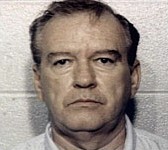
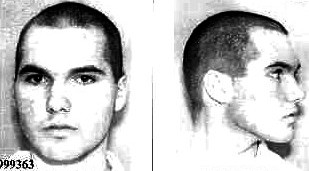
Jack Wayne Reeves
Murderer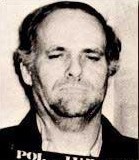 Ervil LeBaron
Murderer · USA · 1972
Ervil Morrell LeBaron (1925 to August 16, 1981) was the leader of a polygamous…
35 victims
Ervil LeBaron
Murderer · USA · 1972
Ervil Morrell LeBaron (1925 to August 16, 1981) was the leader of a polygamous…
35 victims
 Marvin Gray
Murderer · USA · 1975
Marvin Gray was convicted killer who claimed responsibility for 23 slayings and…
23 victims
Marvin Gray
Murderer · USA · 1975
Marvin Gray was convicted killer who claimed responsibility for 23 slayings and…
23 victims
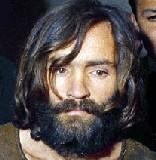 Charles Manson
Murderer · USA · 1969
Charles Milles Manson (born November 12, 1934) was an American criminal and mus…
9 victims
Charles Manson
Murderer · USA · 1969
Charles Milles Manson (born November 12, 1934) was an American criminal and mus…
9 victims
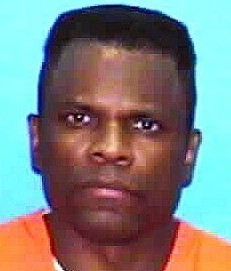 John Errol Ferguson
Murderer · USA · 1977
John Errol Ferguson was sentenced to death and was executed by lethal injection…
8 victims
John Errol Ferguson
Murderer · USA · 1977
John Errol Ferguson was sentenced to death and was executed by lethal injection…
8 victims
 Robert Reldan
Murderer · USA · 1974
Name: Robert Reldan Robert Reldan was sentenced to life in prison on two counts…
8 victims
Robert Reldan
Murderer · USA · 1974
Name: Robert Reldan Robert Reldan was sentenced to life in prison on two counts…
8 victims
 Laurie Tackett
Homicide · USA · 1992
Mary Laurine “Laurie” Tackett was born in Madison, Indiana on October 5, 1974.…
1 victim
Laurie Tackett
Homicide · USA · 1992
Mary Laurine “Laurie” Tackett was born in Madison, Indiana on October 5, 1974.…
1 victim
 William Dwane Bell
Murderer · New Zealand · 2001
William Dwane Bell (born 1978) was a convicted murderer in New Zealand. Bell wa…
3 victims
William Dwane Bell
Murderer · New Zealand · 2001
William Dwane Bell (born 1978) was a convicted murderer in New Zealand. Bell wa…
3 victims
 Dallas Bernard Holiday
Murderer · USA · 1986
Dallas Bernard Holiday Holiday was sentenced to death for the murder. The sente…
1 victim
Dallas Bernard Holiday
Murderer · USA · 1986
Dallas Bernard Holiday Holiday was sentenced to death for the murder. The sente…
1 victim
 Delma Banks
Murderer · USA · 1980
Delma Banks was convicted in a Texas capital murder scheme and was sentenced to…
1 victim
Delma Banks
Murderer · USA · 1980
Delma Banks was convicted in a Texas capital murder scheme and was sentenced to…
1 victim
 Jesse Jacobs
Murderer · USA · 1986
Jesse Jacobs (#872) was the offender. He was executed in Texas on January 4, 19…
1 victim
Jesse Jacobs
Murderer · USA · 1986
Jesse Jacobs (#872) was the offender. He was executed in Texas on January 4, 19…
1 victim
- Gender
- male
- Country
- USA
- Location
- Italy / Texas, USA
- Date of birth
- 1940
- Age at first offence
- 27
- Characteristics
- parricide
- Victim profile
- An Italian man / His second wife, Sharon Vaughn / His fourth wife, Emelita Villa (In addition, he remains a suspect in the 1986 drowning death of his third wife, Myong Reeves)
- Method of murder
- Shooting
- Date(s) of murder
- 1967 / 1978 / 1994
- Years active
- 1967–1994
- Date of arrest
- —
- Status
-
Released
Sentenced to 99 years with 40-year minimum on January 3, 1996; convicted Jan. 3, 1996 in the 1978 murder of Sharon Reeves; convicted in the 1994 slaying of Emelita Reeves and sentenced to 99 years with 40-year minimum on January 3, 1996; released after four months following a 1967 manslaughter conviction
Case record: Jack Wayne Reeves
Background
Jack Wayne Reeves was born in Wichita Falls, where he reached adolescence in the 1950s. He was an Elvis Presley devotee with a modeled pompadour and ducktail.
In 1960, Reeves married his first wife, who was 15 years old. The marriage was annulled because of the bride's age.
In 1960 or 1961, Reeves married Sharon Vaughn when he was 21. Shortly afterward, he enlisted in the Army. He was stationed in Italy, and the couple had two sons there.
Reeves had his first brush with homicide in 1967 when he shot an Italian man he said was spying on him and Sharon. Reeves said he fired a pistol to frighten the man away, but the bullet ricocheted off an iron railing and struck the man in the chest. He was imprisoned for six months. During his imprisonment, his mother circulated a petition among Wichita Falls residents, obtained hundreds of signatures, and forwarded it to then-President Johnson, who interceded to have him released. After that, the couple returned to the United States and moved into a small home in Copperas Cove. Reeves continued his military career and was promoted to sergeant. He was often stationed overseas while his wife remained in Copperas Cove.
In early 1978, Reeves was serving in Korea when he was served with divorce papers. He returned immediately to reconcile his marriage, and by July 20 the couple filed a request to set aside their divorce.
After Sharon Reeves’s death, Reeves returned to Korea after the funeral and married a young Korean woman named Myong Chong in that country. In the early 1980s, he returned to the United States with her, and they later moved to a small brick home on Iberis Street in a new subdivision in south Arlington. Reeves seemed affluent. His brick home was small, but his toys were numerous. He bought cars, a classic Harley-Davidson motorcycle, boats, travel trailers, and expensive pickups.
In 1986, Reeves used camping to spend time; one travel-trailer was custom-built to his specifications. He often towed it to Lake Whitney near Waco.
In 1990 or 1991, Reeves married Emelita Villa, a young Filipino woman he had met through a catalogue for mail-order brides.
In the same period, Reeves later moved a young Russian woman into his home whom he called “Natalie.” He introduced her to several people.
Reeves was 55 when he was convicted Jan. 3, 1996.
The offence
1978 killing of Sharon Reeves
On the night of the reconciliation attempt in 1978, Copperas Cove police were called to the home. They found Sharon Reeves in bed, nude, shot through the chest with a shotgun. Reeves and his 10-year-old son, Randy, were standing near the body.
Reeves told police he and his wife had gone out to dinner, returned home, wrote and signed a will, then had sex. He said he had just walked out of the room when his wife shot herself.
A suicide note was found on a china cabinet. Police read the script that said Sharon Reeves was torn between staying with her husband and leaving him for another man, and they wondered at the obscene drawing that had been added to the note.
Reeves was questioned further. Police said he chatted nonchalantly about his wife and spiced the conversation with accounts of his sexual exploits with Korean women. The officers thought his actions were peculiar, but little more investigation was done, and the death was ruled a suicide.
Later, police exhumed Sharon Reeves’s body. The top-of-the-line casket had kept moisture from the corpse and it was well-preserved. A forensic expert examined the wound and determined that it was inconsistent with suicide. Reeves was charged with murder in May 1995.
1994 slaying of Emelita Reeves
Emelita Reeves returned in 1992. Reeves was apparently convinced by the baby's appearance that the little boy was his. Emelita was not happy with the marriage and told friends she was considering leaving Reeves.
In early October 1994, Reeves said she had gone. He told neighbors she was a bisexual who had simultaneous affairs with men and women and had left with a group of bisexual women.
When her Filipino friends reported her missing, police approached the house and found Reeves in the garage, not glad to see them and seemingly unconcerned with his wife's departure. That interested Detective Buddy Evans, who was in charge of missing persons. Evans contacted LeNoir in homicide. The two spoke to Emelita's friends, who told them they believed Reeves had killed Emelita and that Emelita had said her husband had other wives who had died.
Police eventually found Emelita Reeves’s partially unearthed body. In October, almost exactly a year after Emelita Reeves’s disappearance, a hunter found her partially unearthed body in a shallow grave in a creekbed near Lake Whitney, where Myong Reeves had drowned. Reeves was charged in that case and faced trial in Meridian on April 1.
Emelita Reeves was reported missing on Oct. 12, 1994.
At trial, prosecutors introduced evidence that Reeves began searching for a new mail-order bride within weeks of Emelita Reeves’s disappearance.
Medical details about Emelita Reeves were limited because so little of her remains were found; the authorities never determined the exact cause of Emelita Reeves’s death because so little of her remains were found.
There were no witnesses other than Reeves to the 1986 drowning of Myong Reeves, and in the trial context, there was no scientific evidence that said Reeves killed Emelita Reeves.
Investigation
Police suspicion and focus on the Sharon Reeves case
Police suspicions were fueled by statements Reeves made after the departure of “Natalie.” A neighbor said: “He said she'd been going up to the Hypermart to meet her lover,” and the neighbor said it was the same thing he said about Emelita after she disappeared. LeNoir said he and Evans continued to search for “Natalie,” although neither Reeves nor his attorney, Wes Ball, had given them a full name or address for her.
LeNoir said: “We told Mr. Ball we'd accept an affidavit from him, stating that she is known to him to be alive and well, but he hasn't been able to give us that.”
Police eventually exhumed Sharon Reeves’s body and found that a forensic expert determined the wound was inconsistent with suicide.
Evidence involving a “Natalie” disappearance
Police turned their attentions to a woman known only as “Natalie,” thought to be a Russian immigrant Reeves said he had met through a newspaper ad. She was known to have lived with Reeves for several weeks in 1991 before she seemingly disappeared. Reeves was vocal about his innocence of any murder and his marriages, but had little to say about “Natalie,” piquing Arlington police detectives Tom LeNoir and Buddy Evans.
LeNoir said: “We'd like to know where she is and if she's alive,” and also said: “And Mr. Reeves apparently doesn't want to tell us.”
A neighbor, Larry Conston, said: “I remember her all right,” and added: “She was a nice-looking woman, and you'd notice her. ”When she was gone, Jack said she'd gone off to marry some other man. He said she'd had other boyfriends all along, and he didn't mind. ... He said she'd married one of them and moved off to Washington.”
Arrest
Reeves was convicted Jan. 3, 1996 in the 1978 murder of Sharon Reeves. The record also states Reeves was charged with murder in May 1995 for Sharon Reeves.
No separate arrest event was described in the provided text.
Trial
Trial relating to Sharon Reeves
Reeves faced charges for the 1978 shotgun slaying of Sharon Reeves. He was convicted Jan. Reeves drew 35 years for the murder of Sharon Reeves and could be eligible for parole on that sentence in seven years.
The authorities reopened the 1978 shotgun slaying of his second wife, Sharon, who died in Coryell County, where Reeves served at Fort Hood. Sharon Reeves’s death was originally ruled a suicide. Later, after exhumation, medical examination found the wound inconsistent with suicide.
Trial relating to Emelita Reeves
In the most recent trial in the slaying of Emelita Reeves, prosecutors introduced evidence that Reeves began searching for a new mail-order bride within weeks of Emelita Reeves’s disappearance.
A jury in a small town 90 miles southwest of Dallas took slightly more than 82 minutes to convict Reeves of the most recent murder, and another 86 minutes to sentence him to 99 years in prison.
After the verdict, Reeves said: “I didn't do it, your honor,” Mr. Reeves said after the verdict.
At trial, District Attorney Andy McMullen acknowledged to the jury that the case was circumstantial. He said: “All the evidence taken together points to one man -- only one man.”
Sandy Gately, the Coryell County District Attorney, testified about Reeves’s second wife being shot days after winning a divorce. Sandy Gately said: “Reeves got the divorce overturned the day after his wife died when she did not show up in court.” Sandy Gately also said: “A justice of the peace, without an autopsy, later ruled the shooting a suicide.”
Dan V. Dent, the Hill County District Attorney, said there were no witnesses other than Reeves to the 1986 drowning of Myong Reeves, 26.
Tom Lenoir, an Arlington police detective, testified about Reeves saying: “If Emelita is found or if her body is found in Lake Whitney, am I going to be blamed?” Lenoir testified about police not searching the Reeves home until more than a year after the woman vanished, and an Arlington police officer late that night testified that Reeves would not allow him inside and became angry when asked about his wife's whereabouts.
A son from Reeves’s second marriage testified for the prosecution. The son was in the yard outside when his mother was shot in her bed in 1978, and the son testified for the prosecution saying he saw Reeves camping at Lake Whitney on Oct. 13. The record also states: “One of Mr. Reeves's sons from his second marriage -- who was in the yard outside when his mother was shot in her bed in 1978 -- testified for the prosecution, saying he saw Mr. Reeves camping at Lake Whitney on Oct. 13.”
Reeves’s son at that time had his mother’s 1978 shooting referenced for him being in the yard outside at the time. The son also had relevant testimony tied to Oct. 13.
Emelita Reeves’s son was with Reeves at Lake Whitney shortly after Emelita Reeves disappeared. The record states: “Their son, who was then 3 years old, was with his father at Lake Whitney shortly after Emelita Reeves disappeared.” The child now lived with Reeves’s half sister.
Ben Stool, assistant district attorney for Bosque County, where Meridian is located, said: “His first wife lives in another state.”
Reeves remained a suspect in the 1986 drowning death of his third wife, Myong Reeves, although lack of evidence in that case may preclude a trial. The authorities had no plans to reopen the investigation of Myong Reeves’s death.
Sentencing
Reeves was sentenced to 35 years on one count in 1995, and later sentenced to 99 years with 40-year minimum on January 3, 1996.
The record also states: “Reeves, 55, was convicted Jan. 3, 1996 in the 1978 murder of Sharon Reeves, his second wife, and faces another murder trial in the 1994 slaying of Emelita Reeves, his fourth spouse.”
The record states that in sentencing for the most recent trial, he received 99 years and another 86 minutes to sentence him.
Appeals
Reeves was appealing his first conviction in Sharon Reeves’s killing. Wes Ball said: “his client would appeal his conviction in the death of Emelita Reeves, too.” The record also includes Wes Ball’s statements that Reeves would appeal both convictions.
Reeves was said to be appealing his first conviction, and his lawyer Wes Ball said today Reeves would appeal his conviction in the death of Emelita Reeves as well.
Wes Ball said:
- “Mr. Reeves did not kill any of his wives, Mr. Ball said.”
- “Each one's a different situation: Sharon Reeves's death was a suicide. The drowning of Myong in 1986 was ruled an accidental drowning by the justice of the peace after they investigated that matter.”
- “As for Emelita Reeves, Mr. Ball said, 'There's no witness that says he killed her. There's no confession that says he killed her. There's no scientific evidence that says he killed her.'”
Outcome
The jury convicted Reeves in the most recent trial in the slaying of Emelita Reeves, and he was sentenced to 99 years in prison.
Reeves was also convicted Jan. 3, 1996 in the 1978 murder of Sharon Reeves and sentenced to 35 years on one count in January after authorities reopened the case.
The record additionally states that Reeves was convicted of two murders, and sentenced to 134 years in prison.
Aftermath
The child of Emelita Reeves lived with Reeves’s half sister.
Police were continuing to search for “Natalie,” and LeNoir and Evans stated they wanted to know where she was and if she was alive.
LeNoir and Evans said they continued searching, and that neither Reeves nor Wes Ball had given them a full name or address for “Natalie.”
Hill County authorities said there were no plans to reopen the investigation of Myong Reeves’s death.
Other details
1967 manslaughter conviction
The record states: “Manslaughter conviction in 1967 (released after four months.)” It also says he was sentenced to 35 years on one count in 1995, and sentenced to 99 years with 40-year minimum on January 3, 1996.
1986 drowning death of Myong Reeves
Myong Reeves died in 1986 while Reeves was camping and catching grasshoppers for fishing bait. Reeves told police his wife had fallen from a rubber raft and drowned while he was catching grasshoppers for fishing bait. No autopsy was performed. The death was ruled accidental, and Reeves had Myong's body cremated.
Myong's family disapproved of the cremation and expressed suspicion. They remembered her as a slight woman who could not swim, was afraid of water, and had always refused to get in a boat.
Her death also came shortly after she had written a letter to relatives indicating she was about to leave Reeves because he was abusive.
It was also stated that Reeves remained a suspect in the 1986 drowning death of his third wife, though lack of evidence in that case may preclude a trial.
Sharon Reeves evidence and staged photo
The record states that police found an 8X10 photo of Sharon's body and a report saying she'd pulled the trigger of a shotgun with her toe, which had sustained a cut as a result. The photo appeared staged, and authorities exhumed Sharon Reeves's body.
Medical Examiner Dr. Jefferey Bernard found Sharon's body to be very well-preserved, and the record states this was the result of Reeves having paid for an airtight coffin. The record also states the photo showed a female police officer who was physically unable to trigger the rifle with her toe.
Emelita Reeves remains
The record states that authorities never determined the exact cause of Emelita Reeves’s death because so little of her remains were found.
Emelita Reeves was found in a shallow grave in a creekbed near Lake Whitney.
Timeline of relationships
- Reeves’s first marriage in 1960 was annulled due to bride’s age.
- Reeves married Sharon Vaughn shortly after, had two sons in Italy, and their divorce was served while Reeves was in Korea in early 1978.
- Reeves reconciled with Sharon by July 20 and in that night Sharon was shot and died.
- Reeves married Myong Chong after returning to Korea and later moved to south Arlington with her in the early 1980s.
- Reeves’s third wife, Myong, died in 1986 and was cremated after an accidental ruling.
- Reeves married Emelita Villa and was said to have sent her back to the Philippines in 1991 when she was pregnant; he told friends the child was not his.
- Reeves moved “Natalie,” a Russian woman, into his home after Emelita left.
- Emelita returned in 1992. Reeves was convinced the boy was his by appearance, but Emelita was considering leaving.
- In early October 1994 Reeves said she had left with bisexual friends; Emelita was later reported missing on Oct. 12, 1994 and was found about a year later.
- Reeves faced conviction and sentencing connected to both Sharon and Emelita cases.
Spotted an error, or have more information about this case?