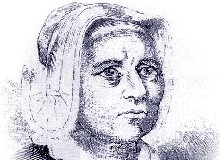
Hélène Jégado
Serial killer Christine Malèvre
Serial killer · France · 1997
Christine Malèvre Christine Malèvre (born 1970) was a French serial killer. She…
30 victims
Christine Malèvre
Serial killer · France · 1997
Christine Malèvre Christine Malèvre (born 1970) was a French serial killer. She…
30 victims
 Antoinette Scieri
Serial killer · France · 1924
Antoinette Scieri was born in Italy and emigrated to France as a child. In the…
12 victims
Antoinette Scieri
Serial killer · France · 1924
Antoinette Scieri was born in Italy and emigrated to France as a child. In the…
12 victims
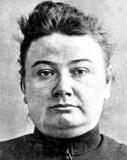 Jeanne Weber
Serial killer · France · 1905
Jeanne Weber (born 7 October 1874) was a French child-care provider and serial…
10 victims
Jeanne Weber
Serial killer · France · 1905
Jeanne Weber (born 7 October 1874) was a French child-care provider and serial…
10 victims
 Marcel Petiot
Serial killer · France · 1942
Marcel André Henri Félix Petiot was a French doctor. He was convicted of multip…
27 victims
Marcel Petiot
Serial killer · France · 1942
Marcel André Henri Félix Petiot was a French doctor. He was convicted of multip…
27 victims
 Thierry Paulin
Serial killer · France · 1984
Thierry Paulin was born in Fort-de-France, Martinique on November 28, 1963. His…
21 victims
Thierry Paulin
Serial killer · France · 1984
Thierry Paulin was born in Fort-de-France, Martinique on November 28, 1963. His…
21 victims
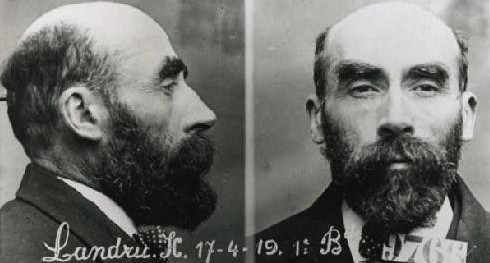 Henri Landru
Serial killer · France · 1915
Henri Désiré Landru (born April 12, 1869; died February 25, 1922) was a French…
11 victims
Henri Landru
Serial killer · France · 1915
Henri Désiré Landru (born April 12, 1869; died February 25, 1922) was a French…
11 victims
 Ronnie Lee Bowling
Murderer · USA · 1989
Ronnie Lee Bowling was sentenced to death on December 9, 1992. Bowling was from…
2 victims
Ronnie Lee Bowling
Murderer · USA · 1989
Ronnie Lee Bowling was sentenced to death on December 9, 1992. Bowling was from…
2 victims
 Terrie Robinson
Murderer · USA · 2011
Terrie Robinson was a 25-year-old woman who pleaded guilty to the murder of her…
1 victim
Terrie Robinson
Murderer · USA · 2011
Terrie Robinson was a 25-year-old woman who pleaded guilty to the murder of her…
1 victim
 David Allen Castillo
Murderer · USA · 1983
David Allen Castillo was executed by lethal injection in Texas on September 23,…
1 victim
David Allen Castillo
Murderer · USA · 1983
David Allen Castillo was executed by lethal injection in Texas on September 23,…
1 victim
 Detrick Cole
Murderer · USA · 2000
Name: Detrick Cole Victim: Santeife Thomas Status: Sentenced to death; convicti…
1 victim
Detrick Cole
Murderer · USA · 2000
Name: Detrick Cole Victim: Santeife Thomas Status: Sentenced to death; convicti…
1 victim
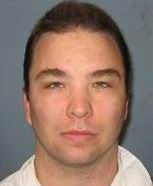 Michael Jeffrey Land
Murderer · USA · 1992
Michael Jeffrey Land was an Alabama death row inmate. He received DOC# 00Z553.…
1 victim
Michael Jeffrey Land
Murderer · USA · 1992
Michael Jeffrey Land was an Alabama death row inmate. He received DOC# 00Z553.…
1 victim
- Gender
- female
- Country
- France
- Location
- Brittany, France
- Date of birth
- 1803
- Age at first offence
- 30
- Characteristics
- poisoner, domestic violence
- Victim profile
- M embers of the families of her various employers for whom she worked as a cook
- Method of murder
- Poisoning (arsenic)
- Date(s) of murder
- 1833 - 1841 / 1851
- Years active
- 1833–1851
- Date of arrest
- July 1, 1851
- Status
-
Executed
Executed by guillotine in Rennes on February 26, 1852
Identity
Hélène Jégado (1803–1852) was a French domestic servant and poisoner. She was executed by guillotine in Rennes on February 26, 1852. She was accused and convicted for poisoning-related deaths, and she consistently denied knowing what arsenic was.
Timeline
- 28 prairial (eleventh year of the republic, 1803) — Hélène Jégado was born at Plouhinec in the department of Morbihan.
- June 28 to October 3 (1833) — In the household of priest Le Drogo in Guern, seven persons died after eating food prepared by Hélène Jégado.
- 1835 — She was employed as a servant in the household of “Madame Toussaint”; four more deaths followed.
- May (1841) — The child “little Marie Bréger” died at the Château de Soye (Ploemeur) ten years and one month before her final arrest.
- 1850 — Hélène Jégado joined the household staff of Théophile Bidard, a law professor at the University of Rennes; Rose Tessier fell ill and died after she tended her.
- 1851 — Rosalie Sarrazin fell ill and died after Hélène Jégado tended her; she was arrested July 1, 1851.
- December 6, 1851 — Hélène Jégado’s trial began at Rennes.
- February 26, 1852 — She was executed in front of a large crowd of onlookers on the Champ-de-Mars in Rennes.
- Afterward (date not provided) — An appeal was put forward on her behalf, but it was rejected.
Background
Hélène Jégado was orphaned at the age of seven. She lived with two aunts who were servants at the rectory of Bubry. Sixteen years later, one aunt, Helene Liscouet, took her into service with M. Conan, cure at Seglien.
In the course of her early work, she was accused of adding hemp from a grain house to a priest’s soup. Her first suspected poisoning was in 1833 when she was employed by a priest, Fr. François Le Drogo, in Guern.
The offence
Poisoning pattern and victims
Multiple deaths in households where she worked were attributed to arsenic poisoning. Most victims were said to have died showing symptoms corresponding to arsenic poisoning. She was never caught with arsenic in her possession.
Local folklore attributed many unexplained deaths to her. The most reliable estimate given in the case narrative was that she probably committed about 36 murders.
A child, “little Marie Bréger,” died at the Château de Soye (Ploemeur) in May 1841.
Symptoms and method as described in the case narrative
Victims were said to die after painful vomitings and to show symptoms consistent with arsenical poisoning. The narrative described that when she tended “the sick,” she ensured they died. There were also accounts that some deaths were initially attributed to natural causes, including the period shortly after a cholera epidemic in 1832.
Theft and alleged motivation
Relatives and employers later reported thefts during periods between suspected poisonings. She was described as apparently kleptomaniac and being caught stealing several times. In the narrative, her poisonings were also described as retaliation for what she considered ill treatment; if somebody admonished her, she answered with poison.
Investigation
In 1850, while employed in Théophile Bidard’s household, his servant Rose Tessier fell ill and died after being tended by Hélène Jégado. In 1851, another maid, Rosalie Sarrazin, fell ill and died. Two doctors tried to save Sarrazin and, because the symptoms were similar to those of Tessier, they convinced the relatives to permit an autopsy. The doctors testified that they found no trace of poison but remained convinced of poisoning.
Hélène Jégado aroused suspicion when she announced her innocence before she was even asked anything. She was arrested July 1, 1851. Later inquiries linked her to suspected deaths by poisoning between 1833–1841, but those deaths were not thoroughly investigated due to the ten-year limit for prosecution and absence of scientific evidence at the time.
Arrest
Hélène Jégado was arrested July 1, 1851 after the Procureur-General acted on information provided by two doctors and information obtained from her employer. The arrest followed her exclamation:
- “I am innocent!” She also responded when confronted with the absence of an accusation:
- “Innocent of what?”
- “No one has accused you of anything!”
Trial
Court and procedural limits
The first hearings were taken before the Juge d’instruction in Rennes, and she was remanded to the assizes for Ille-et-Vilaine, held in the same city. French laws of permissible evidence and statute of limitations restricted the indictment.
She was accused only of three murders, three attempted murders, and 11 thefts, despite later-linked suspected poisonings and speculative counts.
The trial began on December 6, 1851. Maitre Dorange defended her and asked for a remand to a later session on the ground that some of his material witnesses were unavailable owing to the political situation after the coup d’état of that year. An eminent doctor, M. Baudin, had died “pour maintien des lois.” The President ruled that all material witnesses were present and that scientific experts could be called only to assist the court.
Behaviour in court
Her behaviour in court was described as erratic, changing from humble mutterings to loud pious shouting and occasional violent outbursts against her accusers. She consistently denied she even knew what arsenic was, despite evidence to the contrary.
Evidence and testimonies
Doctors who examined victims had not usually noticed anything suspicious at first. When the most recent victims were exhumed, they showed overwhelming evidence of arsenic and possibly antimony, and later chemical analysis was described as finding arsenic residues in the cases tested.
Verbatim exchange about innocence
During her encounter at Bidard’s house, she said:
- “I am innocent!” When asked:
- “Innocent of what?” The Procureur-General replied:
- “One of your servants died recently--it is suspected, of poisoning.” The Procureur-General also said:
Denial of arsenic knowledge
Hélène Jégado repeatedly denied arsenic and denied possession of it. Verbatim statements recorded include:
- “I don't know anything about arsenic--don't know what it is,'' she repeated.
- “No witness can say I ever had any.''
- “Qu'est-ce que c'est l'arsenic? Je n'en ai jamais vu d'arsenic, moi!''
- “Frankly, I have nothing to reproach myself with. I gave them only what came from the pharmacies on the orders of the doctors.'' She also stated:
- “I have never had arsenic in my hands, Monsieur le President--never!”
Trial speech and closing by defence
The defence lawyer, Magloire Dorange, delivered a closing speech arguing that she needed more time than most to repent and could be spared the death penalty since she was dying of cancer anyway.
A President’s summing-up instructions to the jury were recorded:
“Cast a final scrutiny, gentlemen of the jury,'' he said, “at the matter brought out by these debates. Consult yourselves in the calm and stillness of your souls. If it is not proved to you that Helene Jegado is responsible for her actions you will acquit her. If you think that, without being devoid of free will and moral sense, she is not, according to the evidence, as well gifted as the average in humanity, you will give her the benefit of extenuating circumstance.
But if you consider her culpable, if you cannot see in her either debility of spirit or an absence or feebleness of moral sense, you will do your duty with firmness. You will remember that for justice to be done chastisement will not alone suffice, but that punishment must be in proportion to the offence.''
The jury retired, then returned a verdict of guilty on all points. The Procureur asked for the penalty of death. Hélène Jégado responded:
- “No, Monsieur le President, I am innocent. I am resigned to everything. I would rather die innocent than live in guilt. You have judged me, but God will judge you all. He will see then . . . Monsieur Bidard. All those false witnesses who have come here to destroy me . . . they will see. . . .”
Selected episodes described as part of evidence
The trial included detailed narratives about her domestic service and cases in Bidard’s household:
- Rose Tessier’s illness and death in Bidard’s house after she was attended by Hélène Jégado.
- Rosalie Sarrazin’s fatal illness after similar symptoms.
- A described quarrel between Hélène Jégado and Rosalie Sarrazin and the changing of nursing arrangements.
The Bidard testimony included a dispute over whether Rosalie’s worsening was due to poisoning or other causes. Chemical analysis was presented as supporting arsenic poisoning.
Verbatim statements attributed to Hélène Jégado during the trial narrative included:
- “I know,'' she said, “that M. Conan had asked for arsenic, but I wasn't there at the time. My aunt told me about it.''
- “No,'' Helen replied. “Everybody was meddling. All I did was put the tisane on to boil. I have suffered a great deal,'' she added gratuitously. “The good God will give me grace to bear up to the end. If I have not died of my sufferings in prison it is because God's hand has guided and sustained me.''
- “I know,'' she said, “that M. My aunt told me about it.''
- “You won't redden my face by talking of arsenic. I defy anybody to say they saw me give arsenic.''
Verbatim exchange about sulphate of quinine and white powder included:
- “What would the powder be, monsieur? What powder would one prescribe for fever?”
- “Sulphate of quinine; but that's not what it was.”
A verifiable quote about prior incident in the trial narrative included:
- “I am innocent!” (exclamation at Bidard’s door before investigation)
- “Here is the Saviour Who died for you! Commend your soul to Him!” (at the time Rosalie Sarrazin was dying, as recorded in the case narrative)
Evidence and chemical testing
Chemical analysis described:
- In Rosalie’s case, a Marsh test showing a definite arsenic ring after residue testing using hydrochloronitric acid.
- In Perrotte Mace’s case, arsenic found after strict tests excluding the possibility of coming from the ground.
- In Rose Tessier’s case, a huge amount of arsenic, with rose dying after an illness of only four days.
Sentencing
The jury returned guilty on all points. Hélène Jégado was sentenced to death and the sentence was carried out by guillotine.
After the sentence, an appeal was put forward on her behalf, but it was rejected. The narrative also states that she had a scirrhous tumour on her left breast and the defence had argued for an alternative to capital punishment.
Outcome
Hélène Jégado was executed in front of a large crowd of onlookers on the Champ-de-Mars in Rennes on February 26, 1852 by guillotine.
On the scaffold, shortly before she passed into eternity, she accused a woman not named in any of the processes of having urged her to her first crimes and of being her accomplice. The officials took no notice of this indirect confession. The Procureur of Rennes later searched out the named woman; she was described as a very old woman, “saint”-like in the community.
Other details
Places and settings mentioned
Plouhinec (Morbihan), near Lorient in Brittany; Bubry; Séglien; Guern; Locminé; Auray; Pontivy; Lorient; Port-Louis; Rennes; Champ-de-Mars in Rennes; Château de Soye (Ploemeur).
Names of individuals mentioned in connection with deaths or proceedings
- Théophile Bidard (professor at the University of Rennes)
- Rose Tessier (servant who fell ill and died)
- Rosalie Sarrazin (maid who fell ill and died)
- Théophile Bidard’s servant(s) and household members including M. Bidard’s relatives and servants as described
- Drs Pinault and Boudin (doctors)
- Procureur-General (official involved in arrest)
- Maitre Dorange (defence counsel)
- Magloire Dorange (defence lawyer named in the narrative as making the closing speech)
- Juge d’instruction (investigating judge)
- President (trial presiding judge; also gave summing-up)
- Dr Galzain (doctor described as having examined Le Drogo’s body in 1833)
- Dr Martel (pharmacist brother of Dr Galzain; spoke of suspicions)
- Dr Toussaint (doctor at Locminé; later testimony and powder packet description)
- François Le Drogo (priest in Guern)
- Anne Jégado (visiting sister, died in Guern)
- Marie-Jeanne Leboucher (needleworker; her death and her daughter’s death were included in the narrative)
- Lorey (widow who offered a room; died after eating soup prepared by Jégado)
- Madame Toussaint; Anne Eveno; Julie; Mme Toussaint (deaths in Toussaint household as listed in the narrative)
- Mother Superior of the Auray convent (described as telling her to go)
- Anne Lecouvrec (old maid in Auray; tried soup and died two days later)
- Mme Hetel; M. Le Dore (later described as dismissing her)
- M. Kerallic; Dame Veron; Dupuyde-Lome; M. Breger (Breger family episode)
- Duperron; Mlle Leblanc (theft and refusal episode in Port-Louis)
- Rabot (married couple; Albert Rabot and others)
- Ozanne (household where the little son died suddenly)
- Roussell; Veuve Roussell; Perrotte Mace (Bout-du-Monde hotel death)
- Jean Andre (cabinet-making ostler; involved in testimony and rivalry)
- Francoise Huriaux (young servant; described in testimony as an attempt at poisoning)
- Louise Clocher (witness about being on the road between Auray and Lorient with a soldier)
- Cambrai (witness about cemetery conversation)
- Dr Revault; M. Sarzeau; M. Malagutti; Dr Guyot; and other physicians named in the narrative as experts in chemical analysis and medical testimony
Verbatim quotations related to the trial narrative
- “C'est la femme au foie blanc; elle porte la mort avec elle!”
- “I am innocent!”
- “Innocent of what?''
- “You're never going to dismiss me for that young girl?''
- **“Qu'est-ce que c'est l'arsenic?
- Commend your soul to Him!”**
- “A new sect has lately been formed in Paris; in their zeal to associate themselves with the counter-revolutionaries by every possible means, the initiates, who are animated by a pious respect and tender devotion to the guillotine, have the same desires, the same sentiments, and in these days, the same hair; toothless women are eager to buy the locks of any goldenhaired young spark who has been guillotined, and to wear such tresses on their heads. It is a new branch of commerce, and a perfectly new kind of devotion too, so let us respect these blonde locks; our late aristocrats will at least have been of some use – their hair will hide the bald heads of a few women!”
- “Cast a final scrutiny, gentlemen of the jury,'' he said, “at the matter brought out by these debates. Consult yourselves in the calm and stillness of your souls. If it is not proved to you that Helene Jegado is responsible for her actions you will acquit her. If you think that, without being devoid of free will and moral sense, she is not, according to the evidence, as well gifted as the average in humanity, you will give her the benefit of extenuating circumstance. But if you consider her culpable, if you cannot see in her either debility of spirit or an absence or feebleness of moral sense, you will do your duty with firmness. You will remember that for justice to be done chastisement will not alone suffice, but that punishment must be in proportion to the offence.''
- I am resigned to everything. He will see then . . . Monsieur Bidard. . . they will see. . . .”**

Spotted an error, or have more information about this case?