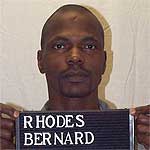
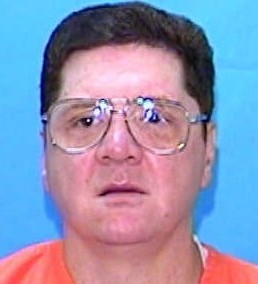
Bernard Rhodes
Murderer Russell Ellwood
Murderer · USA · 1991
Russell Ellwood was a former taxi driver. Authorities suspected him of killing…
20 victims
Russell Ellwood
Murderer · USA · 1991
Russell Ellwood was a former taxi driver. Authorities suspected him of killing…
20 victims
 Robert Martines Perez
Murderer · USA · 1994
Name: Robert Martines Perez · Other name used in proceedings: Robert Martinez P…
15 victims
Robert Martines Perez
Murderer · USA · 1994
Name: Robert Martines Perez · Other name used in proceedings: Robert Martinez P…
15 victims
 Billy Frank Vickers
Murderer · USA · 1993
Billy Frank Vickers Vickers was executed by lethal injection in Texas on Januar…
14 victims
Billy Frank Vickers
Murderer · USA · 1993
Billy Frank Vickers Vickers was executed by lethal injection in Texas on Januar…
14 victims
 Taichin Preyor
Murderer · USA · 2004
Taichin Preyor was sentenced to death on March 30, 2005. · February 26, 2004 —…
1 victim
Taichin Preyor
Murderer · USA · 2004
Taichin Preyor was sentenced to death on March 30, 2005. · February 26, 2004 —…
1 victim
 Derek Percy
Murderer · Australia · 1965
Derek Ernest Percy was declared not guilty by reason of insanity in April 1970…
1 victim
Derek Percy
Murderer · Australia · 1965
Derek Ernest Percy was declared not guilty by reason of insanity in April 1970…
1 victim
 Robert Streetman
Murderer · USA · 1982
Robert Streetman was executed by lethal injection in Texas on January 7, 1988.…
1 victim
Robert Streetman
Murderer · USA · 1982
Robert Streetman was executed by lethal injection in Texas on January 7, 1988.…
1 victim
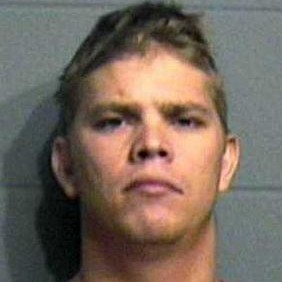 Eric Hanson
Mass murderer · USA · 2005
Eric Hanson — defendant; self-employed mortgage broker of Naperville; convicted…
4 victims
Eric Hanson
Mass murderer · USA · 2005
Eric Hanson — defendant; self-employed mortgage broker of Naperville; convicted…
4 victims
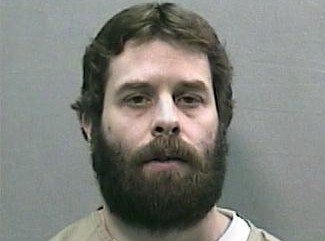 Hugh Miller
Murderer · USA · 1995
Hugh Miller was sentenced to three consecutive life terms in prison on June 12,…
3 victims
Hugh Miller
Murderer · USA · 1995
Hugh Miller was sentenced to three consecutive life terms in prison on June 12,…
3 victims
 Joseph Nichols
Murderer · USA · 1980
Joseph Bernard Nichols was executed by lethal injection in Texas on March 7, 20…
1 victim
Joseph Nichols
Murderer · USA · 1980
Joseph Bernard Nichols was executed by lethal injection in Texas on March 7, 20…
1 victim
- Gender
- male
- Country
- USA
- Location
- Boone County, Missouri, USA
- Date of birth
- ???
- Characteristics
- —
- Victim profile
- Dorothy Martin, 81
- Method of murder
- A sphyxiation from the plastic bag tied over her head
- Date(s) of murder
- July 16, 1997
- Years active
- 1997
- Date of arrest
- —
- Status
-
Sentenced to death
Sentenced to death in 1998; sentence reversed and case remanded; affirmed in part and reversed in part
Case record: Bernard Rhodes
Status / legal outcome
Bernard Rhodes was convicted of first degree murder and first degree robbery. The jury recommended death for the murder and life imprisonment for the robbery. The sentence of death was reversed and the case was remanded; the judgment was affirmed in all other respects. The appellate decision stated: “AFFIRMED IN PART; REVERSED IN PART; REMANDED.”
Timeline
- 13/04/1999 — Supreme Court of Missouri handdown date.
Background
Bernard Rhodes entered Dorothy Martin’s Columbia home looking for something to steal.
The offence
Rhodes entered Dorothy Martin’s home looking for valuables. After Martin spotted appellant, he knocked her down and she stopped moving. While Rhodes searched for valuables, he observed Martin trying to get up. Rhodes bound Martin’s arms and legs, again searched for valuables, but was interrupted by Martin’s screams for help.
Rhodes wrapped a green cloth around Martin’s head and resumed his search. After still hearing Martin’s screams through the cloth, he placed a plastic bag over her head. The screaming stopped. Rhodes then took Martin’s car keys, a few of her belongings, and drove away in Martin’s car.
Investigation
An autopsy revealed that Martin had black eyes, lacerations on her lips and above her eyes, a broken nose, bruises on her shoulders, contusions on her elbows, marked hemorrhaging under the skin of her head, a broken rib, and a broken neck.
Medical testimony established that the cause of death was asphyxiation from the multicolored plastic bag tied over her head.
Arrest
Rhodes provided a confession.
The appellate decision included Rhodes’ statements in a videotaped confession:
“I seen the door open. I thought I would go get me something. Anything worth something.”
Later statements in the confession described Martin:
“She just laid there. I didn’t see her mouth bleeding till later. She quit moving.”
The confession also described taking items from the garage and leaving in the car:
“I then got keys and looked in garage & saw car. I got in car and I seen the weedeater. I got out & put it in car & I left.”
Trial
The Circuit Court of Boone County imposed the jury-recommended punishments: death for the murder and life imprisonment for the robbery.
Participants and representation
The appeal included:
- Appeal From: Circuit Court of Boone County
- The Honorable Ellen S. Roper, Judge
- Counsel for Appellant: Janet Thompson
- Counsel for Respondent: Daniel W. Follett
Convictions and jury recommendations
A jury convicted Rhodes of:
- first degree murder, and
- first degree robbery.
The circuit court imposed the same punishments.
Sentencing
During sentencing, the prosecutor improperly personalized its argument for the death penalty by asking the jurors to imagine themselves in the victim’s place experiencing every detail of the murder, while demonstrating it.
Verbatim sentencing-argument excerpts and objections
The record included the following exchange and demonstration:
“Try, try just taking your wrists during deliberations and crossing them and lay down and see how that feels (demonstrating). Imagine your hands are tied up.”
MS. SHAW (defense counsel): “Your Honor, I’m going to object to the personalization.” THE COURT: “The objection’s overruled.”
MR. CRANE (the prosecutor):
“And ladies and gentlemen, you’re on the floor, and you’re like that, with your hands behind your back, and this guy is beating you. Your is nose broken. Every time you take a breath, your broken rib hurts. And finally, after you're back over on your face, he comes over and he pulls your head back so hard it snaps your neck. *** Hold your breath. For as long as you can. Hold it for 30 seconds. Imagine it’s your last one.”
MS. SHAW: “Your Honor, I’m going to object.” MR. CRANE: “You can do that.” MS. SHAW: “Improper to put the jury in the place of the victim. I think this is improper argument.” THE COURT: “The objection is overruled.”
The appellate decision described that, while arguing in this manner, the prosecutor physically demonstrated how the victim was murdered.
Appeals
The appeal challenged several issues during the guilt phase and the penalty phase.
Guilt phase rulings
Admission of autopsy photographs
The trial court admitted exhibits 49 A-C, photographs of Dorothy Martin’s autopsy. The appellate court held the photographs were properly admitted because they showed the nature and location of wounds and helped the jury understand the extent and location of injuries.
Voluntary intoxication evidence and instruction
Rhodes contended the trial court erred by sustaining the State’s objection to testimony of William Rogers that he used drugs with appellant prior to the murder.
The appellate discussion stated:
- testimony that a party was not intoxicated during relevant time is irrelevant and immaterial,
- testimony of voluntary intoxication is not admissible to negate the mental state of an offense, and
- since no evidence of intoxication relevant to “conduct” was introduced, the court properly did not instruct the jury to consider such evidence.
The appellate decision stated that Rogers would have testified that, in the weeks before the murder, he and Rhodes often used crack cocaine together—the last time being between one and three days before Martin’s death.
The appellate decision referenced an instruction requested by Rhodes:
“You may consider evidence that Bernard Rhodes was in a drugged condition to evaluate his conduct. You may not consider evidence that Bernard Rhodes was in a drugged condition when evaluating whether the state has met its burden of proving beyond a reasonable doubt mental states which are elements of the offense.”
The decision also quoted Rhodes’ argument:
“The evidence that Bernard had been ingesting crack cocaine was thus relevant since, as Dr. Evans explained, the brain chemistry when an individual crashes from a crack high causes him to try to find more crack to alleviate the pain caused by the crash.”
The appellate decision stated that evidence of Rhodes’ cocaine addiction was admitted to show motive to rob Martin to buy more crack cocaine, and the court limited the jury’s consideration with this instruction:
“a drugged condition from drugs will not relieve a person of responsibility for his conduct.”
Sufficiency of the evidence for first degree murder and first degree robbery
The appellate decision rejected Rhodes’ insufficiency challenge to both convictions.
For first degree murder, the appellate decision described first degree murder as knowingly causing death after deliberation, and stated that:
- repeated blows to the victim supported deliberation,
- deliberation could be found based on multiple opportunities to abandon his plan after the first attack while ransacking her home and then returning to bind and suffocate her,
- Rhodes’ “frenzied condition” argument based on “crashed” euphoria was not permitted because voluntary intoxication may not negate the mental state or provide an insanity defense absent a separate mental disease resulting in diminished capacity without voluntarily ingested drugs,
- the necessity to consume more drugs did not excuse the killing.
For first degree robbery, the appellate decision stated:
- the offense required forcibly stealing property and in the course thereof causing serious physical injury,
- Rhodes entered Martin’s home to steal property,
- when spotted, he knocked Martin unconscious,
- marked hemorrhaging under the skin of Martin’s head could support a finding that Rhodes forcibly stole property and simultaneously caused serious physical injury,
- Rhodes later left in Martin’s car with some of her possessions, including the weedeater.
The appellate decision also stated that jurors could infer Rhodes’ physical abuse was “for the purpose of preventing resistance to the taking” and therefore in the course of the robbery.
The appellate decision addressed the intent-to-steal timing claim by citing Rhodes’ own videotaped confession showing his intent to steal was formed before entering Martin’s home.
Prosecutor’s guilt-phase closing argument
Rhodes did not object to the State’s closing argument during the guilt phase, and the appellate court assessed his claims under plain error review.
The appellate decision addressed five closing-argument issues, including these quoted statements:
- On “longer cases,” the appellate decision referenced:
“Ladies and gentleman of the jury, this case has moved quickly. You may have heard of cases, other cases tried elsewhere that take a lot longer. Don’t let that bother you. This case is just that tight. It’s just that good.”
- On the case being the murder in the first degree, the quoted statement was:
“once again, ladies and gentlemen, if there ever was a case of murder in the first degree, it’s this one, and you know that.”
- On reasonable doubt, the quoted statement was:
“This case is proven beyond a reasonable doubt. Now if you want to get into unreasonable doubt, that’s another matter.”
- On post-Miranda statements, the quoted comment was:
“And then he gets with the police and doesn’t tell the truth until they finally got him in a position based on the evidence where he has to start talking. He doesn’t want to get caught. And through his lawyers he’s doing the same thing to you. He doesn’t want you to catch him.”
- On defense arguments being unpersuasive, the quoted statement was:
“I admire – it’s hard for me to take sometimes, I admit, the defense arguments. She’s got to do her job for her client, ladies and gentlemen. But just because the defense gets up here and tells you something, just because the state’s got the burden of proof in this case, it doesn’t mean you got to believe and accept what they tell you.”
The appellate decision concluded no reversible error occurred in the guilt phase.
Outcome
The sentence of death was reversed and the case was remanded. The judgment was affirmed in all other respects. The appellate decision concluded:
- “AFFIRMED IN PART; REVERSED IN PART; REMANDED.”
Spotted an error, or have more information about this case?