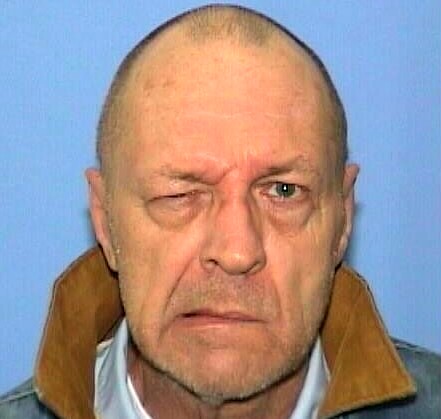
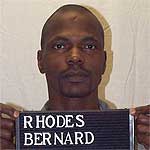
Robert Ben Rhoades
Serial killer Glen Edward Rogers
Serial killer · USA · 1993
Glen Edward Rogers was a spree killer whose cross-country rampage in 1994-95 le…
70 victims
Glen Edward Rogers
Serial killer · USA · 1993
Glen Edward Rogers was a spree killer whose cross-country rampage in 1994-95 le…
70 victims
 Michael Swango
Serial killer · USA · 1981
Michael Swango (Joseph Michael Swango) was a physician and American serial kill…
60 victims
Michael Swango
Serial killer · USA · 1981
Michael Swango (Joseph Michael Swango) was a physician and American serial kill…
60 victims
 Efren Saldivar
Serial killer · USA · 1989
Efren Saldivar (born 30 September 1969) was an American serial killer who murde…
50 victims
Efren Saldivar
Serial killer · USA · 1989
Efren Saldivar (born 30 September 1969) was an American serial killer who murde…
50 victims
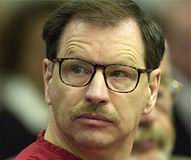 Gary Ridgway
Serial killer · USA · 1982
Gary Leon Ridgway Ridgway was born 18-February-1949 in Salt Lake City, UT. He w…
49 victims
Gary Ridgway
Serial killer · USA · 1982
Gary Leon Ridgway Ridgway was born 18-February-1949 in Salt Lake City, UT. He w…
49 victims
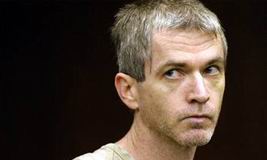 Charles Cullen
Serial killer · USA · 1984
Charles Cullen (born February 22, 1960) was a former nurse and the most prolifi…
45 victims
Charles Cullen
Serial killer · USA · 1984
Charles Cullen (born February 22, 1960) was a former nurse and the most prolifi…
45 victims
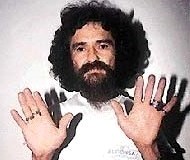 Dorancel Vargas
Serial homicide · Venezuela · 1995
Dorancel Vargas, also known as “el comegente,” was born in 1957. He was describ…
10 victims
Dorancel Vargas
Serial homicide · Venezuela · 1995
Dorancel Vargas, also known as “el comegente,” was born in 1957. He was describ…
10 victims
 Jeremy Steinke
Murderer · Canada · 2006
Jeremy Allan Steinke was sentenced to three life sentences on December 15, 2008…
3 victims
Jeremy Steinke
Murderer · Canada · 2006
Jeremy Allan Steinke was sentenced to three life sentences on December 15, 2008…
3 victims
 Sebastian Bridges
Murderer · USA · 1997
Sebastian Stephanus Bridges was convicted of first degree murder and kidnapping…
1 victim
Sebastian Bridges
Murderer · USA · 1997
Sebastian Stephanus Bridges was convicted of first degree murder and kidnapping…
1 victim
 Eric Randall Nance
Murderer · USA · 1993
Eric Randall Nance was a white male who was born on 01/09/60. He was convicted…
1 victim
Eric Randall Nance
Murderer · USA · 1993
Eric Randall Nance was a white male who was born on 01/09/60. He was convicted…
1 victim
- Gender
- male
- Country
- USA
- Location
- Texas/Illinois, USA
- Date of birth
- November 22, 1945
- Age at first offence
- 44
- Characteristics
- rape, torture, truck driver
- Victim profile
- Regina Kay Walters, 14 / Douglas Scott Zyskowski, 25, and Patricia Candace Walsh, 24
- Method of murder
- Ligature strangulation - Shooting
- Date(s) of murder
- 1989 - 1990
- Years active
- 1989–1990
- Date of arrest
- April 1, 1990
- Status
-
Life imprisonment
Sentenced to life in prison without parole in Illinois on September 11, 1992
Case record: Robert Ben Rhoades
Timeline
- February 3, 1990 — Regina K. Walters, age 14, was last seen alive at her mother’s apartment in Pasadena, Texas.
- January 1990 — Rhoades allegedly murdered Scott Zyskowski and dumped his body in Texas.
- March 16 — A first call to Regina’s father was made from a pay phone at a truckstop in Oklahoma City.
- April 1, 1990 — Arizona State Trooper Mike Miller stopped a Peterbilt semi-tractor parked with hazard lights flashing along Interstate 10 at the city limits of Casa Grande; a nude woman handcuffed and chained inside the sleeper cab was found.
- April 6, 1990 — Agents conducted a search of Rhoades’ Houston apartment and removed bondage material, women’s clothing, make-up, and white towels, including one saturated with blood.
- September 29, 1990 — Regina Walters’ badly decomposed body was found on Interstate 70 in a barn along Interstate 70; it appeared she had been strangled.
- October 1990 — Patricia Candace Walsh’s badly decomposed body was discovered 22 miles south of Fillmore by deer hunters.
- 1991 — The FBI entered the Regina Walters case in early 1991.
- 1992 (September) — Rhoades was shown all the evidence against him and entered a guilty plea to killing Regina Walters; he received a sentence of life without the possibility of parole.
- September 11, 1992 — After plea negotiations with the State, Rhoades pled guilty to first-degree murder and was sentenced to imprisonment for natural life.
- May 6, 1992 — The State filed a notice it intended to seek the death penalty.
- December 26, 1996 — Defense counsel filed a motion to withdraw the guilty plea on remand.
- April 24, 1997 — Defense counsel filed an amended motion to withdraw the guilty plea and/or to reduce sentence; another Rule 604(d) certificate was filed on this date.
- December 4, 1998 — A hearing was held on the motion to reduce sentence, and an offer of proof was presented on the motion to withdraw the guilty plea.
- 2003 — The Millard County Sheriff’s Office detectives were finally able to identify Walsh after her remains were kept in a basement.
- 2005 (early) — Rhoades was extradited from the Pontiac, Ill., Correctional Center to Utah to stand trial for Walsh’s murder.
- 2005 — A trial scheduled for September was postponed until 2009 because Rhoades got a new defense attorney.
- 2006 — Utah dropped its case for Walsh’s murder and sent Rhoades back to Illinois in anticipation of Texas filing two murder counts and seeking the death penalty.
Background
Robert Ben Rhoades was a former truck driver. He was described as having traveled and allegedly used his truck as a “torture chamber” with handcuffs on the ceiling used to incapacitate victims.
Alva Busch wrote a book titled “Roadside Prey” about Rhoades’ travels. Rhoades was accused in the book and by investigators of sexually assaulting and systematically torturing women he held captive before killing them.
A Tucson Weekly story in 1996 quoted officials as believing that by early 1990 Rhoades was kidnapping and killing an average of three women a month, and it alleged he carried a briefcase of torture items on the road.
Behavioral profiling testimony in later proceedings described sexual sadism as arousal by a victim’s suffering and discussed differences between modus operandi and a signature aspect.
Debbie was Rhoades’ third wife. Debbie stayed married to him for several years and later said she thought his conduct was more than “kinky sex.” She later said, “He killed a 14-year-old,” and stated she had a 14-year-old daughter herself.
The offence
Regina K. Walters murder (first-degree murder; guilty plea)
Rhoades pled guilty to first-degree murder. The criminal information count alleged the murder occurred “on or about February 3, 1990[,] to March 17, 1990.”
The grand jury heard evidence that the victim, Regina K. Walters, age 14, was last seen alive at her mother’s apartment on February 3, 1990, in Pasadena, Texas.
The grand jury heard evidence that the victim’s badly decomposed body was found on September 29, 1990, in a barn along Interstate 70. The body appeared to have been strangled, with strangulation described as:
“A small piece of board inserted through a double wire loop of baling wire, twisted clockwise around the neck of the body.”
A Rule 402 hearing record also stated that the court could impose a term of natural-life imprisonment without parole if it decided the actions were exceptionally brutal and heinous indicative of wanton cruelty.
Walsh and Zyskowski allegations (capital murder and aggravated kidnapping charges; later dropped in Utah/Millard County proceeding)
Rhoades was accused of murdering Patricia Candace Walsh, 24, and her husband, Scott Zyskowski.
Walsh’s badly decomposed body was found by hunters in Millard County months after she had been murdered. Walsh’s remains remained unidentified in the basement of the Millard County Sheriff’s Office for 13 years before detectives identified her in 2003.
Prosecutors believed Rhoades picked up Walsh and her husband, Scott Zyskowski, both originally from Seattle, when they were hitchhiking in Texas in 1990.
Prosecutors said Rhoades allegedly murdered Zyskowski near January 1990 in Texas and dumped his body. Utah officials alleged that for the next seven days Rhoades held Walsh captive before shooting her multiple times and dumping her body in Millard County.
Investigation
Identification of evidence and connecting cases
Police and investigators linked Rhoades to the crimes using evidence collected across jurisdictions.
Rhoades’ notebook was found in his truck. Investigators stated that it contained unlisted phone numbers of Regina Walters’ father, along with phone numbers of her mother, grandmother and friends.
Agents compared Rhoades’ trucking logs with the dates of traced phone calls made from Oklahoma City and Ennis, Texas. The first call to Regina’s father was from a pay phone at a truckstop in Oklahoma City on March 16. On the next day, Rhoades had been in Ennis, Texas, based on trucking logs.
Search warrant proceedings described the seizure of women’s clothing, obscene magazines and books, and instruments that could be used in bondage-type situations, as well as photographs of nude women, including one identified as Regina K. Walters.
Arrest
On April 1, 1990, Arizona State Trooper Mike Miller stopped a Peterbilt semi-tractor rig with hazard lights flashing along Interstate 10 at the city limits of Casa Grande after stopping the rig’s driver.
Miller saw a nude woman shackled inside the sleeper cab. Miller stepped up on the runner to look inside. The woman started screaming. Rhoades exited the truck.
Miller’s account included the following statement:
“Well, at that particular time, when I shined the flashlight inside the vehicle, the woman screamed and I saw a momentary illumination of a man's face with the flashlight. That's when this series of events started, and there was no stopping any of the events that happened.”
Miller ordered the man out, handcuffed him behind his back, and seatbelted him in the patrol car. Miller later called for backup from the city of Casa Grande.
Officer Robert Gygax of the Casa Grande Police Department freed the woman with handcuff keys.
After the woman’s injuries were photographed, she gave information about her attacker and said she had been picked up at Rip Griffin’s truckstop just north of Phoenix. She described that Rhoades shoved her into the sleeper cab and shackled her, and that he took torture items from a briefcase. She said she had been tortured on and off since he picked her up earlier that day.
Detective Rick Barnhart asked whether she had been raped. The victim hesitated before stating she had been rescued just in time.
Barnhart described evidence from the briefcase:
“There were alligator clips, leashes, handcuffs, whips, pins and dildos. It was just very well cared for and everything was placed neatly. I knew I had a serial rapist because of all that, and I suspected he might also have killed someone.”
Trial
Utah case (Walsh murder) and Millard County proceedings
Rhoades was scheduled for a preliminary hearing in a capital case, and the scheduled trial date for September was postponed until 2009 due to a new defense attorney.
A motion in Millard County’s 4th District Court officially dismissed capital murder and aggravated kidnapping charges, and Rhoades was to be tried in Texas for the Utah slaying.
In the Utah proceedings, Utah officials alleged Rhoades held Walsh captive for seven days and shot her multiple times before dumping her body in Millard County.
Illinois case (guilty plea; appeal history)
In Illinois, under a plea agreement with the State, Rhoades pled guilty to first-degree murder and was sentenced to imprisonment for natural life on September 11, 1992.
The case included multiple appeals. On his third appeal to the Appellate Court of Illinois, Fifth District, the court affirmed the circuit court’s judgment.
The opinion discussed a Rule 402 hearing and the court’s ability to impose natural-life imprisonment without parole if it decided the actions were exceptionally brutal and heinous indicative of wanton cruelty.
The opinion also discussed procedural history involving:
- Remand after the first appeal due to Supreme Court Rule 604(d) compliance issues.
- Proceedings in which Jon Coleman was appointed on remand and later allowed to withdraw.
- A second appeal reversing the denial of a Rule 604(d) motion and remanding for compliance.
- On remand, later filing of motions and certificates, including timeliness issues under Rule 604(d).
Defense arguments in the appeal included reliance on Apprendi v. New Jersey and the constitutionality of the statute under which the natural-life sentence was imposed.
The court concluded that no Apprendi violation occurred and that the judgment was affirmed. It stated that the defendant waived a jury trial right by pleading guilty and could not later challenge the sentence on that basis.
The Appellate Court opinion concluded:
“For the foregoing reasons, the judgment of the circuit court of Bond County is affirmed. Affirmed.”
The opinion included concurrence by:
- CHAPMAN, P.J., and HOPKINS, J.
Sentencing
Rhoades was sentenced to imprisonment for natural life on September 11, 1992 after pleading guilty to first-degree murder.
The Appellate Court opinion described that the sentence of death had been a possibility because on May 6, 1992, the State filed a notice it intended to seek the death penalty, and the guilty plea avoided that possibility.
Within 30 days of sentencing, Rhoades filed a motion to reduce sentence, and it was denied after a hearing.
Appeals
This was described as the defendant’s third appeal to the Appellate Court of Illinois, Fifth District, and the court treated it as a direct appeal from defendant’s conviction.
On the initial part of the appeal, the defendant contended the circuit court erred in refusing to allow him to file a motion to withdraw his guilty plea after remand from the second appeal.
The Appellate Court allowed a supplemental brief raising the issue whether the statute under which the defendant was sentenced was unconstitutional, based on Apprendi v. New Jersey.
The Appellate Court affirmed the circuit court’s judgment.
Outcome
Rhoades remained imprisoned under a sentence of natural life / life in prison without parole in Illinois.
In Utah proceedings related to Walsh’s murder, Utah dropped its case and sent Rhoades back to Illinois in anticipation of Texas seeking to file two murder counts and seek the death penalty. Texas authorities were to begin extradition-related processes.
Other details
Victims and related individuals
- Patricia Candace Walsh, age 24, was the victim whose badly decomposed body was found in Millard County by hunters.
- Scott Zyskowski, age 25, was Walsh’s husband. Prosecutors believed Rhoades killed him and dumped his body in Texas in January 1990.
- Regina Walters, age 14, was identified through dental records and later connected to Rhoades through DNA and other evidence. Her body was found on Interstate 70 in a barn along Interstate 70.
- Ricky Lee Jones was a boyfriend connected to the Regina Walters case. Jones had not been found, and his body had never been found.
- Katie Ford, age 27 (not her real name), was identified as the woman in the truck on April 1, 1990.
- In a separately described case, there was mention of a kidnapping/rape case involving a victim identified as F.R.T. taken from California to Houston, Texas, where Rhoades kept the victim chained for a two-week period and raped her; the victim escaped.
- The Appellate Court opinion referenced the grand jury hearing that the victim Regina K. Walters was last seen alive at her mother’s apartment in Pasadena, Texas.
Additional allegations and statements
- Investigators and others believed Rhoades used his truck to incapacitate victims and systematically torture them before killing them.
- A Tucson Weekly story (1996) alleged officials believed he kidnapped and killed an average of three women a month by early 1990 and carried torture items in a briefcase.
- Authorities described evidence tags for destruction and stated that the evidence was salvaged.
- Special Agent Bob Lee described that because the rape kit was refined, they knew he had been doing this for a long time. Lee explained:
- Lee also explained:
- Behavioral profiling discussion quoted Debbie’s remarks about the 14-year-old victim and her own daughter:
- Debbie also said:
- Hazelwood was quoted regarding what behavioral experts could and could not tell, including:
- Hazelwood was quoted regarding sexual sadists and discussion of what could be learned from cases and crime scenes:
- Alva Busch was quoted:
- Busch also described the cab and what he said he had observed in the truck:
- Busch described his view of Rhoades’ alleged actions:
- Arizona DPS Officer Mike Miller was quoted:
- Detective Barnhart was quoted recalling Rhoades’ briefcase:
- Prosecutor Brent Berkley was quoted about witnesses:
- Berkley was also quoted about justice and interest:
- Berkley was quoted about regret and what he would do again:
- A call to Walters’ father included an anonymous caller statement:
- The caller statement ended with a hang-up when Walters asked if her daughter was alive.
- A message in the notebook included:
“Ricky is a dead man”
“I made some changes. I cut her hair.” “He also told Walters that his daughter was in a barn loft”
“It was worth it, I think we'd do it again,” “This case is different from most homicides. Most of the evidence is from out of state and from different agencies. It's kind of a complicated case. When we got looking at the best interest of the victims ... it'll bring swifter justice in the case.”
“It's in the best interest of justice and the victims' families,”
“The witnesses in both murders are all the same. It just made more sense, he said, to make those people only have to testify once.”
“He took good care of the contents of that briefcase,”
“It's the good guys who tell you they have a weapon,”
“He drove around the country torturing these people until he got tired of them. Then he killed them.”
“In the cab of that semi-truck, he had a torture chamber built into it.”
“Mr. Rhoades is a very evil man.”
“We can give you facts. We can tell you what occupations they probably have, their marital status, what branch of the military they served in, even what kind of sexual dysfunction each one has--based on the crime scene. This is all based on cases, crime-scene investigation and experience. What we can't tell you is why, or how they got that way.”
“I have a 14-year-old daughter myself.”
“He killed a 14-year-old,”
“Sexual sadists start off with a limited rape kit, as we call it,”
“Because his was so refined, we knew he'd been doing this for a long time.”
Legal citations and documents referenced in the appellate opinion
The Appellate Court opinion referenced:
- Supreme Court Rule 402 (134 Ill. 2d R. 402(c))
- Supreme Court Rule 604(d) (145 Ill. 2d R. 604(d))
- People v. Maltimore
- People v. Ledbetter
- People v. Janes
- People v. Feltes
- People v. Evans
- Apprendi v. New Jersey, 530 U.S. 466
- People v. Chandler
- People v. Nitz
- People v. Calva
- North Carolina v. Alford
- Boykin v. Alabama
- Davis v. City of Evanston
- Boykin v. Alabama was quoted for the proposition about guilty pleas ending controversy and removing prosecution’s burden of proof by supplying evidence and verdict.
Names as presented in the legal opinion and narrative
The Appellate Court opinion used “Robert Ben Rhoades” and also referenced “Robert Ben Rhoades (defendant).” It described Regina as “Regina K. Walters” and also used “Regina Walters” in other narrative portions of the material.
Spotted an error, or have more information about this case?