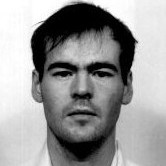
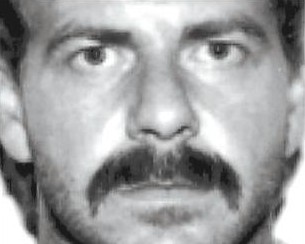
Robert Streetman
Murderer Ervil LeBaron
Murderer · USA · 1972
Ervil Morrell LeBaron (1925 to August 16, 1981) was the leader of a polygamous…
35 victims
Ervil LeBaron
Murderer · USA · 1972
Ervil Morrell LeBaron (1925 to August 16, 1981) was the leader of a polygamous…
35 victims
 Brian Kevin Rosenfeld
Murderer · USA · 1985
Brian Kevin Rosenfeld Brian Kevin Rosenfeld was sentenced to three concurrent l…
23 victims
Brian Kevin Rosenfeld
Murderer · USA · 1985
Brian Kevin Rosenfeld Brian Kevin Rosenfeld was sentenced to three concurrent l…
23 victims
 Marvin Gray
Murderer · USA · 1975
Marvin Gray was convicted killer who claimed responsibility for 23 slayings and…
23 victims
Marvin Gray
Murderer · USA · 1975
Marvin Gray was convicted killer who claimed responsibility for 23 slayings and…
23 victims
 Yahweh ben Yahweh
Murderer · USA · 1980
Yahweh ben Yahweh was born and legally named Hulon Mitchell Jr. (October 27, 19…
23 victims
Yahweh ben Yahweh
Murderer · USA · 1980
Yahweh ben Yahweh was born and legally named Hulon Mitchell Jr. (October 27, 19…
23 victims
 Russell Ellwood
Murderer · USA · 1991
Russell Ellwood was a former taxi driver. Authorities suspected him of killing…
20 victims
Russell Ellwood
Murderer · USA · 1991
Russell Ellwood was a former taxi driver. Authorities suspected him of killing…
20 victims
 Matti Saari
Mass murderer · Finland · 2008
Matti Juhani Saari committed suicide by shooting himself in the head on 23 Sept…
10 victims
Matti Saari
Mass murderer · Finland · 2008
Matti Juhani Saari committed suicide by shooting himself in the head on 23 Sept…
10 victims
 Ronald True
Murderer · United Kingdom · 1922
Ronald True was sentenced to death for the murder of 25-year-old Olive Young, a…
1 victim
Ronald True
Murderer · United Kingdom · 1922
Ronald True was sentenced to death for the murder of 25-year-old Olive Young, a…
1 victim
 Robert Gattis
Murderer · USA · 1990
Robert Gattis (DOB: 11/18/1961) was a Black male. Gattis was convicted in Octob…
1 victim
Robert Gattis
Murderer · USA · 1990
Robert Gattis (DOB: 11/18/1961) was a Black male. Gattis was convicted in Octob…
1 victim
 Joseph Schwab
Murderer · Australia · 1987
Joseph Schwab was a German man who murdered five tourists in the Northern Terri…
5 victims
Joseph Schwab
Murderer · Australia · 1987
Joseph Schwab was a German man who murdered five tourists in the Northern Terri…
5 victims
 Timothy Don Carr
Murderer · USA · 1992
Timothy Don Carr, a white male, was executed by lethal injection in Georgia on…
1 victim
Timothy Don Carr
Murderer · USA · 1992
Timothy Don Carr, a white male, was executed by lethal injection in Georgia on…
1 victim
 Ramiro Hernandez
Murderer · USA · 1997
Ramiro Hernandez was convicted of capital murder and sentenced to death. He was…
2 victims
Ramiro Hernandez
Murderer · USA · 1997
Ramiro Hernandez was convicted of capital murder and sentenced to death. He was…
2 victims
- Gender
- male
- Country
- USA
- Location
- Hardin County, Texas, USA
- Date of birth
- 1960
- Age at first offence
- 22
- Characteristics
- robbery
- Victim profile
- Christine Baker (female, 44)
- Method of murder
- Shooting (.22 caliber rifle)
- Date(s) of murder
- December 17, 1982
- Years active
- 1982
- Date of arrest
- 2 days after
- Status
-
Executed
Executed by lethal injection in Texas on January 7, 1988
Case record: Robert Streetman
STATUS / Outcome
Robert Streetman was executed by lethal injection in Texas on January 7, 1988.
Background
Robert Streetman was convicted of capital murder and sentenced to death. He was described as a high school dropout and as an oil derrick worker. He started using drugs when he was 8. Streetman had previously been on death row in 1983 and had said he was ready to die since the day he arrived there.
The execution followed legal proceedings that included a request for a stay and later proceedings in which the United States Supreme Court deadlocked on a request for a stay.
The offence
Christine Baker was fatally shot during a burglary of her home. The killing occurred on December 17, 1982. She died after a single shot fired through a window while she sat knitting and watching television in her home in Kountze, Tex.
Trial testimony described the burglary as a plan in which Streetman and accomplices believed that a large amount of money was present. The only item taken was Christine Baker’s purse, containing $1. Unbeknownst to the men, $64,000 in cash and checks was hidden. Christine Baker’s relatives accidentally found the money a month after her death.
Investigation
On December 19, 1982, law enforcement officials arrested Robert Streetman, Johnny Johnson, David Kirkendoll, and Gary Holden in connection with a series of thefts of agricultural equipment. While interrogating the four theft suspects, officials discovered that the men had also been involved in the Baker killing.
Later that evening and early the following morning, Streetman gave statements and signed a written confession implicating himself as Baker’s killer. Holden also gave a statement detailing his involvement and identifying Streetman as the triggerman. Kirkendoll gave a statement identifying Streetman as the triggerman.
Authorities granted Johnson immunity. Holden received ten years’ probation in exchange for his testimony at Streetman’s trial. Kirkendoll received a sentence of forty-five years in the Texas Department of Corrections in exchange for a plea agreement and his promise to testify.
Arrest
Law enforcement officials arrested Robert Streetman, Johnny Johnson, David Kirkendoll, and Gary Holden on December 19, 1982 in connection with thefts of agricultural equipment. The arrests related to the series of thefts and later connected the men to the Baker killing.
Trial
The indictments covered capital murder. Of the four indicted men, only Streetman was eventually tried for and convicted of capital murder.
Counsel and representation
The state trial judge initially appointed Michael S. McNeely to represent Streetman. McNeely was inexperienced in handling contested criminal cases and had never before tried a death penalty case. Because of his lack of experience, McNeely requested an experienced attorney to assist. In response, the trial judge appointed Robert S. Coe, who served as de facto lead counsel at trial.
Guilt stage evidence
At the guilt stage, the State presented four witnesses: Ralph Osborne, the Chief Deputy Sheriff of Hardin County, Texas; Nile Henry Baker, the victim’s husband; Gary Holden; and Clint Parr, a friend of Streetman.
Deputy Sheriff Ralph Osborne testified about his investigation, including finding Baker’s body and determining from the physical evidence at the scene that she had been murdered.
On cross-examination, defense attorney Robert Coe elicited testimony that Streetman, Holden, and Kirkendoll each signed statements giving consistent accounts of the Baker murder and admitting their involvement.
During Coe’s cross-examination, Osborne testified that Coe’s questions reflected that the three men had signed statements voluntarily and admitted involvement in killing Mrs. Baker. Osborne also testified that the three statements were similar, that the four men were kept separate at all times, and that Coe’s cross-examination did not reveal a conflict among the statements.
In response to a question by defense attorney Coe, Osborne testified regarding why only Streetman was being tried for capital murder. Osborne testified that Streetman “told me personally that he [had] shot the lady.”
Coe solicited this testimony despite a written pretrial motion to suppress any statements by Streetman that had been filed and taken under advisement by the trial court. As a result, the State was never required to actually introduce Streetman’s confession into evidence. Also, because Coe elicited admission of Kirkendoll’s written confession, the State on redirect examination introduced Kirkendoll’s full statement into evidence. Because of this, it was not necessary for Kirkendoll to testify in person, and he did not testify.
Nile Baker testified regarding the events of the night his wife was murdered. He had been away from home much of that evening and did not witness the burglary or murder.
Gary Holden testified as a participant. He did not witness the killing, but testified that Streetman admitted shooting Baker during a conversation the following day.
Clint Parr also testified that Streetman admitted during a conversation the day after the murder to “having shot a woman.”
Defense witnesses
Although defense attorney Coe cross-examined each State witness, he declined during the guilt phase to call any defense witnesses on behalf of Streetman.
Verdict and special issues
The jury found Streetman guilty of murder. After hearing evidence on punishment, the jury returned affirmative answers to the special issues submitted pursuant to Tex.Code Crim.Proc.Ann. art. 37.071 (Vernon 1981).
The three questions submitted to the jury under article 37.071 were:
- Whether the conduct of the defendant that caused the death of the deceased was committed deliberately and with the reasonable expectation that the death of the deceased or another would result;
- Whether there is a probability that the defendant would commit criminal acts of violence that would constitute a continuing threat to society; and
- If raised by the evidence, whether the conduct of the defendant in killing the deceased was unreasonable in response to the provocation, if any, by the deceased.
Sentencing
On August 10, 1983, the trial judge sentenced Streetman to death by lethal injection after the jury returned affirmative answers to the special issues.
The sentencing scheme was described as involving special questions. If the jury answered “yes” to two special questions, Streetman would automatically be sentenced to death. The first special question asked whether the murder was committed deliberately and with the reasonable expectation that the death would result. The second special question asked whether there is a probability that the defendant would commit criminal acts of violence that would constitute a continuing threat to society. The jury returned “Yes” to both questions, fixing the sentence at death. The Texas Court of Criminal Appeals affirmed the judgment.
Appeals
Direct appeal
On direct appeal, the Texas Court of Criminal Appeals affirmed Streetman’s conviction and sentence. See Streetman v. State, 698 S.W.2d 132 (Tex.Crim.App.1985) (J. Teague).
Scheduling and state habeas corpus
Streetman’s execution was originally scheduled to take place on February 6, 1986.
On February 3, 1986, Streetman, represented by different counsel, filed an application for a writ of habeas corpus in state district court and also moved to withdraw and recall the warrant of execution. In his state habeas corpus petition, Streetman asserted he received ineffective assistance of trial and appellate counsel. The state habeas petition focused principally on Coe’s conduct during the guilt stage of Streetman’s trial.
The state district court ordered an evidentiary hearing on Streetman’s writ application to be held the next day on February 4, 1986. At the outset of the hearing, Streetman’s habeas counsel moved for a continuance, arguing that additional preparation was necessary. The argument included the need to subpoena witnesses and discuss matters outside the record with Streetman. Counsel stated he had been contacted on January 29. The court denied the motion, finding counsel had had a sufficient opportunity to prepare, citing the fact that Streetman had signed the habeas corpus application on January 29, 1986.
Both of Streetman’s trial attorneys testified at the state evidentiary hearing.
- Attorney Coe testified that after discussing the case with Streetman and Streetman’s family, he determined that no basis existed for challenging the validity of Streetman’s confessions. Coe concluded, based on the confessions and the statements made by Kirkendoll and Holden, that Streetman was certain to be found guilty of murder. Coe testified that this led him to adopt a trial strategy intended to: focus on reducing punishment by emphasizing the lesser punishment received by Streetman’s equally guilty accomplices; disrupt the prosecution by bringing out the most damaging evidence in its least prejudicial form; establish that the victim and her husband were involved in criminal activities to lessen jury sympathy for the victim; and emphasize that Streetman had a troubled and disadvantaged life and was deserving of sympathy.
- Co-counsel McNeely testified that he thought Streetman might be acquitted and that his investigation revealed Streetman’s confessions were involuntary and thus inadmissible.
Following the evidentiary hearing, the state district court denied Streetman’s application for a writ of habeas corpus.
Streetman then applied to the Texas Court of Criminal Appeals for a stay of execution and writ of habeas corpus. Because a statement of facts from the state district court could not be transcribed before Streetman’s scheduled execution, a temporary stay was granted. Six weeks later, on March 17, 1986, a divided Texas Court of Criminal Appeals denied Streetman’s application without written order. Judge Teague dissented and concluded Streetman had received ineffective assistance of trial counsel. When the court denied the application, it withdrew its order staying Streetman’s execution.
On April 3, 1986, the state district court signed a new warrant of execution ordering execution before sunrise on May 8, 1986.
Federal habeas corpus
On April 25, 1986, Streetman filed an application for writ of habeas corpus and stay of execution in federal district court. Streetman challenged trial proceedings and argued his trial counsel failed to adequately investigate the admissibility of Streetman’s confessions. Streetman later filed a motion requesting an evidentiary hearing.
The federal district court held a preliminary hearing on May 2, 1986, about whether a full evidentiary hearing was needed. At the preliminary hearing, Streetman’s habeas counsel asserted that facts about voluntariness and counsel’s failure to investigate were not developed at the state hearing, and counsel assured the federal district court he would produce witnesses if an evidentiary hearing were granted.
The federal district court denied Streetman’s motion for an evidentiary hearing, denied habeas corpus, denied the motion for certificate of probable cause, and denied the motion for a stay of execution.
Streetman gave oral notice of appeal, seeking a stay pending decision and remand for a full evidentiary hearing. On May 6, 1986, the court granted a certificate of probable cause and granted a stay of execution pending further order.
Fifth Circuit decision and remand
In Streetman’s appeal, the panel reversed and remanded for an evidentiary hearing.
- The panel held that the facts relevant to Streetman’s ineffective assistance of counsel claim had not been adequately developed, and ordered an evidentiary hearing to permit full development of material facts.
- The panel concluded that Streetman’s allegations, if proved, would establish the right to habeas relief and that material facts regarding the voluntariness of Streetman’s various statements were not adequately developed at the state evidentiary hearing.
- The panel stated that local officials involved in interrogating Streetman did not testify and that neither Streetman nor family members who allegedly witnessed official misconduct testified.
- The panel further concluded that the failure to develop facts was not due to inexcusable neglect.
EDITH H. JONES, Circuit Judge, dissented.
Supreme Court proceedings near execution
The Supreme Court deadlocked 4 to 4 on a request for a stay, apparently clearing the way for the execution. A spokeswoman for the High Court, Suzanne Ward, said no second appeal had been filed.
On January 7, 1988, the application for stay of execution presented to Justice WHITE and referred to the Court was denied. Justice BRENNAN, with whom Justice MARSHALL joins, dissented.
Outcome
Execution events
The execution was delayed three hours by confused state officials.
State officials halted the execution about 2:10 A.M. as Streetman was being strapped to a litter in the death chamber, because they were concerned that a late second appeal to the United States Supreme Court might have been pending. Half an hour earlier, the Supreme Court deadlocked 4 to 4 on a request for a stay.
Mr. Streetman was pronounced dead at 3:26 A.M., seven minutes after the lethal drugs began flowing.
Streetman had no final statement and replied only, “No, sir,” when asked if he wished to make a statement.
He had no final statement and replied only, “No, sir,” when asked if he wished to make a statement.
Related discussion of execution delays and stay votes
A further discussion noted that a tie vote blocked decisions in some instances but not when the Court issued orders sending condemned prisoners to the executioner. It described the role of Supreme Court internal rules and the rule that a majority was required to stay an execution, allowing execution while issues remained under review.
Other details
- Robert Streetman, Christine Baker’s husband Nile Henry Baker, Deputy Sheriff Ralph Osborne, Chief Deputy Sheriff Ralph Osborne, Gary Holden, Clint Parr, and others were named in connection with the events described.
- One of Streetman’s accomplices was put on probation; another was granted immunity; the third was serving a 45-year prison term.
- Streetman refused requests for interviews in recent months.
- Streetman said in the past that he had been ready to die since the day he arrived on death row in 1983.
- Last week he apparently changed his mind and the Capital Punishment Clinic at the University of Texas Law School took over his case; he asked to be executed and appeals continued.
- Federal judges in Beaumont and New Orleans denied a reprieve, sending the case to the Supreme Court.

Spotted an error, or have more information about this case?