
Michael Dale Rimmer
Murderer Russell Ellwood
Murderer · USA · 1991
Russell Ellwood was a former taxi driver. Authorities suspected him of killing…
20 victims
Russell Ellwood
Murderer · USA · 1991
Russell Ellwood was a former taxi driver. Authorities suspected him of killing…
20 victims
 Robert Martines Perez
Murderer · USA · 1994
Name: Robert Martines Perez · Other name used in proceedings: Robert Martinez P…
15 victims
Robert Martines Perez
Murderer · USA · 1994
Name: Robert Martines Perez · Other name used in proceedings: Robert Martinez P…
15 victims
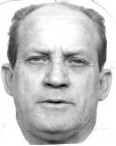 Billy Frank Vickers
Murderer · USA · 1993
Billy Frank Vickers Vickers was executed by lethal injection in Texas on Januar…
14 victims
Billy Frank Vickers
Murderer · USA · 1993
Billy Frank Vickers Vickers was executed by lethal injection in Texas on Januar…
14 victims
 Latasha Pulliam
Murderer · USA · 1991
Latasha Pulliam received clemency from the Governor of Illinois in March 2003 f…
1 victim
Latasha Pulliam
Murderer · USA · 1991
Latasha Pulliam received clemency from the Governor of Illinois in March 2003 f…
1 victim
 Linda Hazzard
Homicide · USA · 1911
Linda Burfield Hazzard was an alternative medicine practitioner who promoted fa…
1 victim
Linda Hazzard
Homicide · USA · 1911
Linda Burfield Hazzard was an alternative medicine practitioner who promoted fa…
1 victim
 Robert Leslie Roberson
Murderer · USA · 2002
Robert Leslie Roberson III was a white male. His hair color was brown, his heig…
1 victim
Robert Leslie Roberson
Murderer · USA · 2002
Robert Leslie Roberson III was a white male. His hair color was brown, his heig…
1 victim
 Edward Schad
Murderer · USA · 1978
Edward Schad was tried for the killing of Lorimer “Leroy” Graves, a 74-year-old…
1 victim
Edward Schad
Murderer · USA · 1978
Edward Schad was tried for the killing of Lorimer “Leroy” Graves, a 74-year-old…
1 victim
 Simone Weber
Murderer · France · 1980
Simone Weber was 60 years old at trial. She was described as “round and dowdy”…
2 victims
Simone Weber
Murderer · France · 1980
Simone Weber was 60 years old at trial. She was described as “round and dowdy”…
2 victims
- Gender
- male
- Country
- USA
- Location
- Shelby County, Tennessee, USA
- Date of birth
- March 13, 1966
- Age at first offence
- 31
- Characteristics
- abduction, alcohol, the body was never found
- Victim profile
- Ricci Lynn Ellsworth, 45 (his ex-girlfriend)
- Method of murder
- ???
- Date(s) of murder
- February 8, 1997
- Years active
- 1997
- Date of arrest
- A month after
- Status
-
Sentenced to death
Sentenced to death on August 26, 2004
Case Overview
Michael Dale Rimmer was convicted of one count of premeditated murder, one count of aggravated robbery, and one count of theft of property. In the penalty phase, the jury imposed a sentence of death for the first degree murder.
The victim was Ricci Lynn Ellsworth, 45.
Timeline
- 1997 — Ricci Lynn Ellsworth disappeared from a Memphis motel where she was employed as a night clerk.
- February 8, 1997 — Police treated Ellsworth’s murder and robbery as occurring in the early morning, including a robbery and killing at the Memphis Inn.
- 1989 — Michael Dale Rimmer pleaded guilty to rape of Ricci Ellsworth.
- October 1996 — Rimmer was released from prison.
- March 5, 1997 — Michael Adams, an Indiana deputy, stopped Rimmer’s Honda, determined it was reported stolen, and arrested Rimmer for possession of a stolen vehicle and public intoxication.
- November 7, 1998 — Rimmer was convicted and a Shelby County jury imposed the death sentence.
- February 20, 2008 — The Tennessee Supreme Court issued an opinion affirming the Court of Criminal Appeals judgment.
- April 7, 2009 — The Tennessee Supreme Court set Rimmer’s execution date.
Background
During the middle 1980’s, Michael Dale Rimmer and the victim had an on-again-off-again romantic relationship. The victim had obtained a divorce in 1977 from her first husband, Donald Eugene Ellsworth, and had two children. At the time, the victim was apparently struggling with a drinking problem and Ellsworth was experiencing drug problems.
After the relationship ended, Rimmer was indicted for the aggravated assault and rape of the victim and first degree burglary of her residence.
In 1989, Rimmer entered pleas of guilt to the charges including aggravated assault and rape and was sentenced to the Department of Correction. During incarceration, the victim often accompanied Rimmer’s mother, Sandra Rimmer, on visits to prison, and she saw Rimmer regularly through a religious program for inmates from about 1988 to 1992.
Despite the purported renewal of the relationship, evidence showed that during this period Rimmer informed two inmates, Roger LeScure and William Conaley, of his desire to kill the victim upon his release. He described how he intended to dispose of her body and explained that he blamed the victim for his incarceration and was entitled to money from her.
Rimmer was released by the Department of Correction in October 1996 and began work at an auto body repair shop in Memphis. By that time, the victim was employed as a night auditor at the Memphis Inn and had remarried Donald Ellsworth.
The victim ceased visitation with Rimmer after her remarriage to Donald Ellsworth, according to prison records.
The offence
Charges and convictions
Rimmer was convicted of:
- one count of premeditated murder,
- one count of aggravated robbery,
- and one count of theft of property.
Victim and disappearance
The victim, Ricci Lynn Ellsworth, disappeared from a Memphis motel where she was employed as a night clerk. Police found blood in the motel office and discovered that money was missing from a cash register. Her blood was found in a motel office. A trail of blood extended from the restroom through multiple areas, ending on the curb outside the night entrance, indicating that the victim may have been dragged from the restroom to the curb. Some $600 in cash was missing from the register.
The murder scene included signs of struggle in the office area, with “puddles” of blood throughout the restroom and a cracked sink and a lid ripped off the commode. Police found the victim’s purse. Three sets of sheets had been taken from the equipment room.
Police found a green cigarette lighter under a bloody towel and discovered the victim’s gold ring between the office and the bathroom.
Body never recovered
The bloody crime scene showed a violent struggle, and the body of the victim was never recovered.
Investigation
Initial discovery
Raymond Summers, a railroad supervisor with CSX Transportation, drove to the hotel when management service was unable to make telephone contact with a work crew. He entered the office area when no one was at the front desk and discovered blood splatters on the sink, wall, toilet bowl, and some towels after hearing the sound of water running in the office restroom. He reported his findings to Shelby County officers leaving a nearby Denny’s Restaurant, and officers notified Linda Spencer, the hotel manager, who lived on the premises.
Evidence described in the record
Police found blood splatters and puddles in the restroom, a cracked sink, and towels. Police found the victim’s purse, and a trail of blood approximately thirty-nine feet long led from the restroom through equipment room, office, reception area, and to the vending space. The trail ended on the curb outside the night entrance, indicating that the victim may have been dragged from the restroom to the curb.
Police found evidence including a green cigarette lighter under a bloody towel and a gold ring between the office and the bathroom.
Custodial and scene-related leads
Sergeant Robert Shemwell testified that the police questioned Richard Rimmer, the defendant’s brother, and Richard Rimmer’s ex-girlfriend, Joyce Frazier. Sergeant Shemwell also described conduct after the murder, including that the defendant appeared at his brother’s house during the morning hours after the murder, and the defendant’s car was muddy and so were his shoes. The back seat appeared to be wet, and there was a shovel inside. Sergeant Shemwell testified that the defendant asked Richard Rimmer if he knew how to get blood out of carpet, and Richard Rimmer disposed of the shovel in a dumpster after learning of the victim’s disappearance.
The police learned that the defendant left Memphis without taking the last paycheck due, gave no notice of departure, and left without taking work tools or clothing stored in the room he occupied.
DNA and forensic testing
Subsequent testing of blood stains in the back seat of the Honda revealed DNA consistent with the bloodline of the victim’s mother, Marjorie Floyd, who lived in Florence, Alabama. It was also consistent with the blood type of the victim, as compared through a sample previously taken from a pap smear.
Frank Baetchel, the FBI forensic expert, examined a bloody hotel towel found at the Memphis Inn and concluded that the blood sample matched the stains found inside the Honda.
Arrest
Indiana stop and arrest
On March 5, 1997, Michael Adams, an Indiana deputy, stopped the defendant, checked the license plate, determined the vehicle had been reported as stolen in early January, and arrested the defendant for possession of a stolen vehicle and public intoxication.
The defendant registered .06 on a blood-alcohol test.
A receipt in the vehicle indicated that the defendant was in Myrtle, Mississippi on the day after the victim’s disappearance. Receipts from Florida, Missouri, Wyoming, Montana, California, Arizona, and Texas with dates ranging from February 13 to March 3, 1997, were found in the vehicle.
There were blood stains on the carpet and on a seat belt in the back seat of the Honda.
Attempts to escape
Sergeant Shemwell testified that the defendant attempted to escape from Indiana authorities on at least two different occasions, including:
- being caught trying to cut through a fence with nail clippers,
- and officers later finding two home-made shanks he made in his cell.
While en route to Tennessee, the defendant attempted to escape a second time by gaining control of the extradition van, which included three other inmates, and driving four hours before finally being apprehended.
A third escape attempt took place at the Shelby County Jail.
Trial
Procedural history on appeal and resentencing
Rimmer was convicted on November 7, 1998, and a Shelby County jury imposed the death sentence.
In 2001, the Court of Criminal Appeals affirmed the convictions but ordered a new sentencing hearing due to multiple errors that affected the integrity and reliability of the verdict with regard to the presence of aggravating circumstances.
After remand for a second trial on the issue of penalty only, a different jury sentenced the defendant to death, relying upon Tennessee Code Annotated section 39-13-204(i)(2) as the aggravating circumstance: the defendant had prior convictions for felonies with statutory elements involving violence to the person.
The State established that in 1985, the defendant had been convicted of assault with intent to commit robbery, had pleaded guilty to aggravated assault, and in 1989 had pleaded guilty to three charges involving the murder victim-first degree burglary, aggravated assault, and rape.
The second appeal affirmed the death sentence.
The Tennessee Supreme Court conducted mandatory review.
Resentencing hearing evidence
The resentencing hearing included testimony about the defendant’s on-again-off-again relationship with the victim, threats to kill upon release, and the defendant’s post-release conduct.
The victim’s husband and the children had an impact from the murder, and the defendant’s troubled childhood and later religious activities were presented as mitigation.
A sociologist and mitigation specialist, Dr. Ann Marie Charvat, testified regarding background, including behavioral problems at school, being a “C” student, needing special education classes, hospitalization as an adolescent during the father’s mental illness treatment, and additional hospitalizations. Dr. Charvat testified about school dropout in the ninth grade and later work at a gas station and in the father’s shop.
Dr. Charvat testified about an adolescent hospitalization period and involvement with an older woman, possibly a teacher.
Dr. Charvat described that the defendant met an inmate, Jimmy Watson, while incarcerated, that the couple broke up, and that after incarceration the defendant became involved with the victim. Dr. Charvat also testified that prison visits resumed their relationship even after the defendant entered guilty pleas to burglary and to the victim’s assault and rape. The names of the victim’s two children were on the prison visitation list.
Prison minister testimony from Barbara Dycus, at West Tennessee State Penitentiary, stated that the victim was engaged to the defendant in 1993 and that the defendant played music, wrote gospel songs, and sang during religious services. Thomas Mach, another prison minister, confirmed that the defendant encouraged other inmates to participate in programs including Bible study.
During the resentencing hearing, the State made numerous objections on grounds of relevance and hearsay, most of which were overruled, with at least three objections sustained, excluding some defense evidence.
Excluded evidence and surviving issues on appeal
Exclusion about attempted extortion
The trial court excluded testimony from Sandra Rimmer about an alleged offer by Tommy Voyles to persuade the victim to drop rape charges in exchange for $5,000, concluding the testimony fell “outside the acceptable hearsay rule as it applies to this sentencing hearing.”
Residual doubt and other possible perpetrators
The defense argued that the resentencing jury remained unaware that the convicting jury never considered evidence of two other possible perpetrators. The Tennessee Supreme Court noted that the sentencing jury did hear, through Sergeant Shemwell, that James Darnell reported seeing two men at the Memphis Inn between 1:45 a.m. and 2:00 a.m. on February 8, 1997, including descriptions and that Darnell could not positively identify the defendant from photospreads.
Composite drawings made from Darnell’s descriptions were not presented to the guilt-phase jury, and the drawings were not introduced at the resentencing hearing.
The Tennessee Supreme Court found that the exclusion and related complaints did not warrant relief because any error was harmless beyond a reasonable doubt.
Jury instruction on reasonable doubt
The trial court instructed the jury:
Reasonable doubt is that doubt engendered by an investigation of all the proof in the case and an inability after such investigation to let the mind rest easily upon the certainty of guilt.
Reasonable doubt does not mean a doubt that may arise from possibility.
Absolute certainty is not demanded by the law.
The defendant challenged the instruction as lowering the burden of proof. The Tennessee Supreme Court rejected the argument.
References to “death row”
The term “death row” was used three times during the testimony of Thomas Mach, a mitigation witness for the defense:
Counsel for Defendant: And how is it that you know Mr. Michael Rimmer?
Witness: I visited him in prison. I'm involved in prison ministry at Riverbend.
Counsel for Defendant: Now, you stated you met Michael while he was on death row?
Witness: Yes, sir.
Counsel for Defendant: And how would you describe his interest in the services and the worship services?
Witness: Michael's done amazing things in unit four. When he was taken off of death row and went to unit four, ․ he got eighteen men interested in the [B]ible․
The following colloquy occurred on cross-examination:
State: How long have you known the defendant in prison?
Witness: Since I met him on death row.
No objections were made during any of these instances.
During final argument, the subject was not addressed.
The Tennessee Supreme Court held that the references did not result in constitutional error.
Sentencing
The resentencing jury returned a sentence of death. The sole aggravating factor was prior felony convictions with statutory elements involving the use of violence to the person.
The jury found that the aggravating factor outweighed mitigating circumstances beyond a reasonable doubt.
Appeals
Court of Criminal Appeals and Supreme Court
The Court of Criminal Appeals affirmed the convictions, reversed the death sentence, and remanded for a second sentencing hearing.
After the second sentencing hearing, the Court of Criminal Appeals affirmed the judgment imposing death.
The Tennessee Supreme Court affirmed the Court of Criminal Appeals judgment.
Issues addressed in the Tennessee Supreme Court opinion (February 20, 2008)
The Tennessee Supreme Court held:
- that the trial court erred during sentencing by excluding evidence solely on hearsay grounds, but that the error was harmless beyond a reasonable doubt;
- that for a waiver of the right to testify to have been valid, a defendant need not state on the record that he was informed of the ruling in State v. Cazes;
- that the jury instruction defining reasonable doubt did not offend due process;
- that references by defense counsel and a defense witness about prior “death row” status did not entitle a new sentencing hearing under these circumstances;
- that the sentence of death satisfied proportionality guidelines.
Recusal
In the appendix, the Tennessee Supreme Court addressed recusal claims by Rimmer, including alleged actual bias and claims that the trial judge denied revising the jury verdict as found by the appellate court.
The court denied relief, finding that adverse rulings were not usually sufficient grounds for bias, and that misstatements or comments insufficiently supported recusal under the standards discussed in the opinion. The court concluded it was unable to conclude the trial court abused discretion in denying the motion for recusal.
Denial of continuance
The appendix addressed denial of a continuance. The court discussed a motion for continuance filed December 19, 2003, seeking rescheduled January 5, 2004 resentencing, and reasons including counsel preparation, housing distance, obtaining funding for experts, and mitigation preparation.
The court concluded the trial court did not abuse discretion and that Rimmer was not prejudiced by denial.
Prosecutorial misconduct allegations
The appendix addressed allegations that prosecutor Thomas D. Henderson made “more than 20 baseless objections to hearsay evidence” at resentencing. The court reviewed approximately twenty-eight objections and concluded they did not deny a fair trial or result in prejudice.
Jury verdict form
The appendix addressed Rimmer’s claim that the verdict was incomplete because it failed to reflect a finding that aggravating circumstances were proven beyond a reasonable doubt, quoting the verdict form and discussing related state holdings. The court concluded Rimmer was not entitled to relief.
Constitutionality challenges
The appendix addressed challenges to the constitutionality of Tennessee Code Annotated sections 39-13-204 and 39-13-206, including arguments that:
- the death sentence was imposed capriciously and arbitrarily,
- the appellate review process was constitutionally inadequate,
- and lethal injection was cruel and unusual punishment.
The court rejected these arguments based on existing Tennessee Supreme Court decisions and declined to revisit lethal injection reasoning.
Outcome
The Tennessee Supreme Court affirmed the judgment of the Court of Criminal Appeals. The death sentence was upheld.
The Tennessee Supreme Court set the sentence of death to be carried out on April 7, 2009, unless otherwise ordered.
Costs of the appeal were taxed to the State because Rimmer was indigent.
Other details
Named individuals and roles
- Michael Dale Rimmer — defendant.
- Ricci Lynn Ellsworth — victim; 45 years old.
- Donald Eugene Ellsworth — victim’s first husband; father of the victim’s two children.
- Donald Ellsworth — victim’s husband at the time of the murder; remarried.
- Sandra Rimmer — defendant’s mother.
- Marjorie Floyd — victim’s mother; lived in Florence, Alabama.
- James Darnell — Army sergeant; provided an account of seeing two men and a dark-colored sedan at the Memphis Inn; later shown photographic line-up.
- Dixie Roberts — named alongside Darnell in the report of observations.
- Raymond Summers — railroad supervisor with CSX Transportation; discovered blood in the restroom.
- Linda Spencer — hotel manager who lived on the premises.
- Officer Robert Moore — Memphis Police officer who found the green cigarette lighter under a bloody towel and discovered the victim’s gold ring between the office and the bathroom.
- Sergeant Robert Shemwell — homicide department; testified at resentencing.
- Frank Baetchel — FBI forensic expert.
- Michael Adams — Indiana deputy who stopped and arrested the defendant.
- Thomas D. Henderson — assistant district attorney general, referenced in the appeals and recusal/misconduct discussion.
- John Campbell — deputy district attorney general, referenced in the context of disputes about evidence disclosure.
- Kelly Gleason — defendant’s attorney referenced in the narrative portion.
- Paul Springer — represented Rimmer at his second trial in 2004.
- Ronald Johnson — referenced as attorney for Rimmer in his first trial.
- Robert Shemwell — same individual referenced as Sergeant Robert Shemwell.
- Linda Spencer — hotel manager.
- William Conaley — referenced as inmate witness for threats and also as known to Rimmer in prison context.
- Roger LeScure — referenced as inmate who received Rimmer’s threats and plans.
- Joyce Frazier — ex-girlfriend of Richard Rimmer.
- Richard Rimmer — defendant’s brother.
- James Beasley — Shelby County judge referenced in the recusal discussion.
- James Beasley — also referenced in the narrative portion about improper suppression and false testimony findings.
- Justice Gary R. Wade — authored the Tennessee Supreme Court opinion.
- William M. Barker (spelled “BARKER” in opinion text), Janice M. Holder, Cornelia A. Clark, William C. Koch, Jr. — joined the opinion as justices.
Additional person details in the record narrative
- Tracye Ellsworth — victim’s daughter; referenced as 45-year-old victim’s daughter and as stating belief that Rimmer killed her mother.
- Billy Wayne Voyles — a man identified by James Darnell in photographs shown to him via the FBI; described as having drug violations and other offenses in Tennessee and Arkansas; later in prison in Arkansas on an unrelated drug charge.
- Terry Voyles — Billy Wayne Voyles’s sister, referenced in narrative.
- Tommy Voyles — referenced as the person alleged to have pressured the victim to file or not file charges in testimony discussed in the appeal.
Money and property taken
Three sets of sheets were taken from the equipment room.
Rimmer also stole cash from the register.
Vehicle details and receipts
Rimmer drove a stolen Honda at the time he was arrested in Indiana. A receipt in the vehicle indicated he was in Myrtle, Mississippi on the day after the victim’s disappearance.
Other factual references
The record described multiple escape attempts and handmade shanks found in his cell during custody in Indiana.
The record also stated that Rimmer left clothes and his last paycheck behind and asked his brother about blood stain removal from car upholstery and asked him to get rid of a shovel.
Execution date and legal status
The Tennessee Supreme Court upheld the death sentence and set the execution date for April 7, 2009. The sentence of death was “carried out on April 7, 2009, unless otherwise ordered by this Court or other proper authority.”

Spotted an error, or have more information about this case?