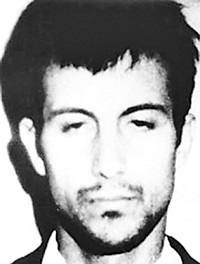
Ion Rîmaru
Serial killer Romulus Veres
Serial killer · Romania · 1972
Romulus Vereş was a serial killer known as “the man with the hammer”. He was bo…
5 victims
Romulus Veres
Serial killer · Romania · 1972
Romulus Vereş was a serial killer known as “the man with the hammer”. He was bo…
5 victims
 Pedro Alonso Lopez
Serial killer · Peru - Ecuador - Colombia · 1969
Name: Pedro Alonso Lopez · Nationality/Background: Colombian-born · Birth: born…
300 victims
Pedro Alonso Lopez
Serial killer · Peru - Ecuador - Colombia · 1969
Name: Pedro Alonso Lopez · Nationality/Background: Colombian-born · Birth: born…
300 victims
 Donald Henry Gaskins
Serial killer · USA · 1969
Donald Henry Gaskins, also known as Donald “Pee Wee” Gaskins, was a serial kill…
200 victims
Donald Henry Gaskins
Serial killer · USA · 1969
Donald Henry Gaskins, also known as Donald “Pee Wee” Gaskins, was a serial kill…
200 victims
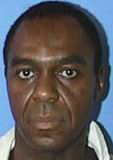 Carl Eugene Watts
Serial killer · USA · 1974
Carl Eugene Watts (born November 7, 1953; died September 21, 2007), also known…
100 victims
Carl Eugene Watts
Serial killer · USA · 1974
Carl Eugene Watts (born November 7, 1953; died September 21, 2007), also known…
100 victims
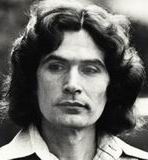 Rodney Alcala
Serial killer · USA · 1977
Rodney James Alcala (born August 23, 1943) was also known as Rodrigo Jacques Al…
100 victims
Rodney Alcala
Serial killer · USA · 1977
Rodney James Alcala (born August 23, 1943) was also known as Rodrigo Jacques Al…
100 victims
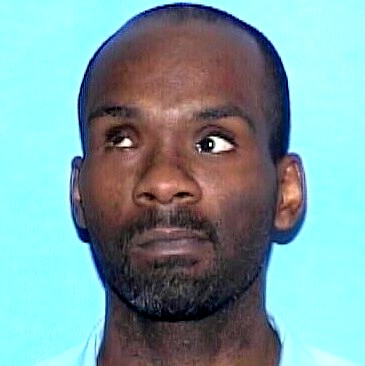 Ernest Jamison
Spree killer · USA · 1995
Defendant: Ernest Jamison Ernest Jamison was convicted on a plea of guilty to f…
3 victims
Ernest Jamison
Spree killer · USA · 1995
Defendant: Ernest Jamison Ernest Jamison was convicted on a plea of guilty to f…
3 victims
 Donald Middlebrooks
Murderer · USA · 1987
Donald Ray Middlebrooks was sentenced to death for torturing and murdering 14-y…
1 victim
Donald Middlebrooks
Murderer · USA · 1987
Donald Ray Middlebrooks was sentenced to death for torturing and murdering 14-y…
1 victim
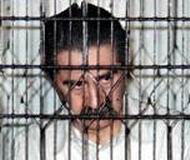 Gabriel Garza Hoth
Serial killer · Mexico · 1991
1991 — Soledad Valdez, Gabriel Arturo Garza Hoth’s first wife, died; doctors be…
3 victims
Gabriel Garza Hoth
Serial killer · Mexico · 1991
1991 — Soledad Valdez, Gabriel Arturo Garza Hoth’s first wife, died; doctors be…
3 victims
 Esad Landzo
Murderer · Bosnia · 1992
Esad Landzo was born on 7 March 1973. During the war, he was a guard at the Cel…
3 victims
Esad Landzo
Murderer · Bosnia · 1992
Esad Landzo was born on 7 March 1973. During the war, he was a guard at the Cel…
3 victims
 Anisio Ferreira de Sousa
Murderer · Brazil · 1989
September 4, 2003 — Anísio Ferreira de Sousa was sentenced to 77 years in priso…
19 victims
Anisio Ferreira de Sousa
Murderer · Brazil · 1989
September 4, 2003 — Anísio Ferreira de Sousa was sentenced to 77 years in priso…
19 victims
 Bruce Rich
Murderer · USA · 1995
Name: Bruce Rich Bruce Rich was accused of killing his parents so that he could…
2 victims
Bruce Rich
Murderer · USA · 1995
Name: Bruce Rich Bruce Rich was accused of killing his parents so that he could…
2 victims
- Gender
- male
- Country
- Romania
- Location
- Bucharest, Romania
- Date of birth
- October 12, 1946
- Age at first offence
- 24
- Characteristics
- cannibalism, serial rapist, robbery
- Victim profile
- Elena Oprea / Fănică Ilie / Gheorghiţa Popa / Mihaela Ursu
- Method of murder
- Hitting with a hammer and axe / St abbing with knife
- Date(s) of murder
- 1970 - 1971
- Years active
- 1970–1971
- Date of arrest
- May 27, 1971
- Status
-
Executed
Executed by firing squad on October 23, 1971
Overview
Ion Rîmaru (or, in newer spelling, Râmaru; October 12, 1946–October 23, 1971) was a Romanian serial killer.
Background
Ion Rîmaru’s parents married in Caracal and had three sons, with Ion as the eldest child. Ion’s father, Florea, beat Ion’s mother daily, and the couple eventually separated. Florea moved to Bucharest and took a job as a night tram driver. After Florea’s death years later, Florea was discovered to have been a serial killer.
Ion was born in Corabia. His early life was described as troubled: he repeated the ninth grade and provoked a public scandal in his home town when he was found to be having a sexual relationship with the minor daughter of his teacher. At age 18, he was convicted of aggravated theft. Despite this, during high school he always received a perfect grade in conduct.
University and medical history
Ion entered the Faculty of Veterinary Medicine in 1966 with a grade of 5.33 (out of 10). He repeated his second year there, and at the time of his arrest he was in the course of repeating his third year. One of his professors described him as shy and semi-literate, with a very poor vocabulary and an extremely narrow set of interests. His roommates reported that he behaved strangely, so they avoided him. When he became enraged, he would puncture himself; he was found to have over 20 cuts on his arms and legs.
From adolescence, Ion Rîmaru was described as having an uncontrollable libido. A university classmate reported that one night, at the dormitory, Ion did not sleep but instead prowled outside a room where he knew a girl had come to visit a classmate. Doctors diagnosed him with esophageal spasm, reactive nervous syndrome and mental problems in 1967.
The offence
Bucharest was described as being shaken by a series of crimes committed in the latter half of 1970 and the first months of 1971. An unknown individual used a hammer, a small axe, an iron bar or a knife to attack restaurant waitresses who were alone and returning from work. The attacks occurred after midnight during unusual weather conditions such as snowstorms, driving rain, high winds, freezing cold or fog. Many women would not go outside after 9:00 pm except in large groups or with men.
A police reluctance to release details was described as heightening rumours. After a few crimes, Communist authorities realised they were dealing with a serial killer. A yearlong investigation, with the help of victims who had survived, led to Rîmaru’s arrest on May 27, 1971. The clue directly leading to his arrest was described as a medical diagnosis sheet.
The 16 gravest offences of which Ion Rîmaru was convicted were listed chronologically:
- 8/9 April 1970 — Elena Oprea — premeditated murder (not raped because a neighbour scared him away)
- 1/2 June 1970 — Florica Marcu — rape (knocked unconscious in front of her house, carried to Sfânta Vineri cemetery, pushed hard off the fence there, raped, stabbed and had her blood sucked while walking home with him, saved by a truck driver)
- 19/20 July 1970 — OCL Confecţia store — theft of public property
- 24 July 1970 — Margareta Hanganu — aggravated theft
- 22/23 November 1970 — Olga Bărăitaru — aggravated attempted murder, rape and aggravated theft
- 15/16 February 1971 — Gheorghiţă Sfetcu — aggravated attempted murder and aggravated theft
- 17/18 February 1971 — Elisabeta Florea — aggravated attempted murder
- 4/5 March 1971 — Fănică Ilie — aggravated premeditated murder, rape and aggravated theft
- 8/9 April 1971 — Gheorghiţa Popa — aggravated murder, rape and aggravated theft (48 stab wounds to the head, chest, groin and legs, five blows to the head, ribs crushed by stomping, genitalia bitten out)
- 1/2 May 1971 — Stana Saracin — attempted rape
- 4/5 May 1971 — Mihaela Ursu — aggravated murder, rape (he was interrupted in the act and left unsatisfied, leading him to seek a new victim)
- 4/5 May 1971 — Maria Iordache — aggravated attempted murder (attacked two hours after Ursu; escaped when he dropped the metal bar with which he was beating her while she was running)
- 6/7 May 1971 — Viorica Tatu — aggravated attempted murder
- 6/7 May 1971 — Elena Buluci — aggravated attempted murder
- May 1971 — Iuliana Funzinschi — aggravated theft of public property and aggravated theft of private property
After the murder of Gheorghiţa Popa, the authorities went on high alert and launched “Operation Vulture”, named after the street where she had been murdered. The operation was described as involving 6,000 men from various law-enforcement agencies patrolling Bucharest streets each night, as well as 100 cars and 40 motorcycles. Medical personnel, night bus and tram operators, hotel and bar employees were described as being mobilised, along with large numbers of Securitate, Police and Interior Ministry staff. It was described as resulting in 2,565 arrests and over 8,000 requests for identification.
Authorities were described as rating Rîmaru’s modus operandi as ferocious and cruel, based on a propensity for cutting off clothes, biting off flesh, dragging victims, and hacking them with his weapons, along with raping victims while they were unconscious. He was judged as aggressive, impulsive and sadistic. Signs of vampirism were described, including poking holes into the flesh of Florica Marcu, who later related that he sucked blood out of them.
Cannibalism was described as being present: he would bite women’s vaginas, pubic areas and breasts, and the missing pieces of flesh were described as no longer being found at the crime scenes. Necrophiliac tendencies were also described, including continuing rapes after victims had died and beating and stabbing corpses.
Investigation
After arrest, Rîmaru was described as remaining completely silent, staring expressionlessly into space. Investigators decided on a plan and introduced a police officer who pretended to be a thief into his cell to get him to talk. After two months of interrogations, Rîmaru admitted to 23 very serious crimes.
It was described that he had been arrested for only three murders, and that the rest—another murder, six attempted murders, five rapes, one attempted rape, and seven thefts of various degrees—he or his father confessed. He tried to convince authorities he was not responsible on grounds of insanity and that he did not realise the women would die, while also insisting he was guilty and asking to be taken to the scenes of his crimes. During police lineups, victims brought in to identify him were described as trembling when their eyes met his, despite no danger to them.
A belief was described that suggestive remarks from his father—who was said to have known about his son’s crimes—led him to commit violence. During the investigation, his father was arrested three times but released because close relatives could not be forced to testify against other family members.
The clue described as leading directly to Rîmaru’s arrest involved a medical diagnosis sheet. On March 4, 1971, a group of six doctors found that he had “suspected periodic epilepsy”. The doctors’ note was described as having been found beneath the body of Mihaela Ursu, whom he murdered in especially brutal fashion two months later; strands of his hair were described as having been found between her fingers and used to identify him. The note was described as being wet and bloody, so only the letterhead from the Bucharest Students’ Hospital was visible. At that point, it was described that Rîmaru began acting more randomly, not attacking waitresses exclusively and even going after two women who were together.
On May 15, specialists determined that the note had been produced in Dr. Octavian Ienişte’s office in March 1971. It was described that Dr. Ienişte had seen 83 students that month, of whom 15, including Rîmaru, had not deposited their diagnoses with university officials. Police closely monitored each suspect and three officers went to his dormitory on May 27. He was described as not being home, but returning at 1:00 pm. In his sack he was described as having an axe and a knife. Tests on the hair and bite marks he left and witness testimony were described as leaving “no reasonable doubt” as to his guilt.
Arrest
Rîmaru was arrested on May 27, 1971. Police went to his dormitory on that date; he returned at 1:00 pm after the officers searched his room. He was described as having an axe and a knife in his sack. His hair and bite marks and witness testimony were described as supporting his guilt.
Trial
After his arrest, Rîmaru remained silent until investigators introduced a police officer who pretended to be a thief into his cell. After two months of interrogations, he admitted to 23 very serious crimes. It was described that he attempted to claim insanity at trial. He was described as believing he had convinced investigators of his insanity defence. He was then apparently shocked when he read the report stating that his judgment was not impaired by mental illness and that he did not suffer from hallucinations, delirium, or similar conditions. He immediately changed his plea, recanting previous confessions in their entirety, and afterwards refused to answer even his lawyer’s questions.
Rîmaru was sentenced to death, and it was described that the courtroom erupted in applause when the penalty was pronounced. He appealed, but the Supreme Tribunal upheld the sentence.
Sentencing and execution
Rîmaru was sentenced to death and the Supreme Tribunal upheld the sentence. On October 23, 1971, he was taken to Jilava prison in a van. He had to be dragged to the place of execution from the moment he left the van. Until he was dead, he was described as in a rage and vigorously tried to escape.
The three officers charged with shooting him tied him to a post in the prison yard. Asked, in accordance with the law, if he had any last wishes, he said: “no”.
He was described as becoming more agitated, trying to bite off his clothes and twisting around the post. He yelled:
- “Call my father, so he can see what's happening to me! Make him come! He's the only guilty one!”
- “I want to live!”
Because of constant movement, aiming accurately was described as being difficult; in the end, his backside was described as riddled with bullets after he had turned all the way round. He was buried in the town cemetery and his grave was described as remaining unmarked.
Outcome
Rîmaru was executed by firing squad on October 23, 1971.
Possible motives
A psychologist, Col. Dr. Tudorel Butoi, viewed tapes of Rîmaru’s interrogations several years after his execution. Butoi’s opinion was that Rîmaru’s crimes were a form of compensation for an inferiority complex he had felt since youth: he was relatively poor, a social misfit, and had dysfunctional relations with women. At the time, Rîmaru was labelled a “wolf-man”, and Butoi theorised that he suffered from a form of clinical lycanthropy.
As evidence, Butoi cited solitary nocturnal prowling and stalking, instinctual animalistic energy drawn from unusual weather conditions, and how he considered victims as prey. It was described that Rîmaru figured out victims’ routes, following them home several nights in a row, and attacked when they were almost home. Butoi rejected Rîmaru’s claim to have tried to engage a woman in ordinary conversation one night as “merely dissimulations, perverse excuses”.
Aftermath
Florea Rîmaru
Rîmaru’s father, Florea Rîmaru, was also described as a serial killer. In the summer of 1944, a string of four murders roiled wartime Bucharest. Each victim was described as female and living in a basement apartment where the killer would enter at night during a storm and bash their heads with a blunt object. Each time, the killer was described as leaving fingerprints and footprints from military boots of size 42 or 43.
On 23 October 1972, a year after Ion Rîmaru’s execution, Florea Rîmaru died at age 53 after falling off a train. The death was described as officially being an accident, but in fact Securitate agents were described as likely having pushed him off. His body was brought to the Medico-Legal Institute, where his height of 174 cm and shoe size of 42 attracted attention. The 1944 fingerprints were described as matching Florea. Their first victims were described as having similar names: Florea first killed Elena Udrea, and Ion, Elena Oprea.
Butoi theorised that a gene predisposing one to violent crime was transmitted from father to son, as the murders happened under remarkably similar circumstances.
Execution aftermath references and additional tally
Ion Rîmaru was described in connection with “The Vampire of Bucharest” on ExecutedToday.com. It also described that authorities initially were tight-lipped about a serial killer, heightening public terror, until a May 1971 dragnet finally caught him. It described that his attempt to claim insanity at trial was portrayed as a nonstarter. It also described that he took the firing squad’s barrage in his back after being dragged from Jilava Prison. The material also described his father’s subsequent death as fatal “fell” (read: was pushed by police) from a train, and said forensics implicated Florea Rîmaru in four unsolved 1944 murders.
An official tally was also described as being four killed, plus six attempted murders, five rapes, one attempted rape, one robbery and three thefts.
Other details
Rîmaru was described as repeatedly puncturing himself when enraged, and he was found with over 20 cuts on his arms and legs. A dormitory classmate was described as observing him not sleeping and prowling outside a room where he knew a girl had come to visit a classmate.
It was described that authorities considered Rîmaru’s name as inspiring dread because “rîmă / râmă means ‘earthworm’ in Romanian”.
After Ion’s last crime, he robbed a cashier. His mother visited him and found the money under his pillow. His father made him go to the crime scene and show him what he had done. The father then took the money and placed it in his Caracal home, intending to use it to buy a new house.
After Ion robbed the cashier, Florea confiscated the axe and knife, and it was with these that he was described as secretly returning when arrested.
During one of Ion’s silent phases, his father was brought to the police station, and the son merely gave his father an ugly look, prompting Florea to say: “How should I know what you did? How?”

Spotted an error, or have more information about this case?