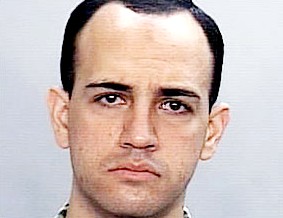
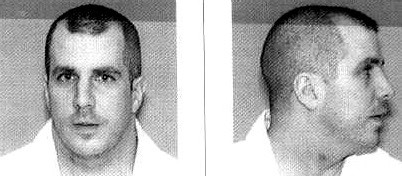
Steven Arthur Rios
Murderer Robert Martines Perez
Murderer · USA · 1994
Name: Robert Martines Perez · Other name used in proceedings: Robert Martinez P…
15 victims
Robert Martines Perez
Murderer · USA · 1994
Name: Robert Martines Perez · Other name used in proceedings: Robert Martinez P…
15 victims
 Robert Glen Jones
Murderer · USA · 1996
Defendant: Robert Glenn Jones (ADC#070566) · Co-defendant: Scott Nordstrom (ADC…
7 victims
Robert Glen Jones
Murderer · USA · 1996
Defendant: Robert Glenn Jones (ADC#070566) · Co-defendant: Scott Nordstrom (ADC…
7 victims
 Joshua Wayne Andrews
Murderer · USA · 2000
Joshua Wayne Andrews was a serial killer accused of killing several people in V…
5 victims
Joshua Wayne Andrews
Murderer · USA · 2000
Joshua Wayne Andrews was a serial killer accused of killing several people in V…
5 victims
 Juan Carlos Alvarez
Murderer · USA · 1998
Juan Carlos Alvarez, born on March 9, 1977, in San Luis, Mexico, was a Hispanic…
5 victims
Juan Carlos Alvarez
Murderer · USA · 1998
Juan Carlos Alvarez, born on March 9, 1977, in San Luis, Mexico, was a Hispanic…
5 victims
 Anibal Canales
Murderer · USA · 1997
Anibal Canales, Jr. was convicted in Texas of capital murder and was sentenced…
1 victim
Anibal Canales
Murderer · USA · 1997
Anibal Canales, Jr. was convicted in Texas of capital murder and was sentenced…
1 victim
 Edson Isidoro Guimaraes
Serial killer · Brazil · 1999
Edson Isidoro Guimarães was a Brazilian nursing assistant and nurse’s aide at S…
131 victims
Edson Isidoro Guimaraes
Serial killer · Brazil · 1999
Edson Isidoro Guimarães was a Brazilian nursing assistant and nurse’s aide at S…
131 victims
 Willie Earl Pondexter
Murderer · USA · 1993
Willie Earl Pondexter was convicted of capital murder for the robbery and slayi…
1 victim
Willie Earl Pondexter
Murderer · USA · 1993
Willie Earl Pondexter was convicted of capital murder for the robbery and slayi…
1 victim
 Ervin Lupoe
Mass murderer · USA · 2009
Ervin Lupoe killed his wife, Ana Lupoe, and their five children, then killed hi…
6 victims
Ervin Lupoe
Mass murderer · USA · 2009
Ervin Lupoe killed his wife, Ana Lupoe, and their five children, then killed hi…
6 victims
- Gender
- male
- Country
- USA
- Location
- Boone County, Missouri, USA
- Date of birth
- 1977
- Age at first offence
- 27
- Characteristics
- police officer, rape?, armed robbery
- Victim profile
- Jesse Valencia, 23 (his gay lover)
- Method of murder
- St abbing with knife
- Date(s) of murder
- June 5, 2004
- Years active
- 2004
- Date of arrest
- 6 days after
- Status
-
Life imprisonment
Sentenced to life imprisonment without parole in May 2005
Case overview
Steven Arthur Rios was a police officer with the Columbia Police Department. A jury found him guilty of first-degree murder and of armed criminal action connected to his use of a knife. His conviction led to a sentence of life imprisonment without parole for the murder count and a consecutive ten-year sentence for armed criminal action.
Status and sentencing
Rios was sentenced to life imprisonment without parole on the murder count and ten years imprisonment for the armed criminal action count, following the jury’s recommendation.
Timeline
- April 18, 2004 — Columbia police officers were dispatched to an apartment on three separate occasions for noise disturbances; Rios and Officers Brad Anderson and Kim Jensen responded to the third call, handcuffed the three occupants until the party began to settle, and wrote tickets; Jesse Valencia and another man were on the porch, refused to leave, and Rios arrested them; both men were issued court summons for obstructing a police operation and were released.
- June 5, 2004 — Valencia was found dead on a lawn near 1513 Wilson Avenue (between that house and 1517 Wilson Avenue) with his throat slit; a crime scene response occurred, and an autopsy later determined the nature and extent of his injuries.
- June 6, 2004 — The Columbia Police Department received a Crime Stoppers report that a married police officer was having an affair with Valencia.
- June 8, 2004 — After learning of the Crime Stoppers report, Rios went to Sergeant Stephen Monticelli and was told he needed to be officially questioned by investigators; Rios was interviewed with Detective John Short.
- September 1, 2004 — The State filed a two count information against Rios for first degree murder and armed criminal action.
- May 23, 2005 — A jury found Rios guilty; the automatic sentence of life in prison without parole applied for the first-degree murder count.
- 27/04/2007 — The Missouri Court of Appeals Western District handed down an opinion reversing and remanding.
- May 2005 — Rios was sentenced to life in prison without parole.
The offence
Valencia was found dead on June 5, 2004, with his throat slit. The wound was described as a gaping, incised neck wound that was longer than deep and severed Valencia’s jugular veins and the muscles on the side of his neck. The injury also nicked his spine. The wound had an “equally distant parallel mark pattern,” suggesting a knife with “some degree of serration” caused the wound. The medical examiner determined that Valencia must have been unconscious and lying down when his throat was slit, based on the nature of the wound and the location of the blood. Valencia’s body also had other injuries, including an injury to his upper lip, a nine-centimeter contusion along his jawline, a bruise to his left ear, contusions and abrasions on his arms, abdomen, hips, and knees, significant contusions to his chest, upper back, shoulders, and a “tremendous hemorrhage” underneath his chest bruise, and petechiae hemorrhaging in his eye and larynx.
People
- Steven Arthur Rios — police officer; convicted of first-degree murder and armed criminal action; appellate appellant.
- Jesse Valencia — victim; 23-year-old college student; found dead with his throat slit.
- Libby Rios — Rios’s wife; testified and maintained Rios’s innocence; cried out “I love you” as marshals escorted her husband.
- Morley Swingle — special prosecutor.
- Ellen Roper — Boone County Circuit Court judge.
- Valerie Leftwich — defense lawyer.
- Geoffrey Preckshot — attorney for Rios’s family.
- Edward McDevitt — person connected to Valencia’s social events leading up to the killing; involved in encounters at Valencia’s apartment and later party plans.
- Joan Sheridan — friend of Valencia; testified about conversations with Valencia prior to his death.
- Andy Schermerhorn — friend of Valencia; involved in sexual activity at Valencia’s apartment before Rios followed Valencia into the bedroom.
- Brad Anderson — officer who responded to the April 18, 2004 noise complaint call.
- Kim Jensen — officer who responded to the April 18, 2004 noise complaint call.
- Rose Wibbenmeyer — prosecutor for the City of Columbia who amended the municipal ticket language.
- Eric Thurston — involved in waking McDevitt and convincing him to go out.
- Jennifer Witherspoon — hosted a party where Valencia and McDevitt spent time.
- Christopher Kepner — lived in an apartment next to Valencia; heard noises through a shared wall in the early morning hours of June 5, 2004.
- Matt Finucane — discovered Valencia’s dead body on June 5, 2004.
- Leah Wooden — Columbia Police Dispatcher; left the roof gathering after Rios and made a telephone call while driving out of the parking garage.
- Jason Jones — officer called by Leah Wooden at 4:57 a.m.
- John White — Sergeant.
- Sergeant Kenneth Smith — drove Rios to the crime scene.
- Detective Tim Giger — met with Rios at the crime scene.
- Sergeant Stephen Monticelli — supervisor of the investigation of Valencia’s murder.
- Detective John Short — conducted the interview with Rios.
- William Randle — criminalist who tested trace evidence submitted to the crime lab.
- Patricia Breckenridge — judge authoring the appellate opinion.
- Howard, P.J., and Hardwick, J. — appellate judges who concurred.
- Ted Anderson — officer name asserted by Swingle as the victim’s friends’ belief; a breast-pocket nametag of the real Ted Anderson was said to have been stolen.
- Levon Wibbenmeyer — not present; omitted (no separate named person added).
- Grayson — Rios’s 16-month-old son mentioned as part of aftermath details.
Background
Valencia was open about his homosexuality. He told classmates he suspected his lover was married and planned to confront him. He also planned to confront Rios about a “little secret” if a municipal ticket was not taken away. Valencia and Rios began an affair seven weeks before the murder. The relationship included trysts at Valencia’s apartment when Rios was in uniform and supposed to be patrolling the neighborhood.
Valencia told friends that the police officer who ticketed him at the April 18, 2004 party was going to pick him up after he finished working his shift at the Campus Inn. Friends decided to “stake out” the Campus Inn and later saw Rios and Valencia get out of Rios’s black Explorer in front of Valencia’s apartment.
After Valencia’s release from the April 18, 2004 summons case, he told one of his friends that the officer would pick him up after the Campus Inn shift. During the week following Valencia’s arraignment, Valencia had a conversation with Joan Sheridan about going to court. Sheridan testified that Valencia said the ticket was still in force, that the charges “sounded worse,” and that he had a little secret he thought the Columbia Police Department might like to know if the ticket was not taken away.
Investigation and key evidentiary facts
Crime scene technicians transported Valencia’s body in a body bag to the medical examiner’s office at about 5:45 p.m. on June 5, 2004.
DNA evidence was described as follows:
- Rios’s DNA was found under Valencia’s fingernails.
- Three hairs on Valencia’s chest were tested, with DNA described as a “1 in 756.6 trillion” match to Rios’s DNA.
- Fingernail clippings from Valencia sent to the crime lab showed DNA under the fingernail clippings from three individuals: Rios, Edward McDevitt, and Valencia.
- McDevitt’s DNA was also found on Valencia’s shorts, a condom from Valencia’s apartment, a penile swab of Valencia, and from the sexual assault kit. Trace evidence on Valencia’s body, including hair, was tested, and DNA comparison samples were sent for several individuals who may have had contact with Valencia, including Rios.
Rios denied the affair at first during his interview, then admitted visiting Valencia’s apartment five or six times and engaging in sexual activity with Valencia after being confronted with information about a female witness who said Rios had visited Valencia in plain clothes.
Rios’s account included an alibi: when testifying in his own defense, he insisted he was miles away at a party on the police station roof at the time of the killing.
Arrest and police involvement
Rios served as a patrolman in Columbia and responded as an officer to the April 18, 2004 noise disturbances at the apartment where Valencia and another man were involved. On the murder day, June 5, 2004, Rios finished his shift at 3:00 a.m., socialized on the roof of the Columbia Police Department while drinking beer and chatting, left as described by the dispatcher and his wife’s estimates, later returned to the police station for his shift between 6:00 and 6:30 p.m., and asked Sergeant John White what was going on because he had heard a homicide on his beat. Rios identified Valencia at the scene by looking at a picture.
Trial
Charges and counts
The State proceeded on two counts:
- First degree murder under section 565.020.
- Armed criminal action under section 571.015.
Jury finding
The jury found Rios guilty on both counts. The finding carried an automatic sentence of life in prison without parole for the murder charge. The jury also recommended an additional largely symbolic sentence of 10 years for armed criminal action related to Rios’s use of a knife.
Closing arguments and motive
The appellate record contained a portion of the prosecutor’s closing argument asserting motive. The quoted closing argument included the following statements, attributed to the special prosecutor Morley Swingle:
Motive is important in this case. The motive was to close the mouth of Jesse Valencia forever. Look at the power Steven Rios gave Jesse Valencia when Steven Rios started having the affair with him. He gave Jesse Valencia the power over his police career, he gave Jesse Valencia the power over his marriage, he gave Jesse Valencia the power over his political aspirations. His whole life was turned over to Jesse Valencia's discretion. Whether Jesse Valencia was going to keep this secret or tell somebody. And look at what John -- Joan Sheridan told you. This is the exact quote of what Jesse Valencia had said to her on June 2nd, just three days before his death, when he's talking about the confrontation he's planning on having the next time the police officer comes over. He said, quote, I'm really going to ask him this time if he's married, because if he's married, I don't want to be involved in a relationship with a married man, close quote. That's what happened. The night Steven Rios went by for his usual quickie, Jesse confronted him. And the first time that Jesse got in trouble when he confronted him is when he got arrested and got the handcuffs put on. This time when Jesse confronted him, Jesse was killed. The other thing was that Joan Sheridan told you about Jesse's thinking about how he's going to expose this secret affair if his ticket didn't go away. He had said, If the officer didn't get the ticket taken away, he had a little secret that he thought the Columbia Police Department might want to know. That's the exact quote from Joan Sheridan, when he was -- when she was on the stand. That Jesse was mad, because when he had gone to court on the 20th, not only did his ticket not go away, but, as Rose Wibbenmeyer explained, it had become a little worse, because now it was alleging force involved. So he was mad and he was going to confront the officer. And he did confront him. And look what happened. Because the State utilized the erroneous admission of the statements to establish a motive for Mr. Valencia's murder, Mr. Rios was sufficiently prejudiced by the trial court's err in admitting the hearsay statements that he was deprived of a fair trial. Forrest , 183 S.W.3d at 223-24. Without the hearsay statements, there exists a reasonable possibility that the outcome of the trial would have been different. Id. at 224. Mr. Rios's first point is granted.
Witness statements and quoted testimony
Joan Sheridan testified about Valencia’s statements and the trial record included the following quotation attributed to Valencia as recounted by Sheridan:
[Mr. Valencia] just said, "The police officer might come over tonight." And I thought, Well, I probably didn't want to be there then. So I said, "If you want, I can just go home. And it's fine. I'll just see you tomorrow." And [Mr. Valencia] was like, "No. No. Just come over and spend the night. I just won't answer the door when he knocks. And just, you know -- I'll just stay asleep." And then [Mr. Valencia] kind of paused for a second and he said, "I'm really going to ask him this time if he's married or not. Because if he's married, I don't want to be involved in a relationship with a married man."
The record also included a quotation attributed to Valencia as recounted by Sheridan about the municipal ticket and a “secret”:
Well, he found out that his ticket still was in standing and that the charges were -- sounded worse. And so he was really upset. And he -- he said that he thought he wouldn't have had this ticket at this point and that would be gone. And then he said, "If he doesn't get this ticket taken away," the police officer didn't get the ticket taken away, he was going to -- or he said he had a little secret that he thought the Columbia Police Department might like to know.
Emotions and courtroom statements (aftermath of the verdict)
As the verdict was announced and after the jury’s decision:
- Libby Rios cried out "I love you" as marshals escorted her husband from the courtroom.
- Rios whispered back, "I love you".
Appeals
Court and procedural posture
Steven Rios appealed his conviction for first degree murder and armed criminal action. The Missouri Court of Appeals Western District reversed and remanded.
Points on appeal and appellate ruling
Rios raised four points on appeal. The appellate opinion held that:
- The trial court erred in admitting two hearsay statements of the victim because the statements did not indicate an intent to perform an act in the immediate future, and therefore did not fall within the future acts exception to the hearsay rule.
- The statements were offered by the State to provide Rios a motive for murder, and admission prejudiced Rios. The appellate outcome reversed the trial court’s judgment and remanded for a new trial.
Appellate opinion details
The opinion was authored by Patricia Breckenridge, Judge. Howard, P.J., and Hardwick, J., concurred. The case style was stated as: State of Missouri, Respondent v. Steven Arthur Rios, Appellant. The case number was WD65708, with handdown date 27/04/2007. The appeal was from the Circuit Court of Boone County, Hon. Ellen S. Roper.
Outcome
The Missouri Court of Appeals Western District reversed and remanded the judgment, ordering a new trial. The appellate court’s reversal was based on prejudicial error in the admission of two hearsay statements.
Aftermath
Afterward, Rios’s family gathered around Libby Rios, holding a blond toddler. The couple had a 16-month-old son, Grayson. An attorney for Rios’s family, Geoffrey Preckshot, said the relatives had no comment but wanted the public to know they still firmly supported him. Outside the courthouse, Morley Swingle called Rios "an arrogant, conceited sociopath" and revealed several pieces of evidence against him that were ruled inadmissible at trial.
Swingle said Rios lied to Valencia about his name throughout their relationship. Swingle said Valencia told his friends he was dating an officer named Ted Anderson and even called the Columbia Police Department in search of officer Anderson, and Swingle said the breast-pocket nametag of the real officer Ted Anderson had been stolen.
Swingle also said several women had come forward to police after the murder and said Rios had hit them up for sex after arresting them:
We had three women sitting in the witness waiting room [Friday] and each of them had been propositioned by him for sexual-type acts," Swingle said.
Swingle said that if Rios or any other defense witnesses referred to his good character, he was prepared to put the women on the stand to rebut the testimony. Swingle also said Rios was fired from a job at the Boone County jail for renting a storage space under another officer’s name, and Swingle described it as "Basically forgery,".

Spotted an error, or have more information about this case?