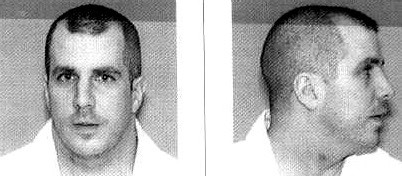
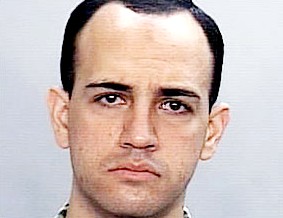
Britt Allen Ripkowski
Murderer Russell Ellwood
Murderer · USA · 1991
Russell Ellwood was a former taxi driver. Authorities suspected him of killing…
20 victims
Russell Ellwood
Murderer · USA · 1991
Russell Ellwood was a former taxi driver. Authorities suspected him of killing…
20 victims
 Robert Martines Perez
Murderer · USA · 1994
Name: Robert Martines Perez · Other name used in proceedings: Robert Martinez P…
15 victims
Robert Martines Perez
Murderer · USA · 1994
Name: Robert Martines Perez · Other name used in proceedings: Robert Martinez P…
15 victims
 Billy Frank Vickers
Murderer · USA · 1993
Billy Frank Vickers Vickers was executed by lethal injection in Texas on Januar…
14 victims
Billy Frank Vickers
Murderer · USA · 1993
Billy Frank Vickers Vickers was executed by lethal injection in Texas on Januar…
14 victims
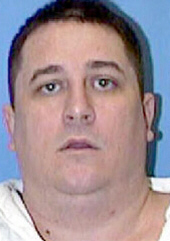 Dennis Wayne Bagwell
Mass murderer · USA · 1995
Dennis Wayne Bagwell was executed by lethal injection in Texas on February 17,…
5 victims
Dennis Wayne Bagwell
Mass murderer · USA · 1995
Dennis Wayne Bagwell was executed by lethal injection in Texas on February 17,…
5 victims
 Andre Bland
Murderer · USA · 1992
Andre S. Bland was convicted in the shooting death of Ontrain Sanders in the pa…
1 victim
Andre Bland
Murderer · USA · 1992
Andre S. Bland was convicted in the shooting death of Ontrain Sanders in the pa…
1 victim
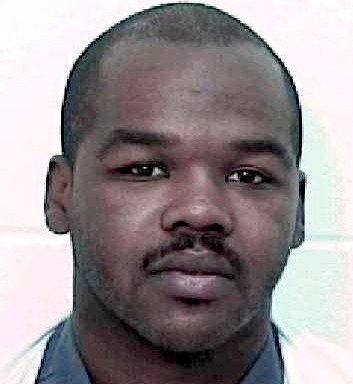 Curtis Osborne
Murderer · USA · 1990
Curtis Osborne was a male inmate convicted by a Spalding County jury of the mur…
2 victims
Curtis Osborne
Murderer · USA · 1990
Curtis Osborne was a male inmate convicted by a Spalding County jury of the mur…
2 victims
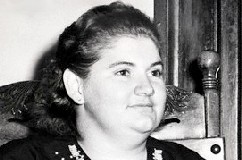 Martha Beck
Serial killer · USA · 1948
Martha Beck was executed by electrocution at Sing Sing prison in New York on Ma…
4 victims
Martha Beck
Serial killer · USA · 1948
Martha Beck was executed by electrocution at Sing Sing prison in New York on Ma…
4 victims
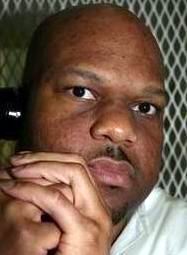 George Alarick Jones
Murderer · USA · 1992
April 13, 1993 — George Alarick Jones and three accomplices went to the Red Bir…
2 victims
George Alarick Jones
Murderer · USA · 1992
April 13, 1993 — George Alarick Jones and three accomplices went to the Red Bir…
2 victims
- Gender
- male
- Country
- USA
- Location
- Harris County, Texas, USA
- Date of birth
- October 31, 1971
- Age at first offence
- 26
- Characteristics
- —
- Victim profile
- Monica Allen and her two-year-old daughter, Dominique Frome
- Method of murder
- Strangulation / Suffocation
- Date(s) of murder
- December 22-25, 1997
- Years active
- 1997
- Date of arrest
- January 22, 1998
- Status
-
Sentenced to death
Sentenced to death on September 15, 1999
Case overview
Britt Allen Ripkowski was convicted of capital murder in Texas and received a sentence of death. The jury answered the future dangerousness issue affirmatively, and the trial judge sentenced him to death. The conviction was affirmed on direct appeal.
Timeline
- 12/22/1997 — A young woman’s body was found by the side of a roadway near Monticello, Utah; the body was not identified at that time.
- 12/30/1997 — A missing persons report was filed on Monica Allen and her daughter.
- 01/15/1998 — The body found in Utah was identified as Allen’s.
- 01/16/1998 — Special Agent Gary Steger contacted Ripkowski at his apartment in Houston, and a search of the apartment revealed nothing of importance; a crack pipe was seen in the apartment.
- 01/19/1998 — Ripkowski told Detective Kelly Kent that he had taken Dominique to Houston and that a friend had taken her to Mexico.
- 01/20/1998 — Ripkowski told Kent he believed the FBI was following him; the FBI searched his apartment pursuant to a federal search warrant.
- 01/22/1998 — Ripkowski was arrested by federal agents; Special Agent Eric Johnson read him his Miranda warnings and transported him to the Houston FBI office.
- 01/23/1998 — Law enforcement agents found Dominique’s body using information Ripkowski provided; Ripkowski submitted physical samples for toxicological testing, which later revealed the presence of cocaine in his system.
- 09/15/1999 — The trial judge sentenced Ripkowski to death.
- 11/07/2001 — The opinion was delivered and the judgment was affirmed.
Background
Monica Allen and Ripkowski dated for a time and had a stormy relationship. Allen had a two-year-old daughter, Dominique Frome, from a prior relationship. Ripkowski had lived with Allen at various times in Salt Lake City, Utah and in Houston, Texas. At the time of the events giving rise to the prosecution, they lived apart, with Ripkowski in Houston and Allen in Salt Lake City.
Ripkowski’s TDCJ number was 999325. His date of birth was 10/31/1971. His age at the time of receipt was 27, and his education level was 12.
The offence
On December 24, 1997, Ripkowski killed Dominique and put her body in a suitcase and buried the suitcase in an undeveloped area near the Sheldon Reservoir in northeast Harris County. Ripkowski also stated that he killed Monica Allen, placed her body where it was later found, left her on the side of the road, and later drove to Houston, Texas with Allen’s two-year-old daughter.
A young woman’s body was found near Monticello, Utah and was later identified as Allen’s. Dominique’s body was later found in Houston, Texas, after Ripkowski provided information about its location.
Investigation
The FBI and the Salt Lake City Police Department (SLCPD) began an investigation into the disappearances of Allen and her child. Detective Kelly Kent of the SLCPD was one of the officers assigned to investigate.
On January 15, 1998, the body found in Utah was identified as Allen’s.
Special Agent Gary Steger contacted Ripkowski at his apartment in Houston on the following day after Allen’s body was identified. Steger and another FBI agent introduced themselves, explained that they were investigating the disappearance of Allen and her child, obtained permission to search the apartment, and conducted a search that revealed nothing of importance to the investigation. Steger observed a crack pipe in the apartment.
On January 20, Ripkowski told Kent that he believed the FBI was following him. That same day, the FBI searched Ripkowski’s apartment pursuant to a federal search warrant.
After Ripkowski was arrested, Special Agent Eric Johnson read him Miranda warnings and transported him to the Houston FBI office. Steger later noticed scratches on Ripkowski’s face and an injury to his wrist. Ripkowski stated that he had tried to slit his wrists the night before. Steger took Ripkowski to a nurse for medical treatment.
After questioning and later a videotaped interrogation, Ripkowski agreed to help locate Dominique’s body and described where it was located.
Arrest
On January 22, 1998, Ripkowski was arrested by federal agents. Special Agent Eric Johnson read him his Miranda warnings and transported him to the Houston FBI office. Johnson testified that he did not threaten Ripkowski or make any promises. Johnson denied that Ripkowski was disoriented during that time period.
During a pat-down search, Johnson discovered phone cords and a necktie.
During transit, Ripkowski told officers that he should have made them kill him.
Statements and confessions
Ripkowski made oral statements to police concerning the location of the victim’s body. He also gave a videotaped interrogation in which he described killing Allen and Dominique and described how Dominique’s body was disposed of.
Non-recorded interview
Detective Kent conducted a first interview that was not electronically recorded. During the interview, Ripkowski admitted to killing both Allen and Dominique. He related that, on December 24, he killed Dominique, put her body in a suitcase, and buried the suitcase in an undeveloped area near the Sheldon Reservoir in northeast Harris County.
Ripkowski agreed to help locate Dominique’s body and accompanied law enforcement agents to the area he described. Several law enforcement agents testified they believed Ripkowski honestly tried to help locate the body but was unsuccessful due to the terrain being swampy and covered with underbrush. Ripkowski informed officers that the body could be further up the same road about a half mile.
Videotaped interrogation
After a failed attempt to find the child’s body, Steger took Ripkowski to the homicide division of the Houston Police Department. Ripkowski was placed in an interview room with Detective Kent and Houston Police Officer Robert King. King read the required warnings and Ripkowski nodded his head after each warning was read. Kent and King testified Ripkowski appeared to understand his rights and appeared to waive them voluntarily.
Kent then conducted a videotaped interrogation. Kent and King testified Ripkowski did not appear to be under the influence of drugs or alcohol during the interrogation and that he responded appropriately to questions. Ripkowski again described how he killed Allen and Dominique and again described how he disposed of Dominique’s body.
Ripkowski also stated that he had used cocaine extensively up to and just prior to his arrest. He stated he had recently attempted suicide by trying to slit his wrists, and that he had tried to kill himself by taking an overdose of pills shortly before his arrest. After the taping ended, Ripkowski was shown a map and pointed out the area on the map where Dominique’s body was located.
On January 23, armed with this information, law enforcement agents found Dominique’s body.
Trial
Parties and procedural posture
In the Court of Criminal Appeals of Texas, the case was titled:
No. 73,590 Britt Allen Ripkowski, Appellant, v. The State of Texas.
It was an appeal from Harris County. Keller, P.J., delivered the opinion of the Court, joined by Keasler, Hervey, Holcomb, and Cochran, JJ. Womack, J. joined in part with note. Cochran, J. filed a concurring opinion. Meyers, J. filed a dissenting opinion, joined by Price and Johnson, JJ.
Ripkowski appealed, raising twenty-four points of error. The appellate court stated it would affirm.
Conviction and sentencing findings
The opinion stated that Ripkowski was convicted of capital murder. The jury answered the future dangerousness issue affirmatively, and the trial judge sentenced Ripkowski to death. Direct appeal was automatic.
Legal issues and rulings on appeal
Miranda waiver and admissibility of statements (points of error one through twelve)
Ripkowski complained about a non-recorded oral statement and about a videotaped confession, alleging violations of Articles 38.21, 38.22, 38.23, Miranda v. Arizona, the Fifth and Sixth Amendments to the United States Constitution, and counterpart provisions in the Texas Constitution.
The court stated it considered only the Miranda issue because Ripkowski failed to present argument or authorities supporting the other allegations.
The appellate court set out the two dimensions of a valid Miranda waiver, describing voluntariness and awareness of rights and consequences. It concluded the trial court found Ripkowski’s waiver was knowing, intelligent, and voluntary. The appellate court stated the trial court’s decision would be afforded deference on credibility and demeanor questions, and reviewed de novo questions not turning on credibility and demeanor.
The opinion stated that various law enforcement officials testified Ripkowski comprehended the warnings and questions, was coherent, gave appropriate answers, and did not appear intoxicated by alcohol or under the influence of any drugs. Ripkowski presented expert testimony from Dr. Paula Lundberg-Love that a combination of stressful conditions, bipolar mental disorder, and cocaine binging rendered him incompetent to understand and waive his rights.
After hearing the evidence, the trial court found Ripkowski knowingly, intelligently, and voluntarily waived his rights and held the complained-of statements to be admissible.
The appellate court ruled that points of error one through twelve were overruled.
Psychiatric testimony (points of error thirteen and fourteen)
Ripkowski contended the trial court erred in admitting testimony of two jail psychiatrists who interviewed him while he was in custody. He argued that because he was given no Miranda warnings before the interviews and because counsel was not notified that the interviews would occur, admitting the psychiatric testimony violated his Fifth and Sixth Amendment rights under Estelle v. Smith.
The opinion quoted the trial court colloquy:
[DEFENSE]: It’s my understanding they are going to bring a doctor from the jail who examined Mr. Ripkowski while he was in custody without the benefit of warnings – unless I’m mistaken about that. We would object to his testimony as a violation of Mr. Ripkowski’s Fifth and Sixth Amendment rights, as well as on State constitutional grounds, and it’s a violation of Estelle vs. Smith for them to conduct an in-custody psychological interview without the benefit of warnings . That’s our argument. [PROSECUTION]: He requested the treatment. It was not at our request; it was at his request when he first came into the jail. It was a doctor, not the expert for the State. I won’t go into any questions regarding the offense. [DEFENSE]: I accept completely the way she represents it. We still think it’s covered by Estelle vs. Smith and would be a Fifth and Sixth Amendment violation, and we make that objection. (Emphasis added).
The appellate court discussed Smith, and Buchanan v. Kentucky, and stated that the interviews occurred because Ripkowski requested treatment. It described that at the guilt-innocence phase, Ripkowski offered expert testimony from Dr. Lundberg-Love that he suffered from bipolar disorder, based on a sixteen-hour personal interview, standardized psychological testing, a review of medical records, and a review of his videotaped confession. It stated the State presented testimony from the jail psychiatrists outlining opinions that Ripkowski did not suffer from bipolar disorder, limiting the scope as reflected by the prosecutor’s statement that she would not go into questions regarding the offense.
The appellate court ruled points of error thirteen and fourteen were overruled.
Waiver of mitigation special issue; victim impact evidence (points of error fifteen through eighteen)
Ripkowski complained about his waiver of the mitigation special issue. The opinion stated that at the beginning of the punishment phase, defense counsel complained the client was placed in an unfair position by being required to choose between admission of victim impact evidence and submission of the mitigation special issue. Defense counsel requested the trial court hold the “statute” unconstitutional; the trial court denied the request.
Defense counsel stated the State intended to use victim impact testimony. Counsel and the trial court confirmed that the testimony would be permitted. Defense counsel and Ripkowski then requested Ripkowski be permitted to waive the mitigation special issue:
MR. MORROW: Based on that then, Your Honor, and after counseling with Mr. Ripkowski and his family, it is our decision on his behalf to waive the mitigation special issue so that the victim impact testimony would no longer be admissible. THE COURT: Mr. Ripkowski, you heard Mr. Morrow, your lawyer, make that statement in the record. Do you agree? MR. RIPKOWSKI: Yes, sir. THE COURT: Do you wish to affirmatively waive and give up the right to have the issue of mitigation presented to the jury? MR. RIPKOWSKI: Yes, sir. THE COURT: You understand if you do that, they will have just the one issue left, and that would be what we call the future dangerousness issue, and then if they answer that in the affirmative, then the Court would assess your punishment at death. Do you understand that? MR. RIPKOWSKI: Yes, sir. THE COURT: Knowing all of this, has anyone promised you anything or threatened you to do it this way? MR. RIPKOWSKI: No, sir. THE COURT: And, that’s what you want to do, is to give up any right to have the issue of mitigation presented to the jury? MR. RIPKOWSKI: Yes, sir.
As a result of the colloquy, the mitigation issue was not submitted in the punishment charge and the State was not permitted to introduce victim impact testimony.
Ripkowski contended the trial court erred in denying his challenge to the constitutionality of Article 37.071, arguing the statute as interpreted by Mosley v. State nullified Penry v. Lynaugh by forcing a defendant to choose between the mitigation issue and victim impact testimony. Alternatively, he contended Tong v. State retracted the rule permitting waiver and hence his waiver was invalid. He also claimed ineffective assistance of counsel based on either forced choice or inaccurate sentencing information.
The appellate court applied the estoppel rule recognized in Prystash v. State and concluded the waiver request barred complaint about omission. The opinion also discussed that Ripkowski did not present an all-illegal-options dilemma and that the advice did not constitute inaccurate information.
The appellate court ruled points of error fifteen through eighteen were overruled.
Constitutionality of child-murder provision (points of error nineteen through twenty-one)
Ripkowski contended Texas Penal Code §19.03(a)(8), which proscribes the killing of a child under age six, violated various provisions of the United States and Texas constitutions. He acknowledged that Black v. State and Henderson v. State decided the issues contrary to his position. The appellate court declined to revisit those holdings and ruled points of error nineteen through twenty-one were overruled.
Videotape and photographs (points of error twenty-two and twenty-three)
Ripkowski contended the trial court violated Tex. R. Evid. 403 by admitting into evidence a videotape of the recovery of the victim’s body. He argued the videotape was cumulative of still photographs and of his statements describing the body’s location, and that the videotape unfairly prejudiced him through dramatization, close-ups of a decomposing body, and lingering camera angles. The appellate court concluded a videotape and still photographs were not entirely cumulative and that unfair prejudice was not sufficient to exclude the evidence.
The appellate court also addressed color photographs of the victim’s larynx after it had been removed from the victim’s throat. Ripkowski argued the photos were unfairly prejudicial because they depicted “massive mutilation caused by the surgery in performing an autopsy.” The appellate court stated it did not apply mutilation cases to photographs depicting organs removed and noted Ripkowski conceded the photographs depicted bruising on the larynx not visible externally. The appellate court ruled the photographs were highly relevant to the manner of death and that their probative value was not substantially outweighed by unfair prejudice.
The appellate court ruled point of error twenty-two and point of error twenty-three were overruled.
Prosecutorial argument about parole (point of error twenty-four)
Ripkowski contended the trial court erred in overruling his objection to a prosecutorial argument about parole. The opinion quoted the exchange during closing argument:
MR. HAWKINS [prosecutor]: Mr. Morrow spoke to you about the parole laws; but as you know, those are laws that can be changed when they need to. MR. MORROW: Excuse me, Mr. Hawkins. Judge, I object to him telling the jury they can disregard the Charge the Court’s given to them and disregard the law. THE COURT: That’s overruled. MR. HAWKINS: As Mr. Baker testified, we saw the changes in the ‘80s when the federal judge stepped in and the Prison Management Act took place and people began to serve a fraction of their time. But that’s not what the issue asks. This issue, as Dr. Quijano admitted, doesn’t ask if the defendant would constitute a continuing threat in prison or after prison or after serving 40 years in prison. That’s not what you are being asked. The question for you, is the defendant, as he sits here, here and now, is he a continuing threat to society? MR. MORROW: Pardon me. Judge, may I have a running objection to him asking the jury to disregard the law as given in the Charge? THE COURT: You certainly may, sir.
The opinion concluded that Ripkowski invited the prosecutorial argument. It described that the defense requested and received a jury instruction that a defendant given a life sentence in a capital murder case would not be eligible for parole for forty calendar years. It stated defense called William Baker, a regional supervisor for the Texas Department of Criminal Justice – Parole Division, who testified to the forty year eligibility requirement. It stated defense questioning elicited testimony that the Legislature increased and never reduced the time capital life inmates must serve to become eligible for parole, and it elicited testimony on Board of Pardons and Paroles procedures and factors.
The opinion stated that during cross-examination, the State elicited testimony over defense objection that rules about parole had changed in the past to permit some inmates to be released earlier. It described that defense counsel argued, during closing argument, that Ripkowski would never be paroled. It quoted the defense counsel’s argument:
40 calendar years is how long someone spends in the penitentiary if you return a life sentence on capital murder, at a minimum. What else does Mr. Baker and the parole board care about? They care about whether or not the person’s still a threat at the end of 40 calendar years. They care about, has he behaved himself in prison. And their primary concern, above all else, is the protection of society. The protection of society. So if you go to prison and misbehave, you are not going to even get out when 40 calendar years pass. It’s a reasonable deduction from the evidence, I would suggest to you all, that Britt Ripkowski will never be paroled if you return a life sentence. Never.
The appellate court concluded the defense invited the argument based on eliciting testimony and making the argument that appellant would never be released on parole. It overruled point of error twenty-four.
Outcome
The appellate court affirmed the judgment of the trial court.
Other details
Ripkowski’s prior prison record was none. His prior occupation was listed as contra costa California computer programmer / repair, laborer. His race was indicated as White and his gender as male. His hair color was Brown. His height was 5' 7" and his weight 190. His eye color was Green.
The opinion referenced that Article 37.071, §2(b)(1) related to the future dangerousness issue. It also referenced Article 37.071 §2(h). It quoted the definition of the child-murder offense as “A person commits an offense if he commits murder as defined under Section 19.02(b)(1) and...the person murders an individual under six years of age.” Texas Penal Code §19.03(a)(8).
The opinion also included the mitigation special issue as: “Whether, taking into consideration all of the evidence, including the circumstances of the offense, the defendant’s character and background, and the personal moral culpability of the defendant, there is a sufficient mitigating circumstance or circumstances to warrant that a sentence of life imprisonment rather than a death sentence be imposed. Article 37.071, §2(e)(1).”
Spotted an error, or have more information about this case?