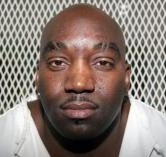
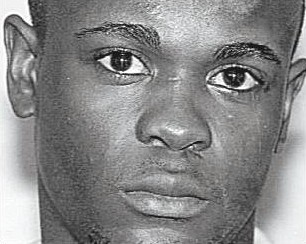
Willie Earl Pondexter
Murderer Brian Kevin Rosenfeld
Murderer · USA · 1985
Brian Kevin Rosenfeld Brian Kevin Rosenfeld was sentenced to three concurrent l…
23 victims
Brian Kevin Rosenfeld
Murderer · USA · 1985
Brian Kevin Rosenfeld Brian Kevin Rosenfeld was sentenced to three concurrent l…
23 victims
 Russell Ellwood
Murderer · USA · 1991
Russell Ellwood was a former taxi driver. Authorities suspected him of killing…
20 victims
Russell Ellwood
Murderer · USA · 1991
Russell Ellwood was a former taxi driver. Authorities suspected him of killing…
20 victims
 Robert Martines Perez
Murderer · USA · 1994
Name: Robert Martines Perez · Other name used in proceedings: Robert Martinez P…
15 victims
Robert Martines Perez
Murderer · USA · 1994
Name: Robert Martines Perez · Other name used in proceedings: Robert Martinez P…
15 victims
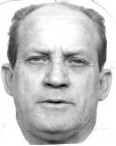 Billy Frank Vickers
Murderer · USA · 1993
Billy Frank Vickers Vickers was executed by lethal injection in Texas on Januar…
14 victims
Billy Frank Vickers
Murderer · USA · 1993
Billy Frank Vickers Vickers was executed by lethal injection in Texas on Januar…
14 victims
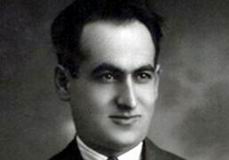 Soghomon Tehlirian
Murderer · Germany · 1921
Soghomon Tehlirian (Armenian: Սողոմոն Թեհլերյան) was born on April 2, 1897, in…
1 victim
Soghomon Tehlirian
Murderer · Germany · 1921
Soghomon Tehlirian (Armenian: Սողոմոն Թեհլերյան) was born on April 2, 1897, in…
1 victim
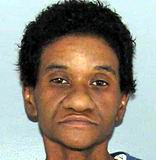 Nikole Flagg
Murderer · USA · 2003
Nikole Flagg (defendant) Myrvinia Lowe (victim; 61-year-old; employee at Cincin…
2 victims
Nikole Flagg
Murderer · USA · 2003
Nikole Flagg (defendant) Myrvinia Lowe (victim; 61-year-old; employee at Cincin…
2 victims
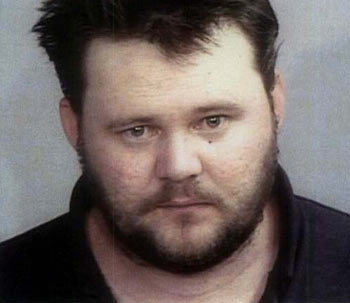 William Thomas Clare
Homicide · Australia · 2003
William Thomas Clare was a convicted killer who was also described as a paedoph…
1 victim
William Thomas Clare
Homicide · Australia · 2003
William Thomas Clare was a convicted killer who was also described as a paedoph…
1 victim
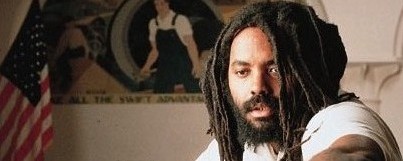 Mumia Abu-Jamal
Murderer · USA · 1981
Mumia Abu-Jamal (also known as Wesley Cook) was a journalist and political acti…
1 victim
Mumia Abu-Jamal
Murderer · USA · 1981
Mumia Abu-Jamal (also known as Wesley Cook) was a journalist and political acti…
1 victim
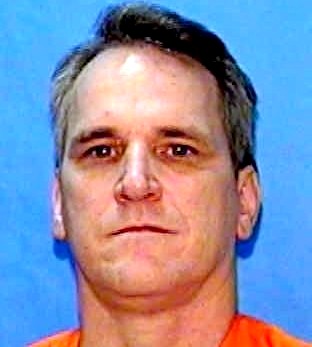 Scott Mansfield
Murderer · USA · 1995
Scott Mansfield was sentenced to death. · 10/14/95 — Jesus Alfonso and Sara Rob…
1 victim
Scott Mansfield
Murderer · USA · 1995
Scott Mansfield was sentenced to death. · 10/14/95 — Jesus Alfonso and Sara Rob…
1 victim
- Gender
- male
- Country
- USA
- Location
- Bowie County, Texas, USA
- Date of birth
- March 5, 1974
- Age at first offence
- 19
- Characteristics
- robbery, convicted rapist
- Victim profile
- Martha Lennox (female, 84)
- Method of murder
- Shooting (9 mm pistol)
- Date(s) of murder
- October 29, 1993
- Years active
- 1993
- Date of arrest
- Next day
- Status
-
Executed
Executed by lethal injection in Texas on March 3, 2009
Case overview
Willie Earl Pondexter was convicted of capital murder for the robbery and slaying of Martha Lennox at her Clarksville home and was sentenced to death. He was executed by lethal injection in Texas on March 3, 2009.
Timeline
- Oct. 28, 1993 — Willie Pondexter and four other men discussed robbing Martha Lennox; the group went to Lennox’s Clarksville home, Pondexter kicked in the front door, and Henderson shot Lennox and handed the gun to Pondexter, who also shot Lennox in the head; the group fled with money from Lennox’s coin purse and took her car.
- Oct. 29, 1993 — After the murder, Pondexter and his companions drove to Dallas and were arrested hours later after trying to rob a man walking along a street.
- Dec. 14, 1993 — A Red River County grand jury indicted Pondexter for the capital murder of Martha Lennox.
- July 19, 1994 — A jury found Pondexter guilty of capital murder.
- Jan. 29, 1997 — The Texas Court of Criminal Appeals denied rehearing.
- Oct. 6, 1997 — The U.S. Supreme Court denied Pondexter’s petition for a writ of certiorari.
- Oct. 31, 1997 — Pondexter filed a state application for a writ of habeas corpus, later amended.
- Jan. 17, 1999 — The Texas Court of Criminal Appeals adopted the trial court’s findings of fact and conclusions of law in an order denying Pondexter’s habeas application.
- Nov. 30, 1999 — Pondexter filed a federal petition for writ of habeas corpus in U.S. district court.
- Sept. 26, 2002 — The federal district court granted relief on Pondexter’s first claim and dismissed the remaining nineteen claims as moot.
- Sept. 16, 2003 — The Fifth U.S. Circuit Court of Appeals vacated the district court’s judgment and remanded for further proceedings.
- Sept. 27, 2006 — The district court issued a second memorandum opinion rejecting all of Pondexter’s claims and granted the state’s motion for summary judgment.
- July 29, 2008 — The Fifth Circuit affirmed the district court’s decision and denied habeas relief.
- Dec. 9, 2008 — Pondexter filed a writ of certiorari in the U.S. Supreme Court.
- Feb. 13, 2009 — Pondexter filed a civil rights suit in a U.S. district court.
- Feb. 18, 2009 — Pondexter asked the U.S. district court for a stay of execution; the court denied the request for a stay.
- March 3, 2009 — Pondexter was executed by lethal injection in Texas; he was pronounced dead at 6:18 p.m.
Background
Willie Earl Pondexter was scheduled to be executed after 6 p.m. on Tuesday, March 3, 2009. He was convicted and sentenced to die for the murder of Martha Lennox.
The offence
On Oct. 28, 1993, Pondexter and four other men discussed robbing Martha Lennox, an elderly woman. All five men went to Lennox’s Clarksville home. One of the men left the group, and the other four proceeded. Pondexter kicked in the front door. The four men entered Lennox’s bedroom where the 85-year-old Lennox was sitting on the bed.
Williams took the seven dollars that was in Lennox’s coin purse. Henderson shot Lennox in the head and handed the gun to Pondexter, who also shot Lennox in the head.
Pondexter made the statement: “that’s how you smoke a bitch”.
The group then took Lennox’s money and fled with Lennox’s car, driving to Dallas. On the way after the murder, Pondexter suggested robbing a convenience store, but they robbed nearby pedestrians instead. After spending Lennox’s money on gasoline, Pondexter and his companions were later arrested hours after attempting to rob a man walking along a street.
Victim
- Martha Lennox, 85 years old, was shot twice and died as a result of the robbery and slaying.
Investigation
Evidence about the cause of death
At trial, the medical examiner testified that two gunshot wounds caused Lennox’s death and that either shot could have been fatal. Dr. Guileyardo testified about the autopsy findings, including that one bullet entered the left side of the victim’s face and exited below her right ear, perforating her oral cavity, boring a hole through her tongue, and shattering her right jawbone; and the other bullet entered the victim’s forehead, traveled through her brain, and exited at the back of her head. Dr. Guileyardo also testified that both wounds were inflicted while the victim was still alive, and that either could have killed her.
Dr. Guileyardo testified that the gunpowder stippling marks on both gunshot wounds were red and had the appearance of inflammation, indicating a vital reaction, not a postmortem reaction. He testified that the wounds could not be determined by order from autopsy evidence, but he concluded that the one that shattered her jawbone was fired from a closer range than the other shot.
A defense pathologist, Dr. Bolesta, later testified at the state habeas evidentiary hearing that the shot to the victim’s brain was “universally fatal” and that the shot to her face—stated to be the second shot fired—was only “potentially fatal”.
Arrest
Pondexter and his companions were arrested hours later in Dallas after trying to rob a man walking along a street.
People involved
Defendants and co-actors
- Willie Earl Pondexter (defendant)
- James Henderson (co-actor), who was tried separately before Pondexter’s trial and was also convicted of capital murder and sentenced to death.
- Ricky Bell (identified as part of the group)
- James Bell (identified as part of the group)
- Deon Williams (identified as part of the group)
Witnesses and other individuals
- Deon Williams, testified at trial.
- Michael Kendricks, testified that he was in jail with Pondexter on unrelated charges and that Pondexter told him he shot Lennox in the jaw after she was already dead.
- Rhoda Briley, testified for the defense in relation to Pondexter’s claims about whether he shot the victim.
- Jack Herrington, Red River County district attorney at the time who prosecuted Pondexter.
- Dr. Guileyardo, the medical examiner who testified at trial.
- Dr. Bolesta, the pathologist who testified at the state habeas evidentiary hearing.
Trial
Charges
Pondexter was indicted for the capital murder of Martha Lennox.
Venue
The venue was shifted from Red River County to Bowie County.
Verdict and sentence
- A jury found Pondexter guilty of capital murder on July 19, 1994.
- After a separate punishment hearing, the trial court sentenced Pondexter to death.
Jury issues and rulings (appeal content preserved in record)
Pondexter appealed his conviction, raising twenty-four points of error. The Texas Court of Criminal Appeals affirmed.
The appeals court addressed arguments including:
- Fair cross-section challenge: the court found that Pondexter did not establish a prima facie violation of the fair cross-section requirement.
- Peremptory strikes and Batson/Equal Protection: the court held that Pondexter did not establish that the reasons were pretextual; it overruled the challenge.
- Jury array and additional jury instructions requests were addressed through the appellate points and denied as errors.
Gang evidence during guilt-innocence
Evidence of Pondexter’s gang affiliations and activities was admitted during the guilt/innocence phase. The appellate record includes extensive discussion of gang-talk testimony and whether it should have been admitted and whether its admission was harmless.
The appellate opinion included the following verbatim statement by Pondexter during the murder: “that’s how you smoke a bitch”.
The appellate court found that the trial court erred in admitting evidence of gang affiliations and activities but held the error was harmless beyond a reasonable doubt.
Sentencing
Pondexter was sentenced to death after the jury affirmatively answered the special issues set forth in Article 37.071(b) of the Texas Code of Criminal Procedure.
Appeals
Direct appeal
On Oct. 16, 1996, the Texas Court of Criminal Appeals affirmed Pondexter’s conviction and sentence.
Rehearing and certiorari
- Rehearing was denied on Jan. 29, 1997.
- The U.S. Supreme Court denied certiorari on Oct. 6, 1997.
State habeas
- Pondexter filed a state application for a writ of habeas corpus on Oct. 31, 1997.
- The trial court held an evidentiary hearing and entered findings of fact and conclusions of law recommending denial.
- On Jan. 17, 1999, the Texas Court of Criminal Appeals adopted the trial court’s findings and conclusions and denied Pondexter’s habeas application.
Federal habeas
- On Nov. 30, 1999, Pondexter filed a federal petition for writ of habeas corpus raising 20 claims.
- On Sept. 26, 2002, the federal district court granted relief on the first claim concluding ineffective assistance due to counsel’s decision not to consult with and offer testimony of a pathologist; it dismissed the remaining nineteen claims as moot.
- The Fifth Circuit vacated the district court’s judgment on Sept. 16, 2003, remanding for further proceedings.
- After subsequent proceedings, the district court issued a second memorandum opinion on Sept. 27, 2006, rejecting all claims and granting summary judgment for the state.
- The Fifth Circuit affirmed on July 29, 2008, denying habeas relief.
U.S. Supreme Court petition after habeas
- On Dec. 9, 2008, Pondexter filed a writ of certiorari in the U.S. Supreme Court. The petition was pending at the time of the execution notice.
Aftermath
Execution proceedings and last statement
Pondexter was executed by lethal injection in Texas on March 3, 2009, and he was pronounced dead at 6:18 p.m., nine minutes after the lethal drugs began.
From the death chamber gurney, Pondexter said he did not murder anyone and expressed remorse and apologized for his involvement in the crime. He made the following statements:
- “I am not mad. I’m a little upset and disappointed in the courts. I feel I’ve been let down,” he said.
- “I just played the hand that life dealt me,” he said.
- He hoped that people who read about him would “look at my life and learn from it.”
- He looked toward the district attorney who prosecuted him and a distant cousin of his victim and said, “I know I’m wrong asking you to forgive me.”
Before the lethal drugs took effect, he said: “I wasn’t the guy who killed her,” he said recently from death row. He also said: “At 19, I was like, a follower,” and “If I didn’t go along, you’re a punk. At 19, that’s my thought process.”
Future dangerousness evidence and juvenile history details contained in record
The record included information about Pondexter’s juvenile delinquency adjudication in Oklahoma in August 1991, when he was seventeen-years old, including that he was made a “ward of the court” based on stipulation to having committed assault and battery, trespassing, and two counts of disturbing the peace. In November 1992, a Clarksville, Texas, policeman arrested Pondexter for unlawfully carrying a weapon, and Pondexter had a 9MM pistol and a plastic bag of bullets in his possession.
In May 1993, Pondexter committed assault and battery with a dangerous weapon in Oklahoma and pled no contest, receiving 12-years probation, which Oklahoma revoked in October 1993 for failure to report and failure to pay supervision fees and court costs.
The record also included claims that Pondexter later bragged about shooting a man during an argument and that he got away with shooting another man because his attorney successfully suppressed his confession.
Other execution-related narrative details contained in record
The record included background about Martha Lennox’s family wealth, including that Lennox’s home had been watched by the burglars and that her family foundation continued charitable work. It also included that Lennox’s home had attracted the interest of the burglars who watched it during the day and determined she was living there alone.
Identified “Jurek v. Texas” and clemency process discussion contained in record
The record included discussion of executive clemency in Texas, and referenced that Texas law relies on predictions of future dangerousness in capital sentencing. It also included references to legal proceedings involving clemency access, including a civil rights suit and a request for a stay of execution that was denied.
Spotted an error, or have more information about this case?