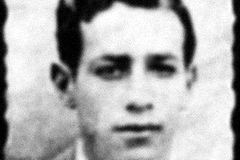
Juan Roa Sierra
Murderer Ernesto Picchioni
Murderer · Italy · 1944
March 12, 1949 — He was sentenced to life in prison. · 2016 — The case record l…
16 victims
Ernesto Picchioni
Murderer · Italy · 1944
March 12, 1949 — He was sentenced to life in prison. · 2016 — The case record l…
16 victims
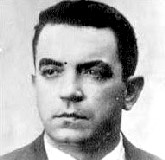 José María Jarabo
Murderer · Spain · 1958
José María Jarabo was a Spanish spree killer. · April 28, 1923 — José María Jar…
4 victims
José María Jarabo
Murderer · Spain · 1958
José María Jarabo was a Spanish spree killer. · April 28, 1923 — José María Jar…
4 victims
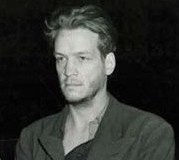 George Sitts
Murderer · USA · 1945
George Sitts was executed by the State of South Dakota on April 8, 1947 for the…
3 victims
George Sitts
Murderer · USA · 1945
George Sitts was executed by the State of South Dakota on April 8, 1947 for the…
3 victims
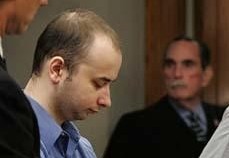 Mykhaylo Kofel
Murderer · USA · 2001
Mykhaylo Kofel was a Byzantine Catholic Church monk-in-training. He had brought…
1 victim
Mykhaylo Kofel
Murderer · USA · 2001
Mykhaylo Kofel was a Byzantine Catholic Church monk-in-training. He had brought…
1 victim
 Robert William Clayton
Murderer · USA · 1985
Robert William Clayton was a Tulsa death row inmate. He had an IQ of 68 and pre…
1 victim
Robert William Clayton
Murderer · USA · 1985
Robert William Clayton was a Tulsa death row inmate. He had an IQ of 68 and pre…
1 victim
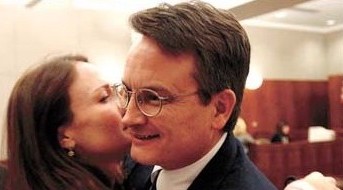 Robert Allen Weitzel
Homicide? · USA · 1995
Robert Allen Weitzel was a psychiatrist charged in relation to the deaths of fi…
5 victims
Robert Allen Weitzel
Homicide? · USA · 1995
Robert Allen Weitzel was a psychiatrist charged in relation to the deaths of fi…
5 victims
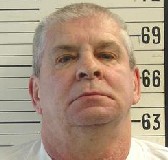 John Patrick Henretta
Murderer · USA · 1988
John Patrick Henretta was sentenced to death in Tennessee on April 6, 2002. · N…
2 victims
John Patrick Henretta
Murderer · USA · 1988
John Patrick Henretta was sentenced to death in Tennessee on April 6, 2002. · N…
2 victims
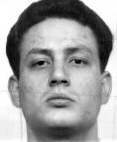 John Elliott
Murderer · USA · 1986
John Elliott was convicted of murder committed in the course of kidnapping and…
1 victim
John Elliott
Murderer · USA · 1986
John Elliott was convicted of murder committed in the course of kidnapping and…
1 victim
 Erika Sifrit
Murderer · USA · 2002
Erika Sifrit and Benjamin Sifrit gained notoriety in 2002 for the murders of Jo…
2 victims
Erika Sifrit
Murderer · USA · 2002
Erika Sifrit and Benjamin Sifrit gained notoriety in 2002 for the murders of Jo…
2 victims
- Gender
- male
- Country
- Colombia
- Location
- Bogotá, Colombia
- Date of birth
- November 4, 1927
- Age at first offence
- 21
- Characteristics
- arson, history of mental illness
- Victim profile
- Jorge Eliécer Gaitán, 45 (Colombian Liberal leader and presidential candidate)
- Method of murder
- Shooting
- Date(s) of murder
- April 9, 1948
- Years active
- 1948
- Date of arrest
- —
- Status
-
Died in custody
Juan Roa Sierra was killed by a massive mob after he shot Jorge Eliécer Gaitán three times; his body was left in front of the Presidential Palace and he was described as “an almost shapeless corpse”
Case identification
Juan Roa Sierra was a Colombian who assassinated Liberal leader and presidential candidate Jorge Eliécer Gaitán on April 9, 1948.
Timeline
- April 7, 1948 — Gerat visited Roa and declared that Roa had had a dream about a treasure in two indigenous towns not too far from Bogotá; Gerat suggested Roa not go alone, but Roa rejected this; Roa purchased the weapon.
- April 8, 1948 — Roa bought the ammunition.
- April 9, 1948 — Roa assassinated Gaitán by shooting him three times; after Roa was mortally wounding him, a mob chased Roa down, kicked and stabbed him “until he was ‘an almost shapeless corpse’,” and then left his body in front of the Presidential Palace; the assassination triggered El Bogotazo and riots that partially destroyed Bogotá and led to La Violencia.
- July 20, 1948 — A Scotland Yard report dated July 20, 1948 recorded statements attributed to Roa.
- January 23, 1903 – April 9, 1948 — Jorge Eliécer Gaitán’s life dates were stated, including the date of his death as April 9, 1948.
- November 4, 1927 – April 9, 1948 — Roa’s birth and death dates were stated.
- approximately 1958 — La Violencia was stated as a period of violence lasting until approximately 1958.
Background
Juan Roa Sierra was born on November 4, 1927 in Bogotá and died on April 9, 1948 in Bogotá. Roa was 20 years old at the time of the Gaitán assassination and his subsequent death.
Roa was the son of Encarnación Sierra and Rafael Roa. A memoir by Gabriel Garcia Marquez expressed doubts about Roa’s guilt and stated that Roa’s mother was a Gaitán follower; she was home preparing her grieving dress when she heard on the radio that her son was the assassin.
The assassination of Gaitán triggered El Bogotazo, riots that partially destroyed Bogotá, and led to La Violencia, described as a period of violence lasting until approximately 1958.
The offence
On April 9, 1948, Roa assassinated Jorge Eliécer Gaitán by shooting him three times, mortally wounding him.
Roa’s motivations were described as unknown or disputed. The text stated that “the violent riot known as the Bogotazo” followed the assassination and that “the assassination provoked a violent riot,” leading to further years of violence.
Investigation and theories about responsibility
The text presented multiple theories about how and why Gaitán was assassinated and about whether Roa acted alone.
Cold War conspiracy claims
The violent disruption of the 1948 Inter-American Conference, and the violent deaths of a thousand people, were alleged to have been part of a Cold War conspiracy by agents of the USSR that allegedly included Fidel Castro. It further stated that police records suspected Castro personally of assassinating Gaitán.
The text stated that Roa’s Cuban traveling companion, Rafael del Pino, was seen with Roa “an hour and a half before the assassination,” and that Castro had attempted to recruit Gaitán earlier but Gaitán had repeatedly declined. It stated that Gaitán was assassinated because he was too politically influential and would have countered the Cold War objectives of the USSR in the Caribbean.
It also reported that the President of Colombia Mariano Ospina Pérez and General Secretary Rafael Azula Barrera considered evidence that the revolver Roa had carried was incapable of accurate fire and that Roa was not thought to have firearms training; it stated that no eyewitness saw Roa anywhere near the assassination and that he was first seen between two policemen. From that evidence, it stated that the government concluded that impoverished Roa, with diminished mental capacities, had been paid to stand near the event with a recently fired revolver.
Claims of influence by others
The text stated that Weyl documented a claim by Ospina Pérez and others that Roa was influenced by others and perhaps did not commit any crime at all. It also stated that Milton Bracker of the New York Times and U.S. Ambassador Willard L. Beaulac questioned whether Roa had acted on his own. Ambassador Beaulac was described as speculating that Roa was simply used to cover the identity of the real assassins.
CIA involvement theory
The text stated that one theory held that Roa acted under the orders of CIA agents John Mepples Espirito (alias Georgio Ricco) and Tomás Elliot, as part of an anti-leftist plan supposedly called Operation Pantomime.
It further stated that the theory claimed complicity by the then Chief of Police, who allegedly ordered two police officers to abandon Juan Roa Sierra to be killed by the mob, while also noting that the claim conflicted with mainstream accounts of Roa Sierra’s death.
Alternative personal-disillusion theory
The text also presented a theory that Roa “simply got tired and disenchanted of lobbying Jorge Eliécer Gaitán to get a job.” It stated that he had a history of job instability and believed he could get a position worthy of his status as a reincarnation of Santander and Quesada.
The text stated that Roa had an initial conversation with Jorge Eliécer and was advised to write a letter to the President, which he did, but did not get a job. It stated that after that, he visited Gaitán’s office several times in the two months prior to the assassination. It stated that “the revolver was purchased two days before the assassination and the ammunition the day before,” and that on Roa’s last visit on April 9, when the secretary finally wrote his name to be considered by Jorge Eliécer.
Arrest, chase, and death
After Roa shot Gaitán, the text stated that an angry mob grew in front of a drug store where police had taken Roa for refuge. It stated that the situation became so menacing that the iron shutters of the drug store were opened.
Roa was then kicked and stabbed by a massive mob until he was “an almost shapeless corpse.” His body was left in front of the Presidential Palace.
The text also stated an eyewitness statement from Guillermo Perez Sarmiento, Director of the United Press in Columbia, that upon his arrival Roa was already “between two policemen” and that he described the angry mob that kicked and “tore him to pieces,” without suggesting police involvement.
Roa’s movements and statements before the assassination
Gerat was described as having been introduced to Roa “18 months before the assassination.” Gerat suggested that Roa not go alone, which Roa rejected.
The text stated that two witnesses said they heard Roa say he was going to serve as bodyguard for “two foreigners” who were going on a trip to a desolated land. It stated that police records identified one foreigner, Rafael del Pino, as having been in contact with Roa ninety minutes before the assassination.
It also stated that Fidel Castro was observed in the immediate vicinity of the assassination.
It stated that these two Cubans “immediately fled to the Cuban Legation just in time to avoid arrest.”
Testimony and claims about appointments and interactions with Gaitán
The text stated that Cecilia de González, assistant of Jorge Eliécer Gaitán, said Roa went several times to the office “two months before the assassination,” but that she never gave Roa the opportunity to see him.
On the day of the assassination, the text stated that Roa visited the office at 9:30 AM. It stated that Gaitán had arrived “a little before 8 AM,” though he had been awake until late because he attended the trial of Lieutenant Jesús María Córtez Poveda, his client.
The text stated that the building security guard saw Gaitán with another person later identified as César Bernal Ordóñez, but that Roa solicited the interview alone.
The text stated that on the last visit on April 9, the secretary finally wrote Roa’s name to be considered by Jorge Eliécer.
Other versions of Roa’s life and mental health
Newspaper and baptism details
A translation made by the United States embassy of an article published on April 16, 1948 by the Colombian newspaper El Tiempo was described.
This version stated Roa was 25 years old at the time of his death. It stated he was baptized in the church of the Egipto Neighborhood in Bogotá and was the youngest of 6 brothers. It stated he lived for some time in the Ricaurte Neighborhood and provided an address: Calle 17-S No.16-52. It stated he was working as a “paintor.”
Schizophrenia and clinic
That version also stated that Roa began to suffer from Schizophrenia and was interned in a clinic in Sibaté.
Scotland Yard report details
A Scotland Yard report dated July 20, 1948 was described. It stated Roa said he was one of 14 children of the same mother and that his father had passed away.
It stated that Roa said he had not married but had had an affair with a married woman named María de Jesús Forero with whom he had had a child. It stated that the woman denied Roa’s affirmations and that after a psychological chiromancy test in front of a mirror, Roa began to act as if he were the 19th century Colombian military and political figure, Francisco de Paula Santander.
It stated that Roa ended the relationship with the woman “a years before the assassination.” It stated that four months later his mother noticed he had become more quite and weird.
It also stated that Scotland Yard affirmed he was the 13th of the 14 siblings. It stated that Scotland Yard mentioned Roa admired Gaitán, and that this admiration may had changed after a commentary made by the candidate.
Disputed siblings number and pocket documents address
The text stated that Gabriel García Márquez had issues with the Scotland Yard report with the number of siblings and that in documents found in Roa’s pocket, his address was located on Calle 8 No. 30-73, differing from the address attributed to Roa by the El Tiempo newspaper.
It also stated that the Scotland Yard report said Roa had illusions of being mighty, egocentric, and was usually spaced out.
Rosicrucianism and Umland Gerat
The text stated Roa’s behavior might have changed after getting involved with the Rosicrucianism introduced by a German named Umland Gerat 18 months before the assassination. It stated that Roa’s mother noticed this and went to speak to Gerat about his son’s issues, telling Gerat that her son believed he was Jiménez de Quesada, the founder of Bogotá.
It also stated that Roa was at Gaitán’s office applying for a job.
Connective context: Gaitán and the political setting
Pan-American Conference and unrest
The text stated that Gaitán was murdered in the middle of the 9th Pan-American Conference, led by U.S. Secretary of State George Marshall, a meeting that led to a pledge to fight communism in the Americas and the creation of the Organization of American States.
It stated that Bogotá also had a Latin American Youth Congress organized to protest the Pan American conference. It stated that the meeting was organized by a young Fidel Castro and funded by Perón.
The text stated Castro had an appointment to meet Gaitán later in the afternoon on the day of his murder and had also met Gaitán two days earlier. It also stated that it appeared that Gaitán was contemplating supporting this conference.
Gaitán’s influence and the riot
The text stated that Gaitán commanded large audiences when he spoke and was one of the most influential men in the country. It stated that the assassination caused the Bogotazo and led to additional years of violence in which at least 200,000 people died (described as La Violencia).
It also stated that some writers said the event influenced Castro’s views about the viability of an electoral route for political change.
García Márquez’s presence
The text stated that on that day Gabriel García Márquez was in Bogotá. It stated that he was a young law student and short story writer, eating lunch near the scene of the assassination, and arrived on the scene shortly after the shooting.
It stated that he witnessed the murder of Gaitán’s presumed assassin at the hands of enraged bystanders. It stated that García Márquez discusses the day in the first volume of his memoirs, Living to Tell the Tale. It further stated that in the book he described a well-dressed man who “eggs on the mob” before fleeing in a luxurious car that arrived just as the presumed assassin was being dragged away.
Popular myth about land reform
The text included a popular story, possibly apocryphal, about a debate between Gaitán and the Conservative candidate for president. It stated Gaitán asked, “how he made his living.” It stated the Conservative candidate replied, “From the land.” It stated Gaitán then asked, “Ah, and how did you get this land?” and that the candidate replied, “He inherited it from my father!” It stated Gaitán then asked, “And where did he get it from?” and that the candidate replied, “He inherited it from his father!” It stated the exchange was repeated once or twice more, and that the Conservative candidate then conceded, “We took it from the Indians”. It stated Gaitán’s reply was, “Well, we want to do the opposite: we want to give the land back to the Indians”. The text stated that Gaitán advocated land reform.
People named in connection with the case
- Jorge Eliécer Gaitán — Liberal leader and presidential candidate who was assassinated; his life dates were given as January 23, 1903 – April 9, 1948.
- Encarnación Sierra — Roa’s mother.
- Rafael Roa — Roa’s father.
- Gabriel Garcia Marquez — author of Vivir para contarla and a memoir cited as expressing doubts about Roa’s guilt.
- Gerat — a person associated with Roa’s dream and advice about going alone; also said to have introduced Rosicrucianism.
- Umland Gerat — identified as a German who introduced Rosicrucianism to Roa.
- Cecilia de González — assistant of Jorge Eliécer Gaitán who stated Roa visited the office.
- Jesús María Córtez Poveda — Lieutenant whose trial Gaitán attended.
- César Bernal Ordóñez — later identified as the “another person” seen with Gaitán.
- Rafael del Pino — named as the foreigner in contact with Roa and traveling with Castro.
- Fidel Castro — named as a Cuban observed near the assassination and suspected in conspiracy claims; described as fleeing to the Cuban Legation.
- Mariano Ospina Pérez — Colombian President in cited conspiracy claims and assessed evidence.
- Rafael Azula Barrera — Columbian General Secretary in cited evidence assessment.
- Milton Bracker — New York Times figure who questioned whether Roa acted on his own.
- Willard L. Beaulac — U.S. Ambassador who speculated Roa was used to cover real assassins.
- Guillermo Perez Sarmiento — Director of the United Press in Columbia, described as an eyewitness.
- John Mepples Espirito (alias Georgio Ricco) — named CIA agent in the CIA involvement theory.
- Tomás Elliot — named CIA agent in the CIA involvement theory.
- George Marshall — U.S. Secretary of State, described as leading the Pan-American Conference.
- Perón — referenced as funding the Latin American Youth Congress.
- Gloria Gaitán — referenced as 11 years old when her father was murdered.
- Francisco de Paula Santander — named as the historical figure Roa began to act as.
- María de Jesús Forero — named as the married woman with whom Roa had an affair and had a child, according to the Scotland Yard report.
- Nathaniel Weyl — named author in connection with documentation of claims.
- Rafael Azula Barrera 1956 and Beaulac 1951 — referenced as works cited for evidence and speculation.
Aftermath
The assassination triggered El Bogotazo, riots that partially destroyed Bogotá, and it led to La Violencia, described as lasting until approximately 1958. The text stated that disorders following the assassination resulted in deaths described as “as many as 200,000 people died” and elsewhere described as “violent deaths of a thousand people” in relation to alleged Cold War conspiracy disruption of the 1948 Inter-American Conference.
Spotted an error, or have more information about this case?