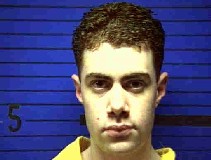
Todd Rizzo
Murderer Russell Ellwood
Murderer · USA · 1991
Russell Ellwood was a former taxi driver. Authorities suspected him of killing…
20 victims
Russell Ellwood
Murderer · USA · 1991
Russell Ellwood was a former taxi driver. Authorities suspected him of killing…
20 victims
 Robert Martines Perez
Murderer · USA · 1994
Name: Robert Martines Perez · Other name used in proceedings: Robert Martinez P…
15 victims
Robert Martines Perez
Murderer · USA · 1994
Name: Robert Martines Perez · Other name used in proceedings: Robert Martinez P…
15 victims
 Billy Frank Vickers
Murderer · USA · 1993
Billy Frank Vickers Vickers was executed by lethal injection in Texas on Januar…
14 victims
Billy Frank Vickers
Murderer · USA · 1993
Billy Frank Vickers Vickers was executed by lethal injection in Texas on Januar…
14 victims
 Maurice Lydell Harris
Murderer · USA · 1994
Maurice Lydell Harris was sentenced to death on December 20, 1996. The Californ…
1 victim
Maurice Lydell Harris
Murderer · USA · 1994
Maurice Lydell Harris was sentenced to death on December 20, 1996. The Californ…
1 victim
 James Duquette
Murderer · USA · 1980
James Duquette Jr. was convicted of murder and was also sentenced in connection…
2 victims
James Duquette
Murderer · USA · 1980
James Duquette Jr. was convicted of murder and was also sentenced in connection…
2 victims
 J.J. Jameson
Murderer · USA · 1960
J. J. Jameson was also known as Norman A. Porter, Jr. He presented himself as a…
2 victims
J.J. Jameson
Murderer · USA · 1960
J. J. Jameson was also known as Norman A. Porter, Jr. He presented himself as a…
2 victims
 Mel Ignatow
Murderer · USA · 1988
Mel Ignatow was a resident of Louisville, Kentucky. Brenda Sue Schaeffer (Brend…
1 victim
Mel Ignatow
Murderer · USA · 1988
Mel Ignatow was a resident of Louisville, Kentucky. Brenda Sue Schaeffer (Brend…
1 victim
 Clifton McCree
Mass murderer · USA · 1996
Clifton McCree was a black man who had worked for the city as part of a beach c…
5 victims
Clifton McCree
Mass murderer · USA · 1996
Clifton McCree was a black man who had worked for the city as part of a beach c…
5 victims
- Gender
- male
- Country
- USA
- Location
- Waterbury, Connecticut, USA
- Date of birth
- October 11, 1978
- Age at first offence
- 19
- Characteristics
- former mental patient, history of mental illness, abuse, domestic violence
- Victim profile
- Stanley Edwards, 13
- Method of murder
- Hitting with a 3-pound sledgehammer
- Date(s) of murder
- September 30, 1997
- Years active
- 1997
- Date of arrest
- October 2, 1997
- Status
-
Sentenced to death
Sentenced to death on June 23, 1999; Resentenced to death on June 23, 2005; death sentence upheld by the Supreme Court of Connecticut in 2011
Background
Todd Rizzo was a former U.S. Marine. He murdered Stanley G. Edwards, a thirteen-year-old boy, in September 1997. Rizzo stated that he wanted to know what it felt like to kill somebody.
Rizzo’s public defenders presented mitigation evidence that included testimony about his childhood, home conditions, neglect and lack of supervision.
The offence
In the early evening hours of September 30, 1997, Rizzo lured Stanley Edwards into his backyard under false pretenses. He then bludgeoned the victim to death with a small sledgehammer. Police said Rizzo confessed that he struck up a conversation with Stanley Edwards IV as the boy rode his bicycle by his house in Waterbury on Sept. 30, 1997.
Rizzo recognized the victim because he had spent time at the video store where Rizzo previously had worked. The victim left his house and got onto his bicycle at approximately 6:30 p.m., and at approximately 7:45 p.m. Rizzo encountered him as he rode up to the front of Rizzo’s home.
Rizzo asked the victim whether his mother or anyone else knew where he was, and the victim replied in the negative. When Rizzo heard this, he decided to kill the victim.
Rizzo decided to lure the victim to a secluded place where he could kill him unobserved. Believing that the victim would be interested in snakes, Rizzo told him there were snakes in his backyard and asked if he wanted to see them. When the victim agreed, Rizzo told him that they would need a flashlight to see the snakes in the darkness and that he would get one from his car. Rizzo retrieved a flashlight and a three pound sledgehammer, slipped the sledgehammer down the front of his pants, rejoined the victim, and took him into the backyard.
Rizzo handed the flashlight to the victim so he could look for snakes. As the victim looked, Rizzo took the sledgehammer from his pants, approached the victim from behind, raised the sledgehammer over his head for a moment, and then hit the victim on the side of the head with the flat surface of the sledgehammer. The victim rolled over and implored Rizzo to stop hitting him, and Rizzo straddled him “like a horse” and began hitting him in the head “because [he] didn't want [the victim] to scream out and alert the neighbors.”
After repeated blows, the victim made a gurgling sound. Rizzo then delivered another one or two blows to ensure that the victim was dead.
The three-judge panel found that, in all, Rizzo delivered approximately twelve blows: four to the head, then eight others on the back and shoulders. The blows to the back and shoulders were not fatal and did not result in bleeding. None of the blows to the back and shoulders would have rendered the victim unconscious. Any of the blows to the head could have been fatal, fracturing the victim's skull and causing numerous lacerations that bled profusely. Although any blows to the head could have rendered the victim unconscious, none of them necessarily did so.
During the attack, the victim attempted to protect himself. One blow punched out a large fragment of the victim’s skull, creating a gaping hole. At some point, two dogs began to bark and the owner came out to quiet them. Rizzo stopped the beating and held the flashlight against his body so the neighbor would not see light coming from his yard. After the neighbor returned inside, Rizzo shone the flashlight on the victim’s body and saw that he was covered in blood with a large hole in his skull.
Rizzo then decided to dump the victim’s body on Fulkerson Drive in Waterbury, located a short distance from his house. He realized his car was too small to carry both the victim's body and the bicycle in one trip, so he took the bicycle to Fulkerson Drive and left it next to a dumpster. He returned to his house, put garbage bags over the victim’s head and lower part of his body, dragged the body to his car, and opened the hatchback. He removed a rug that covered the rear portion of the car to ensure it would not be stained with blood, placed the victim’s body into the rear portion of the car, and drove to Fulkerson Drive. At approximately 8:30 p.m., he drove into a condominium complex on Fulkerson Drive, looking for a place to dispose of the body, and eventually threw the victim’s body onto the pavement in a dark, secluded area. He then drove back to his house, put the sledgehammer and his blood soaked shirt into plastic bags, and next morning threw the plastic bags into his employer’s trash compactor.
The victim’s body was discovered on Fulkerson Drive at approximately 8:45 p.m. that same night.
Investigation and confession
The next day, Rizzo became the focus of the investigation. At 5 p.m., members of the Waterbury police department approached him and asked if he would be willing to go to the police station and answer questions. Rizzo agreed. During his presence at the police station, he denied he knew the victim and claimed no knowledge of the murder. He was allowed to return home with police.
Pursuant to Rizzo’s consent, police searched his car. The search produced smears in the spare tire wheel well area that appeared to be blood. When confronted with the blood smears, Rizzo said, “I feel sick” and “I did it.” He further explained that, as he spoke to the victim, he “had an urge.” He stated he was interested in serial killings and Jeffrey Dahmer, and that when he saw the victim, the urge to commit murder “just came over him.”
The next day, while being transported to court for his arraignment, Rizzo told a police detective that he murdered the victim because he just wanted to know what it was like to kill somebody.
A memorandum of decision described Rizzo’s confession statements and the physical details of the attack and concealment.
Arrest
Rizzo was approached by members of the Waterbury police department at 5 p.m. the day after the killing and agreed to go to the police station and answer questions. He initially denied knowing the victim and denied involvement.
Trial
Rizzo pleaded guilty to murder in violation of General Statutes § 53a-54a (a) and capital felony in violation of General Statutes (Rev. to 1997) § 53a-54b (9). Following a § 53a-46a penalty phase that was tried to a jury, he was sentenced to death.
A later appeal reversed the death sentence, and the case was remanded for a new penalty phase hearing.
Sentencing
Rizzo was sentenced to death under a 1995 state law that allowed jurors in death penalty cases to weigh aggravating factors, including brutality, against mitigating factors, including abuse suffered during childhood.
In 1999, a jury sentenced Rizzo to death and a jury sentenced him to lethal injection. The state Supreme Court overturned the sentence in 2003 after ruling that a judge had not properly instructed jurors before they began deliberating.
A three-judge panel imposed the death sentence on Rizzo in 2005.
The Supreme Court of Connecticut upheld the death sentence in 2011.
Penalty phase facts found by the three-judge panel
The sole aggravating factor found proven was that Rizzo committed the offense “in an especially heinous, cruel or depraved manner” (General Statutes (Rev. to 1997) § 53a–46a (i)(4)).
The panel found that the murder was committed in an especially cruel, heinous and depraved manner. The panel further found that Rizzo engaged in intentional conduct that inflicted extreme physical pain and psychological pain (suffering) on the victim above and beyond that necessarily accompanying the underlying killing, and that Rizzo was callous and indifferent to the extreme physical pain and psychological pain and suffering his intentional conduct inflicted.
The panel stated the finding of intentional conduct was based on:
- the type of weapon used,
- the manner in which the sledgehammer was utilized,
- Rizzo’s obsession with violent deaths and serial killers, and
- Rizzo’s preexisting desire to kill.
The panel stated the finding that the victim experienced extreme physical and psychological pain and suffering was supported by:
- the number and nature of sledgehammer blows to the head and torso,
- the victim’s attempt to protect himself,
- profuse bleeding from the victim’s wounds,
- the nighttime attack in a dark and secluded location, and
- the victim’s last words, imploring Rizzo to stop hitting him.
The panel stated the finding that Rizzo was callous or indifferent was supported by:
- Rizzo’s emphasis in postarrest statements on his own feelings at the time of the murder,
- the type of weapon used,
- the manner the weapon was utilized, and
- Rizzo’s lack of remorse immediately following the murder.
The panel found a cumulative mitigating factor was mitigating in nature and determined it should be weighed in fairness and mercy under § 53a–46a (f). The panel did not find any individual mitigating factors proposed by Rizzo were mitigating in nature.
The panel concluded that the aggravating factor outweighed the mitigating factor beyond a reasonable doubt and sentenced Rizzo to death.
Appeals
Rizzo appealed his death sentence. The Supreme Court of Connecticut rejected all claims and upheld the judgment sentencing him to death in 2011.
The Supreme Court addressed claims including: the constitutional validity of Rizzo’s waiver of a jury for the penalty phase; disqualification of Judge O’Keefe; whether the aggravating factor was unconstitutionally vague; evidentiary support for aggravating factors; constitutionality of the method of establishing mitigating factors under § 53a–46a (d); propriety of mitigation findings; improper weighing of aggravating and mitigating factors; whether the death sentence was a product of passion, prejudice and other arbitrary factors; and whether the death penalty violated the state constitution.
Justice Flemming L. Norcott Jr. dissented. He maintained that “the death penalty has no place in the jurisprudence of the state of Connecticut” and recommended a life prison sentence for Rizzo.
The Supreme Court majority included the quoted statement:
“As long as there remains powerful evidence of strong public support for the death penalty … we will not attempt to discern a contrary view of the public will, or to answer complex policy questions best answered by the legislative process.”
Outcome
The Supreme Court of Connecticut affirmed the judgment sentencing Todd Rizzo to death by lethal injection.
Other details
Phone interview and jail statements
During a telephone interview taped by Shelly Sindland of WTIC-Fox 61 television, Rizzo discussed being on death row. He described his jail routine, writing fiction, and said he had not been outside since being sentenced in August 1999. He described smelling Stanley’s blood for a “whole month” and described the gurgling sound the boy made when the first blow connected.
Rizzo said:
“When he got hit, it was like, taking a sip of beer and letting out air, like he got the wind knocked out of him. He turned around and spun around like a windmill. It was pitch black. I never saw myself killing him. It was pitch black.”
At some point during the interview, he said the moon was out.
In the same interview, Rizzo told Sindland he did not know Michael Ross was a serial killer and considered Jeffrey Dahmer “my father” and studied other serial killings. Rizzo stated:
“It was like when I made my decision I was going to do it; it wasn't going to be anyone I knew. When Stanley showed up, I exploded. There was no one around, and I thought it was the perfect time. That is what I felt like.”
Rizzo also discussed wanting to be put to death, later saying his feelings changed while in jail after he fell in love with a high school girl and they planned to marry before the engagement broke off. He told Sindland he wondered what Stanley’s mother was going through and what he would feel if it had happened to someone in his family.
Rizzo told Sindland:
“They should have killed me before when they sentenced me. Punishment wasn't prison time, but death,”
and he stated:
“Technically, my life is over. My life ended at age 18. This is my life from now on,”
Rizzo said he wanted to talk with Stanley’s mother before he dies.
He also described the night of the killing and said:
“I remember one day he said he heard I got out of the Marine Corps. I almost snapped, and told him to mind his business. When he showed up, we started talking. It didn't matter who he was, I had to kill that night.”
Rizzo said he asked Stanley if he wanted to see snakes in his backyard and said that when Stanley gave up because he did not see any snakes:
“I was standing on a ledge above him. My knees were parallel to the back of his neck. He never turned around. I was shaking. I remember looking up at the moon. It was like it wasn't even me.”
He also said he swung the sledgehammer down, jumped on the boy’s back, and pummeled him a total of 12 times.
Rizzo said he began to feel regret in March or April of 1999 and said this came after a high school friend came back into his life.
Letter to John Fleischer
Rizzo wrote to Marine buddy John Fleischer. The letter was dated Oct. 10, 1997. Rizzo wrote:
“Well, let's say, you might be reading about me one day. Just add me to your long list of famous killers, like Jeffrey Dahmer, Mr. John Gacy, Henry Lucas, and so on. Yes, from the news article inclosed (sic), you'll learned (sic), I've been arrested for murdering a 13 yr old boy. I beat the backside of his skull in with a sledgehammer in my backyard and dropped his body on a side road w/his head wrapped in a plastic bag. So way back in July, when me, you, Jones and Sims talked about the truth if we could actually kill another person? Well, I did. That knocks off number two on my goal list.”
He continued:
“I probably [won't] go to trial until early [1999] maybe late [1998]. But I will keep you informed if you continue to write me. I suppose you can let everyone know, [there's] no secret. If I can get my hands on a better article, I'll mail it to you. You [should've] seen it, I was on the entire front page of my paper and many [other] papers and all over the news! I am sorry for what I've done, because my life is now over, [I'm] either facing life in prison with no [parole] or the death sentence, which in [Connecticut] is lethal injection. Anyway, now that my life is through, [how's] yours doing?”
Testimony about childcare and community views
During a hearing to consider Rizzo’s penalty, two mothers, Lynne Connolly and Violet Boisvert, testified that Rizzo was a baby sitter for their children during the mid-1990s, took children to the park, and played with them. Neither woman said she was concerned about leaving their children with him.
Boisvert said:
“He was very good to my children,”
Boisvert also said:
“I never had a problem with Todd. I never mistrusted him.”
Boisvert testified that her two sons saw Rizzo as an older brother and called him “Todd Squad.” She stated:
“My kids loved Todd,”
Other witnesses included Perrin Markay, who testified that he and Rizzo were best friends when they attended middle school. Markay testified that students picked on Rizzo because he was undersized and had red hair and freckles, and that by his junior year in high school Rizzo dyed his hair black, watched violent movies, read books about serial killers, and collected serial killer trading cards. Markay said:
“I was hoping it was just a phase he would let go as time went on,”
and:
“So I didn't really make a big deal about it.”
Defense mitigation evidence
Mitigation evidence included testimony and records describing the condition of the family home at 15 Marion Avenue shortly after Rizzo’s arrest. Ellen Knight, an investigator for the division of public defender services, testified that the house was in severe disrepair, filthy, and overrun with clutter and garbage, and that it reeked from the presence of several cats and their accumulated waste. Knight described that the washing machine, oven, a refrigerator, and one bathroom were not functional, and the kitchen subfloor had been exposed due to removal of linoleum without replacement. Part of a downstairs ceiling had collapsed due to a leak in an upstairs bathroom. The yard was poorly maintained and overrun with vegetation. Extensive photographic and videotaped evidence was submitted after being identified and described by Knight.
Rizzo’s mother testified about long work hours after the parents’ divorce and that the children were sometimes left unattended and unsupervised into the evening hours. The mitigation testimony described that the house fell into disrepair and that the heat had been turned off for nonpayment.
The mitigation evidence also described Rizzo as physically small, underweight, and a chronic bedwetter into his teens, and that he was picked on at school. It included evidence that neighbors confirmed Rizzo and his siblings were unsupervised and outside alone after dark, and that the house disheveled and smelled strongly of cat urine.
Mitigation included testimony that Rizzo was an avid cook and a churchgoer, including his involvement in a Christmas pageant one year and bringing homemade baked goods to church events. It also included testimony from classmates describing Rizzo as a “class clown,” outgoing and funny, and best friend-like qualities.
Rizzo’s education included admission into the culinary arts program at Warren F. Kaynor Regional Vocational–Technical School (Kaynor), where he maintained an average class rank and graduated in 1996 in the middle of his class.
The mitigation evidence also included that Rizzo joined the Marine Corps, completed boot camp and infantry training, and later became demoralized and caused himself to be discharged from service by eating marijuana and failing a drug test.
Evidence was also presented about hazing activities at Kaynor, including sexual harassment. There were rumors Rizzo was a victim of sexual assault and that the teacher failed to address the matter; after an investigation, upperclassmen were suspended and the teacher resigned, but no criminal charges were brought. With help from his father, Rizzo participated in a civil action against Kaynor that was settled, and Rizzo received about $7500.
The defense presented expert testimony from developmental psychologist James Garbarino about adolescence, impulsivity, effects of abuse and neglect, emotional numbing, risk factors and resilience.
The state cross-examined the mitigation witnesses and offered rebuttal evidence regarding the family’s awareness of the condition of the home and the lack of reporting to the department of children and families, among other points.
Spotted an error, or have more information about this case?