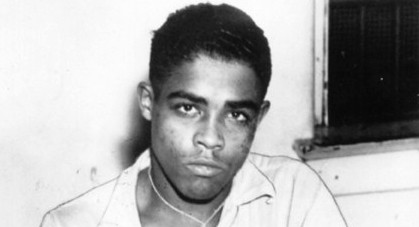
Rainey Bethea
Murderer
1known / alleged victims
Similar offenders
 Paul Jaworski
Murderer · USA · 1926
Paul Jaworski was born in Poland as Paul Poluszynski in 1900. He later immigrat…
20 victims
Paul Jaworski
Murderer · USA · 1926
Paul Jaworski was born in Poland as Paul Poluszynski in 1900. He later immigrat…
20 victims
 Ernesto Picchioni
Murderer · Italy · 1944
March 12, 1949 — He was sentenced to life in prison. · 2016 — The case record l…
16 victims
Ernesto Picchioni
Murderer · Italy · 1944
March 12, 1949 — He was sentenced to life in prison. · 2016 — The case record l…
16 victims
 Harry Maione
Murderer · USA · 1937
Harry “Happy” Maione (1908 – February 19, 1942) was a New York mobster who serv…
12 victims
Harry Maione
Murderer · USA · 1937
Harry “Happy” Maione (1908 – February 19, 1942) was a New York mobster who serv…
12 victims
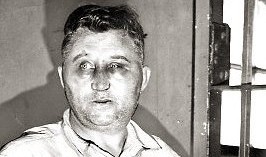 Harry Powers
Murderer · USA · 1931
Harry Powers was executed by hanging on March 18, 1932, at the West Virginia Pe…
5 victims
Harry Powers
Murderer · USA · 1931
Harry Powers was executed by hanging on March 18, 1932, at the West Virginia Pe…
5 victims
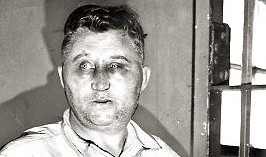 Herman Drenth
Murderer · USA · 1931
Herman Drenth was also known by the aliases Harry F. Powers and Cornelius O. Pi…
5 victims
Herman Drenth
Murderer · USA · 1931
Herman Drenth was also known by the aliases Harry F. Powers and Cornelius O. Pi…
5 victims
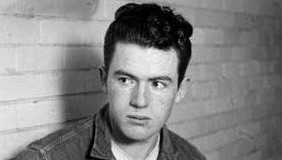 William Edward Hickman
Murderer · USA · 1926
William Edward Hickman was a man who tried to solve his financial problems by k…
5 victims
William Edward Hickman
Murderer · USA · 1926
William Edward Hickman was a man who tried to solve his financial problems by k…
5 victims
Random profiles
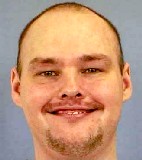 Jan Michael Brawner
Mass murderer · USA · 2001
In December 1997, Jan Michael Brawner married Barbara Craft. In March 1998, the…
4 victims
Jan Michael Brawner
Mass murderer · USA · 2001
In December 1997, Jan Michael Brawner married Barbara Craft. In March 1998, the…
4 victims
 Sonny Ray Jeffries
Murderer · USA · 1993
Sonny Ray Jeffries was sentenced to death on January 22, 1999. Wilma Martin wor…
1 victim
Sonny Ray Jeffries
Murderer · USA · 1993
Sonny Ray Jeffries was sentenced to death on January 22, 1999. Wilma Martin wor…
1 victim
 William Henry Kennedy
Murderer · United Kingdom · 1927
William Henry Kennedy was executed by hanging at Wandsworth prison on May 31, 1…
1 victim
William Henry Kennedy
Murderer · United Kingdom · 1927
William Henry Kennedy was executed by hanging at Wandsworth prison on May 31, 1…
1 victim
 Mark Bridger
Murderer · United Kingdom · 2012
Mark Bridger was convicted of abduction and murder of April Jones, and of perve…
1 victim
Mark Bridger
Murderer · United Kingdom · 2012
Mark Bridger was convicted of abduction and murder of April Jones, and of perve…
1 victim
 Michael Jeffrey Land
Murderer · USA · 1992
Michael Jeffrey Land was an Alabama death row inmate. He received DOC# 00Z553.…
1 victim
Michael Jeffrey Land
Murderer · USA · 1992
Michael Jeffrey Land was an Alabama death row inmate. He received DOC# 00Z553.…
1 victim
 John William Rook
Murderer · USA · 1980
John William Rook was tried for first-degree rape, kidnapping, and first-degree…
1 victim
John William Rook
Murderer · USA · 1980
John William Rook was tried for first-degree rape, kidnapping, and first-degree…
1 victim
Case Facts
- Gender
- male
- Country
- —
- Location
- —
- Date of birth
- October 16, 1909
- Age at first offence
- 27
- Characteristics
- rape, robbery
- Victim profile
- Lischia Edwards, 70
- Method of murder
- Strangulation Loca tion : Owensboro, Kentucky, USA
- Date(s) of murder
- June 7, 1936
- Years active
- 1936
- Date of arrest
- 7 days after
- Status
-
Executed
Executed by hanging on August 14, 1936.
Case Summary
Case identification
- Name: Rainey Bethea
- Birth: October 16, 1909
- Execution date: 14 August 1936
- Victim: Lischia Edwards (70-year-old white woman)
- Victim crime: rape and murder of Lischia Edwards
Timeline
- 1919 — Bethea was orphaned after the death of his mother.
- 1926 — Bethea was orphaned after the death of his father.
- 1933 — Bethea arrived in Owensboro and worked for the Rutherford family, living in their basement for about a year.
- 1935 — Bethea was charged with breach of the peace and was fined $20.
- 1935 — Bethea stole two purses from the Vogue Beauty Shop; he was convicted of grand larceny and sentenced to a year in the Kentucky State Penitentiary at Eddyville.
- June 1, 1935 — Bethea arrived at the Kentucky State Penitentiary at Eddyville.
- December 1, 1935 — Bethea was paroled.
- January 6, 1936 — Bethea’s dwelling house breaking charge was amended to drunk and disorderly.
- April 18 — Bethea remained incarcerated in the Daviess County Jail until April 18.
- June 7, 1936 — Bethea strangled Edwards and violently raped her; he also stole several of her rings.
- June 12, 1936 — Bethea made a third confession and told the Captain of the Guards where he had hidden the jewelry.
- June 22 — The grand jury could not convene until June 22.
- June 25, 1936 — Officers returned Bethea to Owensboro for the trial.
- July 4 — The court term ended on July 4.
- July 10, 1936 — Bethea’s new trial motion was filed.
- July 29, 1936 — Justice Gus Thomas refused to permit a belated appeal to be filed.
- August 5, 1936 — A hearing on a petition for writ of habeas corpus was held before United States District Judge Elwood Hamilton.
- August 6, 1936 — The Governor of Kentucky Albert Chandler signed Bethea’s execution warrant and set the execution for sunrise on August 14.
- August 13, 1936 — Bethea ate his last meal at 4:00 p.m. in Louisville.
- August 14, 1936 — Bethea was executed by hanging.
Background
Early life and work in Owensboro
- Bethea was orphaned after the death of his mother in 1919 and his father in 1926.
- Little was known of Bethea’s time before he arrived in Owensboro in 1933.
- He worked for the Rutherford family and lived in their basement for about a year.
- He then moved to a cabin behind the house of Emmett Wells.
- He worked as a laborer and rented a room from Mrs. Charles Brown.
- He attended a Baptist church.
Prior legal matters
- In 1935, Bethea was charged with breach of the peace and was fined $20.
- In April 1935, Bethea stole two purses from the Vogue Beauty Shop.
- Because the value of the purses exceeded $25, Bethea was convicted of grand larceny and sentenced to a year in the Kentucky State Penitentiary at Eddyville.
- He arrived at the penitentiary on June 1, 1935.
- His physical showed he was 5 feet, 4 3/8 inches (1.64 meters) tall and 128 pounds (58 kg).
- On December 1, 1935, Bethea was paroled.
- After returning to Owensboro, he continued working as a laborer and was paid about $7.00 per week.
- Less than a month later, he was arrested for dwelling house breaking.
- On January 6, 1936, the charge was amended to drunk and disorderly.
- He could not pay the $100 fine and remained incarcerated in the Daviess County Jail until April 18.
- Under Kentucky law, the parole board should have been notified of his arrest because a standard condition of parole was that the parolee commit no more crimes.
- The narrative described that if the Kentucky Parole Board had revoked his parole, he would not have committed the serious crimes which led to his hanging.
The offence
Entry into Edwards’s home
- During the early morning of June 7, 1936, an intoxicated Bethea gained access to Edwards’s by climbing onto the roof of an outbuilding next door.
- From there, he jumped onto the roof of the servant’s quarters of Emmett Wells’s house, and then walked down a wooden walkway.
- He climbed over the kitchen roof to Edwards’s bedroom window.
- After removing a screen from her window, he entered the room, waking Edwards.
Attack and theft
- Bethea strangled Edwards and violently raped her.
- After Edwards was unconscious, he searched for valuables and stole several of her rings.
- In the process, he removed his own black celluloid prison ring, but failed to retrieve it.
- He left the bedroom and hid the stolen jewels in a barn not far from the house.
Investigation and discovery
Discovery by the Smith family and police response
- The crime was discovered late that morning after the Smith family noticed they had not heard Edwards stirring in her room.
- They knocked on the door attempting to rouse her.
- They found the door locked with a skeleton key from the inside.
- They contacted a neighbor, Robert Richardson, hoping he could help.
- Richardson managed to knock the key free, but another skeleton key would not unlock the door.
- The Smiths obtained a ladder and climbed into the room through the transom, over the door.
- They discovered Edwards was dead.
- The Smiths alerted Dr. George Barr while he was attending a service at the local United Methodist Church.
- Dr. Barr realized there was little he could do and summoned the local coroner, Delbert Glenn, also attended the same church.
- The Smiths also called the Owensboro police.
- Officers found the room was otherwise tidy, but there were muddy footprints everywhere.
Physical evidence
- Coroner Glenn found a celluloid prison ring, which Bethea had inadvertently left behind in the room.
Identification efforts and sightings
- Throughout the next four days, police searched for the murderer.
- By late Sunday afternoon, police suspected Rainey Bethea after several residents of Owensboro stated they had previously seen Bethea wearing the ring.
- Because Bethea had a criminal record, police used fingerprints to establish that Bethea had recently touched items inside the bedroom.
Observations on the Ohio River and further elusion
- On Wednesday, Burt “Red” Figgins was working on the bank of the Ohio River when he observed Bethea lying under some bushes.
- Figgins asked Bethea what he was doing, and Bethea responded he was “cooling off.”
- Figgins reported this to his supervisor, Will Faith, and asked him to call the police.
- By the time Faith returned to the spot on the river bank, Bethea had moved to the nearby Koll’s Grocery.
- Faith followed Bethea and then found a policeman in the drugstore, but when they searched for Bethea, he again eluded capture.
- Later that afternoon, Bethea was again spotted and cornered on the river bank after he tried to board a barge.
- When police questioned him, he denied he was Bethea and claimed his name was James Smith.
- The police played along with the fabricated name, fearing a mob would develop if residents learned that the murderer had been captured.
- After his arrest, Bethea was identified by a scar on the left side of his head.
Arrest and custody
- The judge of the Daviess Circuit Court ordered the sheriff to transport Bethea to the Jefferson County Jail in Louisville to prevent a lynch mob.
Confessions and investigative statements
First confession during transfer
- During transport, Bethea made his first confession, admitting that he had strangled and raped Edwards.
- Bethea said he did not know whether Edwards was alive at the time of the rape.
- The narrative explained this mattered because the prosecutor had to prove the victim was alive to establish the elements of rape.
- The narrative further stated that in 1936 it was not illegal under Kentucky law to have intercourse with a corpse.
- Bethea lamented the fact that he had made a stupid mistake by leaving his ring at the crime scene.
Second confession at Jefferson County Jail
- Once incarcerated in the Jefferson County Jail in Louisville, Bethea made a second confession before Robert M. Morton, a notary public, and George H. Koper, a reporter for The Courier-Journal.
- Officials requested the notary and the reporter anticipating that Bethea or someone else might accuse them of coercing the confession.
Third confession and location of jewelry
- On June 12, Bethea made a third confession and told the Captain of the Guards where he had hidden the jewelry.
- Owensboro police searched a barn in Owensboro and found the jewelry where Bethea said he had left it.
Charges and legal strategy
Prosecutor’s decision on the indictment
- Under Kentucky law, the grand jury could not convene until June 22, and the prosecutor decided to charge Bethea solely with rape.
- The narrative stated that if punishment of death were given for murder and robbery, it would be carried out by electrocution in the state penitentiary at Eddyville, while rape could be punished by public hanging in the county seat where the crime occurred.
- To avoid a potential legal dilemma about whether Bethea would be hanged or electrocuted, the prosecutor elected to charge Bethea only with rape.
- Bethea was not charged with murder, robbery, burglary, or theft.
Indictment and trial return
- After only an hour and forty minutes, the grand jury returned an indictment charging Bethea with rape.
- On June 25, officers returned Bethea to Owensboro for the trial.
Trial
Legal representation
- Bethea was unhelpful to his state-appointed attorneys: William L. Wilson, William W. “Bill” Kirtley, Carroll Byron, and C. W. Wells, Jr..
- Bethea said that a Clyde Maddox would provide an alibi, but Maddox claimed he did not even know Bethea.
- The defense subpoenaed four witnesses—Maddox, Ladd Moorman, Willie Johnson (whom Bethea had implicated as an accomplice in his second confession), and Allen McDaniel.
- Only the first three were served because the sheriff’s office could not find a person named Allen McDaniel.
Plea and jury selection
- On the night before the trial, Bethea announced to his lawyers that he wanted to plead guilty and did so the next day at the start of the trial.
- The prosecutor still presented the state’s case because the jury would decide his sentence and because the prosecutor was asking for the death penalty.
- The first twelve of 111 people called for the jury were selected.
- At the time, only white men served on American juries.
Prosecutor’s opening statement
- Commonwealth’s Attorney Herman Birkhead said: “This is one of the most dastardly, beastly, cowardly crimes ever committed in Daviess County. Justice demands and the Commonwealth will ask and expect a verdict of the death penalty by hanging.”
Evidence and defense posture
- The prosecution questioned 21 witnesses and closed its case-in-chief.
- The defense did not call any witnesses nor cross-examine the prosecution’s witnesses.
Sentencing instruction and jury deliberation
- After the prosecutor’s closing statement, the judge instructed the jury that, since Bethea had pled guilty, their only task was “...fix his punishment, at confinement in the penitentiary for not less that ten years nor more than twenty years, or at death.”
- After only four and a half minutes of deliberation, the jury returned a sentence—death by hanging.
- Bethea was quickly removed from the courthouse and returned to the Jefferson County Jail.
Post-trial representation and motions
New counsel in Louisville
- In Louisville, Bethea acquired five new black lawyers: Charles Ewbank Tucker, Stephen A. Burnley, Charles W. Anderson, Jr., Harry E. Bonaparte, and R. Everett Ray.
- They worked without pay to challenge the sentence as their ethical duty for the indigent defendant.
Motion for new trial and attempts to appeal
- On July 10, they filed a motion for a new trial.
- The judge summarily denied it on the grounds that under Section 273 of the Kentucky Code of Practice in Criminal Cases, a motion for a new trial had to have been received before the end of the court’s term, which ended on July 4.
- They attempted to appeal to the Kentucky Court of Appeals, which was also not in session.
- On July 29, Justice Gus Thomas returned to Frankfort, Kentucky and heard the motion orally.
- Justice Thomas refused to permit the appeal on the grounds that the trial court record was incomplete and only included the judge’s ruling.
- The narrative described that the appeal would be denied and that it was to exhaust state court remedies before filing a petition for writ of habeas corpus in a federal court.
- After Justice Thomas denied the motion to file a belated appeal, Bethea’s attorneys filed a petition for a writ of habeas corpus in the U.S. District Court for the Western District of Kentucky at Louisville.
Federal habeas corpus hearing
Hearing details and court
- A hearing was held on August 5 at the Federal Building in Louisville before United States District Judge Elwood Hamilton.
- Bethea claimed that he did not want to plead guilty but had been forced to by his lawyers.
- Bethea claimed he had wanted to subpoena three witnesses to testify on his behalf, but the lawyers had not done this.
- Bethea also claimed his five confessions had been made under duress and that when he signed one of them he did not know what he was signing.
- The Commonwealth brought several witnesses to refute these claims.
- Judge Hamilton denied the petition for habeas corpus and ruled that the hanging could proceed.
Sentencing and execution arrangements
Sheriff Thompson and execution supervision
- The crime gained nationwide attention because the sheriff of Daviess County was a woman: Florence Thompson.
- Florence Thompson became sheriff on April 13, 1936 after her husband Everett, elected sheriff in 1933, unexpectedly died of pneumonia on April 10, 1936.
- As sheriff, it was her duty to hang Bethea.
- After Thompson’s decision became public, she received letters offering help.
- Thompson accepted an offer from Arthur L. Hash, a former Louisville police officer, and asked that his name not be public.
- She also received a letter from the Chief Deputy United States Marshal for the District of Indiana about G. Phil Hanna of Epworth, Illinois, who had assisted with hangings across the country.
- The narrative stated Bethea’s hanging would be the 70th Hanna had supervised.
- Hanna did not pull the trigger that released the trapdoor.
- Hanna asked for the weapon used in the crime.
- The narrative described Hanna’s prior involvement, including his interest after witnessing a botched execution of Fred Beheme at McCleansboro, Illinois, in 1896.
- The narrative also stated that during the hanging of James Johnson on March 26, 1920, the rope broke, Johnson fell to the ground, and Hanna had to descend the steps, carry Johnson back to the scaffold, and proceed.
Warrant and change of location
- On August 6, 1936, Governor Albert Chandler signed Bethea’s execution warrant and set the execution for sunrise on August 14.
- Sheriff Thompson requested a revised death warrant because the original warrant specified the hanging in the courthouse yard, where the county had planted new shrubs and flowers.
- Chandler was out of state, so Lieutenant Governor Keen Johnson signed a second death warrant, moving the location from the courthouse yard to an empty lot near the county garage.
Last meal and transport to Owensboro
- Bethea’s last meal consisted of fried chicken, pork chops, mashed potatoes, pickled cucumbers, cornbread, lemon pie, and ice cream.
- Bethea ate it at 4:00 p.m. on August 13 in Louisville.
- Around 1:00 a.m., Daviess County deputy sheriffs transported Bethea from Louisville to Owensboro.
The hanging
- At the jail, Hanna visited Bethea and instructed him to stand on the X marked on the trapdoor.
- A crowd estimated at 20,000 gathered to watch the execution, with thousands coming from out of town.
- Hash arrived drunk at the site wearing a white suit and a white Panama hat.
- The narrative stated that only Hash and Thompson knew at that time that Hash would pull the trigger.
- Bethea left the Daviess County Jail at 5:21 a.m. and walked with two deputies to the scaffold.
- Within two minutes, he was at the base of the scaffold.
- Bethea removed his shoes and put on a new pair of socks.
- He ascended the steps and stood on the large X as instructed.
- He made no final statement to the waiting crowd.
- After making his final confession to Father Lammers of the Cathedral of the Assumption Church in Louisville, a black hood was placed over his head.
- Three large straps were placed around his ankles, thighs and arms and chest.
- Hanna placed the noose around Bethea’s neck, adjusted it, and signaled to Hash to pull the trigger.
- Instead, Hash did nothing.
- Hanna shouted at Hash: “Do it!”
- A deputy leaned onto the trigger which sprung the trap door.
- The narrative stated the crowd was hushed throughout this.
- Bethea fell eight feet; his neck was instantly broken.
- About 14 minutes later, two doctors confirmed Bethea was dead.
- After the noose was removed, his body was taken to Andrew & Wheatley Funeral Home.
- Bethea had wanted his body sent to his sister in South Carolina, but he was buried in a pauper’s grave at Elmwood Cemetery in Owensboro.
Aftermath
Reporting controversies and later complaints
- The narrative stated many newspapers that spent considerable sums of money to cover the first execution of a man by a woman were disappointed and took liberties with their reporting.
- Newspapers described the event as a “Roman Holiday,” falsely reporting that the crowd rushed the gallows to claim souvenirs.
- Some newspapers falsely reported Thompson fainted at the base of the scaffold.
- Afterwards, Hanna complained that Hash should not have been allowed to perform the execution in his state.
- Hanna said it was the worst display he experienced in the 70 hangings he had supervised.
End of public executions in the United States
Kentucky law changes
- The Kentucky General Assembly met in biennial sessions.
- The narrative stated that although the media circus surrounding the Bethea execution embarrassed the Kentucky legislature, it was powerless to amend the law until the next session in 1938.
- Meanwhile, two other men were hanged for rape in Kentucky, John “Pete” Montjoy and Harold Van Venison, but the trial judges in both cases ordered the hangings be conducted privately.
- Montjoy, age 23, was privately hanged in Covington on December 17, 1937.
- On January 17, 1938, Kentucky Senator William R. Attkisson of the 38th Senatorial District in Louisville introduced Senate Bill 69, calling for the repeal of the requirement from Section 1137 that death sentences for rape be conducted by hanging in the county seat where the crime occurred.
- Representative Charles W. Anderson, Jr., one of the attorneys who assisted Bethea in his post conviction relief motions, promoted the bill in the House of Representatives.
- After both houses approved the bill on March 12, 1938, Governor Albert B. Chandler signed it into law, and it became effective on May 30, 1938.
- Chandler later expressed regret at having approved the repeal, claiming: “Our streets are no longer safe.”
Last legal hanging and legal issue regarding method
- The last person to be legally hanged in Kentucky was Harold Van Venison, a thirty-three-year-old black singer.
- Van Venison was privately hanged in Covington on June 3, 1938, after the rape law had actually been repealed.
- Governor Chandler signed no death warrant in this case, and the narrative stated that for this reason the hanging was conducted in violation of Section 297 of the Kentucky Code of Criminal Practice.
- Before the hanging, a legal question arose as to whether Van Venison should hang or be electrocuted, since the rape law requiring hanging had been repealed effective May 30, 1938.
- The narrative stated that Attorney General Hubert Meredith issued a formal legal opinion that, since the offense and conviction occurred prior to the repeal date, Van Venison should hang because Section 1137-10 of the Kentucky Statutes stated that the penalty to be imposed would be the penalty available and in effect at the time the offense was committed.
Other details
- Bethea’s physical measurements were reported as 5 feet, 4 3/8 inches (1.64 meters) and 128 pounds (58 kg).
- After being selected for jury deliberations, the narrative stated the context that, at the time, only white men served on American juries.
- The narrative included multiple named legal participants and observers: Florence Thompson, Everett Thompson, Arthur L. Hash, G. Phil Hanna, Burt “Red” Figgins, Will Faith, Robert Richardson, Dr. George Barr, Delbert Glenn, Commonwealth’s Attorney Herman Birkhead, Judge Elwood Hamilton, Justice Gus Thomas, Governor Albert Chandler, Lieutenant Governor Keen Johnson, Father Lammers, Robert M. Morton, George H. Koper.
- The narrative listed references: Perry T. Ryan (1992). The Last Public Execution In America . ISBN 0-09625504-5-0; “Word for Word; The Last Hanging There Was a Reason They Outlawed Public Executions”. New York Times (May 6, 2001); “10,000 See Hanging of Kentucky Negro”. New York Times (August 15, 1936); Wikipedia.org.
Spotted an error, or have more information about this case?