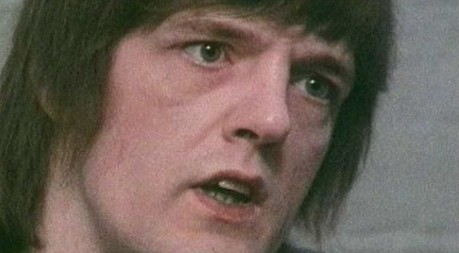
Robert Maudsley
Serial killer Bruce Lee
Serial killer · United Kingdom · 1973
Bruce Lee was born Peter George Dinsdale in 1960. He later changed his name to…
26 victims
Bruce Lee
Serial killer · United Kingdom · 1973
Bruce Lee was born Peter George Dinsdale in 1960. He later changed his name to…
26 victims
 Dennis Nilsen
Serial killer · United Kingdom · 1978
Dennis Andrew Nilsen was born on November 23, 1945. He lived in London. He was…
16 victims
Dennis Nilsen
Serial killer · United Kingdom · 1978
Dennis Andrew Nilsen was born on November 23, 1945. He lived in London. He was…
16 victims
 Dr. Harold Shipman
Serial killer · United Kingdom · 1974
Harold Fredrick Shipman was an English doctor who was convicted as a serial kil…
15 victims
Dr. Harold Shipman
Serial killer · United Kingdom · 1974
Harold Fredrick Shipman was an English doctor who was convicted as a serial kil…
15 victims
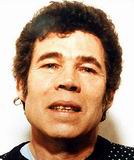 Frederick West
Serial killer · United Kingdom · 1967
Frederick West (29 September 1941 – 1 January 1995) was an English serial kille…
13 victims
Frederick West
Serial killer · United Kingdom · 1967
Frederick West (29 September 1941 – 1 January 1995) was an English serial kille…
13 victims
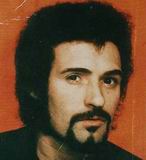 Peter Sutcliffe
Serial killer · United Kingdom · 1975
Peter William Sutcliffe (born 2 June 1946) was an English serial killer dubbed…
13 victims
Peter Sutcliffe
Serial killer · United Kingdom · 1975
Peter William Sutcliffe (born 2 June 1946) was an English serial killer dubbed…
13 victims
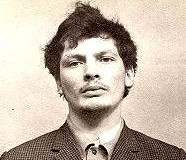 Patrick David Mackay
Serial killer · United Kingdom · 1973
Patrick David Mackay was born on September 25, 1952, in England. He was the son…
11 victims
Patrick David Mackay
Serial killer · United Kingdom · 1973
Patrick David Mackay was born on September 25, 1952, in England. He was the son…
11 victims
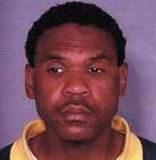 Mac Minister
Murderer · USA · 2005
Mac Minister was an American rapper. His real name was Andre Dow. He was 37 yea…
2 victims
Mac Minister
Murderer · USA · 2005
Mac Minister was an American rapper. His real name was Andre Dow. He was 37 yea…
2 victims
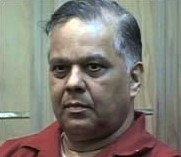 Krishna Maharaj
Murderer · USA · 1986
Krishna Maharaj (born January 26, 1939) was a Trinidad and Tobago-born British…
2 victims
Krishna Maharaj
Murderer · USA · 1986
Krishna Maharaj (born January 26, 1939) was a Trinidad and Tobago-born British…
2 victims
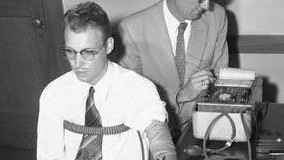 Burton Abbott
Murderer · USA · 1955
28 April 1955 — Stephanie Bryan, a 14-year-old girl, did not come home from sch…
1 victim
Burton Abbott
Murderer · USA · 1955
28 April 1955 — Stephanie Bryan, a 14-year-old girl, did not come home from sch…
1 victim
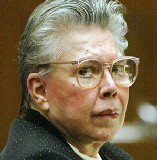 Sante Kimes
Murderer · USA · 1996
Sante Kimes (born July 24, 1934), American felon convicted of two murders, alon…
3 victims
Sante Kimes
Murderer · USA · 1996
Sante Kimes (born July 24, 1934), American felon convicted of two murders, alon…
3 victims
 Sajal Barui
Homicide · India · 1993
Sajal Barui was a convicted criminal who was serving a life sentence in prison…
3 victims
Sajal Barui
Homicide · India · 1993
Sajal Barui was a convicted criminal who was serving a life sentence in prison…
3 victims
- Gender
- male
- Country
- United Kingdom
- Location
- United Kingdom
- Date of birth
- J une 1953
- Age at first offence
- 21
- Characteristics
- mentally ill, drug addict, torture, serial rapist
- Victim profile
- John Farrell , a man who picked him up for sex / A fellow inmate / Salney Darwood and Bill Roberts (fellow inmates)
- Method of murder
- Strangulation - St abbing with homemade knife
- Date(s) of murder
- 1974 / 1977 - 1978
- Years active
- 1974–1978
- Date of arrest
- —
- Status
-
Died in custody
Sentenced to life in prison (solitary confinement); Maudsley was deemed untreatable after a killing at Broadmoor; he wrote letters pleading for solitary confinement conditions to be relaxed or to be allowed to commit suicide
Case record: Robert Maudsley
Other details
Robert Maudsley (born June 1953) was a British serial killer responsible for the murders of four people. He was known within the prison system as "Hannibal the Cannibal" after the psychopath in the film Silence of the Lambs. He was officially classified as Britain's most dangerous prisoner.
Maudsley was one of twelve children, born in Liverpool, and spent most of his early years in an orphanage. He later formed a close bond with his brothers while living at Nazareth House, a Roman Catholic orphanage run by nuns in Liverpool. His parents retrieved him at the age of eight, and he was beaten regularly by them until he was eventually rescued by social services.
During the late 1960s, as a teenager, Maudsley was a rent boy in London and developed a drug habit. He suffered sexual abuse at the hands of older men, and he developed a hatred of paedophiles. He was finally forced to seek psychiatric help after several suicide attempts. During talks with doctors, he claimed to hear voices telling him to kill his parents.
Maudsley was held securely behind bars in solitary confinement and was housed in a two-cell unit at Wakefield prison built for him in 1983. The cell was perspex and the furniture was made of cardboard. The bed was a concrete slab, and the lavatory and sink were bolted to the floor. A solid steel door opened into a small cage within the cell, encased in thick Perspex, with a small slot at the bottom through which guards passed him food and other items. He remained in the cell for 23 hours a day and was allowed out once a day for one hour's exercise in a yard 20 feet long by 12 feet wide. Every move he made was under watchful eye of at least five guards. He did not come into contact with any other inmates since being moved into the cell. He remained in solitary confinement 25 years on.
Supporters described Maudsley as gentle, kind and highly intelligent. Friends and family said he loved classical music, poetry and art and was keen to take an Open University degree in music theory. During his violent rages, the court heard that Maudsley believed his victims were his parents.
Maudsley had been housed in Parkhurst prison and Woodhill prison at different times. During a spell in Parkhurst, on the Isle of Wight, Maudsley met psychiatrist Dr Bob Johnson, who believed after three years of interviews and counselling that Maudsley was making great progress and was three quarters of the way through removing the aggression and latent violence that made Maudsley such a danger. The treatment was later cut off without warning, and Maudsley was moved back to Wakefield.
A tabloid newspaper ran a sensationalised article on him in 1993, dubbing him "The Real Hannibal Lecter", referencing the fictional cannibal killer in the 1991 movie The Silence Of The Lambs. His crimes were largely ignored by the British press until 1993.
Maudsley’s brother Paul said:
"As far as I can tell, the prison authorities are trying to break him. Every time they see him making a little progress, they throw a spanner in the works. He spent a time in Woodhill prison, and there he was getting on well with the staff, even playing chess with them. He had access to books and music and television. Now they have put him back in the cage at Wakefield. His troubles started because he got locked up as a kid. All they do when they put him back there is bring all that trauma back to him."
Jane Heaton wrote:
"Everyone concentrates on the crimes he committed 25 years ago. It's as if they are living in a time loop and no one is prepared to look at how he is now. I would like to see him get an independent review of his condition and find a suitable course of treatment for him."
Maudsley wrote from solitary confinement and said:
"It does not matter to them whether I am mad or bad. They do not know the answer and they do not care just so long as I am kept out of sight and out of mind."
"I am left to stagnate, vegetate and to regress; left to confront my solitary head-on with people who have eyes but don't see and who have ears but don't hear, who have mouths but don't speak. My life in solitary is one long period of unbroken depression."
In a series of letters to The Times, Maudsley asked for access to classical music tapes, a television, pictures, toiletries and a budgerigar. He asked for a simple cyanide capsule if the Prison Service said no:
"If (the Prison Service) says no then I ask for a simple cyanide capsule which I shall willingly take and the problem of Robert John Maudsley can easily and swiftly be resolved."
Maudsley wrote:
"Why can't I have a budgie instead of the flies and cockroaches and spiders I currently have? I promise to love it and not eat it."
Maudsley wrote:
"All I have to look forward to is further mental breakdown and possible suicide. In many ways, I think this is what the authorities hope for. That way the problem of Robert John Maudsley can be easily and swiftly resolved."
He was one of 26 offenders in Britain who had been told they would never be released.
Timeline
- 1974 — Maudsley killed a man who picked him up for sex; he was jailed in 1974 for stabbing and garrotting an uncle; he was sentenced to life in prison (with a recommendation that he should never be released) on the grounds of diminished responsibility and convicted of manslaughter; he was sent to Broadmoor Hospital for the criminally insane.
- 1977 — Maudsley and another inmate took a hostage; he tortured and killed the hostage; after guards smashed their way into the cell, the hostage was found with his skull cracked open and a spoon wedged in his brain; Maudsley confessed to eating some of the victim's brain matter; he was later convicted of manslaughter and sent to Wakefield Prison.
- 1978 — Maudsley lured fellow prisoner William Roberts to his cell and stabbed him to death; he then hunted for another victim and stabbed to death a prisoner named Stanley Darwood.
- 1979 — Maudsley stabbed two more prisoners to death with a home-made knife.
- 1983 — Prison authorities built a two-cell unit in the basement of Wakefield Prison to house Maudsley for the continuation of his confinement.
- 1993 — A tabloid newspaper ran a sensationalised article on him, dubbing Maudsley "The Real Hannibal Lecter".
- 2000 — A headline was published: "Killer begs for budgie or suicide" (March 23, 2000).
- 2003 — An article by Tony Thompson in The Observer (Sunday April 27, 2003) discussed Maudsley’s solitary confinement and letters.
The offence
Maudsley was responsible for the murders of four people. His first victim involved an incident in which a man picked him up for sex and showed pictures of children the man had sexually abused. Maudsley garrotted the man.
In prison, Maudsley took a third patient hostage and locked himself in a cell with the captive before torturing and killing him. When guards eventually smashed their way into the cell, the hostage’s skull was found cracked open and a spoon was wedged in his brain, with pieces missing. Maudsley confessed to eating some of the victim’s brain matter.
Later in 1978, Maudsley lured a fellow prisoner named William Roberts to his cell and stabbed him to death. He then hunted for another victim and cornered and stabbed to death a prisoner named Stanley Darwood.
During violent rages, the court heard that Maudsley believed his victims were his parents.
Investigation
A psychiatric and prison assessment was described in which psychiatrists deemed Maudsley untreatable at Broadmoor. Prison chiefs ordered that Maudsley be locked in a zoo-like cage with cardboard furniture and a concrete bed. Michael Howard, when he was Home Secretary, ordered that Maudsley, 46, should never be released.
Arrest
Maudsley was arrested for the 1974 killing after it was reported that the man who picked him up for sex had shown Maudsley pictures of children he had sexually abused.
Trial
At Broadmoor, Maudsley had been declared unfit to stand trial and was sent to Broadmoor Hospital for the criminally insane. In 1977, despite killing a patient in Broadmoor, Maudsley was found fit to stand trial. After the hostage killing, Maudsley was convicted of manslaughter and sent to Wakefield Prison.
Later, psychiatrists deemed him untreatable, and he was convicted of murder and sentenced to life imprisonment in the normal criminal justice system. He was sent to Wakefield, where a year later he killed two fellow prisoners in one day.
During his last murder trial in 1979, the court heard that during his violent rages Maudsley believed his victims were his parents, and his lawyers argued that the killings resulted from pent-up aggression stemming from a childhood of near-constant abuse.
Maudsley said:
"When I kill, I think I have my parents in mind."
"If I had killed my parents in 1970, none of these people need have died. If I had killed them, then I would be walking around as a free man without a care in the world."
Sentencing
Maudsley was sentenced to life in prison with a recommendation that he should never be released. He was sent to Broadmoor Hospital for the criminally insane after the 1974 killing.
After the 1977 hostage killing, he was convicted of manslaughter and sent to Wakefield Prison. After being deemed untreatable, he was convicted of murder and sentenced to life imprisonment in the normal criminal justice system and sent to Wakefield.
He was placed in solitary confinement and was later moved to Parkhurst prison. In Parkhurst, he met psychiatrist Dr Bob Johnson. He was later moved back to Wakefield.
Outcome
Maudsley remained in solitary confinement and was unlikely to ever be released. In addition, prison authorities housed him in an isolated two-cell unit at Wakefield prison with restrictive access and no contact with other inmates.
Aftermath
Maudsley wrote letters to The Times pleading for better conditions and requesting items including classical music tapes, a television, pictures, toiletries and a budgerigar. He also asked for a cyanide capsule if his requests were refused.
A spokesman for the Prison Service said no-one was available for comment.
One article described him as being likened by some newspapers to Hannibal Lecter from The Silence of the Lambs. He was called "Blue" because that was the colour the face of his first victim had turned during his strangling, and he was also called "Spoons" after leaving a spoon sticking out of the skull and part of the brain missing.

Spotted an error, or have more information about this case?