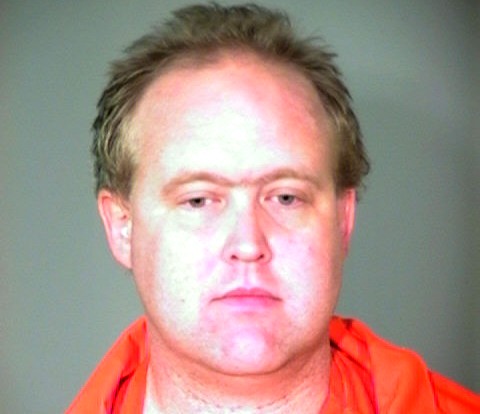
Pete Carl Rogovich
Spree killer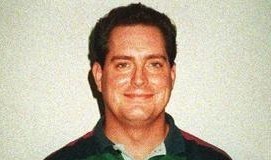 Mark Barton
Spree killer · USA · 1999
Mark Orrin Barton (1955 – July 29, 1999) committed a spree killing in Stockbrid…
12 victims
Mark Barton
Spree killer · USA · 1999
Mark Orrin Barton (1955 – July 29, 1999) committed a spree killing in Stockbrid…
12 victims
 John Allen Muhammad
Spree killer · USA · 2002
John Allen Muhammad carried out the 2002 D.C. sniper attacks with his 17-year-o…
10 victims
John Allen Muhammad
Spree killer · USA · 2002
John Allen Muhammad carried out the 2002 D.C. sniper attacks with his 17-year-o…
10 victims
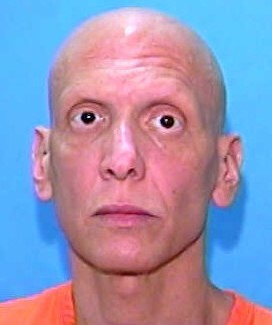 Manuel Pardo
Spree killer · USA · 1986
Manuel Pardo, Jr. was a former police officer who was convicted of nine counts…
9 victims
Manuel Pardo
Spree killer · USA · 1986
Manuel Pardo, Jr. was a former police officer who was convicted of nine counts…
9 victims
 Michael Alan Silka
Spree killer · USA · 1984
Michael Alan Silka was killed during a shoot-out with the police on May 19, 198…
9 victims
Michael Alan Silka
Spree killer · USA · 1984
Michael Alan Silka was killed during a shoot-out with the police on May 19, 198…
9 victims
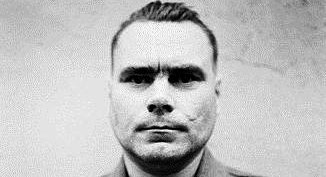 Josef Kramer
Homicide · Germany · 1944
Josef Kramer (November 10, 1906 – December 13, 1945) was the Commandant of the…
Josef Kramer
Homicide · Germany · 1944
Josef Kramer (November 10, 1906 – December 13, 1945) was the Commandant of the…
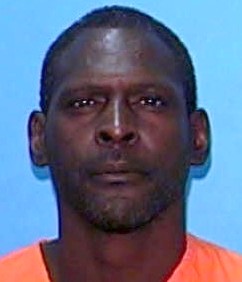 Crosley Green
Murderer · USA · 1989
Crosley Green was sentenced to death on February 8, 1981. Late in the evening o…
1 victim
Crosley Green
Murderer · USA · 1989
Crosley Green was sentenced to death on February 8, 1981. Late in the evening o…
1 victim
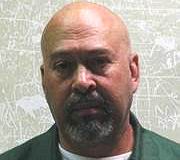 Jesus Aguilera
Serial killer · USA · 1981
Jesus Aguilera was a convict serving time for two murders that occurred in New…
3 victims
Jesus Aguilera
Serial killer · USA · 1981
Jesus Aguilera was a convict serving time for two murders that occurred in New…
3 victims
 Tracie Andrews
Murderer · United Kingdom · 1996
Tracie Marguerite Andrews (born 1969) was an English woman who murdered her fia…
1 victim
Tracie Andrews
Murderer · United Kingdom · 1996
Tracie Marguerite Andrews (born 1969) was an English woman who murdered her fia…
1 victim
- Gender
- male
- Country
- USA
- Location
- Maricopa County, Arizona, USA
- Date of birth
- February 21, 1966
- Age at first offence
- 26
- Characteristics
- armed robbery, robbery
- Victim profile
- Terkeberhan Manna, 24 (store clerk) / Phyllis Mancuso, 62 / Marie Pendergast, 83 / Rebecca Carreon, 48
- Method of murder
- Shooting
- Date(s) of murder
- March 15, 1992
- Years active
- 1992
- Date of arrest
- Same day
- Status
-
Sentenced to death
Sentenced to death on June 9, 1995
Case information
Pete Carl Rogovich was tried in Maricopa County in connection with the March 15, 1992 shootings and robberies.
Timeline
- March 15, 1992 — A maintenance man saw Rogovich park his car in the lot of his central Phoenix apartment complex at 8:30 a.m.; he later spoke to the maintenance man about being upset with his girlfriend and getting even.
- March 15, 1992 — At about 8:45 a.m., a customer entered a Super Stop Market near Rogovich’s apartment and found the body of the clerk, Tekleberhan Manna.
- March 15, 1992 — Around 1:00 p.m., Rogovich left his apartment with a gun in his hand and began randomly firing.
- March 15, 1992 — In the afternoon, Rogovich jumped a fence into a neighboring trailer park and shot and killed victims in the trailer park.
- March 15, 1992 — Later, Rogovich appeared at a restaurant parking lot where disc jockey Kelly Urich was doing promotional work for Y-95, took the Y-95 van from Urich at gunpoint, and drove off.
- March 15, 1992 — Rogovich appeared at a convenience store in Goodyear, demanded “Give me some money.”, received about $45, and took the Y-95 van and drove off.
- March 15, 1992 — About 5:00 p.m., Goodyear police spotted the Y-95 van and pursued Rogovich; he led police on a lengthy chase at speeds ranging from 50 to over 100 miles per hour, and police stopped him at a roadblock.
- March 26, 1992 — The State charged Rogovich with four counts of first-degree murder, two counts of aggravated assault, two counts of armed robbery, and one count of unlawful flight from a law enforcement vehicle.
- May 12, 1994 — Rogovich’s jury trial commenced on May 12, 1994.
- June 1, 1994 — The jurors returned guilty verdicts on all counts on June 1, 1994.
- June 9, 1995 — The trial court sentenced Rogovich to death on June 9, 1995.
- February 4, 1997 — The Arizona Supreme Court issued the decision affirming Rogovich’s convictions and sentences.
- October 6, 1997 — Certiorari was denied.
Background
On Sunday, March 15, 1992, at 8:30 a.m., a maintenance man saw Rogovich park his car in the lot of his central Phoenix apartment complex. On the way to his apartment, Rogovich spoke to the maintenance man, telling him he was upset with his girlfriend and was going to get even with her. Rogovich then went to his second-floor apartment.
The offence
Super Stop Market clerk killing
At about 8:45 a.m., a customer entered a Super Stop Market located near Rogovich’s apartment and found the body of the clerk, Tekleberhan Manna, a 24-year-old Ethiopian immigrant. Manna sustained a fatal gunshot wound to his right eye, fired from within two feet, causing instantaneous death. No money or merchandise had been taken from the store.
Shooting at the apartment complex and jump into the trailer park
Around 1:00 p.m. the same day, Rogovich left his apartment with a gun in his hand and began randomly firing. At that time, Tony Madrid and Pamela Rodgers were leaving the apartment complex by car. One of Rogovich’s shots hit a rear tire. Madrid thought the car was backfiring, and when he and Rodgers momentarily got out of the car to inspect, Rogovich fired at them but missed. Rogovich then ran to the south side of the complex and jumped the fence separating the apartment complex from the neighboring trailer park.
Trailer park killings
In the trailer park, Rogovich left three victims in his wake.
- In the laundry room, 62-year-old Phyllis Mancuso was shot once through her right cheek and neck and died within minutes.
- In her driveway, 48-year-old Rebecca Carreon was shot once in the back and died from loss of blood within a few minutes.
- In her trailer 83-year-old Marie Pendergast was shot twice in the abdomen and also died from blood loss.
Rogovich was last seen running into an open field adjacent to the trailer park.
Carjacking/vehicle taking at gunpoint from Y-95
Some time later, he appeared at a restaurant parking lot where disc jockey Kelly Urich was doing promotional work for Y-95, a Phoenix radio station. Rogovich took the distinctive Y-95 van from Urich at gunpoint and drove off.
Convenience store robbery in Goodyear
Rogovich was next seen at a convenience store in Goodyear. Inside the store, he grabbed a couple of 12-packs of beer from the cooler and approached the counter. At the counter, he put down his gun and demanded in a quiet voice, “Give me some money.” The cashier handed him about $45. Rogovich took the money, casually walked out to the Y-95 van, and drove off.
Unlawful flight and police pursuit
At about 5:00 p.m. Goodyear police, responding to a call concerning the convenience store robbery, spotted the Y-95 van and pursued. Although Rogovich led them on a lengthy chase at speeds ranging from 50 to over 100 miles per hour, police were finally able to stop him at a roadblock.
Investigation and police interviews
In interviews with the police, Rogovich admitted to committing all of the various offenses, including the murder of Tekleberhan Manna. He stated, “I did it. I know it was wrong. I know I’ll burn in hell.” When asked if he was sorry, Rogovich replied, “Of course, I’m sorry. It was wrong. I know it, but I just snapped. I was so angry. I just couldn’t stop. I was full of anger.” Rogovich told a detective that the death of his stepfather in 1986 and the recent breakup with his girlfriend really bothered him.
Arrest and charges
The State charged Rogovich with four counts of first-degree murder, two counts of aggravated assault, two counts of armed robbery, and one count of unlawful flight from a law enforcement vehicle on March 26, 1992. The State also filed a notice of intent to seek the death penalty. At arraignment, Rogovich pleaded not guilty.
Trial
Judge, prosecutor, and presiding court
The opinion described the proceeding as an appeal from the Superior Court in Maricopa County, before the Honorable David R. Cole, Judge. The prosecutor was Robert Shutts.
Competency and psychiatric examinations; insanity notice
The trial judge granted Rogovich’s motions for a competency prescreening and a full psychiatric examination. Although the trial court found Rogovich competent to stand trial, several months later Rogovich gave notice of his intent to present the affirmative defense of insanity.
Two mental health experts examined Rogovich for the defense:
- Dr. Paul Bindelglas, a psychiatrist, concluded that Rogovich suffered from acute psychosis—in particular, paranoid schizophrenia.
- Dr. Marc Walter, a clinical neuropsychologist, likewise concluded that Rogovich suffered from paranoid schizophrenia.
The State also had two mental health experts examine Rogovich:
- Dr. Alexander Don, a psychiatrist, concluded that Rogovich suffered only from a personality disorder, not a mental illness.
- Dr. Michael Bayless, a psychologist, concluded that Rogovich suffered from no thought or mental disorder but only from phencyclidine (PCP) intoxication.
Motions and verdict
Rogovich’s jury trial commenced on May 12, 1994. Both at the conclusion of the State’s evidence and at the conclusion of all of the evidence, Rogovich moved for a judgment of acquittal; the judge denied both motions. After deliberating for just over five hours, the jurors found Rogovich guilty on all counts.
Trial issues
A. Expert testimony
- Bases of expert testimony Rogovich argued that the trial judge erred when he permitted Dr. Philip Keen, the Maricopa County Chief Medical Examiner, to testify at trial in place of Dr. Larry Shaw and explain the autopsy reports and causes of death. Dr. Shaw prepared the autopsy reports but was no longer on staff at the Medical Examiner’s Office at the time of trial.
The opinion addressed the testimony issue using Arizona Rule of Evidence 703 and cited multiple prior cases, and it discussed whether Dr. Keen reasonably relied on reports and opinions from others, including Dr. Shaw. The court rejected Rogovich’s argument and avoided error under Rule 703.
The opinion quoted Rule 703, Ariz.R.Evid:
“The facts or data in the particular case upon which an expert bases an opinion or inference may be those perceived or those made known to the expert at or before the hearing. If of a type reasonably relied upon by experts in the particular field in forming opinions or inferences upon the subject, the facts or data need not be admissible in evidence. The rule does not require that the facts or data used as a basis for an opinion be generated by a qualified, testifying expert. ”
- Confrontation issues Rogovich also cited Idaho v. Wright, 497 U.S. 805, 110 S. Ct. 3139, 111 L. Ed. 2d 638 (1990), and argued the right of confrontation was satisfied only when evidence came in under a firmly rooted hearsay exception. The opinion stated that admitting the substance of a non-testifying expert’s opinion was not a hearsay use at all, discussed limited purpose admissibility for facts or data underlying an expert opinion, and stated that Rogovich confronted and cross-examined Dr. Keen.
The opinion included a footnote:
“However, it is important to note that we have also held that ‘if the testifying expert merely acts as a conduit for another non-testifying expert’s opinion, the ‘expert opinion’ is hearsay and is inadmissible, Rule 703 notwithstanding.’ Landstrom, 161 Ariz. at 148, 776 P.2d at 1074 (citing J. WEINSTEIN & M. BERGER, WEINSTEIN’s EVIDENCE § 703[03], at 703-25 n. 23 (1988)). ”
B. The Wussler instruction
Rogovich contended the judge committed reversible and fundamental error by instructing jurors they were required to decide unanimously if he was guilty of the more serious crime of first-degree murder before they could consider the less serious crime of second-degree murder. The opinion reproduced the jury instruction:
“The crime of first degree murder includes the less serious crime of second degree murder. You may find the defendant guilty of the less serious crime only if you find unanimously the State has failed to prove the more serious crime beyond a reasonable doubt, but has proved the less serious crime beyond a reasonable doubt. ”
The opinion described Wussler and Staatz, then stated it had disapproved both in State v. LeBlanc, and further explained that LeBlanc was applied prospectively only and that giving the Wussler-type instruction did not rise to reversible error.
C. The insanity defense
Rogovich contended that because the record did not affirmatively show he agreed to present an insanity defense, the convictions violated the Due Process Clause of the Fourteenth Amendment. He argued that insanity involves a concession of the State’s basic facts, makes virtually any evidence relevant and admissible, and operates as a waiver of fundamental rights, so due process required a defendant’s affirmative, recorded agreement to its presentation.
The opinion quoted the position it took in State v. Hurles and stated it rejected Rogovich’s argument. It included the quoted reasoning from Hurles:
“We also disagree with Hurles' assertions that the insanity defense vitiates the presumption of innocence or negates the state's burden of proof. Even though criminal defendants have the burden of proving insanity under A.R.S. § 13-502(B), which may, but need not result in a strategy of admitting certain facts of the crime charged, the presumption of innocence and the state's burden remain unchanged. ”
The opinion stated that Rogovich did not personally object to his lawyer presenting an insanity defense, was present at his competency hearing and at trial, and had been examined by four mental health experts. It concluded the claim was precluded.
Sentencing
Sentencing hearing and judge’s findings
At the sentencing hearing following trial, the State raised three statutory aggravators. Rogovich sought to prove only one statutory mitigator, though he also sought to prove five nonstatutory mitigators. In rendering his special verdict, the judge found beyond a reasonable doubt that Rogovich killed the four victims and that he intended to kill them.
Aggravating circumstances found at sentencing
The opinion described that, when seeking death, the State had to prove aggravating circumstances enumerated in A.R.S. § 13-703(F) beyond a reasonable doubt. The judge found Rogovich had been convicted of:
- another offense in the United States for which, under Arizona law, a sentence of life imprisonment or death was imposable (§ 13-703(F)(1));
- a felony involving the use or threat of violence on another person (§ 13-703(F)(2)); and
- one or more other homicides committed during the commission of the offense (§ 13-703(F)(8)).
The record described these as applying to the murders and explained how the court viewed their applicability.
The opinion included a footnote regarding amendment language of § 13-703(F)(2):
“The language of (F)(2) was amended in 1993 to read: ‘The defendant was previously convicted of a serious offense, whether preparatory or completed.’ ”
It also included a footnote about Rogovich’s aggravated assault convictions:
“Rogovich was convicted of aggravated assault under § 13-1203(A)(2) (A person commits assault by ‘intentionally placing another person in reasonable apprehension of imminent physical injury....’) and § 13-1204(A)(2) (‘A person commits aggravated assault if such person commits assault as defined in § 13-1203 under any of the following circumstances:...If such person uses a deadly weapon or dangerous instrument’). Thus, unlike State v. Fierro, 166 Ariz. 539, 550 n.9, 804 P.2d 72, 83 n.9 (1990), there appears to be no concern that Rogovich may have committed an assault without the use or threat of violence, or requisite mental state of intentionally or knowingly, thereby negating the (F)(2) aggravator. See State v. McKinney, 185 Ariz. 567, 580, 917 P.2d 1214, 1227 (1996). ”
It also included a footnote about double counting:
“The Judge avoided double counting, as do we. See Special Verdict at 11. The Manna conviction satisfied the (F)(1) factor for the trailer park killings. The (F)(8) factor is also applicable to to the trailer park killings, as is the (F)(2) factor. ”
Mitigating circumstances found at sentencing
Rogovich had the burden of proving any statutory or non-statutory mitigating circumstances by a preponderance of the evidence. The opinion described the death penalty requirement if at least one aggravating factor was found and mitigating circumstances were not sufficiently substantial to call for leniency.
Rogovich offered:
- one statutory mitigator: that his “capacity to appreciate the wrongfulness of his conduct or to conform his conduct to the requirements of the law was significantly impaired” when he killed each of the four victims (§ 13-703(G)(1));
- five nonstatutory mitigators: (1) dysfunctional home life and difficult early years; (2) lack of serious prior record; (3) good employment history; (4) good behavior while incarcerated; and (5) admission of guilt and feeling of remorse.
The judge found Rogovich proved all presented mitigators by a preponderance of the evidence, except that he had not established that his capacity to appreciate the wrongfulness of his conduct was impaired. The opinion stated it agreed with each of the judge’s findings.
Sentence imposed
- The judge sentenced Rogovich to death for the murders of three victims: Rebecca Carreon, Phyllis Mancuso, and Marie Pendergast.
- For the murder of Tekleberhan Manna, the judge sentenced Rogovich to a parole-eligible life sentence.
- For the non-capital offenses, the trial court imposed a total of 52 years.
- The later description added that the sentence included a consecutive sentence of life with no eligibility for parole for 25 years for the other murder.
Appeals
Direct automatic appeal
The opinion stated it was Rogovich’s direct automatic appeal of his murder convictions and death sentences. It also stated that the Arizona Supreme Court affirmed the convictions and sentences.
The opinion identified:
- The case citation: State v. Rogovich, 188 Ariz. 38, 932 P.2d 794 (1997).
- The court decision date: February 4, 1997.
- Maricopa County number: No. CR 92-02443.
- Certiorari denied on October 6, 1997.
- The opinion author: Justice Feldman.
- Concurrence included: Thomas A. Zlaket, Chief Justice; Charles E. Jones, Vice Chief Justice; Frederick J. Martone, Justice.
- Justice James Moeller did not participate in the determination of this matter.
Appellate issues covered in the opinion
The opinion addressed:
- Expert testimony issues, including Rule 703 and confrontation clause arguments.
- The Wussler instruction issue, including Wussler, Staatz, and LeBlanc, and whether the instruction constituted reversible error.
- The insanity defense issue, including whether the record needed an affirmative, recorded agreement.
Sentencing review in the appeal
The opinion stated it conducted an independent review of the aggravating and mitigating factors in all capital cases to determine whether the death penalty was warranted, even though it found no sentencing issues raised.
It explained:
- For Tekleberhan Manna, the judge found the (F)(2) aggravating circumstance applied and six mitigating circumstances; balancing led to a conclusion that mitigating circumstances were sufficiently substantial to call for leniency, and the court agreed.
- For the trailer park killings (Rebecca Carreon, Phyllis Mancuso, and Marie Pendergast), the judge found three aggravating circumstances and six mitigating circumstances; it said the (F)(8) circumstance carried the most weight, and that the mitigating circumstances were not substantial enough to call for leniency. The opinion agreed and concluded a life sentence would not be more appropriate.
Outcome
The Arizona Supreme Court affirmed Rogovich’s convictions and sentences.
Other details
The opinion included a statement identifying the jury’s guilt findings: On June 1, 1994, a jury found Pete Carl Rogovich guilty of four counts of first-degree murder, two counts of aggravated assault, two counts of armed robbery, and one count of unlawful flight from a law enforcement vehicle. The trial court sentenced Rogovich to death for three of his four murder convictions.

Spotted an error, or have more information about this case?