
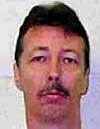
Timothy Ronk
Murderer Joshua Wayne Andrews
Murderer · USA · 2000
Joshua Wayne Andrews was a serial killer accused of killing several people in V…
5 victims
Joshua Wayne Andrews
Murderer · USA · 2000
Joshua Wayne Andrews was a serial killer accused of killing several people in V…
5 victims
 Juan Carlos Alvarez
Murderer · USA · 1998
Juan Carlos Alvarez, born on March 9, 1977, in San Luis, Mexico, was a Hispanic…
5 victims
Juan Carlos Alvarez
Murderer · USA · 1998
Juan Carlos Alvarez, born on March 9, 1977, in San Luis, Mexico, was a Hispanic…
5 victims
 Leon Davis Jr.
Murderer · USA · 2007
Leon Davis Jr. was sentenced to death on April 29, 2011, for the execution-styl…
5 victims
Leon Davis Jr.
Murderer · USA · 2007
Leon Davis Jr. was sentenced to death on April 29, 2011, for the execution-styl…
5 victims
 Raymond Lee Oyler
Murderer · USA · 2006
Raymond Lee Oyler was convicted for starting the 2006 Esperanza fire in Riversi…
5 victims
Raymond Lee Oyler
Murderer · USA · 2006
Raymond Lee Oyler was convicted for starting the 2006 Esperanza fire in Riversi…
5 victims
 Terry Lee Hankins
Murderer · USA · 2000
Terry Lee Hankins was convicted by a jury of capital murder and was sentenced t…
5 victims
Terry Lee Hankins
Murderer · USA · 2000
Terry Lee Hankins was convicted by a jury of capital murder and was sentenced t…
5 victims
 Daniel Conahan
Serial killer? · USA · 1994
April 16, 1996 — Richard Montgomery was last seen by friends; Montgomery told a…
6 victims
Daniel Conahan
Serial killer? · USA · 1994
April 16, 1996 — Richard Montgomery was last seen by friends; Montgomery told a…
6 victims
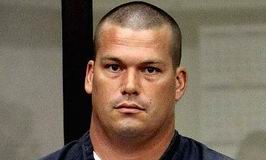 John Albert Gardner
Murderer · USA · 2009
On May 14, 2010, John Albert Gardner was sentenced to two terms of life impriso…
2 victims
John Albert Gardner
Murderer · USA · 2009
On May 14, 2010, John Albert Gardner was sentenced to two terms of life impriso…
2 victims
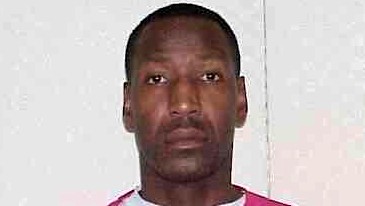 Gregory L. Wilson
Murderer · USA · 1987
Gregory L. Wilson was sentenced to death on October 31, 1988 in Kenton County f…
1 victim
Gregory L. Wilson
Murderer · USA · 1987
Gregory L. Wilson was sentenced to death on October 31, 1988 in Kenton County f…
1 victim
 Rocky Barton
Murderer · USA · 2003
Defendant: Rocky Barton · Victim: Kimbirli Jo Barton (fourth wife) · The grand…
1 victim
Rocky Barton
Murderer · USA · 2003
Defendant: Rocky Barton · Victim: Kimbirli Jo Barton (fourth wife) · The grand…
1 victim
 Gerald Wayne Bivins
Murderer · USA · 1991
Gerald Wayne Bivins · January 16, 1991 — Bivins and two other men committed mul…
1 victim
Gerald Wayne Bivins
Murderer · USA · 1991
Gerald Wayne Bivins · January 16, 1991 — Bivins and two other men committed mul…
1 victim
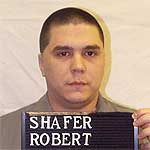 Robert Andrew Shafer
Murderer · USA · 1990
Robert Andrew Shafer was sentenced to death on January 6, 1993. His conviction…
2 victims
Robert Andrew Shafer
Murderer · USA · 1990
Robert Andrew Shafer was sentenced to death on January 6, 1993. His conviction…
2 victims
- Gender
- male
- Country
- USA
- Location
- Biloxi, Harrison County, Mississippi, USA
- Date of birth
- 1979
- Age at first offence
- 29
- Characteristics
- alcohol, arson, armed robbery, domestic violence, rape
- Victim profile
- Michelle Craite, 38 (his girlfriend)
- Method of murder
- Stabbing with knife
- Date(s) of murder
- August 26, 2008
- Years active
- 2008
- Date of arrest
- Next day
- Status
-
Sentenced to death
Sentenced to death on October 8, 2010; Mississippi Supreme Court denied rehearing request on September 18, 2015
Case information
Name: Timothy Ronk Full name used in appellate case: Timothy Robert Ronk a/k/a Timothy Ronk a/k/a Timothy R. Ronk v. State of Mississippi. Case number: No. 2011–DP–00410–SCT. Court and disposition referenced: Decided: May 07, 2015 (EN BANC). Victim: Michelle Lynn Craite (also referenced as Michelle Lynn Craite; also identified as thirty-seven-year-old Michelle Lynn Craite).
Timeline
- August 26, 2008 — Emergency personnel responded to reports of a house fire on Timber Ridge Lane in Biloxi, Mississippi; firefighters discovered the remains of a human body in a bedroom of the house.
- August 27, 2008 — Two United States Marshals approached Ronk and Heather Hindall as they were leaving a department store in Jacksonville, Florida, and placed Ronk under arrest for the murder of Michelle Lynn Craite; law enforcement recovered a knife from Ronk’s vehicle.
- October 4, 2010 — Trial commenced at the Harrison County Courthouse; the capital murder trial of Timothy Ronk began.
- October 7, 2010 — A jury convicted Ronk of capital murder and armed robbery.
- October 8, 2010 — Ronk was sentenced to death.
- October 9, 2010 — Closing and reporting of the jury sentencing for capital murder by WLOX is referenced.
- June 1, 2009 — A grand jury indicted Ronk for armed robbery and capital murder with the underlying felony of arson.
- October 5, 2010 — Reporting referenced regarding the start of the capital murder trial.
- May 07, 2015 — Mississippi Supreme Court (EN BANC) decision referenced.
- September 18, 2015 — Mississippi Supreme Court denied Ronk’s request for a rehearing.
Background
Ronk lived with Michelle Lynn Craite at the time of the killing. Court records stated that Ronk and Craite argued as he was leaving her for another woman in Florida. Ronk was described as having a previous Bipolar diagnosis, and testimony at trial addressed his bipolar disorder and ADHD diagnosis. Ronk stated that he acted in self-defense when he stabbed Craite.
Neighbors and family stated that Craite moved to Mississippi from Michigan in 2008 and was in a relationship with Timothy Ronk. Sergeant Christopher DeBack learned that Ronk drove a dark green 1999 Honda Passport and instructed local police to be on the lookout for that vehicle.
The offence
Emergency personnel responded to reports of a house fire on Timber Ridge Lane in Biloxi, Mississippi on August 26, 2008. Firefighters discovered the remains of a human body in a bedroom of the burning house.
Dental records later identified the body as thirty-seven-year-old Michelle Lynn Craite. Craite’s autopsy revealed multiple stab wounds to her back in addition to severe burns that destroyed her flesh down to the bone. Craite had suffered blistering and burning to the lining of her mouth, tongue, larynx, and windpipe, and a high level of carbon monoxide was found in Craite’s blood. This evidence indicated that Craite was still alive and breathing during the fire.
Dr. Paul McGarry, a forensic pathologist, opined that the stab wounds likely were the cause of Craite’s death, as she would have died from those wounds within “minutes” or “hours” without medical assistance. Dr. McGarry also noted that the stab wounds incapacitated Craite so that she could not escape from the fire.
Special agents from the Bureau of Alcohol, Tobacco and Firearms investigated the cause of the fire. ATF Special Agent Drew Sheldrick and another agent used a fire dog to walk the perimeter and the inside of Craite’s house. In total, the dog “alerted” thirteen times to the presence of ignitable liquid in and around Craite’s home, including three alerts in the master bedroom, two alerts in the hallway, two alerts in the carport, and one alert on the porch. The ATF investigation determined that the fire in Craite’s house had been intentionally set, with gasoline vapors being the ignition source. Agent Sheldrick concluded that the gasoline trail traveled “all the way from [the gas can in the carport] through the kitchen and down the hall and into the master bedroom,” where Craite had died.
Officer Carl Short and Investigator Mike Shaw with the Biloxi Police Department were called to the scene shortly after firefighters arrived, and they began a perimeter investigation. Officer Short ran the license plate of a red Ford Explorer parked in the house’s carport and discovered that the car belonged to Craite. Officer Short noticed a red plastic gas can sitting in the carport, which appeared to be “out of place.”
After the fire had been extinguished, Investigator Shaw investigated the body, which was laying face down on the floor of the master bedroom. Investigator Michael Manna, who took photographs of the scene, explained that the body had been severely burned and, “You couldn't even tell it [sic] was a man or a woman until you rolled her over.”
Police said Ronk argued with Craite as he was leaving her for another woman in Florida. Ronk later told Heather Hindall that Craite attempted to attack him with a knife and threatened to get a shotgun and kill him. Ronk told Hindall that he disarmed Craite and stabbed her, then “poured gasoline over everything and lit it on fire and jumped in his truck and took off, and he told me that he had threw [sic] the knife over the bay bridge before he got to me .”
Ronk’s letter written to Hindall from prison in October 2008 described Craite as a “rich widow” and an “alcoholic millionaire” who fell for him “at first sight.” Ronk admitted to Hindall that he manipulated Craite “to get the car so I could come see you, used her to buy your ring, used her to have money to make the trip.” The letter stated that on the morning of Craite’s death, Ronk told Craite that he was leaving for Florida, and she began slapping him and then approached him with a knife. Ronk asserted that he never intended to kill Craite and that he had stabbed her only after she threatened to shoot him. Ronk concluded, “When I realized what I had done, I cleaned the knife off, changed my clothes, doused the house with gasoline, set it on fire and drove off․”
No weapons were found inside Craite’s house. However, police found two unloaded shotguns stored in their cases in a studio apartment behind Craite’s house.
Investigation
Sergeant Christopher DeBack interviewed Craite’s neighbors and family regarding her death, including confirmation that Ronk was living with Craite at the time of the fire and that Ronk drove a dark green 1999 Honda Passport.
Officer Short ran the license plate on Craite’s red Ford Explorer. Receipts and items from the glove compartment were strewn about the passenger and driver seats of the vehicle. Investigator Manna retrieved a Mississippi tax receipt and a Mississippi application for certificate of title to a 1999 Honda from inside the vehicle, and both documents were in Ronk’s name. Investigators also found Ronk’s birth certificate inside the vehicle.
Investigators focused on Ronk as the primary suspect and searched Craite’s bank and phone records. After obtaining a subpoena for Craite’s bank accounts, investigators discovered someone used Craite’s debit card on the morning of her death. Bank records showed a $500 withdrawal from a BancorpSouth ATM located in a Walmart in D’Iberville, Mississippi, a $418.16 purchase at the jewelry department of the same Walmart, and a $116.18 purchase at a Shell gas station in Mobile, Alabama. With a subpoena, investigators obtained still images from the Walmart ATM’s surveillance camera, and Ronk was pictured in the photographs. Investigators learned Ronk purchased three cartons of cigarettes and an energy drink at the Mobile gas station and forged Craite’s signature on the receipt. A Wal-mart employee confirmed Ronk purchased an engagement ring using Craite’s debit card and received $100 in cash.
The State also obtained Craite’s phone records after a subpoena. Sergeant DeBack learned that Craite kept two cellular phones and that Ronk used one of them. The records showed extensive activity to a cell phone number in the (904) area code in northeastern Florida. The number belonged to Heather Hindall in Middlesburg, Florida. Craite’s phone records indicated that Ronk and Hindall communicated regularly, and communication increased in frequency during the two weeks preceding Craite’s death. A few days prior to Craite’s death, Ronk sent Hindall a text message asking if she needed a television or an Xbox video game console. On the morning of Craite’s death, Ronk sent Hindall a text message stating that he was loading up and coming to Florida.
A Biloxi investigator testified a gas can was found behind an SUV in the carport, but with no fingerprints on the can. Another ATF-related witness testified about a gasoline trail that started near the gasoline can, moved through the kitchen, the hall and into the master bedroom where Craite was found face down.
Arrest
On August 27, 2008, two United States Marshals approached Ronk and Hindall as they were leaving a department store in Jacksonville, Florida, and placed Ronk under arrest for the murder of Michelle Lynn Craite. Law enforcement recovered a knife from Ronk’s vehicle. Investigators from the Biloxi Police Department traveled to Jacksonville to question Ronk and Hindall.
Trial
Procedural history and indictment
On June 1, 2009, a grand jury indicted Ronk for armed robbery and capital murder with the underlying felony of arson.
Ronk’s trial commenced on October 4, 2010. Ronk presented no witnesses in his defense. On October 7, 2010, a jury convicted Ronk of capital murder and armed robbery. Ronk’s sentencing hearing commenced the following day.
Culpability phase: jury instructions and verdict
The trial court granted Ronk’s self-defense and murder instructions but denied Ronk’s imperfect-self-defense manslaughter instruction. Ronk submitted a jury instruction on heat-of-passion manslaughter but later withdrew it. At the State’s request and over Ronk’s objection, the trial court instructed the jury on arson as a separate lesser offense, and it instructed the jury on the one-continuous-transaction doctrine applicable to felony-murder cases.
Ronk argued that the arson and the killing were distinct, and he requested a deliberate-design murder instruction under the theory that the arson and killing were separate. The trial court accepted the State’s instruction defining the one-continuous-transaction doctrine as applicable to felony-murder cases.
At the conclusion of the sentencing phase, the jury unanimously sentenced Ronk to death. The jury made findings that included:
- “The Defendant actually killed Michelle Lynn Craite.”
- Aggravating circumstances found beyond a reasonable doubt:
- “The capital offense was committed while the Defendant was engaged in the commission of Arson.”
- “The capital offense was committed by a person under sentence of imprisonment.”
- “The capital offense was especially heinous, atrocious, or cruel.”
- “and that there are insufficient mitigating circumstance(s) to outweigh the aggravating circumstance(s)” and “the Defendant should suffer death.”
The trial court sentenced Ronk to thirty years’ imprisonment for the armed-robbery charge, and the sentence in Count II was ordered to run consecutively with the sentence in Count I.
Sentencing
Mitigation witness
At sentencing, Ronk presented Dr. Beverly Smallwood, a psychologist, as a mitigation witness. Dr. Smallwood testified that Ronk had been diagnosed with bipolar disorder and ADHD early in life. Dr. Smallwood opined that Ronk was susceptible to impulsive behavior, while clarifying that the disorders did not significantly interfere with Ronk’s ability to separate right from wrong.
Death penalty sentence and aggravating circumstances
The jury unanimously sentenced Ronk to death for capital murder and found insufficient mitigating circumstances to outweigh aggravating circumstances. The aggravating circumstances included engagement in arson, commission by a person under sentence of imprisonment, and that the offense was especially heinous, atrocious, or cruel.
The decision referenced that Ronk had been convicted of grand larceny and sentenced to ten years’ imprisonment three weeks prior to Craite’s death, and that Ronk was serving house arrest in Craite’s home at the time of the capital offense.
In closing argument at trial, Assistant DA Alison Baker stated, “She took him in. He took her out.” Defense attorney Eric Geiss argued, “As the State has said Timothy Ronk has forfeited his life. That is going to happen one way or the other no matter which way you choose to punish him.” Prosecutors and defense argued about the relationship between stabbing and arson and whether arson was an attempt to cover up a crime.
Evidentiary rulings and disputed issues during trial
- Investigator Michael Manna described the burned body such that, “You couldn't even tell it [sic] was a man or a woman until you rolled her over.”
- The ATF dog “alerted” thirteen times to ignitable liquid presence.
- Dr. McGarry opined Craite would have died from stab wounds within “minutes” or “hours” without medical assistance and that Craite was alive and breathing during the fire.
At trial and in appellate discussion, issues included evidentiary rulings about:
- Limiting Hindall’s testimony and her discussions with Ronk describing Craite as an alcoholic.
- Admitting a knife recovered from Ronk’s car, including testimony and an opinion about consistency of the knife with Craite’s stab wounds.
- Admission of Craite’s bank records.
- Admission of Jennifer Mitchell’s identification and related testimony about the purchase of a diamond ring at Walmart.
Jennifer Mitchell’s testimony included that her shift began at 7:00 a.m., that she assisted a man with purchasing an engagement ring at approximately 9:00 a.m., and that she showed rings with costs of $798 for a yellow-gold, half-carat, solitaire diamond ring and $288 for a white-gold solitaire ring; the man purchased the white-gold ring with a debit card and requested $100 cash back. Mitchell identified Ronk in court and previously identified Ronk using a surveillance photograph.
In appellate argument, Ronk did not object to certain admissions and arguments, and the court held some claims procedurally barred due to failure to object.
Appeals
Issues raised on appeal
Ronk timely appealed raising issues including: I. Jury instructions error in the culpability phase. II. Sufficiency of the evidence. III. Ineffective assistance of counsel during sentencing phase. IV. Jury sequestration. V. Inadmissible evidence admitted at trial. VI. Whether the State overcompensated Heather Hindall. VII. Jury instructions during sentencing phase. VIII. Death sentence constitutionality. IX. Death sentence disproportionality. X. Whether any error was harmless. XI. Cumulative effect of errors.
Appellate decision
The Mississippi Supreme Court affirmed Ronk’s convictions and death sentence and affirmed the armed robbery conviction and thirty-year sentence.
The appellate opinion addressed:
- Denial of Ronk’s imperfect-self-defense manslaughter instruction.
- Jury instruction on arson as a lesser-included offense and procedural waiver/harm analysis.
- Instruction on the one-continuous-transaction doctrine.
- Sufficiency of evidence supporting the causal nexus between the killing and the arson.
- Dismissal without prejudice of ineffective assistance claims due to facts not fully apparent on direct appeal.
- Sequestration procedure.
- Evidentiary rulings, including admission of the knife and Craite’s bank records, and identification evidence.
- Prosecutorial misconduct claims.
- Witness compensation claims involving payment of travel and expenses to Hindall.
- Sentencing instruction issues, including statutory mitigating circumstances and refusal of certain proffered instructions.
- Constitutionality arguments about indictment and the lethal-injection procedure.
- Proportionality review and findings supporting statutory aggravators and lack of excessiveness or disproportionality.
Outcome
The Mississippi Supreme Court affirmed:
- Count I: Conviction of capital murder and sentence of death by lethal injection, affirmed.
- Count II: Conviction of armed robbery and sentence of thirty (30) years in the custody of the Mississippi Department of Corrections, affirmed. The sentence in Count II was ordered to run consecutively with the sentence in Count I.
The Mississippi Supreme Court denied Ronk’s request for a rehearing on September 18, 2015.
Other details
Alternative legal views expressed in separate opinions
A separate opinion expressed concern about “recent iterations” of the imperfect self-defense manslaughter standard, disputing the “bona fide (but unfounded)” language and urging abandonment of it. The separate opinion also discussed opposition to the one-continuous-transaction doctrine, arguing that it had no statutory authority requiring a killing to occur during the commission of arson.
The separate opinion included quoted material from the earlier trial self-defense instruction:
The Court instructs the Jury that to make a killing justifiable on the grounds of self defense, the danger to the Defendant must be either actual, present and urgent, or the Defendant must have reasonable grounds to apprehend a design on the part of the victim to kill him or to do him some great bodily harm, and in addition to this he must have reasonable grounds to apprehend that there is imminent danger of such design['s] being accomplished. It is for the jury to determine the reasonableness of the ground upon which the Defendant acts. (Emphasis added.)
The separate opinion included the denied imperfect self-defense manslaughter instruction (as described):
That the Defendant, Timothy Robert Ronk, did willfully kill Michelle Lynne Craite, without malice, under the bona fide belief, but without reasonable cause therefore [sic], that it was necessary for him so to do in order to prevent Michelle Lynne Craite from inflicting death or great bodily harm upon him․ (Emphasis added.)
People identified in the case
- Heather Hindall — resident of Middlesburg, Florida; recipient of texts and testimony describing phone conversation and meeting after Ronk’s arrest.
- Jennifer Mitchell — manager of the D’Iberville Walmart; testified to identification of Ronk purchasing a diamond ring and related details of the ring and cash back.
- Dr. Beverly Smallwood — psychologist mitigation witness.
- Dr. Paul McGarry — forensic pathologist who testified regarding autopsy findings and survivability during the fire.
- Officer Carl Short — Biloxi Police Department, perimeter investigation and license plate run.
- Investigator Mike Shaw — Biloxi Police Department, called to the scene.
- Investigator Michael Manna — took photographs and described the body.
- Sergeant Christopher DeBack — Biloxi Police Department, supervisor for violent crimes against persons and lead investigator.
- ATF Special Agent Drew Sheldrick — fire investigation and fire dog alerts; conclusion about gasoline trail.
- Assistant DA Alison Baker — argued closing.
- Defense attorney Eric Geiss — argued closing and mitigation around punishment theories.
- Assistant District Attorney Chris Schmidt — told the jury “Murder and arson fold into the crime of capital murder.”
- Harrison County Judge Lisa Dodson — issued a ruling that allowed the jury to deliberate on capital murder or murder not carrying the death penalty; accepted and handled instruction discussions in connection with arson as a lesser offense.
Counts and sentencing structure referenced
The opinion referenced Count I and Count II with consecutive sentencing, and noted that the sentencing options at trial were death or life imprisonment without the possibility of parole, with rejection of instructions that proposed life without parole under other conditions.
Spotted an error, or have more information about this case?