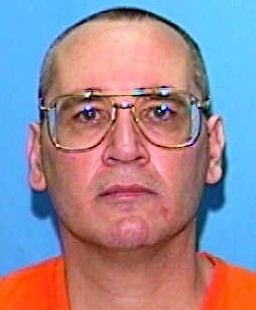
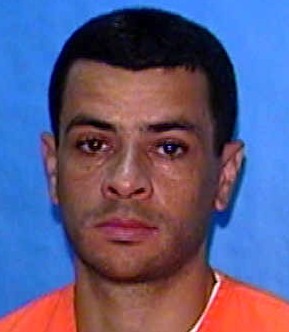
Daniel Conahan
Serial killer? John Robert Williams
Serial killer? · USA · 2003
John Robert Williams was a long-haul trucker. He was held in a “supermax” unit…
12 victims
John Robert Williams
Serial killer? · USA · 2003
John Robert Williams was a long-haul trucker. He was held in a “supermax” unit…
12 victims
 Helmuth Schmidt
Serial killer? · USA · 1918
Helmuth Schmidt used a false name to place advertisements, which lured young, l…
30 victims
Helmuth Schmidt
Serial killer? · USA · 1918
Helmuth Schmidt used a false name to place advertisements, which lured young, l…
30 victims
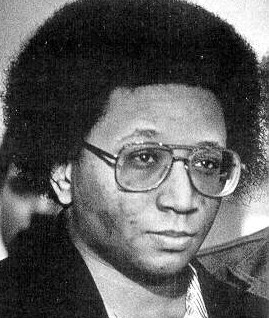 Wayne Williams
Serial killer? · USA · 1979
Wayne Bertram Williams was sentenced to two consecutive terms of life imprisonm…
24 victims
Wayne Williams
Serial killer? · USA · 1979
Wayne Bertram Williams was sentenced to two consecutive terms of life imprisonm…
24 victims
 Tommy Lynn Sells
Serial killer? · USA · 1980
Tommy Lynn Sells was a white male. He was 35 at the time of the offence and 36…
13 victims
Tommy Lynn Sells
Serial killer? · USA · 1980
Tommy Lynn Sells was a white male. He was 35 at the time of the offence and 36…
13 victims
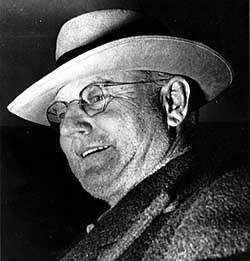 Alfred Cline
Serial killer? · USA · 1930
Alfred Cline was an American “Bluebeard” who was linked with at least nine homi…
9 victims
Alfred Cline
Serial killer? · USA · 1930
Alfred Cline was an American “Bluebeard” who was linked with at least nine homi…
9 victims
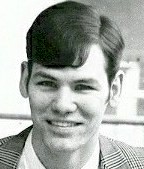 John Norman Collins
Serial killer? · USA · 1967
John Norman Collins was implicated in a series of killings targeting students a…
8 victims
John Norman Collins
Serial killer? · USA · 1967
John Norman Collins was implicated in a series of killings targeting students a…
8 victims
 Joseph Danks
Spree killer · USA · 1987
Joseph Martin Danks was convicted in California. He was sentenced to death in 1…
7 victims
Joseph Danks
Spree killer · USA · 1987
Joseph Martin Danks was convicted in California. He was sentenced to death in 1…
7 victims
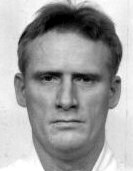 Jeffrey Doughtie
Murderer · USA · 1993
Jeffrey Doughtie was executed by lethal injection in Texas on August 16, 2001.…
3 victims
Jeffrey Doughtie
Murderer · USA · 1993
Jeffrey Doughtie was executed by lethal injection in Texas on August 16, 2001.…
3 victims
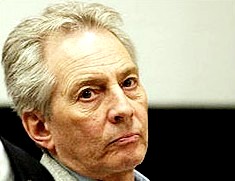 Robert Durst
Homicide · USA · 2001
Robert Alan "Bobby" Durst (born 1943) was a son of the late New York real estat…
1 victim
Robert Durst
Homicide · USA · 2001
Robert Alan "Bobby" Durst (born 1943) was a son of the late New York real estat…
1 victim
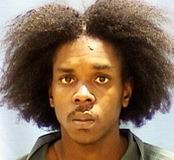 William Balfour
Murderer · USA · 2008
William Balfour was sentenced to three consecutive life sentences plus 120 year…
3 victims
William Balfour
Murderer · USA · 2008
William Balfour was sentenced to three consecutive life sentences plus 120 year…
3 victims
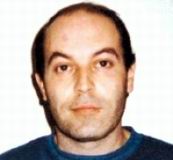 Paul Culshaw
Murderer · United Kingdom · 2004
Paul Culshaw (born 1969) was a British convicted murderer and sex offender. He…
1 victim
Paul Culshaw
Murderer · United Kingdom · 2004
Paul Culshaw (born 1969) was a British convicted murderer and sex offender. He…
1 victim
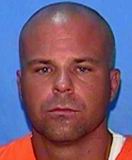 Anthony Wainwright
Murderer · USA · 1994
Anthony Wainwright (DOB: 10/22/70) was tried in the Third Judicial Circuit, Ham…
1 victim
Anthony Wainwright
Murderer · USA · 1994
Anthony Wainwright (DOB: 10/22/70) was tried in the Third Judicial Circuit, Ham…
1 victim
- Gender
- male
- Country
- USA
- Location
- Charlotte County, Florida, USA
- Date of birth
- May 11, 1954
- Age at first offence
- 40
- Characteristics
- kidnapping, torture, decapitation, dismemberment, murder for hire, rape, rapist, alcohol, drug addict, armed robbery
- Victim profile
- Transients, hitchhikers and hustlers
- Method of murder
- Strangulation
- Date(s) of murder
- 1994 - 1996
- Years active
- 1994–1996
- Date of arrest
- J uly 3, 1996
- Status
-
Sentenced to death
Sentenced to death on December 10, 1999
Timeline
- April 16, 1996 — Richard Montgomery was last seen by friends; Montgomery told a friend he was going to make a few hundred dollars and would return shortly.
- April 16, 1996 — A man saw Montgomery walking toward Cox Lumber; the same day Conahan bought rope, cutting pliers, a razor-sharp knife and Polaroid film at a Punta Gorda Wal-Mart and picked Montgomery up by the lumber yard and took him for a drive.
- April 17, 1996 — County maintenance workers discovered decomposed body parts of a dismembered male whose identity was later determined to be Kenneth Lee Smith; the fresh corpse of Richard Montgomery was found nearby.
- March 1995 — David Payton said he was picked up by Conahan in Fort Myers and supplied with marijuana, beer and Valium; Payton said Conahan asked if he could tie him to a tree and photograph him.
- 1994 — Investigators said the murders started in February 1994; Conahan admitted soliciting Burden for oral sex in 1994.
- 1996 — Conahan was arrested after a 50-day surveillance; the surveillance operation included wired undercover officers posing as gay transients and mock homeless camps.
- July 3, 1996 — Conahan was arrested.
- August 18, 1999 — Conahan was found guilty of first-degree murder in Montgomery’s death after waiving his right to a jury trial for the murder.
- September 13, 1999 — Sentencing was scheduled for September 13.
- December 10, 1999 — Conahan was sentenced to death; the defendant was sentenced on Count I (First-Degree Premeditated Murder) to Death and Count III (Kidnapping) to 6 years, 8 months.
- January 24, 2000 — Conahan filed a Direct Appeal in the Florida Supreme Court.
- January 16, 2003 — The Florida Supreme Court affirmed Conahan’s convictions and sentence.
- April 24, 2003 — The court issued a revised opinion again affirming the convictions and sentence of death.
- July 3, 2003 — Conahan filed a Petition for Writ of Certiorari in the United States Supreme Court.
- October 6, 2003 — The United States Supreme Court denied certiorari.
- October 1, 2004 — Conahan filed a 3.851 Motion with the Circuit Court that was pending.
- August (year stated as August) — A sexual battery charge was dropped because of a lack of evidence.
Background
Daniel Conahan suspected serial killings involving bodies found in wooded areas in Florida known as “The Hog Trail Murders.” The murders involved similar crime scenes. Authorities believed these six murders could be linked to the same person and police suspected Conahan after getting a tip from inmate David Payton.
Conahan was described as a gay, sex-driven killer who fantasized about raping, photographing and strangling young men. Defense attorneys argued that he was being falsely targeted for his openly gay lifestyle and that the prosecution had a collection of unreliable witnesses and no biological evidence.
Conahan had been discharged from the Navy at Great Lakes, Illinois, in 1978 under the threat of court martial for several counts of sodomy and physical assault. Defense counsel stated that Conahan had a bad back and that it made him incapable of committing the crimes. Conahan opted for a bench trial for the guilt phase because counsel said he feared conviction by a conservative jury because he was a gay man who admitted being fascinated by bondage.
Conahan admitted his homosexuality and fascination with bondage while denying guilt in the string of murders.
The offence
Daniel Conahan was convicted and sentenced to death for the kidnapping and premeditated murder of Richard Montgomery.
Conahan was accused of luring Montgomery into the woods and offering money connected to nude bondage photos. Montgomery agreed but was unaware he was helping set up his own murder. Prosecutors said Conahan preferred young, lean, blonde white males like Montgomery.
Prosecutors alleged Conahan:
- tied Montgomery to a tree,
- raped and strangled Montgomery,
- and then removed Montgomery’s genitals to prevent DNA trace. Montgomery was found in the woods after two men checking wild hog traps discovered a human skull and called police. Montgomery’s body was later discovered wrapped in carpet padding. An examination revealed Montgomery had been bound to a tree and then strangled, and that his genitals had been removed with “surgeon-like precision.”
The sentencing judge read from a document that confinement against Montgomery’s will was for the obvious purpose of inflicting bodily harm upon the victim or terrorizing him.
Investigation
Authorities believed the “Hog Trail Murders” involved at least six slayings with similar features. The bodies were found within a 10-mile radius between 1994 and 1997 in Charlotte and Sarasota County areas. Most victims were transients, day laborers or “street people,” and all victims were male and nude. At least four victims were posed on their backs in similar positions; two victims had their genitals amputated; one body was completely dismembered with parts scattered for a hundred yards through the trees. Ropelike material was involved in at least three killings. Two victims had the same angle of ligature marks on their legs.
A five-agency task force investigated the killings, including the State Attorney’s office, the Florida Department of Law Enforcement, the Charlotte County Sheriff’s Office, the North Port Police Department, and the Fort Myers Police Department. Lead investigator Detective Rickey Hobbs of the Charlotte County Sheriff’s Office believed a single individual was responsible for all six killings.
Authorities monitored Conahan using surveillance, including wired undercover officers posing as gay transients and mock homeless camps set up in the woods. A mobile tracking device was placed on Conahan’s vehicle. Chuck Ellis, a spokesman for the Charlotte County Sheriff’s Office Police, said authorities had overhead aerial surveillance and had Conahan’s house under 24-hour surveillance with video cameras.
Undercover officers negotiated with Conahan in the woods. Hobbs said officers were on the ground and in trees pointing guns at his head and that the purpose was to establish Conahan’s modus operandi rather than to catch him in an attempted assault. Hobbs said officers would have killed Conahan if he had made any move to injure the undercover officers.
On at least one occasion, authorities sent a marked police car to break up a liaison Conahan was having with a man in an isolated area because they feared for the man’s safety. At the end of May 1996, police stopped Conahan and took him to a hotel room set up for a videotaped interrogation while executing a search warrant for his apartment and vehicles. During the interrogation, Conahan chain smoked and responded to police questions with answers including: “Oh my gosh, Oh my gosh. ... Why me? What brought you to me?” When a detective told Conahan, “Right now you're a suspect,” Conahan responded, “Wooow.” After three hours he left.
Investigators said fibers from Conahan’s car, his father’s car and his home were discovered at the Montgomery murder scene. A metallic blue paint chip, described as identical in nature and color to a chip missing from his father’s Mercury Capri, was found in Montgomery’s pubic hair. A single paint chip recovered from Montgomery’s pubic hair matched paint on a car registered to Conahan’s father. The paint chip was described as unique because it was composed of four layers of paint. The K-9 dog trained to detect human scent showed particular interest in a palm tree, which was flattened or otherwise damaged on one side. Crime scene investigators collected a rope, a carpet pad used to cover Montgomery’s body, a skull and torso belonging to another individual, a gray coat, and numerous combings. Rope grooves were found on a nearby tree after Smith’s remains were discovered.
Arrest
Conahan was arrested in July 1996 after being under surveillance around the clock for 50 days by the multi-agency task force. Police arrested him on July 3, 1996.
Trial
Conahan was tried for only the murder of Richard Montgomery though he was suspected of other murders.
Conahan waived his right to a jury trial. He was adjudicated as follows:
- Count I: First-Degree Premeditated Murder — Guilty
- Count II: First-Degree Felony Murder — Nolle Prosse by State
- Count III: Kidnapping — Guilty
- Count IV: Sexual Battery — Acquitted
During the guilt phase, the State presented evidence that on the day of Montgomery’s disappearance Conahan’s credit card was used to buy rope, Polaroid Film, pliers and a knife. A Motion for Change of Venue to Collier County was granted for the penalty phase.
On advisory sentencing, the jury voted for imposition of the death penalty. Conahan faced the death penalty if convicted of first-degree murder.
Conahan took the stand and testified:
- “I have fantasized about bondage.”
- “But that is not my only fantasy.” Conahan said he never met Montgomery and denied the allegations. Conahan admitted soliciting Burden for oral sex in 1994 but denied that he tried to strangle Burden.
The prosecution presented evidence including testimony from Stanley Burden, who claimed he was also assaulted by Conahan. Burden claimed Conahan offered him $150 to pose nude while being tied to a tree; Burden said the nude modeling accompanied by progressive bondage turned into an attempted rape and murder attempt. Defense suggested Burden’s attacker was a homosexual man Burden lived with.
The prosecution also introduced evidence from two undercover officers who posed as gay men and claimed Conahan asked them to pose for nude photos; prosecutors pointed out officers bore physical resemblance to Conahan’s “fantasy man.”
Conahan’s defense tried to prove other people attacked Burden and Montgomery and argued there was auto-erotic or self-inflicted asphyxiation in Montgomery’s case.
Conahan was described in court materials and testimony as having shown little emotion throughout the trial, crying at one point when his ex-lover testified of the accused’s bondage fantasy.
Sentencing
Chief Circuit Judge William Blackwell delivered Conahan’s decision on punishment for Montgomery’s April 16, 1996 murder. “May God have mercy on his soul,” Chief Circuit Judge William Blackwell said after delivering his decision. “It was an indescribable feeling,” said West, Montgomery’s mother, who witnessed the sentencing. “How dare he kill my son and sit there like that?” West said. Conahan shed a tear and took a hard swallow when he heard the sentence.
Blackwell considered mitigating factors including earlier testimony that Conahan was polite, appreciative and considerate but found them not enough to spare his life. A charge of sexual battery was dropped due to a lack of evidence.
Blackwell said the crime was especially heinous, atrocious and cruel. Two medical examiners testified that many of Montgomery’s wounds were inflicted before he died. “I hope he didn't suffer too much,” West said. “I trust God wouldn't have let it go on too long.”
West said she did not previously know the extent of her son’s injuries. Conahan received the sentence the judge determined he deserved. Conahan faced death and was formally sentenced December 10, 1999.
Conahan’s sentence was:
- Count I: First-Degree Premeditated Murder — Death
- Count III: Kidnapping — 6 years, 8 months
Appeals
Conahan filed a Direct Appeal in the Florida Supreme Court on January 24, 2000. He argued that the trial court erred in denying his motion for acquittal because the State’s circumstantial evidence was legally insufficient. He also claimed the trial court erred in its consideration and application of aggravating circumstances. Conahan contended the prosecutor violated his right to a fair trial by making improper comments in his opening and closing remarks of the penalty phase.
The Florida Supreme Court agreed the prosecutor did improperly comment upon evidence at the penalty phase but found the error harmless and affirmed the convictions and sentence on January 16, 2003. The court issued a revised opinion on April 24, 2003, again affirming the convictions and sentence of death.
Conahan filed a Petition for Writ of Certiorari in the United States Supreme Court on July 3, 2003, and it was denied on October 6, 2003. Conahan filed a 3.851 Motion with the Circuit Court on October 1, 2004 that was pending.
Conahan had 30 days to appeal. Blackwell would not consider a motion by Conahan to stop his attorneys from representing him on the appellate issues.
Outcome
Conahan was convicted of first-degree premiditated murder and sentenced to death for Richard Montgomery’s death. The jury recommended death penalty and Conahan received the death sentence on December 10, 1999.
Aftermath
Mary West, Montgomery’s mother, said: “It’s an answer to prayers -- I thank God for directing this.” “It's a miracle my son's body was even found.” West said she hoped the families of several other murder victims could get closure. She said Montgomery was buried in Royal Palm Memorial Garden.
Conahan was suspected of murdering five other young men found nude, strangled or stabbed in southern Sarasota and northern Charlotte counties and had not been charged in any of the other deaths. West said she worried about people her son hung out with.
Other details
Victim details and bodies found
Richard Montgomery was described as 21 years old. Montgomery was found naked and lying on his back with a large gaping hole between his legs where his entire genitalia had been cut out. His back and buttocks were badly scratched and rope marks were all over his body. There were neck, wrist and waist trauma consistent with ligature or bondage marks. Autopsy reports concluded Montgomery died as a result of strangulation and ligature marks were consistent with being tied to a tree.
On April 17, decomposed body parts of a dismembered male later identified as Kenneth Lee Smith were discovered. Smith was described as 25 years old and was the fourth Hog Trail Killings victim. A severed human head and Montgomery’s body were described as having been found in the woods of northern Charlotte County by a government employee, leading to the discovery of additional parts.
Additional alleged victim: Stanley Burden
Stanley Burden was described as a convicted pedophile. Burden said his assault was similar to Montgomery’s attack but he claimed he was lucky enough to get away. Burden was serving 10 to 25 for child molestation, according to the materials provided.
David Payton
David Payton was described as an inmate who provided a tip leading police to suspect Conahan. Payton said he was picked up by Conahan in Fort Myers in March 1995 and reported he received marijuana, beer and Valium. Payton later cooperated with police in a sting operation in an attempt to get information out of Conahan. Payton’s current whereabouts were described as unknown.
Conahan’s other identifying details
Daniel O. Conahan Jr. was described as a 45-year-old Punta Gorda resident currently incarcerated in the Charlotte County Jail. Conahan’s personal identification details included:
- DOB: 05/11/54
- Twentieth Judicial Circuit, Charlotte County, Case #97-166
- Sentencing Judge: The Honorable William L. Blackwell
- Criminal Trial Attorney: Paul Sullivan, Esq.
- Attorney: Paul Sullivan, Esq.
- Direct Appeal: Paul Helm – Assistant Public Defender
- Collateral Appeals: William Hennis & Celeste Bacchi – CCRC-S
- Date of Offense: 04/16/96
- Date of Sentence: 12/10/99
Statement about charge content
A handwritten statement to APBnews.com said Conahan denied he committed the crimes and said: “This is not a case of a serial killer but a corrupt criminal [justice] system.” He also charged that “the police and State Attorney are big on talk but short on proof.”
During sentencing, West said: “I had a feeling, a dream or something.” “He was working at getting his life back together.” “He was going back to school.” “He wanted to join the Army.” “He needed to get his high school diploma.” “He was my baby, but he didn't like for me to call him that.” West said: “He always gave his things away -- his clothes, his food, everything but his cowboy boots.” “And I buried him in them.”
Conahan’s military and alleged prior conduct
Conahan’s naval discharge in 1978 was linked to the threat of court martial for several counts of sodomy and physical assault. Defense materials additionally stated he had no criminal record except for an administrative discharge from the Navy for a fight resulting from an attempt to seduce a navy man, and that he denied the charges and was never prosecuted.
Statements about liquor and drugs
Montgomery was described as a heavy drinker and drug user and as a transient. Authorities alleged Conahan used alcohol and drugs with victims, including plying victims with alcohol and drugs.
Physical description and disputed medical inference
Charlotte County Medical Examiner R.H. Imami testified that Montgomery was strangled to death and had ligature marks. Imami said ligature marks appeared to have been inflicted after death. Conahan’s attorneys said whoever killed Montgomery tied him up after death. Hobbs said the task force began undercover agents posing as homeless men within two weeks of discovery of the bodies and described receiving information that somebody in the area was trying to pick up men for nude photographs in the woods.
Venue and discovery of Montgomery
Montgomery’s last day and disappearance involved a trailer park setting south of Punta Gorda. Witness Gary Mastin described seeing Montgomery in Robert Whittaker’s trailer where Montgomery once lived. Mastin said that about 2 or 3 in the afternoon on April 16, 1996, Montgomery came into the trailer and said he was going to make “$300 or something like that in half an hour and that he'd be back.” Mastin said Whittaker asked Montgomery “if it was legal,” and Montgomery made a jokingly sarcastic reply. Mastin said: “He had a big ass smile on his face.” Mastin said: “He took off, and that was the last time we saw him.”
Quotes involving appellate counsel and prosecutors
The materials included: “We're never pleased when a death sentence is ordered,” said Assistant State Attorney Robert Lee. “It is not a happy event; it is a sad one. In some cases it is appropriate, and this is one.” Lee said he never had any doubt Conahan was guilty, even before he was arrested, but he did have some doubt as to the evidence. Defense attorney Mark Ahlbrand said: “The only thing you have at this point is a gay person who has admittedly been attracted to picking up people like Montgomery, having casual sex with them and soliciting them for, in some instances, bondage.” “There is almost no evidence at this point with the exception of one witness who can even put the two of them together.” “He is being falsely targeted for his openly gay lifestyle.” Ahlbrand said the prosecution had unreliable witnesses and no biological evidence and argued for closure by pinning six murders on his client.
Trial evidence and purchases
Conahan admitted purchasing four separate purchases of knives on the day of Montgomery’s murder. Conahan said he purchased clothesline and film on that day. Hobbs said none of the knives purchased were found when police searched his apartment. Conahan insisted the knives were in his apartment during the search but police missed them, and said they were now sitting in a box in his lawyer’s office. Hobbs said that was the first he had heard of this. Ahlbrand said there was no way the knives could be used to perform the scalpel-like removal of Montgomery’s genitalia. Ahlbrand said Conahan also told him he never purchased any knives and that he got them for free from coupons from other purchases.
Additional discussion of body parts and alleged evidence disposal
Authorities speculated Conahan may have gotten rid of amputated body parts and other evidence via hospital biohazard disposal bags after working as a nurse. Police said fibers found on the victim’s body matched fibers found in Conahan’s car and bedroom. Authorities said fibers and paint chips supported linking Conahan to the scene.
Additional case framing and reporting statements
The materials included multiple characterizations of the case, including references to “Hog Trail Killer,” “Hog Trail Murders,” and “Hog Trail Killings,” as well as references to Conahan being a suspect in a string of murders.

Spotted an error, or have more information about this case?