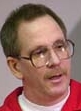
Gerald Wayne Bivins
Murderer Brian Kevin Rosenfeld
Murderer · USA · 1985
Brian Kevin Rosenfeld Brian Kevin Rosenfeld was sentenced to three concurrent l…
23 victims
Brian Kevin Rosenfeld
Murderer · USA · 1985
Brian Kevin Rosenfeld Brian Kevin Rosenfeld was sentenced to three concurrent l…
23 victims
 Russell Ellwood
Murderer · USA · 1991
Russell Ellwood was a former taxi driver. Authorities suspected him of killing…
20 victims
Russell Ellwood
Murderer · USA · 1991
Russell Ellwood was a former taxi driver. Authorities suspected him of killing…
20 victims
 Robert Martines Perez
Murderer · USA · 1994
Name: Robert Martines Perez · Other name used in proceedings: Robert Martinez P…
15 victims
Robert Martines Perez
Murderer · USA · 1994
Name: Robert Martines Perez · Other name used in proceedings: Robert Martinez P…
15 victims
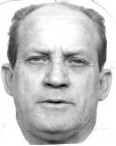 Billy Frank Vickers
Murderer · USA · 1993
Billy Frank Vickers Vickers was executed by lethal injection in Texas on Januar…
14 victims
Billy Frank Vickers
Murderer · USA · 1993
Billy Frank Vickers Vickers was executed by lethal injection in Texas on Januar…
14 victims
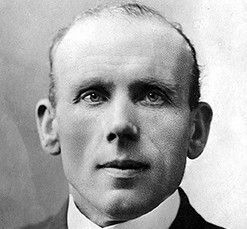 John Henry George Lee
Murderer · United Kingdom · 1884
John Henry George Lee, better known as John “Babbacombe” Lee (1864 – c. 1945),…
1 victim
John Henry George Lee
Murderer · United Kingdom · 1884
John Henry George Lee, better known as John “Babbacombe” Lee (1864 – c. 1945),…
1 victim
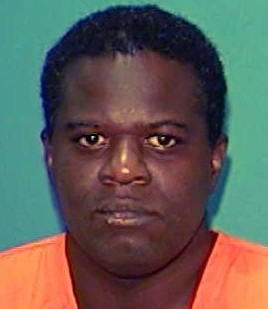 Gregory Capehart
Murderer · USA · 1988
Defendant: Gregory Capehart (born 08/09/67) Sixth Judicial Circuit: Pasco Count…
1 victim
Gregory Capehart
Murderer · USA · 1988
Defendant: Gregory Capehart (born 08/09/67) Sixth Judicial Circuit: Pasco Count…
1 victim
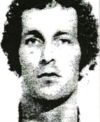 Russell Maurice Johnson
Serial killer · Canada · 1973
Russell Maurice Johnson (born 1947) was confined to maximum security at the Oak…
7 victims
Russell Maurice Johnson
Serial killer · Canada · 1973
Russell Maurice Johnson (born 1947) was confined to maximum security at the Oak…
7 victims
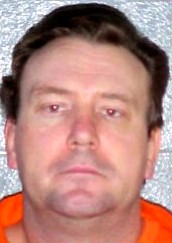 David Hyde
Murderer · USA · 1991
David Hyde was convicted in connection with the murders of John Lee and Ginger…
2 victims
David Hyde
Murderer · USA · 1991
David Hyde was convicted in connection with the murders of John Lee and Ginger…
2 victims
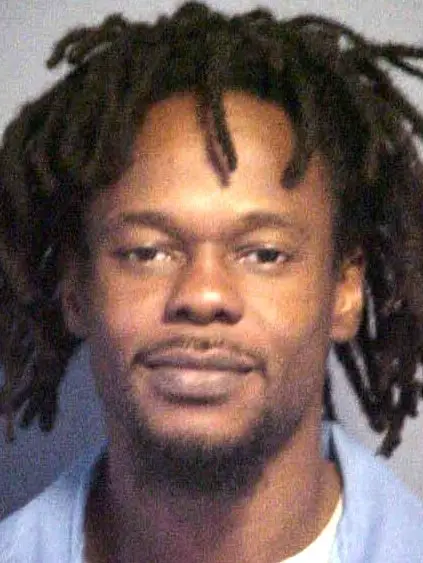 Michael Pennington
Murderer · USA · 1991
Michael L. Pennington was an in-prison convert to Islam at the Oklahoma State P…
1 victim
Michael Pennington
Murderer · USA · 1991
Michael L. Pennington was an in-prison convert to Islam at the Oklahoma State P…
1 victim
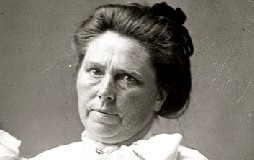 Belle Gunness
Serial killer · USA · 1880
Belle Gunness was Norwegian-born. She was born as Brynhild Paulsdatter Størseth…
42 victims
Belle Gunness
Serial killer · USA · 1880
Belle Gunness was Norwegian-born. She was born as Brynhild Paulsdatter Størseth…
42 victims
- Gender
- male
- Country
- USA
- Location
- Boone County, Indiana, USA
- Date of birth
- December 7, 1959
- Age at first offence
- 32
- Characteristics
- robbery, alcohol, drug addict, convicted rapist
- Victim profile
- Reverend William Harvey Radcliffe, 39
- Method of murder
- Shooting (handgun)
- Date(s) of murder
- January 16, 1991
- Years active
- 1991
- Date of arrest
- —
- Status
-
Executed
Executed by lethal injection in Indiana on March 14, 2001
Case identification
Gerald Wayne Bivins
Timeline
- January 16, 1991 — Bivins and two other men committed multiple crimes during a two-day central Indiana crime spree that included a murder of Reverend William Radcliffe at an interstate highway rest area restroom along Interstate 65 north of Lebanon.
- January 16, 1991 (evening) — Bivins and two other men stopped at a Lazarus Department Store in Lafayette, Indiana, and stole blue jeans at gunpoint from a security guard.
- January 16, 1991 — They drove to a Holiday Inn in Lebanon, Indiana, forced their way into a guest room occupied by Kevin Hritzkowin, pointed guns at Hritzkowin's head and body, ransacked the room, took cash, credit card, and van keys, threatened to kill him, struck him on the back of his head, and tied him to a bathtub railing.
- January 16, 1991 — They drove from the Holiday Inn in Hritzkowin's van, then parked the van and rejoined in Bivins's wife's car.
- January 16, 1991 — They stopped at an interstate highway rest area just north of Lebanon, confronted Reverend William Radcliffe in the public restroom, announced a robbery with their guns drawn, took his wallet, pushed Radcliffe into a stall, and fatally shot him in the head.
- January 16, 1991 (after the shooting) — As they fled, Bivins told Ronald Chambers that he shot Radcliffe because he wanted to know what it felt like to kill; he later reiterated this to Scott Weyls.
- February 20, 1991 — Bivins was arrested in Lafayette on an unrelated Carroll County forgery charge; he signed a standard advice of rights form and a waiver of rights form.
- February 21, 1991 — Police took Bivins from the Carroll County Jail to various locations in Tippecanoe County so he could show where evidence from the January 16, 1991 crimes had been discarded.
- February 25, 1991 — Bivins was questioned in Tippecanoe County after Miranda advisement and signed a polygraph waiver; he told an Indiana State Police sergeant he had not told the truth about who committed the murder and robberies, and requested to speak with a prosecutor.
- February 25, 1991 — Boone County Sheriff Ern K. Hudson was present during Bivins's statements about negotiating with Boone County Prosecutor Rebecca McClure.
- February 25, 1991 — Boone County recorded statement included an agreement with Prosecutor Rebecca McClure and described potential charges and sentencing arguments.
- March 7, 1992 — Bivins was found guilty and sentenced to death for the murder of William Harvey Radcliffe and consecutive prison terms for robbery, confinement, auto theft, and theft.
- 1992 (sentence phase) — The death sentence was imposed following jury conviction of six crimes committed during a two-day central Indiana crime spree in January 1991.
- January 16, 1991 (murder conviction referenced) — Bivins was convicted of killing the Rev. William Radcliffe on Jan. 16, 1991.
- March 14, 2001 — Bivins waived the remainder of his appeals to federal court and was executed by lethal injection.
- March 14, 2001 (after midnight) — Joseph Ross, a volunteer chaplain and spiritual advisor, witnessed Bivins's execution and described events on the night before and during the execution.
- March 14, 2001 (12:26 a.m. CST) — Bivins was pronounced dead at Indiana State Prison in Michigan City.
- Monday (week of execution, unspecified date) — Jeanne Bivins, 61, was taken to a Michigan City hospital and treated for an overdose of a prescription drug; she was in intensive care in the period leading to Wednesday morning.
- Thursday (week of execution, unspecified date) — Bivins was scheduled to hold a news conference.
Background
Bivins was convicted following jury trial of six crimes committed during a two-day central Indiana crime spree in January 1991. He was sentenced to death for the murder of William Harvey Radcliffe and consecutive terms of twenty years for one count of robbery, twenty years for one count of confinement, three years for one count of auto theft, and three years for each of two counts of theft.
Bivins said he did not seek federal appellate relief and said he wanted to die.
A volunteer chaplain, Joseph Ross, described that Bivins asked him to serve as his spiritual advisor and to witness his execution. Ross arrived at the Indiana State Prison on Monday morning, March 12th, planned to spend the day with Bivins, and described first visits and conversations on death row.
Ross described Bivins as sentenced to death in 1992, and stated that Bivins came to death row after being convicted of murdering Rev. William Radcliffe at a roadside rest stop washroom in Lebanon, Indiana. Ross stated that Bivins was born and raised in Evansville and that for most of his teens and twenties he was addicted to alcohol and various drugs.
Ross stated that when Bivins realized the man coordinated a substance abuse clinic Bivins had once been part of, in a stoned frenzy Bivins shot him.
Ross stated that after being convicted and sentenced to death, Bivins came to death row where he learned to sharpen writing skills and developed an intellectual and spiritual life, and that Ross said this was the first adult years Bivins spent mostly sober.
Ross described that Bivins received into the Catholic church and was confirmed as an adult Catholic in 1999. Ross described that Bivins co-founded a publication called "The Death Row Forum" with Hugo Boniche and that the "Forum" ran for about four years with about 100 readers at its peak.
Ross described Bivins as having been baptized in a pentecostal church as a child but virtually never practicing any faith. Ross described Bivins as having a hungry mind and heart and being eager for answers to ultimate questions.
Ross stated that Bivins referred to Mary as "the back door" and described how Bivins said: "If you can't get in the front door, you go to Mary at the back door. She'll get you in."
Ross stated that Bivins had a deep sense of God's forgiveness and that he knew he expressed sorrow for all his sins and spoke his apology to the Radcliffe family.
Ross included a description of Bivins having a conversation with his niece who had given birth and was nursing in the hospital, and Bivins urged her to take care of her children and reminded her she was in the right place.
Ross described interactions in the death house holding cell including Bivins being prepared to receive communion, and described a dispute about whether Ross could cross a line to touch Bivins.
The offence
Bivins and two other men, Ronald Chambers and Scott Weyls, stopped at a Lazarus Department Store in Lafayette, Indiana, where Bivins stole blue jeans. The men avoided apprehension by pointing a gun at a security guard.
After two intervening stops, they drove to a Holiday Inn in Lebanon, Indiana. Bivins and Chambers forced their way into a guest room occupied by Kevin Hritzkowin. They pointed guns at Hritzkowin's head and body, ransacked his room, took his cash, credit card, and van keys, threatened to kill him, struck him on the back of his head, and tied him to a bathtub railing.
Bivins then drove from the Holiday Inn in Hritzkowin's van, shortly thereafter parking the van and rejoining Chambers and Weyls in Bivins's wife's car.
They headed back toward Lafayette and stopped at an interstate highway rest area just north of Lebanon. There, Bivins and Chambers confronted Reverend William Radcliffe in the public restroom and announced a robbery with their guns drawn. Reverend Radcliffe cooperated immediately, giving the men his wallet. Bivins turned Radcliffe around, pushed him into a stall, and fatally shot him in the head.
As they were fleeing the rest area, Bivins told Chambers that he had shot Radcliffe because he wanted to know what it felt like to kill. In the following days, Bivins reiterated this to Weyls.
In the ensuing days, Bivins attempted to conceal his role by burning the shoes he had worn, believing them to be blood-stained. He had the inside of his wife's car cleaned. He discarded the fruits of his robberies in a dumpster near his home and threw the gun and the car's license plate into a creek.
Ross also described the murder as occurring at an Indiana highway rest stop 10 years earlier and described Radcliffe as resigning as pastor of Badger Grove Community Baptist Church in rural Brookston and filling water jugs for an overheated car engine.
Authorities called the murder a thrill killing, but Bivins said he killed the minister only because the victim had recognized him during a robbery.
Bivins said: "I'm not trying to excuse it. Honestly, I don't think that makes it any better than one who did it to see what it feels like," according to Ross's account of a statement previously made.
Ross included Bivins's written last statement, in which Bivins asked for forgiveness and stated:
"Last Statement. I know that I have hurt a lot of people in my life, especially my family and the Radcliffe family. I am sorry for the pain and sorrow I have caused Karen and Matthew Radcliffe, my friends and family. I ask that they forgive me. And to those here at the prison, I say 'Father forgive them, for the know not what they do to me.'"
Bivins also stated in another final statement:
"I wish to apologize to the victim's family for the pain I have caused and the pain I have caused my family and friends and I ask that they, who did this to me, be forgiven."
Ross described other statements Bivins made, including that Bivins had said: "Last Statement. I know that I have hurt a lot of people..." and the line about "Father forgive them, for the know not what they do to me."
Ross described Bivins saying to him during final moments:
"Tell God we all did our best."
And Ross described Bivins's response:
"He knows you did."
Investigation
Bivins was arrested on February 20, 1991, in Lafayette on an unrelated Carroll County forgery charge. He was read a standard advice of rights form and a waiver of rights form and signed both forms. He did not ask and was not told whether he would be questioned about any crimes other than the forgery charge.
After the taking of a recorded statement regarding the forgery, Bivins was asked if he had any knowledge regarding other crimes, including the robberies and murder in Boone and Tippecanoe counties on January 16. Bivins offered to provide information about the caliber of the gun used to kill the minister, the precise location of the murder, and various other crimes, including a Lazarus shoplifting.
Bivins later argued at trial that the advisements only covered questioning about the Carroll County forgery charge and did not establish waiver of rights to be questioned about offenses in Tippecanoe and Boone counties.
On February 21, 1991, Detective Brown testified that he did not readvise Bivins of Miranda rights before going on a search because the excursion was "a continuation of the interview from the night before." During that search, the police and Bivins looked for the gun but were unable to find it. One week later a gun later determined to be the murder weapon was found at the location identified by Bivins.
Later on February 21, 1991, in Lafayette, police taped a statement from Bivins after he was readvised of Miranda rights. Bivins stated he had helped two men, Jamie Warren and Kevin Robertson, attempt to use stolen credit cards and dispose of some stolen property. Bivins claimed that Warren and Robertson had confided particulars of their crimes to him and Bivins related the stories of the robberies and the Radcliffe murder.
By February 25, 1991, police had established that neither Warren nor Robertson could have committed the murder.
On February 25, 1991, Bivins was questioned by an Indiana State Police sergeant in Lafayette. A polygraph test followed an additional Miranda advisement and the signing of a polygraph waiver form. Bivins told the sergeant he had not told the truth about who committed the murder and robberies. In the presence of Boone County Sheriff Ern K. Hudson, Bivins claimed he was afraid of the two people he alleged had committed the crimes.
After admitting he had been at the rest stop the night the minister had been killed, Bivins said that if he had to do time, he did not want to be imprisoned at the same facility as the two who actually committed the crime. He then said he wished to cooperate and requested the opportunity to speak with a prosecutor.
Hudson advised that because Bivins wanted to cooperate, Hudson would call ahead from Lafayette to Lebanon to arrange an appointment of a defense attorney. Bivins responded: "I don't want an attorney to tell me to keep my mouth shut, all I want an attorney for is to negotiate with [Boone County Prosecutor Rebecca McClure]."
Ross recorded a dispute described by Department of Corrections spokeswoman, but in Ross's narrative Ross stated that this was not true; Ross stated Bivins was frustrated but understood why his brother did this.
Arrest
He signed standard advice of rights and waiver of rights forms. He was taken from Carroll County Jail to various locations in Tippecanoe County on February 21, 1991 to show police where evidence was discarded.
During the execution period, his age was described as 41. His mother Jeanne Bivins was described as 61 and treated for an overdose of a prescription drug following sharing a last meal with her son at the prison.
Trial
The crimes were: murder of William Harvey Radcliffe, robbery, confinement, auto theft, and two counts of theft. The robbery and confinement were consecutive terms and the thefts involved two counts; the death sentence was imposed for murder.
Bivins's direct appeal issues addressed included physical restraint at trial, admissibility of his statements, loss or destruction of evidence, evidence and instruction regarding escape, merger of offenses, constitutionality of Indiana's death penalty statute, death penalty aggravator as double jeopardy, penalty phase instructions, failure to find and weigh mitigators, and use of non-statutory aggravators including victim impact evidence, and the nature of relief to be afforded.
The Indiana Supreme Court concluded that Count IV of the information, charging money and bank card theft, was merged with Count I, charging robbery, and affirmed remaining convictions while remanding for revision of judgment to merge Count IV with Count I and vacate the separate sentence for Count IV accordingly. The court affirmed in all other respects, including the death sentence.
Bivins v. State, 642 N.E.2d 928 (Ind. 1994) (Direct Appeal) is included in the record summary.
The Supreme Court’s holdings included:
- trial court's consideration of nonstatutory aggravating factors in sentencing defendant to death violated provision of state constitution requiring that all penalties be proportionate to nature of the offense;
- victim impact statement of murder victim's wife was irrelevant and inadmissible;
- trial court's unconstitutional consideration of nonstatutory aggravating factors in sentencing defendant to death was harmless beyond a reasonable doubt.
The record identifies the court as Special Judge and references murder, robbery, confinement, auto theft, and two counts of theft.
Ross described Bivins's remorse and that the defense strategy aimed to have Bivins express remorse and present him as a human being. Ross quoted Bivins referring to Mary as "the back door" and described prayer and communion on the night before execution.
Sentencing
Bivins was sentenced to death for the murder of William Harvey Radcliffe and consecutive terms of twenty years for robbery, twenty years for confinement, three years for auto theft, and three years for each of two counts of theft.
The record states sentencing occurred June 5, 1992, with a death sentence and 20 years, 20 years, 3 years, and 3 years consecutive.
Aggravating circumstances included b(1) Robbery.
Mitigating circumstances included intoxication, drinking heavily on night of murder, used alcohol and drugs as teenager, death of grandfather, his being an alcoholic, and that his accomplice was the instigator.
Appeals
Direct appeal (Indiana Supreme Court)
Bivins v. State, 642 N.E.2d 928 (Ind. 1994) (Direct Appeal) affirmed remaining convictions and remanded in part to merge theft count with robbery and vacate separate sentence for Count IV. The death sentence and other sentences were affirmed in all other respects.
Federal civil rights litigation (Seventh Circuit)
An appeal was included from a civil rights action against Sheriff Ernie K. Hudson in which Bivins sought relief under § 1983.
The Seventh Circuit described that Bivins alleged Sheriff Hudson continued questioning after Bivins requested an attorney, violating his fifth, sixth, and fourteenth amendment rights. Bivins also alleged losing audio-cassette tapes of the polygraph examination. He further alleged Sheriff Hudson violated state law by holding Bivins in jail without charges pending in that county.
The district court dismissed without prejudice for failure to state a claim under Fed.R.Civ.P. 12(b)(6), on grounds that most claims were barred by testimonial immunity, other claims were barred by Heck v. Humphrey, and still others by Indiana statute of limitations. The Seventh Circuit affirmed dismissal and discussed that claims would be barred if they implied wrongful conviction absent reversal.
The case is shown as 81 F.3d 163, Gerald W. Bivins, Plaintiff-Appellant, v. Ernie K. Hudson, Defendant-Appellee, United States Court of Appeals, Seventh Circuit, submitted Nov. 14, 1995, decided March 19, 1996.
Post-conviction relief (Indiana Supreme Court)
After affirmance on direct appeal, Bivins sought post-conviction relief. The Boone Superior Court denied the petition. The record identifies denial by Boone Superior Court, James C. Detamore, Special Judge.
Bivins appealed denial to the Indiana Supreme Court. The Indiana Supreme Court held that counsel was not ineffective in investigating and presenting mitigating evidence during penalty phase, not ineffective in failing to discover statements made to police by defendant's accomplices and by wife of one of accomplices, and that statements by accomplices and wife were not material such that failure to disclose violated due process rights. The Supreme Court affirmed the post-conviction court's denial.
The record includes Bivins v. State, 735 N.E.2d 1116 (Ind. 2000) (PCR).
Outcome
Bivins waived the remainder of his appeals to federal court and was executed by lethal injection on March 14, 2001. He was pronounced dead at 12:26 a.m. CST at Indiana State Prison in Michigan City.
The record states that Bivins became the 78th murderer executed in Indiana since 1900 and the 8th since 1977. It also states he became the 8th overall since the state resumed capital punishment in 1981 and became the 19th condemned inmate to be put to death this year in the USA and the 702nd overall since executions resumed on January 17, 1977.
Before execution, death penalty opponents had urged Gov. Frank O'Bannon to commute Bivins's sentence to life in prison, questioning the governor's decision to allow execution while a commission studied the fairness of Indiana's death penalty. The record states O'Bannon would not intervene because Bivins had abandoned his appeals and because the commission had not discovered any problems with the death penalty, with the commission report due that summer.
Ross described Bivins's religious preparation and last statement. Ross described an anointing with sacred chrism, prayer, and witness arrangements. Ross described Bivins in the death house with an I.V. inserted into his left arm, with his glasses on and arms strapped, and described the execution sequence including a period of stillness, coughing hard and convulsing and gagging and straining, and then stopping and being still.
Aftermath
Ross stated that the execution took place shortly after midnight on Wednesday, March 14th, and he described the meeting with other witnesses including Jerry's brother and Bishop Dale Melczek, the catholic bishop of the Diocese of Gary, in which the prison sits.
Bishop Melczek was described as making a sign of the Cross toward the window. After the blinds snapped open and Bivins was on the gurney, Ross described that the witnesses were escorted out and taken into a van, with a hearse present, and later into the prison parking lot where there was a small gathering of vigilers and news people.
Ross described speaking to the press after Bishop Melczek joined him, stating he was Joseph Ross, one of Jerry Bivins's spiritual advisors; introducing Bishop Melczek; reading Bivins's last statement; and adding that Bivins went to his death with courage and honesty and humor.
Ross stated reporters asked questions he could not recall. Bishop Melczek spoke about Bivins and faith and thanked those who work against the death penalty and said efforts should be stepped up so this would not happen again. Bishop Melczek reminded those present that Bivins was a good man, a brother to all, and that those present should pray for him and work to end the penalty. The crowd dispersed in silence.
Ross also described intending to speak about setting up Bivins's funeral in Evansville.
Bivins's mother Jeanne Bivins attempted suicide at her hotel shortly after sharing a last meal with her son at the prison. She was treated for an overdose of a prescription drug and remained in intensive care early on Wednesday.
Other details
Bivins's associates included Ronald Chambers and Scott Weyls, who were mentioned repeatedly in the offence narrative and appellate discussion.
During the Boone County recorded statement, Prosecutor Rebecca McClure negotiated an arrangement described as involving charging Bivins with robbery as a Class B felony related to the Holiday Inn in Lebanon, and that Bivins would plead guilty straight up while both defense and the State reserved the right to argue sentencing. The prosecutor stated: "I, the Prosecutor, will talk if at all possible tomorrow with the Prosecutors in both Tippecanoe and Carroll County. I can do no more than represent that I will ask that they run concurrent any time for charges that Mr. Bivins may face there, which I understand to relate to forgeries in both of those counties. That's the agreement as I understand it to be."
In the appellate materials, Bivins's statements were at issue:
- a February 20, 1991 statement following arrest on a Carroll County forgery charge;
- a February 21, 1991 discarded gun search;
- a February 25, 1991 statement after polygraph;
- a March 28, 1991 statement involving waiver of the right to counsel and a claim he was inside the restroom at the time of the murder;
- an April 10, 1991 confession in which the defendant's tape recording of waiver of rights was not saved;
- an April 11, 1991 statement confirming the truth of his statement to Detective Brown and the sheriff's response that "You wanted to see me."
Bivins argued on appeal that a confession was made under an unkept promise of leniency, and claimed the State made an offer of immunity and leniency to obtain a confession to participation in the murder.
Ross's narrative included Bivins's conversation with his niece and Bivins's use of the phrase "the back door." Ross described that Bivins wrote his last statement after being given pen and paper.
Ross included the words used by Ross for last communion as: "food for the journey."
Ross described Fr. Paul spoke of an apostolic pardon and a forgiveness from the Pope, and Ross recorded Bivins's quick reply: "I don't need that. I have all I need."
Bivins was described as 41 at the time of execution.
Jeanne Bivins was described as 61.
Ross identified Bishop Dale Melczek as the catholic bishop of the Diocese of Gary.
Ross described witnesses including Jerry's brother and Bishop Dale Melczek.
Ross described the execution time period as taking place with the blinds opening and the timing of cough/convulsions and then stillness; Ross also described he could not recall parts of reporters' questions.
Spotted an error, or have more information about this case?