
Jason Wayne Rose
Murderer Brian Kevin Rosenfeld
Murderer · USA · 1985
Brian Kevin Rosenfeld Brian Kevin Rosenfeld was sentenced to three concurrent l…
23 victims
Brian Kevin Rosenfeld
Murderer · USA · 1985
Brian Kevin Rosenfeld Brian Kevin Rosenfeld was sentenced to three concurrent l…
23 victims
 Yahweh ben Yahweh
Murderer · USA · 1980
Yahweh ben Yahweh was born and legally named Hulon Mitchell Jr. (October 27, 19…
23 victims
Yahweh ben Yahweh
Murderer · USA · 1980
Yahweh ben Yahweh was born and legally named Hulon Mitchell Jr. (October 27, 19…
23 victims
 Russell Ellwood
Murderer · USA · 1991
Russell Ellwood was a former taxi driver. Authorities suspected him of killing…
20 victims
Russell Ellwood
Murderer · USA · 1991
Russell Ellwood was a former taxi driver. Authorities suspected him of killing…
20 victims
 Robert Martines Perez
Murderer · USA · 1994
Name: Robert Martines Perez · Other name used in proceedings: Robert Martinez P…
15 victims
Robert Martines Perez
Murderer · USA · 1994
Name: Robert Martines Perez · Other name used in proceedings: Robert Martinez P…
15 victims
 Walter Lee Caruthers
Murderer · USA · 1980
Walter Lee Caruthers was the defendant. Reginald Watkins was his co-defendant.…
1 victim
Walter Lee Caruthers
Murderer · USA · 1980
Walter Lee Caruthers was the defendant. Reginald Watkins was his co-defendant.…
1 victim
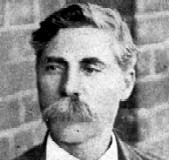 Floyd Allen
Murderer · USA · 1912
Floyd Allen (July 5, 1856 – March 28, 1913) was an American landowner and patri…
5 victims
Floyd Allen
Murderer · USA · 1912
Floyd Allen (July 5, 1856 – March 28, 1913) was an American landowner and patri…
5 victims
 De'Marquise Elkins
Homicide · USA · 2013
De'Marquise Elkins was a Georgia teenager who fatally shot a baby in a stroller…
1 victim
De'Marquise Elkins
Homicide · USA · 2013
De'Marquise Elkins was a Georgia teenager who fatally shot a baby in a stroller…
1 victim
 Glen Edward Rogers
Serial killer · USA · 1993
Glen Edward Rogers was a spree killer whose cross-country rampage in 1994-95 le…
70 victims
Glen Edward Rogers
Serial killer · USA · 1993
Glen Edward Rogers was a spree killer whose cross-country rampage in 1994-95 le…
70 victims
 Violette Nozière
Murderer · France · 1933
Violette Nozière was convicted of parricide in 1934 for poisoning her parents i…
1 victim
Violette Nozière
Murderer · France · 1933
Violette Nozière was convicted of parricide in 1934 for poisoning her parents i…
1 victim
- Gender
- male
- Country
- USA
- Location
- Lane County, Oregon, USA
- Date of birth
- January 10, 1968
- Age at first offence
- 20
- Characteristics
- rape, convicted rapist
- Victim profile
- Melissa Ann Meyer, 19
- Method of murder
- Strangulation
- Date(s) of murder
- May 30, 1988
- Years active
- 1988
- Date of arrest
- June 13, 1988
- Status
-
Sentenced to death
Resentenced to life in prison on July 10, 1989; sentenced to death on May 16, 1989
Case overview
Jason Wayne Rose was a state prisoner who appealed the denial of his 28 U.S.C. § 2254 petition. He challenged the denial of habeas relief after the district court ruled that his Fifth Amendment claim regarding his confession and re-enactment was unexhausted and procedurally barred, and that he validly waived his Ex Post Facto Clause objection to his sentence.
Timeline
- May 16, 1989 — Rose was sentenced to death.
- July 10, 1989 — Rose was resentenced to life in prison.
- April 20, 1989 — Rose was convicted of aggravated murder and robbery in the first degree.
- July 31, 1992 — A Lane County Circuit Court judge reviewed the resentencing agreement in the presence of the prosecutor, Rose, and his counsel, and questioned Rose about his understanding of accepting the “true life” sentence.
- January 7, 1993 — The Oregon Court of Appeals judgment became final.
- December 29, 1993 — Rose filed a petition for post-conviction relief in Marion County Circuit Court.
- 1999 — The Oregon Court of Appeals affirmed the denial of post-conviction relief without issuing an opinion (Rose v. Maass, 158 Or.App. 145, 972 P.2d 1233 (1999)).
- 2000 — The Oregon Supreme Court denied review (Rose v. Maass, 329 Or. 589, 994 P.2d 130 (2000)).
- March 2, 2000 — The Oregon Court of Appeals judgment became effective.
- July 31, 2000 — Rose filed a federal habeas petition.
- January 7, 1993 — The judgment of the Oregon Court of Appeals became final.
- AFFIRMED — The federal appeal concluded with the judgment affirmed.
People and roles
- Jason Wayne Rose — Defendant; state prisoner; petitioner in the federal habeas proceeding.
- Melissa Meyer — Murder victim; robbery and murder were confessed to and reenacted.
- Robert E. Jones — District Judge, Presiding.
- WALLACE — Senior Circuit Judge.
- GOULD — Circuit Judge.
- BEA — Circuit Judge.
- Prosecutor — Participated in resentencing agreement review and was present when the judge questioned Rose.
- Rose’s counsel — Assisted Rose in negotiating the resentencing agreement; represented Rose at resentencing.
Background
Following his arrest, Rose confessed to the robbery and murder of Melissa Meyer and re-enacted the crime for investigating officers. His videotaped re-enactment was admitted at trial.
Rose was convicted on April 20, 1989, of aggravated murder and robbery in the first degree. The jury sentenced him to death. On automatic and direct review, the Oregon Supreme Court affirmed his convictions but vacated his death sentence due to a jury instruction error in the penalty phase and remanded (State v. Rose, 311 Or. 274, 810 P.2d 839 (1991)).
The offence
Rose confessed to the robbery and murder of Melissa Meyer and re-enacted the crime for investigating officers.
Sentencing and resentencing agreement
To avoid the possibility that he would again receive the death penalty, Rose, with the assistance of counsel, negotiated an agreement with the state under which he would accept a sentence of life without the possibility of release or parole. The state refused Rose’s offer of life with the possibility of parole after 30 years, so Rose’s settlement choice to avoid the possibility of the death penalty was life without parole.
This “true life” sentence was not authorized under state law until an amendment to Oregon Revised Statutes § 163.105, effective after Rose was convicted but before his resentencing took place in 1992. The amendment became retroactively applicable because Rose was a “defendant sentenced to death after December 6, 1984” (Or. Rev.Stat. §§ 163.105, 163.150(5)(e) (1993)). Before the amendment, the only sentencing options for aggravated murder were death or life in prison with the possibility of parole after thirty years (Or. Rev. Stat. § 163.105 (1987)).
In State v. McDonnell, 329 Or. 375, 987 P.2d 486 (1999), the Oregon Supreme Court held that a defendant may waive an Ex Post Facto objection to the application of the revised statute, and that a court errs if it refuses such application despite a defendant’s waiver (Id. at 492-93).
On July 31, 1992, a Lane County Circuit Court judge reviewed the terms of the agreement in the presence of the prosecutor, Rose, and his counsel, and questioned Rose to ascertain whether he understood the nature and consequences of accepting the “true life” sentence. Rose expressly reserved his rights to appeal and to pursue post-conviction relief. The Oregon Court of Appeals affirmed without opinion (State v. Rose, 124 Or.App. 679, 865 P.2d 1341 (1993)), and Rose did not seek review by the Oregon Supreme Court. The judgment became final on January 7, 1993.
At resentencing, the judge questioned Rose as follows:
[M]y understanding is that you are willing to submit yourself to the sentence of life imprisonment without the possibility of release or parole as set out in ORS 163.105(1)(b), specifically acknowledging that the provisions of ORS 163.150 ... (5)(e) would apply, which say that the provisions of this section are procedural and shall apply to any defendant sentenced to death after December 6th, 1984. Is that correct, sir?
Post-conviction relief history
On December 29, 1993, Rose filed a petition for post-conviction relief in Marion County Circuit Court. He claimed, among other things:
- He was denied the effective assistance of trial and appellate counsel in violation of the Sixth and Fourteenth Amendments to the U.S. Constitution.
- His life sentence was unconstitutional under Article I, § 10 of the U.S. Constitution.
The court denied post-conviction relief, and the Oregon Court of Appeals affirmed without issuing an opinion (Rose v. Maass, 158 Or.App. 145, 972 P.2d 1233 (1999)). The Oregon Supreme Court denied review (Rose v. Maass, 329 Or. 589, 994 P.2d 130 (2000)). The judgment of the Oregon Court of Appeals became effective on March 2, 2000.
Federal habeas petition and appeal
On July 31, 2000, Rose filed a federal habeas petition that included his claim that his confession and re-enactment were unlawfully induced by a police officer in violation of the Fifth Amendment. He also asserted that his sentence of life without parole was unconstitutional because it was “brought into effect” after he had been convicted.
The district court held that Rose failed to exhaust his Fifth Amendment claim in the state courts and waived any Ex Post Facto objection to his sentence. The Ninth Circuit reviewed de novo the district court’s denial of Rose’s habeas petition (Peterson v. Lampert, 319 F.3d 1153, 1155 (9th Cir.2003) (en banc)). The court stated that habeas relief is not allowed unless the state court adjudication resulted in a decision that was “contrary to, or involved an unreasonable application of, clearly established Federal law, as determined by the Supreme Court of the United States,” or was “based on an unreasonable determination of the facts in light of the evidence presented in the State court proceeding” (28 U.S.C. § 2254(d)).
Arguments and rulings
Fifth Amendment confession and re-enactment claim
Rose argued that his confession and re-enactment violated his rights under the Fifth and Fourteenth Amendments. The district court found the argument was waived because Rose did not raise this claim on direct appeal or in his state habeas petition.
Pursuant to 28 U.S.C. § 2254(b)(1)(A), the federal court could not consider the merits of Rose’s Fifth Amendment claim unless he exhausted all available state court remedies. The exhaustion requirement required Rose to fairly present the claim so state courts had the opportunity to pass upon and correct alleged violations (Baldwin v. Reese, 541 U.S. 27, 124 S.Ct. 1347, 1349, 158 L.Ed.2d 64 (2004)).
Rose conceded he never claimed on state direct appeal or in his petition for review in the Oregon Supreme Court that his re-enactment and confession were induced in violation of the Fifth Amendment, and that he did not assert the claim in his state post-conviction petition.
He argued that he “indirectly” exhausted the Fifth Amendment claim by alleging ineffective assistance of counsel under the Sixth and Fourteenth Amendments, including:
- trial counsel’s failure to argue properly the inadmissibility of his confession and re-enactment;
- appellate counsel’s failure to assign error to the trial court’s adverse ruling on his motion to suppress.
The district court characterized Rose’s argument as an attempt to “`cut and paste' two separate and distinct claims into one viable claim for relief,” and concluded that “ '[s]uch a reconstruction is not legally defensible.' ”
The Ninth Circuit cited Peterson v. Lampert (319 F.3d at 1154) and described how ineffective assistance claims did not fairly present federal issues when strategic choices led to not presenting the federal issue directly. The court also cited standards for exhaustion specificity, including:
- Duncan v. Henry, 513 U.S. 364, 366 (1995) (“[M]ere similarity of claims is insufficient to exhaust”);
- Lyons v. Crawford, 232 F.3d 666, 668 (9th Cir.2000), as modified by 247 F.3d 904 (9th Cir.2001) (“[A] petitioner must make the federal basis of the claim explicit either by citing federal law or the decisions of federal courts, even if the federal basis is `self-evident' or the underlying claim would be decided under state law on the same considerations that would control resolution of the claim on federal grounds.”);
- Johnson v. Zenon, 88 F.3d 828, 830 (1996) (“If a petitioner fails to alert the state court to the fact that he is raising a federal constitutional claim, his federal claim is unexhausted regardless of its similarity to the issues raised in state court”).
The court further explained that petitioners must articulate the substance of alleged violations with particularity (citing Kelly v. Small, 315 F.3d 1063 (9th Cir.2003)). The court reasoned that Rose’s Fifth Amendment claim was distinct from his ineffective assistance claims and should have been separately and specifically presented.
The Ninth Circuit also described the Strickland v. Washington standard for ineffective assistance, noting that Sixth Amendment claims could be rejected without deciding the Fifth Amendment issue. It stated that the Circuit Court in the post-conviction proceedings limited its findings to counsel adequacy and that it did not directly hold Rose’s Fifth Amendment rights were not violated. It also noted that the Circuit Court found the trial court had held a voluntariness hearing and found Rose’s confession and re-enactment were “freely and voluntarily made,” and that counsel’s conclusion there was no basis for a motion to suppress was a reasonable exercise of professional judgment. The Ninth Circuit then held that Rose did not fairly present the Fifth Amendment claim to the state courts.
It also agreed the district court held the claim was procedurally barred by applicable state rules and that Rose did not contest that aspect of the opinion. The Ninth Circuit concluded the district court did not err in rejecting the Fifth Amendment claim.
Ex Post Facto Clause argument about sentencing
Rose contended his sentence violated the Ex Post Facto Clause because the “true life” sentence he agreed to was not authorized by state law at the time he committed the offenses. He argued he did not knowingly waive the claim because he did not understand that the plea agreement at resentencing “turned upon acceptance of a sentence which was not authorized for his crime of conviction.”
The state court found that Rose “affirmatively stipulated to the imposition of an extra-legal sentence in order to avoid a potential death sentence.” The Ninth Circuit reviewed this finding under 28 U.S.C. § 2254(d)(2), which required showing an unreasonable determination of facts. It held Rose had not shown the state court’s decision involved an unreasonable determination of facts.
The Ninth Circuit cited the resentencing judge’s careful questioning of Rose and stated that Rose had been advised he was agreeing to life imprisonment without the possibility of release or parole and that his sentence was applied pursuant to ORS 163.150(5)(e), which authorized retroactive application of ORS 163.105(1)(b).
The Ninth Circuit also stated that Rose received a benefit from the resentencing agreement: avoidance of a possible death sentence. It reasoned that it was “strange indeed” to allow an Ex Post Facto challenge to a sentence he affirmatively chose as the more favorable option. It stated that the affirmative choice constituted a waiver of the Ex Post Facto claim, citing United States v. Gilcrist, 106 F.3d 297, 302 (9th Cir.1997).
The Ninth Circuit then addressed Rose’s argument about misunderstanding and said that did not render the choice unknowing or involuntary. It cited United States v. Navarro-Botello, 912 F.2d 318, 320-21 (9th Cir.1990), rejecting the argument that a plea was involuntary because it was “logically impossible to make a knowing and voluntary waiver of unknown rights.” It also stated that it had not held that an Ex Post Facto claim cannot be waived unless a defendant specifically understands he is waiving that particular right.
Finally, the Ninth Circuit stated that Rose did not preserve his Ex Post Facto objection by reserving his right to appeal his sentence and seek post-conviction relief, and distinguished his situation from United States v. Groves, 369 F.3d 1178, 1182 (10th Cir.2004), which concerned challenging a sentence after a guilty plea with no specific sentence agreement and reservation of the right to appeal an illegal sentence.
Outcome
The Ninth Circuit affirmed the district court’s denial of habeas relief and stated:
- AFFIRMED.


Spotted an error, or have more information about this case?