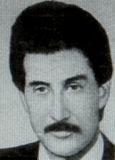
Scott Robin Roston
Murderer Brian Kevin Rosenfeld
Murderer · USA · 1985
Brian Kevin Rosenfeld Brian Kevin Rosenfeld was sentenced to three concurrent l…
23 victims
Brian Kevin Rosenfeld
Murderer · USA · 1985
Brian Kevin Rosenfeld Brian Kevin Rosenfeld was sentenced to three concurrent l…
23 victims
 Yahweh ben Yahweh
Murderer · USA · 1980
Yahweh ben Yahweh was born and legally named Hulon Mitchell Jr. (October 27, 19…
23 victims
Yahweh ben Yahweh
Murderer · USA · 1980
Yahweh ben Yahweh was born and legally named Hulon Mitchell Jr. (October 27, 19…
23 victims
 Russell Ellwood
Murderer · USA · 1991
Russell Ellwood was a former taxi driver. Authorities suspected him of killing…
20 victims
Russell Ellwood
Murderer · USA · 1991
Russell Ellwood was a former taxi driver. Authorities suspected him of killing…
20 victims
 Robert Martines Perez
Murderer · USA · 1994
Name: Robert Martines Perez · Other name used in proceedings: Robert Martinez P…
15 victims
Robert Martines Perez
Murderer · USA · 1994
Name: Robert Martines Perez · Other name used in proceedings: Robert Martinez P…
15 victims
 William Hepper
Murderer · United Kingdom · 1954
William Sanchez de Pina Hepper was a 62-year-old painter. He had a studio in Br…
1 victim
William Hepper
Murderer · United Kingdom · 1954
William Sanchez de Pina Hepper was a 62-year-old painter. He had a studio in Br…
1 victim
 Christian Stephen Fuhr
Murderer · USA · 2001
Christian Stephen Fuhr was sentenced to death on August 27, 2002. · November 28…
2 victims
Christian Stephen Fuhr
Murderer · USA · 2001
Christian Stephen Fuhr was sentenced to death on August 27, 2002. · November 28…
2 victims
 William Henry Hance
Serial killer · USA · 1977
William Henry Hance was executed by electrocution in Georgia on March 31, 1994.…
3 victims
William Henry Hance
Serial killer · USA · 1977
William Henry Hance was executed by electrocution in Georgia on March 31, 1994.…
3 victims
 Leslie Demeniuk
Murderer · USA · 2001
Leslie Demeniuk was a mother accused of murdering her twin 4-year-old sons, Jam…
2 victims
Leslie Demeniuk
Murderer · USA · 2001
Leslie Demeniuk was a mother accused of murdering her twin 4-year-old sons, Jam…
2 victims
- Gender
- male
- Country
- USA
- Location
- In the sea, California, USA
- Date of birth
- 1951
- Age at first offence
- 37
- Characteristics
- domestic violence, murder for hire
- Victim profile
- Karen Roston, 26 ( his wife of nine days )
- Method of murder
- Drowning
- Date(s) of murder
- February 13, 1988
- Years active
- 1988
- Date of arrest
- —
- Status
-
Conviction affirmed; sentence vacated; cause remanded for resentencing; resentenced to 33 years and 9 months in prison in November 1994
Overview
Scott Robin Roston was convicted of second-degree murder on the high seas after his bride, Karen Roston, went overboard and died during the last night of her honeymoon aboard the cruise ship Stardancer. The conviction was affirmed on appeal, but the original sentence was vacated and the case was remanded for resentencing. In November 1994, Roston was resentenced to a term of thirty-three years, nine months.
Timeline
- 3 o'clock A.M., Saturday, February 13, 1988 — Scott Robin Roston informed authorities aboard the cruise ship Stardancer that his bride of nine days, Karen Roston, had gone overboard.
- Saturday afternoon, February 13, 1988 — The U.S. Coast Guard found Karen Roston’s body in Pacific waters thirty miles southwest of San Diego.
- Saturday, February 13, 1988 (after the sea search) — Police arrested Roston in Long Beach when the Stardancer sailed back to the Port of Long Beach; he was held without bail at the Federal detention facilities on Terminal Island.
- Late February 1989 — Roston’s second-degree murder trial began.
- Late February 1989 (after trial) — United States District Judge James Ideman sentenced Roston to life in prison without parole.
- November 1994 — Roston was resentenced to a term of thirty-three years, nine months.
- February 26, 1993 — The United States Court of Appeals for the Ninth Circuit issued an opinion in United States of America v. Scott Robin Roston, affirming the conviction and vacating the sentence.
- 1999 — Roston appealed his conviction for the third time, arguing that the 405-month sentence imposed during the first appeal, based on a seven-level upward departure from the Sentencing Guidelines, is unwarranted.
The offence
During the honeymoon aboard the cruise ship Stardancer, Karen Roston went overboard and died. On appeal, the court stated that the prosecution presented evidence which tended to show that Roston strangled his wife into unconsciousness and then threw her overboard. Her body was kept afloat by air trapped in her clothing, and medical testimony supported that she was unconscious when she went overboard; she subsequently died from drowning. Evidence of hemorrhage in her neck and eyes and warping of her neckbones was presented as evidence of manual strangulation. Material from the rubberized jogging track embedded in her clothing was presented as suggesting she had been pressed to the deck with considerable force. Parts of her earrings were found on the deck eleven and a half feet from the railing, together with strands of her strawberry blond hair that appeared to have been yanked from her head. Roston’s face showed triangular gouges and a four-inch scratch when he reported that his wife had gone overboard; he told the crew that he had hit his head on a gangway control box, but no blood, hair or marks were found on the box, and photographs showed the box had no sharp protrusions that could have caused the facial injuries.
Background
Scott Robin Roston had married Karen Waltz Roston shortly before the incident. Karen Waltz Roston was described as being nine days into the honeymoon at the time of her death and was reported to be five feet three inches tall. The court described the incident as occurring on the last night of her honeymoon aboard Stardancer.
Roston and his parents emigrated to Israel, where he opened an unlicensed chiropractic clinic. In late 1979, he spent more than two months in jail and in a mental hospital where he claimed to have been drugged and brutalized. He claimed that after he refused to be bribed into marrying a neighbor’s niece, he was arrested on a false charge at the behest of the “Israeli Mafia” and was accused of having beaten up and robbed a member of the neighbor’s family. In March 1987, Palm Beach County, Florida sheriffs received a report from Roston’s parents about an attempt to kidnap Roston outside a shopping mall. Roston claimed that two Israelis in a white van grabbed him and proclaimed in Hebrew, “Israel wants you.” He claimed he broke free and shot one of the would-be captors before speeding away in his Toyota. He asserted that Israeli agents killed his “beloved wife” because he “had published an expose last year of the countless crimes of [their] government.” The prisoner referred to his book entitled Nightmare in Israel, which he paid Vantage Press to publish in early 1987; testimony later indicated that only one of the thousand copies printed had been sold.
Investigation
Several passengers noticed tension between Roston and Karen during the cruise. A vacationer who shared a table with them testified that Roston was angry with his new wife because she ate sweets and did not know which eating utensils to choose from the “complex” silverware settings. Roston was also seen quarreling with a woman on deck about forty-five minutes to one hour before he reported that his wife had gone overboard.
Roston told inconsistent stories about how Karen went overboard. He first said that she was blown off Stardancer’s jogging track. Later, he said she fell overboard and that he had tried to grab her without success. The appeal described the evidence as including the conclusion that the prosecution tended to show Roston strangled his wife into unconsciousness before throwing her overboard.
After Roston reported Karen missing, he was questioned at length by Dr. Young, the ship’s doctor. During the questioning, other people occasionally entered and left. The questioning took place in the captain’s cabin with the door open. With Roston’s permission, the interrogation was audiotaped. When the questioning ended, Roston was put in an unoccupied cabin under guard. The appeal stated that he was never advised of his Miranda rights.
The Coast Guard found Karen Roston’s body in Pacific waters thirty miles southwest of San Diego on Saturday afternoon, February 13. The body was kept afloat by air trapped in her clothing. Medical examiners testified that if she had attempted to swim after entering the water, the air would have been forced out of her clothes and that she therefore must have been unconscious when she went overboard; she subsequently died from drowning. Signs of hemorrhage in her neck and eyes and warping of her neckbones were described as evidence of manual strangulation. Material from the rubberized jogging track was embedded in her clothing, and parts of her earrings were found on the deck eleven and a half feet from the railing along with strands of her strawberry blond hair that appeared to have been yanked from her head.
Arrest
Scott Roston was arrested in Long Beach by federal authorities on suspicion of murder and was held without bail at the Terminal Island detention center. The appeal described that police arrested him in Long Beach after the Stardancer sailed back to the Port of Long Beach and that he was held without bail while the investigation continued.
Trial
Roston was indicted for second-degree murder and convicted. The trial began in late February 1989. The defense did not overcome the prosecution’s medical evidence or the testimony of fellow passengers about shipboard squabbles. The defense introduced records showing that there were two Israeli nationals on the ship when Karen went overboard.
In its rebuttal case, the prosecution surprised defense counsel by bringing to the stand Maurice Haziza, one of the two Israeli passengers. Haziza testified that he was not a secret agent for the Israeli government but a wedding photographer on vacation; he and his traveling companion, Emil Yaron, visited Disneyland and Universal Studios before embarking on the Mexico cruise to complete their vacation after photographing the wedding of a friend. The jury found Roston guilty of second-degree murder on the high seas.
The appeal described Roston as not testifying at his trial. It also stated that he argued the Israelis killed his wife and threw her overboard.
Sentencing
After conviction, United States District Judge James Ideman sentenced Roston to life in prison without parole. The judge observed: “This is one of the cruelest crimes this court has ever seen. It is this court's hope that this defendant never be released.”
At the sentencing hearing, the court observed that forensic evidence collected from the ship’s upper deck and the condition of Mrs. Roston’s body showed that Mrs. Roston was severely beaten and strangled before her body was thrown overboard. The judge also observed: “he had never seen a case in which a honeymoon ended in such a chilling and heartless manner.”
On appeal, the Ninth Circuit affirmed the conviction but vacated the sentence and remanded for resentencing. The appellate opinion noted that by imposing a life sentence, the trial court had applied the penalty required under the Federal Sentencing Guidelines for first-degree murder even though the defendant was only convicted of murder in the second degree.
Appeals
Appeal in the Ninth Circuit
Roston’s appeal contended that the evidence was insufficient to support his conviction and that the district court erred in refusing a voluntary manslaughter instruction, admitting into evidence a statement Roston made to the ship’s doctor without a Miranda warning, denying a pretrial request for substitution of counsel, and departing upward in imposing his sentence. The Ninth Circuit stated: “Conviction AFFIRMED. Sentence VACATED. Cause REMANDED to the district court for resentencing.”
The court held that the evidence was sufficient to support second-degree murder. It stated that malice could be inferred from the circumstances showing a wanton and depraved spirit and that there was evidence of a substantial struggle, including injury consistent with smashing against the deck, hemorrhaging and bone warping in the neck indicating strangulation, and additional evidence including remnants of hair and parts of earrings found on the deck 11 1/2 feet from the railing.
Regarding the voluntary manslaughter instruction, the court held that the district court did not commit an abuse of discretion in refusing to give a lesser-included offense instruction. It concluded that disagreements over sweets and silverware were insufficient provocation for a reasonable and ordinary person to kill. It further concluded that even though physical altercation was evidenced, there was no evidence that “the scratching of Roston's face provoked the altercation,” and therefore adequate provocation was not established for voluntary manslaughter.
Regarding the Miranda warning issue, the court rejected Roston’s argument. It stated that the doctor who questioned Roston aboard ship was asked to do so by the captain, and both the captain and doctor acted on their own initiative without government involvement, and therefore no Miranda warning was required.
Regarding the refusal to appoint new counsel, the court held that it did not err. It described that the motion for substitution was not timely, that the court’s inquiry was extensive, and that breakdown in communication was attributed to Roston’s own refusal to communicate with his attorney and his distrust based on alleged mistreatment by previous attorneys.
Regarding the sentencing departure, the Ninth Circuit determined that the district court erred in departing upward to impose the penalty required for first-degree murder even though the conviction was second-degree murder. The court stated that malice was an element of second-degree murder and that intentional killing standing alone could not be used to depart upward from the base offense level. It found that the district court had authority to depart under U.S.S.G. § 5K2.8 based on findings that Roston cruelly killed his wife of nine days, physically assaulted her, beat her, choked her into unconsciousness, and threw her body into the sea knowing she was certain to perish. However, it faulted the district court for failing to explain the extraordinary departure in terms of the structure, standards, and policies of the Guidelines and for failing to allocate the extent of departure between sections 5K2.1 and 5K2.8.
Third appeal
Roston appealed his conviction for the third time in 1999. The appeal argued that the 405-month sentence imposed during the first appeal, based on a seven-level upward departure from the Sentencing Guidelines, was unwarranted. The court disagreed.
Other details
Reported statements and quotations
Roston asserted that Israeli agents had killed his “beloved wife” because he “had published an expose last year of the countless crimes of [their] government.” He also told the Palm Beach Post: “Israel took its best shot,” and “and they blew it.”
Ship and renaming details
The Stardancer was Sundance Cruises’ only ship. Sundance merged with Eastern Cruise Line to form Admiral Cruises. It then became the Royal Caribbean Viking Serenade when Admiral was merged with them. In 2002 it was renamed Island Escape and operated 7-Day Mediterranean cruises. The Stardancer was described as 40132 gross tons and 635 feet long, with a maximum passenger capacity of 2560.
Passengers and witnesses mentioned
Dr. Young was the ship’s doctor who questioned Roston in the captain’s cabin. Maurice Haziza testified as one of the two Israeli passengers and described himself as a wedding photographer on vacation; he traveled with Emil Yaron. A passenger shared a table with Roston and Karen and testified about tension related to sweets and the “complex” silverware settings. An assistant chief deputy in the Cook County, Ill., Sheriff’s Department observed part of an earring and some hair and reported it to ship officials.
Legal posture at the appellate stage
The Ninth Circuit stated that Roston was accused of killing his wife, was indicted for second-degree murder, and convicted. It stated that Roston argued the evidence was insufficient and that the district court committed specified errors, and then issued its disposition affirming the conviction and vacating the sentence for resentencing. A concurring opinion by BOOCHEVER, Circuit Judge, addressed the standard adopted by the circuit for provocation justifying a voluntary manslaughter instruction, stating that the standard requiring provocation such as would “arouse a reasonable and ordinary person to kill someone” was “impossibly high.”


Spotted an error, or have more information about this case?