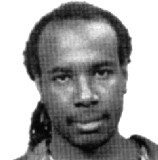
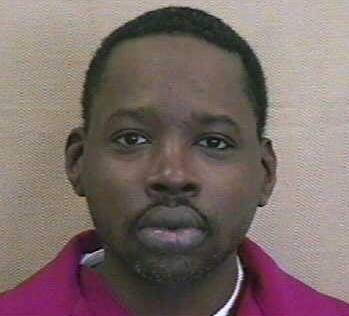
Gregory Rouster
Murderer Brian Kevin Rosenfeld
Murderer · USA · 1985
Brian Kevin Rosenfeld Brian Kevin Rosenfeld was sentenced to three concurrent l…
23 victims
Brian Kevin Rosenfeld
Murderer · USA · 1985
Brian Kevin Rosenfeld Brian Kevin Rosenfeld was sentenced to three concurrent l…
23 victims
 Yahweh ben Yahweh
Murderer · USA · 1980
Yahweh ben Yahweh was born and legally named Hulon Mitchell Jr. (October 27, 19…
23 victims
Yahweh ben Yahweh
Murderer · USA · 1980
Yahweh ben Yahweh was born and legally named Hulon Mitchell Jr. (October 27, 19…
23 victims
 Russell Ellwood
Murderer · USA · 1991
Russell Ellwood was a former taxi driver. Authorities suspected him of killing…
20 victims
Russell Ellwood
Murderer · USA · 1991
Russell Ellwood was a former taxi driver. Authorities suspected him of killing…
20 victims
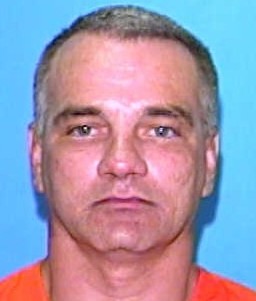 Paul Christopher Hildwin
Murderer · USA · 1985
Name: Paul Christopher Hildwin · Date of birth: 03/22/60 · Jurisdiction: Fifth…
1 victim
Paul Christopher Hildwin
Murderer · USA · 1985
Name: Paul Christopher Hildwin · Date of birth: 03/22/60 · Jurisdiction: Fifth…
1 victim
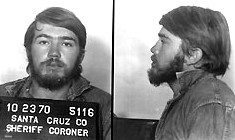 John Linley Frazier
Mass murderer · USA · 1970
John Linley Frazier was from Soquel and was later arrested in connection with t…
5 victims
John Linley Frazier
Mass murderer · USA · 1970
John Linley Frazier was from Soquel and was later arrested in connection with t…
5 victims
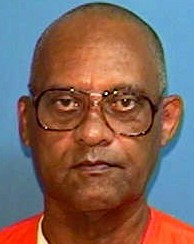 Linroy Bottoson
Murderer · USA · 1979
Linroy Bottoson was the appellant, petitioner, and convict in multiple court pr…
1 victim
Linroy Bottoson
Murderer · USA · 1979
Linroy Bottoson was the appellant, petitioner, and convict in multiple court pr…
1 victim
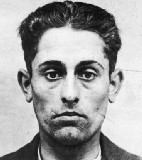 Tony Mancini
Murderer · United Kingdom · 1934
Tony Mancini was the resident of the house at number 52 Kemp Street in Brighton…
1 victim
Tony Mancini
Murderer · United Kingdom · 1934
Tony Mancini was the resident of the house at number 52 Kemp Street in Brighton…
1 victim
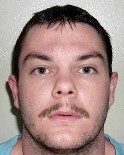 John Yancey Schmitt
Murderer · USA · 1999
John Yancey Schmitt was convicted of capital murder and related non-capital off…
1 victim
John Yancey Schmitt
Murderer · USA · 1999
John Yancey Schmitt was convicted of capital murder and related non-capital off…
1 victim
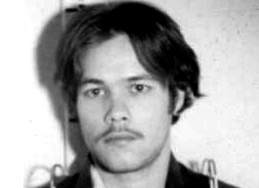 Randall McKinney
Murderer · USA · 1981
Randall Lynn McKinney Randall Lynn McKinney was 41 years old and was from Tular…
1 victim
Randall McKinney
Murderer · USA · 1981
Randall Lynn McKinney Randall Lynn McKinney was 41 years old and was from Tular…
1 victim
- Gender
- male
- Country
- USA
- Location
- Lake County, Indiana, USA
- Date of birth
- February 7, 1968
- Age at first offence
- 18
- Characteristics
- robbery
- Victim profile
- John Rease, 74, and his wife Henrietta Rease, 59 (ex-foster parents of Rouster)
- Method of murder
- Shooting
- Date(s) of murder
- August 12, 1986
- Years active
- 1986
- Date of arrest
- —
- Status
-
Sentenced to death
Sentenced to death on March 23, 1987.
Background
John and Henrietta Rease, an elderly couple who lived in Gary, Indiana, cared for, fed, and housed foster children at their home at 2430 Jennings Street in exchange for $160 per month per child. Gregory Rouster lived with the Reases from November 1985 until his eighteenth birthday on February 7, 1986.
The offence
On August 12, 1986, the Reases were robbed and shot to death in their home. The State charged Rouster by information with two counts of felony murder, and the State sought the death penalty against Rouster pursuant to Indiana’s death penalty statute.
Investigation
Lake County crime technician Ronald Lach searched the Rease house for evidence on August 12, 1986. Lach found a live .30 caliber cartridge case on the floor outside of the door to the Reases’ bedroom. Lach opened the door to the bedroom and saw John Rease lying on the floor, with his knees bent, and saw Henrietta Rease wedged between the bed and dresser with her head resting on an open drawer of the nightstand. Lach testified that the room was “ransacked” and that the two bodies were covered with clothes from the dresser drawers. Lach found live .30 caliber ammunition in the doorway going into the bedroom and two live .30 caliber rounds next to John Rease’s leg. Lach found two fired .32 caliber cartridge cases and two or three live rounds of .22 caliber bullets lying on the floor of the bedroom.
Lach found two boxes of ammunition on the bed’s headboard: Remington .32 caliber Smith & Wesson live rounds and Western X .25 caliber automatic live rounds. Lach found two other boxes of ammunition on the nightstand: Winchester Super Western .38 caliber live rounds and Remington .32 caliber Smith & Wesson live rounds. Lach testified that he found a wad of money behind the corner of the dresser and coins lying on the floor.
Lach also testified that he saw several apparent bullet holes in the Rease house: one in the bedroom wall, one on the nightstand, and one on the side of the refrigerator. Lach found a .22 caliber weapon with three fired rounds in the cylinder and a B.B. or pellet pistol in the house.
Lach testified that in the early morning hours of August 13, 1986, he went to the Gary City jail to observe Rouster. Lach noticed red drops on the back of Rouster’s white vest and t-shirt, and Lach found several red drops on Rouster’s shorts, white tube socks, and gym shoes.
Kimberly Epperson, a forensic serologist employed by the Indiana State Police Department, testified that the blood found on Rouster’s vest, socks, and gym shoes was consistent with the blood type of John Rease, but not with that of Henrietta Rease, Newsome, Taylor, Williams, or Rouster. Epperson also testified that the blood found on Rouster’s t-shirt and shorts was consistent with the blood type of either Henrietta or John Rease or with that of Rouster, but not consistent with the blood type of Newsome, Taylor, or Williams.
Lach testified that he returned to the Rease house on August 19, 1986, and found two more rounds of .22 caliber live ammunition and three fired .32 caliber cartridge cases in the bedroom. Lach searched the weeds behind the house and found a .32 caliber revolver with one fired .32 caliber cartridge case in the cylinder.
Sarvind Kakodar, a pathologist for the Lake County Coroner’s Office, testified that he performed the Reases’ autopsies. Kakodar testified that there was a gunshot entrance wound above John Rease’s collarbone and that he recovered the bullet that caused this wound from John Rease’s back. Kakodar testified that this wound damaged John Rease’s lung, and that John Rease’s cause of death was “due to a laceration of the right lung.”
Kakodar testified that Henrietta Rease had three bullet entrance wounds: one that entered the skull cavity through the right eye, one at the “lateral end of the left eyelobe,” and one in the abdominal area. Kakodar testified that Henrietta Rease’s cause of death was “due to laceration of the brain due to two gunshot wounds of the head.”
Jay Gauthier, a firearms examiner for the Lake County Crime Lab, testified that the bullet recovered from John Rease’s back was fired by the .32 caliber gun that Lach found behind the Rease house. Gauthier testified that the same gun fired the bullet recovered from Henrietta Rease’s abdomen. Gauthier testified that one of the bullets recovered from Henrietta Rease’s head may have come from the .22 caliber gun that Lach found in the Rease house.
Arrest
Officer Rita Dorsey of the Gary Police Department testified that she and her partner were dispatched because of reports of gunfire in the area. Officer Dorsey saw two black youths—a male and a female—and asked them where the disturbance was. The young woman approached the police car and told Officer Dorsey that there was no disturbance at that location and that maybe there was a disturbance at a different house down the street. After questioning one of the Reases’ neighbors, Officer Dorsey heard a gunshot and returned to their patrol car, then drove towards the direction of the gunshot. Bryant flagged down the officers and took them to the Rease house. Officer Dorsey and her partner entered the Rease house and found the Reases’ bodies on the floor of a bedroom.
Gary bus driver Donna Thomas testified that at 8:05 p.m. on August 12, 1986, two young women and two young men got onto her bus at 21st Avenue and Broadway. Thomas identified Rouster as one of the young men and Newsome as one of the young women. Thomas testified that Rouster wore a white shirt and a black hat and that Rouster had a bottle wrapped in a paper bag with him. Thomas testified that Rouster smelled strongly of “intoxicants.”
Thomas testified that at around 8:15 p.m., the Four departed the bus at 21st Avenue and Hendricks. Thomas testified that shortly after 9:20 p.m., Rouster and Newsome ran across 21st Avenue and then boarded her bus at 21st Avenue and Chase. Thomas testified that they paid their bus fare with change and asked her if they “could ride around.” Thomas testified that as the bus crossed 25th Avenue and Chase, she saw an Indiana State Police car and noticed that Rouster and Newsome crouched down in their seats. Thomas testified that Rouster and Newsome exited the bus at 21st Avenue and Broadway, where another bus whose route went down Broadway to 41st Avenue was idling.
Indiana State Trooper Rodney Means testified that on the evening of August 12, 1986, he saw a young man and a young woman running towards a bus on 21st Avenue and identified them later as Rouster and Newsome. Means saw them board the bus at 21st Avenue and Broadway. Because Rouster and Newsome matched the description of two of the youths involved in the shootings at the Rease house, Means followed the bus. When Rouster and Newsome got off the bus at 41st Avenue and Broadway, Means approached and questioned them. Means testified that Rouster and Newsome told inconsistent stories about where they boarded the bus and that Newsome told Means not to listen to Rouster because he was high and had been drinking. Means testified that Rouster appeared intoxicated and that his eyes were bloodshot. Means testified that he asked Rouster what the bulge in his shirt pocket was, and Rouster answered “bullets” or “ammunition.” Means testified that Rouster handed about twenty bullets to Means. Means noticed red spots that looked like blood stains on the back of Rouster’s white shirt.
Indiana State Trooper Al Brown testified that on August 12, 1986, he went to 41st Avenue and Broadway to assist Means. Brown arrived immediately after Rouster handed the bullets to Means. Brown examined the bullets and determined they were .30 caliber bullets. Brown testified that he read Rouster and Newsome their Miranda rights and arrested them. Brown also testified that he noticed “red splotches” on the back of Rouster’s white shirt. Brown transported Newsome to the Gary Police Department, and Means transported Rouster to the Gary Police Department.
At the Police Department, Brown searched Newsome’s handbag and discovered that it contained, among other things, several loose coins.
Lake County Police Officer Timothy Lukasik testified that at approximately 9:45 p.m. on August 12, 1986, he began to search the area around the Rease house to identify possible suspects. Lukasik testified that in front of 2530 Chase Street, about three blocks away from the Rease house, he saw a young man that matched Williams’s description. After apprehending the suspect, Lukasik found a black pouch on him and took him to the Gary Police Department. Lukasik testified that the black pouch contained a gold watch, $232.00, a billfold, a J.C. Penny credit card, and .30 caliber ammunition. In court, Lukasik identified the suspect as Williams.
Trial
People involved
The trial was a joint jury trial with co-defendants Darnell Williams, Theresa Newsome, and Edwin Taylor was involved as a witness. The jury also heard evidence that Newsome was Rouster’s girlfriend and Toney was Williams’ girlfriend, and that Newsome and Williams were siblings.
Charges and plea
Rouster entered a plea of not guilty on both counts. The trial began on February 10, 1987. Rouster’s counsel waived opening statement.
Witness testimony (guilt phase)
Jack Baumer, the child welfare caseworker who placed Rouster with the Reases, testified that he saw Rouster at a drug store in Gary, Indiana on August 12, 1986, and that Rouster asked Baumer if the Reases received a clothing allowance on his behalf during the time Rouster lived with them. Baumer responded that the Reases received a clothing allowance of about five to six dollars per month, and Rouster told him he had never received any clothing from the Reases. Baumer testified that Rouster ended the conversation by saying that he was going to get his money from the Reases.
Derrick Bryant, a seventeen-year-old foster child who lived with the Reases, testified that on August 12, 1986, he was in the living room of the Rease house. Through a window in the living room, Bryant saw Rouster, Williams, Newsome, and Kim Toney (“Four”) walking towards the Rease house at around 9:00 p.m. Bryant testified that while walking toward the Rease house, Rouster was drinking from a 40-ounce bottle of Private Label malt liquor. Bryant testified that the Four entered the Rease house and sat down in the living room, and that Rouster and Henrietta Rease went into Rouster’s former bedroom to talk.
Bryant testified that while he was in the living room, he heard Rouster state that Baumer had told him that he was supposed to get some money from the Reases. Bryant testified that Henrietta Rease responded that she did not know anything about that money. Bryant testified that Rouster and Henrietta Rease returned to the living room, and Bryant then left the living room and went to a room at the back of the house. From the back room, Bryant heard Henrietta Rease ask the Four to leave the house. Bryant testified that he then heard Williams say, “I won’t let her, she’s doing nothing but gypping you out of the money.” Bryant testified that he heard a gunshot and someone running through the backyard. Bryant then hid in the attic. From the attic, Bryant heard a conversation outside between Williams, Rouster, and Edwin Taylor. Bryant testified that Taylor said, “you all have guns, you all go take the money.” Bryant testified that Rouster asked Taylor where the Reases kept their money, and Taylor responded, “it’s on the dresser.” Bryant testified that he heard Rouster say, “let’s go rob them.”
Bryant testified that he ran downstairs to warn the Reases, but hid behind a stairway when he saw Rouster coming into the Rease house through the front door. Bryant testified that he heard Rouster tell Henrietta Rease, “I know how to act now and I don’t need us to go through this because I got a gun and you got a gun.” Bryant testified that he heard Williams tell Henrietta Rease to get down on the floor and heard Rouster demand to be told where the money was. Bryant testified that he then heard Rouster say, “bring both of them back here,” and he heard a noise that sounded like someone falling into a wall. Bryant testified that Williams said, “it’s your time.” Bryant testified that he heard Rouster say, “waste them.”
Bryant testified that Henrietta Rease asked Rouster, “Greg, why are you doing this?” to which Rouster responded, “my name ain’t Greg.” Bryant testified that he heard a gunshot, followed by someone entering the Rease house through a side-door in the kitchen. Bryant testified that the next noise sounded like money falling on the kitchen floor. Bryant testified that he then heard more gunshots coming from inside the house, ran out of the back door, flagged down a police car, and told the police to come to the Rease house. Bryant testified that he knew the Reases kept at least one pellet gun in the house, and that Taylor told him that Henrietta Rease kept a gun by her bed.
Fourteen-year-old Eugene Powell testified that at around 8:30 or 9:00 p.m. on August 12, 1986, he was standing outside his house at 2423 Jennings Street (across the street and one house over from the Rease House) with friends Jamal Pope, Demond Ligon, Jimmy Gray, and others (“Group”). Powell testified he saw Rouster, Newsome, a young man, and a young woman walking towards the Rease House. Powell testified he saw Rouster and Newsome enter the Rease house while the other two stayed outside. Powell testified that the Group walked to the corner of Jennings Street and 25th Avenue, turned around, and walked down Jennings Street towards the Rease house. Powell testified that when they were across the street from the house on 2462 Jennings Street, he heard a noise that sounded like two firecrackers coming from inside the Rease house.
Powell testified that when the Group reached Gray’s house directly across the street from the Rease house, he saw the young man he did not know looking for something on the ground in front of the Rease house, using a cigarette lighter for illumination. Powell testified that he then saw Taylor running down Jennings Street and that the Group moved to Powell’s front yard. Powell testified he saw Rouster exit the Rease house and enter the Reases’ garage with the young man. Powell testified that he and Ligon began walking up the driveway but turned back when they heard Rouster say, “who’s up in here, we’ll shoot.” Powell testified that the Group walked away again, and when they were two houses down from Powell’s, Powell heard three more firecracker sounds. Powell testified that he then saw the shadow of a person in the living room of the Rease house. After hearing two more firecracker sounds, Powell, Pope, and Ligon went to Ligon’s house to call Powell’s father. Powell testified that a few minutes later he and Pope started walking towards Powell’s house.
Powell testified that he saw Rouster and Newsome in the Reases’ driveway and heard Rouster ask Newsome if she still loved him. Powell testified that while running he heard Rouster tell Newsome, “I killed the motherfuckers.” Powell testified that Pope and he got into Powell’s father’s car and saw a police car pull up where Rouster and Newsome were talking, and saw Rouster pointing down the street. Powell testified that as the car drove away, he heard another firecracker sound while Rouster and Newsome were still in the driveway.
Pope, Ligon, and Gray corroborated Powell’s testimony. Ligon testified Rouster wore a white shirt and a black hat that night, and Gray testified he saw Rouster drinking from a 40-ounce bottle of Private Label malt liquor when Rouster was first walking up Jennings Street toward the Rease house.
Lelia Gray, Jimmy’s mother, testified that after hearing noise from the Rease house, she looked out of her window across the street and saw two young men wrestling in the Reases’ front yard. She testified that one wore a white shirt and that she heard one shout that he “wanted his share.” She testified she saw a young woman wearing all white clothing ask one of the young men for bus fare. Gray testified she saw the two young men enter the Rease house and saw that the young man in the white shirt had a gun in his back pocket. Gray testified that after the young men entered, she heard gunfire and saw two flashes inside the Rease house described as “light flashing from [the] firing of a gun”?one in the living room and one in the front bedroom. Gray testified she then saw the young man in the white shirt talking to the young woman in white on the Reases’ driveway, telling her that he “killed the motherfuckers.” She testified she heard the young woman ask the young man, “why did you do that?” Gray testified she saw a police car pull in front of the Rease house and saw the young man in the white shirt tell police that the disturbance was down the street. She testified she saw the young man and young woman walk behind the outside of the Rease house, and then heard one more gunshot.
Gloria Williams, the Reases’ next-door neighbor, testified that on the night of August 12, 1986, she heard screams and a noise that sounded like “a hammer hitting aluminum siding” coming from inside the Rease house. Williams testified someone inside the Rease house yelled, “Get it. You know where it is. Go get it.” She testified she could see objects being tossed around and that someone closed the shade in the bedroom. She testified that after hearing gunshots she called police and noticed a young man and young woman arguing in the front yard. She testified the young man told the young woman, “you don’t love me,” and she replied, “yes I do. You know I love you.” Williams testified that the voice of the young man in the front yard was the same voice she heard yelling in the Rease house.
Defendants’ evidence and closing arguments
Theresa Newsome testified that on the evening of August 12, 1986, the Four were at her home when Rouster asked if they wanted to accompany him to the Rease house, and Newsome testified that Rouster said he “wanted to be with some friends.” Newsome testified the Four boarded a bus at 41st Avenue and Johnson Street, and that at Broadway and 24th Avenue, Rouster and Williams got off, bought one 40-ounce bottle of malt liquor each, and reboarded the bus. Newsome testified Rouster drank his beer the entire bus ride.
Newsome testified that when the Four got off the bus, they walked down Jennings Street, entered the Rease house, and sat down in the living room with Henrietta Rease, John Rease, and Bryant. Newsome testified that Rouster and Henrietta Rease went into a back room to talk “loud,” and that Newsome, Toney, and maybe Williams left and walked a few feet down Jennings Street. Newsome testified she heard two gunshots that sounded like they were fired from outside the front of the Rease house, and that she saw Rouster standing with his arms up in the front hall. Newsome testified that one neighborhood child told her Rouster had a gun, and Toney told that child to call the police. Newsome testified they returned to the Rease house and saw Rouster, Williams, and the Reases talking in the living room. Newsome testified that she and Toney left and walked to the bus stop on 24th Avenue, realized she had no money for bus fare, and started to return. Newsome testified she asked Rouster for bus fare and that he told her to go home. Newsome testified Rouster told her that “he killed the motherfuckers” and asked her, “do you love me?” Newsome testified she did not see Williams and did not hear any gunshots. Newsome testified she did not see Rouster with a gun that entire night.
Newsome testified that a police car pulled up and that she and Rouster approached it, and that Rouster told officers the disturbance was down the street. Newsome testified Rouster gave her money from a purse he had taken from the Rease house. She testified she and Rouster boarded a bus and that the police apprehended them when they got off at 41st Avenue and Broadway.
Williams called an employee of the Public Defender’s Office to authenticate photographs of the Rease house and called Shirley Williams, who testified that Williams possessed the black pouch and items in it before August 12, 1986. Rouster called Officer Means, who testified that at the Gary Police Department he searched Rouster and found money totaling approximately twenty dollars.
During closing arguments, the trial judge granted additional time if he perceived Rouster had turned on the co-defendants, and placed his eyeglasses on the bench during Rouster’s argument. Williams’ counsel told the jury that Rouster “wanted to settle the score” with the Reases and that Rouster had gone “berserk.” Williams’ counsel argued that the State had not proved that Williams was guilty of felony murder “beyond a reasonable doubt.” Rouster’s counsel argued that “the real maniac was Darnell Williams.” Rouster’s counsel argued that because Williams was twenty years-old and Rouster only eighteen on August 12, 1986, Williams was the ringleader and driving force behind the murders. Rouster’s counsel argued the police only found drops of blood on the back of Rouster’s vest and shirt, and that this indicated Rouster faced away from the Reases when someone else shot them.
After the eyeglasses were placed on the bench, Williams’ counsel argued that the police also found blood on Rouster’s shorts, socks and shoes, so it was unclear whether he was facing away from the Reases. Newsome’s counsel argued in additional time that Newsome received the money police found on her “from Greg [Rouster], after he had told her [the Reases] were dead.”
Verdict
The jury found Rouster and Williams guilty of two counts of felony murder and acquitted Newsome on both counts. In Phase II, which began the next day, the State sought the death penalty against Rouster and Williams.
The jury recommended the death sentence for both Rouster and Williams on February 19, 1987.
Sentencing
On March 20, 1987, a joint sentencing hearing was held. Rouster did not present any witnesses or testify. Williams presented testimony from family members and from his employer. The judge entered a death sentence against Rouster and issued written findings.
The judge’s findings indicated the State proved three aggravating factors: (1) Rouster intentionally killed John Rease while committing the crime of robbery, (2) Rouster intentionally killed Henrietta Rease while committing the crime of robbery, and (3) Rouster had previously been convicted of another murder. The judge found that none of the mitigating factors applied and addressed each potential mitigating factor.
The written findings stated that as a juvenile Rouster was adjudicated for two burglaries in 1982 and for violation of probation in 1984, and that as an adult he was charged in Lake County Division I for conversion. The findings stated the killings were done in a deliberate fashion and that there was some indication Rouster thought he was suffering an injustice, but that it had no basis in fact and was pretext to give the appearance of justification for killing. The findings stated that from the evidence, the victims acceded to the robbery to avoid the killings but were completely at the defendant’s mercy. The findings stated that Rouster planned the robbery with Williams, that they were well known to the Reases, and that it was reasonable to conclude that once the robbery plan was carried out the Reases could not be permitted to identify either Rouster or Williams, and that Rouster was the one announcing he had killed them both. The findings stated that both Rouster and Williams acted as a team, and that it was Rouster who said: “Let’s get them now.” The findings stated Rouster was equal partner and not under anyone’s domination.
The findings stated that Rouster was mentally alert and was capable of making A’s and B’s in high school, and that there was no indication of mental disease or defect, though there was evidence he had been drinking that evening. The findings stated Rouster was able to deceive the arresting officer as to his prior locations that evening and had the presence of mind to duck down in the bus when the police car went by.
The judge found Rouster was a nineteen (19)-year-old male, well-informed of stature, physically strong, and mentally alert. The findings stated his lack of family support and traditional human relationships could not excuse the conduct as resulting from a social disorder or mental disease. The court also noted Rouster was eighteen (18) years of age at the time of the murders, and stated a young age was always a mitigating factor, though not enumerated by statute; it stated tender age makes impulsive choices often unwise; it stated that had this been the first or second bad decision, age would have been a substantial mitigating factor; and it stated that Rouster had consistently made bad decisions, had been subjected to corrective treatment, had been given more time to reflect, had his environment changed, and had the benefit of supervision at all levels of his development, and that it had no deterrent effect.
Appeals
Direct appeal
After the Indiana Supreme Court rejected Rouster’s claims on direct appeal, Rouster v. State, 600 N.E.2d 1342 (Ind. October 16, 1992), affirmed the conviction. The conviction was affirmed 5-0.
The opinion was attributed to Shepard, with Givan, Dickson, and Krahulik concurring, and Debruler dissenting.
Post-conviction relief
Rouster filed a petition for post-conviction relief in Lake County Superior Court on April 28, 1995. The petition alleged that he was denied effective assistance of counsel because of trial counsel’s failure to move for severance and failure to present expert testimony on self-defense, fundamental errors in jury instructions, false evidence submitted to the jury, the Indiana sentencing scheme was unconstitutional, and execution by electrocution was a cruel and unusual mode of punishment.
Magistrate T. Edward Page held a hearing the week of June 26, 1995 and received an affidavit from Dr. Jeffrey Gwynne, a reconstruction expert. Dr. Gwynne asserted that it was highly likely Rouster was acting in self-defense at the time Henrietta Rease was shot, based on the angle of the bullet path and the location of the bullet-hole in her dress. Dr. Gwynne asserted that the fatal wound to John Rease also supported the theory that Rouster was acting in self-defense.
Gloria Williams testified in support of Rouster and stated the Reases had used inappropriate force in dealing with their foster children. Jimmy Gray also testified that he saw the Reases carry guns in their home and saw a rifle in their bedroom.
Judge Richard Conroy dismissed Rouster’s post-conviction petition in its entirety. Rouster appealed the denial directly to the Indiana Supreme Court. Rouster v. State, 705 N.E.2d 999 (Ind. 1999) affirmed 5-0. The opinion was attributed to Shepard, with Dickson, Sullivan, Selby, and Boehm concurring.
Rouster v. State, 718 N.E.2d 737 (Ind. 1999) involved a petition for rehearing being denied, and an execution date being set.
Federal habeas
Rouster filed a petition for a writ of habeas corpus in the U.S. District Court for the Northern District of Indiana on February 4, 2000. The writ was denied on October 24, 2000 by U.S. District Court Judge Allen Sharp. The case Rastafari v. Anderson, 117 F.Supp.2d 788 (N.D. Ind. October 24, 2000) involved the order denying the petition.
Rastafari v. Anderson, 278 F.3d 673 (7th Cir. January 22, 2002) affirmed 3-0 the denial of the habeas petition. Opinion was by Judge Michael S. Kanne, with Judge Frank H. Easterbrook and Judge William H. Bauer concurring.
Successive post-conviction relief and remand
Successive post-conviction relief was filed on February 20, 2003. Successive PCR was granted on June 16, 2003 by Special Judge T. Edward Page on grounds that Rouster was mentally retarded.
On remand, on March 11, 2005, Rouster was resentenced by Lake County Superior Court Judge Clarence D. Murray to 60 years imprisonment.
Outcome
The case involved a death sentence being imposed for Rouster and Williams, with Newsome acquitted on both counts. Rouster was resentenced to 60 years imprisonment on March 11, 2005 after successive PCR was granted on June 16, 2003 on grounds that Rouster was mentally retarded.
Other details
Ind.Code § 35-42-1-1(2) provided that “A person who ... kills another human being while committing or attempting to commit... robbery ... commits murder, a felony.” Indiana’s death penalty statute was Ind. Code § 35-50-2-9, and the State sought the death penalty pursuant to that statute.
The habeas appeal listed issues alleging trial counsel was ineffective for failing to move for severance before trial, failing to move for severance prior to the penalty phase, and failing to present expert testimony on self-defense, and the federal court affirmed the denial of the habeas petition.
Spotted an error, or have more information about this case?