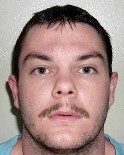
John Yancey Schmitt
Murderer Russell Ellwood
Murderer · USA · 1991
Russell Ellwood was a former taxi driver. Authorities suspected him of killing…
20 victims
Russell Ellwood
Murderer · USA · 1991
Russell Ellwood was a former taxi driver. Authorities suspected him of killing…
20 victims
 Robert Martines Perez
Murderer · USA · 1994
Name: Robert Martines Perez · Other name used in proceedings: Robert Martinez P…
15 victims
Robert Martines Perez
Murderer · USA · 1994
Name: Robert Martines Perez · Other name used in proceedings: Robert Martinez P…
15 victims
 Billy Frank Vickers
Murderer · USA · 1993
Billy Frank Vickers Vickers was executed by lethal injection in Texas on Januar…
14 victims
Billy Frank Vickers
Murderer · USA · 1993
Billy Frank Vickers Vickers was executed by lethal injection in Texas on Januar…
14 victims
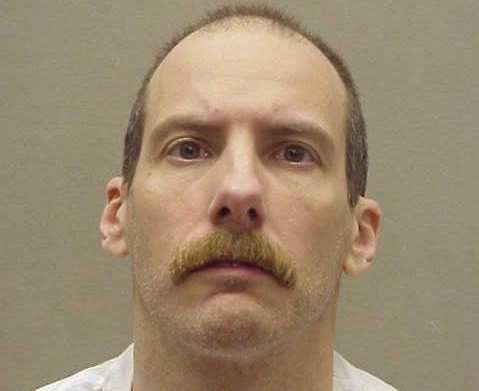 Eric Napoletano
Serial killer · USA · 1984
Eric Napoletano was described as a “sexually sadistic serial killer,” according…
3 victims
Eric Napoletano
Serial killer · USA · 1984
Eric Napoletano was described as a “sexually sadistic serial killer,” according…
3 victims
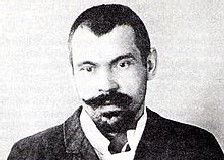 Frans Otto Eriksson
Murderer · Sweden · 1909
Frans Otto Eriksson (also known as Svarta Hästen, “The Black Horse”) Frans Otto…
2 victims
Frans Otto Eriksson
Murderer · Sweden · 1909
Frans Otto Eriksson (also known as Svarta Hästen, “The Black Horse”) Frans Otto…
2 victims
 Bryan Toles
Murderer · USA · 1993
Bryan Anthony Toles was convicted in the District Court, Comanche County, of fi…
2 victims
Bryan Toles
Murderer · USA · 1993
Bryan Anthony Toles was convicted in the District Court, Comanche County, of fi…
2 victims
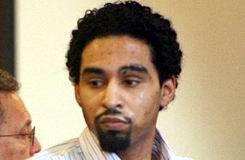 Esteban Carpio
Murderer · USA · 2005
Esteban Carpio was convicted and served a life sentence for the murder of a pol…
1 victim
Esteban Carpio
Murderer · USA · 2005
Esteban Carpio was convicted and served a life sentence for the murder of a pol…
1 victim
 Brittany Miles
Murderer · USA · 2011
Brittany Miles was convicted of first-degree felony murder after a fatal collis…
1 victim
Brittany Miles
Murderer · USA · 2011
Brittany Miles was convicted of first-degree felony murder after a fatal collis…
1 victim
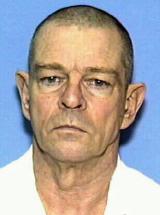 Richard William Kutzner
Murderer · USA · 1996
Richard William Kutzner was convicted of capital murder and was sentenced to de…
2 victims
Richard William Kutzner
Murderer · USA · 1996
Richard William Kutzner was convicted of capital murder and was sentenced to de…
2 victims
- Gender
- male
- Country
- USA
- Location
- Chesterfield County, Virginia, USA
- Date of birth
- J uly 15, 1973
- Age at first offence
- 26
- Characteristics
- bank robbery
- Victim profile
- Earl Shelton Dunning ( security guard )
- Method of murder
- Shooting
- Date(s) of murder
- February 17, 1999
- Years active
- 1999
- Date of arrest
- 2 days after
- Status
-
Executed
Executed by lethal injection in Virginia on November 9, 2006
Case record: John Yancey Schmitt
Overview
John Yancey Schmitt was convicted of capital murder and related non-capital offenses for the shooting death of bank security guard Earl Shelton Dunning during a bank robbery at a NationsBank branch in Bon Air, Chesterfield County. Schmitt was sentenced to death for capital murder and to a total of 118 years’ imprisonment for the other offenses. Schmitt was executed by lethal injection in Virginia on November 9, 2006.
Timeline
- January 17, 1999 — Schmitt robbed a NationsBank bank on Buford Road in Chesterfield County and stole over $65,000 with another man; Schmitt was armed with a sawed-off shotgun.
- January 19, 1999 — Earl Shelton Dunning worked as a security guard at the Bon Air branch after the earlier robbery; Schmitt later robbed the same bank.
- February 17, 1999 — Schmitt shot and killed Earl Shelton Dunning while robbing the Bon Air branch of NationsBank; the bank’s security cameras recorded photographs of Schmitt approaching the end of the teller counter and standing at a teller window holding a bag and pointing a gun.
- February 19, 1999 — Police learned where Schmitt was staying in Williamsburg; a tactical team surrounded Schmitt’s hotel room and a crisis negotiator attempted to persuade Schmitt to surrender.
- February 20, 1999 — Schmitt surrendered and was taken into police custody; police seized a satchel containing $27,091 in cash and other items from the hotel room.
- August 15, 2000 — A jury recommended a death sentence for capital murder based on “future dangerousness” and fixed imprisonment for the other charges, for a total of 118 years; the Virginia trial court sentenced Schmitt accordingly.
- September 30, 1999 — The Circuit Court granted Schmitt’s motion and continued the trial until February 11, 2000.
- November 9, 2006 — Schmitt was executed by lethal injection in Virginia; he was pronounced dead at 9:14 p.m.
- November 10, 2006 — The execution coverage stated that Gov. Timothy M. Kaine had declined to intervene and that the U.S. Supreme Court had turned down Schmitt’s last appeal.
The offence
Bank robbery and killing of Earl Shelton Dunning
On February 17, 1999, Earl Shelton Dunning was shot and killed while working as a security guard at the Bon Air branch of NationsBank on Buford Road in Chesterfield County. About a month before Dunning was killed, Schmitt had robbed the same bank, and after that robbery, the bank had hired Dunning to work as a security guard.
Shortly after 1:00 p.m., a man entered the bank wearing dark sunglasses and a bulky jacket, kept his head lowered, and appeared to scan the interior of the bank. Dunning was outside the bank; after the man went inside, Dunning entered and walked across the lobby to stand at the end of the teller line where customers were waiting. The man stood in the teller line behind several customers. The bank manager, Sara Parker-Orr, testified that she was “nervous” because the man wore sunglasses inside on a “really cloudy day.”
Parker-Orr watched the man leave his place in line and walk toward Dunning. When the man was within “a foot or so” of Dunning, Parker-Orr heard two gunshots and then heard someone scream, “[G]et down, get down.” The man approached Parker-Orr’s teller window and banged on the counter while yelling “Money, give me money,” and “[I]f I don’t get money, I’m going to kill everybody.” Parker-Orr opened her cash drawer and threw money into a black plastic bag the robber was holding.
The robber continued banging on the counter demanding “more money,” announced he would give the tellers “ten seconds” to give him more money, and began counting backward from “ten.” By the time he reached “nine,” teller Marlene Austin was “throwing money in the bag.” Parker-Orr also gave money from a third teller’s drawer. When Parker-Orr told the robber she had no more money to give him, the robber left the bank.
The bank’s security camera system recorded photographs of Schmitt approaching the end of the teller counter and standing at a teller window holding a bag and pointing a gun. None of the witnesses who testified at trial saw the actual shooting of Dunning, and the shooting was not recorded by the security camera system. However, Parker-Orr, Austin, and teller Kelli Konstaitis identified a photograph of Schmitt recorded by the bank’s security camera system as depicting the man who robbed the bank that day.
After Schmitt left the bank, witnesses telephoned 911 and attended to Dunning, who was lying on the floor. Dunning died before emergency medical personnel arrived.
Witnesses testified they did not touch or see anyone else touch Dunning’s gun or its holster. Dunning’s gun was found in its holster, which was closed and snapped. An autopsy revealed Dunning was killed by a gunshot wound to his chest. The bullet entered the right side of Dunning’s chest, caused significant injuries to the aorta, and exited from the right side of his back.
Threats to kill everyone
After shooting Dunning, Schmitt shouted, “get down,” and threatened to “kill everybody” if he did not get some money.
A bank employee testified that after shooting Dunning, Schmitt said: "'If I don't get money, I'm going to kill everybody.'"
Flight and robbery proceeds
After the shooting, Schmitt fled with nearly $36,000 in cash in one account, and “more than $35,000” in another account; police recovered more than $27,000 in cash later from the hotel room.
After the murder and robbery, Schmitt registered at a Williamsburg hotel the same day under the name “R. Napier.” The hotel desk clerk testified that Schmitt asked for directions to local shopping areas, and that when Schmitt returned to the hotel, his hair was a different color. Schmitt paid cash for a three-day stay at the hotel.
After the first bank robbery, the earlier bank robbery was described as involving $65,000 and a sawed-off shotgun, with Schmitt accompanied by an accomplice and with no security guard present in that earlier robbery.
Investigation and arrest
Identification and location
Chesterfield County Police Department officers identified Schmitt after reviewing the photographs taken by the bank’s security camera system.
Two days after the murder and robbery, on February 19, 1999, police learned where Schmitt was staying in Williamsburg. The James City County Tactical Team surrounded Schmitt’s hotel room, and a crisis negotiator attempted to persuade Schmitt to surrender.
Negotiations and surrender
The crisis negotiator was Lieutenant Diane M. Clarcq of the James City County Police Department. About 10:30 a.m. the following morning, Schmitt surrendered and was taken into police custody. Clarcq attempted to persuade Schmitt to surrender peaceably.
During the discussions, Schmitt told Clarcq that he had struggled with the security guard and had not intended to kill him. In the negotiations culminating in his surrender, Schmitt expressed remorse over the killing.
Search and seized items
Leonard obtained a search warrant for Schmitt’s hotel room. A satchel, a handgun, a box of shotgun shells, a black leather jacket, and newly purchased clothing items were seized. Inside the satchel was $27,091 in cash, most of which still bore “bank bands” identifying the money as coming from the Bon Air branch of NationsBank.
Forensic evidence
A firearms and tool mark examiner, John H. Willmer of the Virginia Division of Forensic Science, qualified as an expert witness on firearms. Willmer examined the handgun found in Schmitt’s hotel room and cartridge casings and bullets found in the bank. Willmer testified that, based on examination, the cartridge casings and bullets had been fired from the handgun.
Willmer also tested the handgun and items of Dunning’s clothing to establish the distance between the firearm muzzle and Dunning at the time of the shooting. Based on gunpowder residue found on Dunning’s clothing, Willmer concluded that when Dunning was shot, the distance between him and the firearm muzzle was between 12 and 36 inches.
Trial
Charges and bifurcated trial
Schmitt was indicted for capital murder based on the willful, deliberate, and premeditated killing of Earl Shelton Dunning during the commission of a robbery, in violation of Code § 18.2-31(4).
Schmitt also was indicted for:
- armed entry of a bank with intent to commit larceny, in violation of Code § 18.2-93;
- two counts of robbery, in violation of Code § 18.2-58; and
- three counts of use of a firearm, in violation of Code § 18.2-53.1.
A bifurcated trial was conducted under Code § 19.2-264.3. In the first stage, a jury convicted Schmitt of all offenses charged.
Guilt phase evidence presented
In the guilt phase, the court described evidence supporting premeditation: Schmitt entered the bank armed with a loaded and concealed weapon, left his teller line position and walked directly to Dunning, fired two shots with one hitting Dunning in the chest, shouted “get down,” and threatened to “kill everybody” if he did not get money.
The court also described that:
- Schmitt’s contrary theory relied on evidence suggesting unintentional discharge during a struggle; and
- the shooting was not recorded by the bank’s security camera system, though photographs recorded Schmitt at the teller window holding a bag and pointing a gun.
Conflicting accounts regarding premeditation
Schmitt argued that the shooting occurred during a struggle and was unintentional, thereby negating premeditation. Schmitt also argued for admission of statements to the crisis negotiator, Lieutenant Clarcq, as declarations against penal interest; the court concluded the statements did not qualify under that exception because they included self-serving denial of criminal intent.
Jury findings and sentencing phase
In the penalty phase, the jury fixed Schmitt’s punishment for capital murder at death based on a finding of “future dangerousness,” and for the other offenses at imprisonment for a total of 118 years. The trial court sentenced Schmitt in accordance with the jury verdict.
Additional sentence details mentioned in coverage
Virginia coverage described that, in addition to the capital murder sentence, Schmitt received a 118-year prison sentence on six felony charges associated with the armed robbery of the Bon Air branch of NationsBank and related firearms violations.
Sentencing
Recommended punishment
The jury recommended death for capital murder based on “future dangerousness” and fixed imprisonment for the other offenses to total 118 years.
Prior criminal record and probation status
During the penalty phase, the Commonwealth presented evidence of Schmitt’s criminal record. Between 1992 and 1996, Schmitt had been convicted twice of possession of marijuana with intent to distribute, and also had convictions of receiving stolen property, possession of a firearm by a convicted felon, and possession of marijuana.
Schmitt had been on probation for some of these offenses at the time of the capital murder and robbery. Schmitt failed to keep probation conditions requiring regular drug tests and meeting with his probation officer, and a warrant had been issued for his arrest prior to both bank robberies.
Prior acts described by the Commonwealth
In the earlier robbery of the bank on January 19, 1999, Schmitt and another man stole over $65,000, and Schmitt was armed with a sawed-off shotgun. The Commonwealth presented evidence that before the first robbery, police were called to investigate an argument between Schmitt and a girlfriend involving a shotgun and that Schmitt had “sawed off” the barrel of the gun the night before the first bank robbery.
The Commonwealth presented evidence of a tape recording of a telephone conversation between Schmitt and a friend in which Schmitt described the present offenses, and evidence described as a “drug dealer lifestyle” in the months before the capital offenses.
Appeals and habeas proceedings
Direct appeal (Virginia Supreme Court)
On direct appeal, Schmitt challenged multiple aspects of jury selection, guilt, sentencing, and evidentiary rulings.
The Virginia Supreme Court affirmed the capital murder conviction and death sentence and also affirmed judgments on non-capital convictions. The direct appeal held that, among other rulings, the prospective jurors alleged to have been biased in favor of the death penalty were not subject to challenge for cause; Schmitt was properly prevented from asking jurors to speculate about automatically imposing death; evidence was sufficient to establish premeditation; and the sentence was affirmed as not arbitrary, excessive, or disproportionate.
The direct appeal was:
- Schmitt v. Commonwealth, 262 Va. 127, 547 S.E.2d 186 (Va. 2001).
Federal habeas (district court and 4th Circuit)
After the Virginia Supreme Court affirmed, Schmitt filed for habeas corpus relief in federal court.
Schmitt v. True, 387 F.Supp.2d 622 (E.D. Va. 2005) (Habeas).
- The district court dismissed claims in part and denied leave to amend, including denial of a motion to amend to add a Brady claim. The opinion described Findings of Fact for certain claims and noted that suppressed impeachment evidence was not material.
Schmitt v. Kelly, 2006 WL 1954888 (4th Cir. 2006) (Habeas).
- The Fourth Circuit affirmed denial of the habeas petition, including holding that exclusion of evidence about prison security features did not violate the right to present rebuttal evidence at sentencing, and that counsel decisions regarding suppression motions involved tactical decisions. The court also held that certain claims were procedurally defaulted and other claims were not prejudicial.
U.S. Supreme Court and clemency
Coverage described that the U.S. Supreme Court turned down Schmitt’s last appeal without comment. Gov. Timothy M. Kaine declined to intervene, and Kaine later rejected a request for clemency.
Outcome
Execution details and last words
Schmitt was executed by lethal injection in Virginia on November 9, 2006, at Greensville Correctional Center in Jarratt. Coverage stated that he was taken into the death chamber at 8:55, and he was pronounced dead at 9:14 p.m.
The execution process described:
- At 9:01 p.m., the first chemical was injected as a barbiturate sedative.
- Witnesses then observed Schmitt’s breathing and then a stillness.
- With lethal injections, the first chemical was followed by pancuronium bromide, causing paralysis and stopping breathing, and then potassium chloride to stop the heart.
Schmitt’s last words were: "Come on with it."
Last meal
Schmitt requested a final meal of:
- cheese pizza,
- a cheese omelet with sausage, green peppers and onions, and
- white cake with white icing.
Other details
Age and victim details as stated in coverage
Coverage stated:
- Earl Shelton Dunning was 39.
- Schmitt was 33 at the time of the execution coverage.
Dunning was described as having retired from the United States Army after over 20 years of service and being engaged to be married. Dunning’s family members were described as among those who watched the execution from the viewing area.
Protest and participation details mentioned
Coverage stated that more than a dozen protesters gathered outside the prison for a candlelight vigil about a half-hour before the execution. It also described that Schmitt was the 98th person executed in Virginia since the Supreme Court allowed executions to resume in 1976 and the fourth person executed in Virginia that year.
Legal identifiers and prison status described
An “Inmate” entry mentioned:
- Inmate #: 284700
- DOB: 7-15-73
- Race: White
- Venue: Chesterfield
- Conviction: murder/robbery
- Date received: 6-15-00
It also stated that on August 15, 2000, John Yancey Schmitt was sentenced to death for the murder of a security guard in the commission of a bank robbery and described “Schmitt has been on death row since June 15, 2000.”
Spotted an error, or have more information about this case?