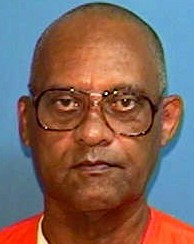
Linroy Bottoson
Murderer Ervil LeBaron
Murderer · USA · 1972
Ervil Morrell LeBaron (1925 to August 16, 1981) was the leader of a polygamous…
35 victims
Ervil LeBaron
Murderer · USA · 1972
Ervil Morrell LeBaron (1925 to August 16, 1981) was the leader of a polygamous…
35 victims
 Brian Kevin Rosenfeld
Murderer · USA · 1985
Brian Kevin Rosenfeld Brian Kevin Rosenfeld was sentenced to three concurrent l…
23 victims
Brian Kevin Rosenfeld
Murderer · USA · 1985
Brian Kevin Rosenfeld Brian Kevin Rosenfeld was sentenced to three concurrent l…
23 victims
 Marvin Gray
Murderer · USA · 1975
Marvin Gray was convicted killer who claimed responsibility for 23 slayings and…
23 victims
Marvin Gray
Murderer · USA · 1975
Marvin Gray was convicted killer who claimed responsibility for 23 slayings and…
23 victims
 Yahweh ben Yahweh
Murderer · USA · 1980
Yahweh ben Yahweh was born and legally named Hulon Mitchell Jr. (October 27, 19…
23 victims
Yahweh ben Yahweh
Murderer · USA · 1980
Yahweh ben Yahweh was born and legally named Hulon Mitchell Jr. (October 27, 19…
23 victims
 Irving Davis
Murderer · USA · 2001
Name: Irving Davis · Also known as: Irving Alvin Davis · TDCJ Number: 999423 ·…
1 victim
Irving Davis
Murderer · USA · 2001
Name: Irving Davis · Also known as: Irving Alvin Davis · TDCJ Number: 999423 ·…
1 victim
 Arohn Kee
Serial killer · USA · 1991
February 19, 1999 — Miami Police arrested a 25-year-old man, Arohn Kee, at the…
3 victims
Arohn Kee
Serial killer · USA · 1991
February 19, 1999 — Miami Police arrested a 25-year-old man, Arohn Kee, at the…
3 victims
 Shonda Walter
Murderer · USA · 2003
Name: Shonda Walter Victim: James Sementelli (83-year-old) Shonda Walter was se…
1 victim
Shonda Walter
Murderer · USA · 2003
Name: Shonda Walter Victim: James Sementelli (83-year-old) Shonda Walter was se…
1 victim
 Ramil Safarov
Murderer · Hungary · 2004
Ramil Safarov was a lieutenant in the Azerbaijani Army. He was born in 1977 in…
1 victim
Ramil Safarov
Murderer · Hungary · 2004
Ramil Safarov was a lieutenant in the Azerbaijani Army. He was born in 1977 in…
1 victim
 Gary Addison Taylor
Serial killer · USA · 1972
Gary Addison Taylor Gary Addison Taylor was born in 1936 in Michigan. He spent…
20 victims
Gary Addison Taylor
Serial killer · USA · 1972
Gary Addison Taylor Gary Addison Taylor was born in 1936 in Michigan. He spent…
20 victims
- Gender
- male
- Country
- USA
- Location
- Orange County, Florida, USA
- Date of birth
- February 28, 1939
- Age at first offence
- 40
- Characteristics
- robbery, kidnapping, torture, mentally ill
- Victim profile
- Catherine Alexander, 74 (the postmistress of Eatonville)
- Method of murder
- Crushed by a car
- Date(s) of murder
- October 26, 1979
- Years active
- 1979
- Date of arrest
- 3 days after
- Status
-
Executed
Executed by lethal injection in Florida on December 9, 2002
Case record: Linroy Bottoson
Parties and identifying details
Linroy Bottoson was the appellant, petitioner, and convict in multiple court proceedings. He was identified as “BOTTOSON, LINROY” (race: BLACK; sex: MALE; hair color: GRAY OR PARTIALLY GRAY; eye color: BROWN; height: 6'00''; weight: 195; birth date: 02/28/1939).
Bottoson was incarcerated under DC Number: 078079. The record listed a detainer date of 08/24/1984 for the “US DEPT JUSTICE ATLANTA.” He was executed for killing 23 years ago.
Timeline
- February 5, 2002 — The United States Supreme Court issued a stay of Bottoson’s execution.
- May 9, 1996 — The Florida Supreme Court denied rehearing following denial of postconviction relief in Bottoson v. State, 674 So. 2d 621.
- June 28, 2002 — A stay of Bottoson’s execution was lifted.
- July 1, 2002 — Bottoson’s execution was rescheduled for July 8, 2002.
- October 26, 1979 — The Eatonville, Florida post office was robbed; over $14,000 worth of money orders were taken along with about $150 in cash.
- January 9, 1997 — A petition for writ of habeas corpus and subsequent responses were filed under docket Docket #87694 - Linroy Bottoson, Petitioner, vs. Harry K. Singletary, Jr., etc., Respondent.
- January 18, 1996 — An opinion docketed for postconviction proceedings included Bottoson v. State, 674 So. 2d 621.
- January 31, 2002 — Dockets SC02-58 and SC02-1455 listed 813 So. 2d 31.
- December 9, 2002 — Bottoson was executed by lethal injection in Florida.
- December 10, 2002 — Reporting described the execution, the pronouncement time, and the circumstances surrounding it.
- November 14, 1991 — The trial court held an evidentiary hearing and denied Bottoson’s initial rule 3.850 motion.
- November 19, 2001 — The Governor issued a second death warrant; Bottoson’s execution was set for February 5, 2002, at 6 p.m.
- January 11, 2002 — Bottoson filed a successive postconviction motion titled “Motion to Vacate Judgement and Sentence, and Request for Evidentiary Hearing and Stay of Execution.”
- January 15, 2002 — The trial court held a preliminary Huff hearing; the order granted an evidentiary hearing on the issue of mentally retarded execution.
- January 17, 2002 — The trial court held an evidentiary hearing.
- January 18, 2002 — The trial court entered an order denying all claims.
- February 28, 2001 — The Eleventh Circuit denied a motion for rehearing.
- June 2, 1998 — Bottoson sought habeas corpus relief in the United States District Court for the Middle District of Florida; that relief was denied and the Eleventh Circuit affirmed.
- May 1, 1981 — The trial judge imposed a death sentence.
- 1981 — Bottoson was convicted of first-degree murder and sentenced to death.
- 1971 — Bottoson was convicted of bank robbery in 1971.
- Late Friday (year not specified) — A temporary postponement occurred from a scheduled execution time of 6 p.m. until 5 p.m. Monday; Florida law required an examination and court review when an inmate or other person claimed the condemned person was incompetent or insane.
- Thursday (week of last legal proceedings, year not specified) — Dr. Xavier Amador evaluated Bottoson in prison.
- Friday (week of last legal proceedings, year not specified) — Dr. Wade C. Myers evaluated Bottoson after Gov. Jeb Bush appointed psychiatrists.
- Monday (week of execution, year 2002) — Bottoson entered the death chamber and was pronounced dead at 5:12 p.m.
Background
Bottoson had believed he was “locked in a battle between Satan and Jesus Christ.” Bottoson accepted Valium before the execution.
The record described Bottoson’s mental health history, including a childhood period in which his mother was described as obsessed with religion and involved requirements that he read the Bible, pray, and preach from street corners from “ages seven to nine.” It also described a suicide attempt in the church and a diagnosis of “acute schizophrenic episode.” The record also referenced Bottoson being diagnosed as a “latent schizophrenic” (a classification describing people who have schizophrenic episodes, but are considered in remission).
A clinical psychologist hired by Bottoson’s lawyers issued a report describing Bottoson as insane and believing he was locked in a battle between Jesus and Satan. Bottoson indicated he possessed “supernatural” powers to foresee future events such as terrorist acts, and he believed he would not be executed because “God will not allow him to be executed.”
A state psychologist, Dr. Wade Myers, testified that while Bottoson sometimes heard God and believed that if he stood at Alexander’s grave God would resurrect her, that did not mean Bottoson was mentally ill. Court proceedings also referenced a question of mental competency and mental retardation, and the Florida Supreme Court determined there was “no proof of Bottoson's mental retardation” and cited IQ tests and findings of no deficiencies in adoptive behavior.
The offence
On Friday October 26, 1979, the Eatonville, Florida, post office was robbed. Over $14,000 worth of money orders were taken along with about $150 in cash.
Catherine Alexander, the postmistress of Eatonville, was last seen leaving the post office at around noon led by “a tall African-American man.” As she left, she whispered to bystanders to call the police and to tell them that the man was stealing.
Catherine Alexander was abducted and held captive for about 83 hours and for three days; at some point she was locked in the trunk of a car. She was stabbed 16 times (and in one account stabbed 14 times in the back and once in the abdomen) and then was fatally crushed by a car, described as run over repeatedly.
Bottoson robbed and later killed Catherine Alexander. The record also stated that prosecutors said Alexander was held until Bottoson wanted “to eliminate Alexander as a witness,” and that the crime involved money orders and cash stolen from the post office.
In addition, when the record described evidence and trial testimony, it stated that search of Bottoson’s home produced the missing money orders (including “31 of the money orders” in one account) and other items, including Catherine’s shoes and a knife. Evidence also described carbon copies of stolen checks deposited in a bank by Bottoson’s wife, and it described testimony that witnesses could not identify Bottoson as the man seen leaving the post office but identified, from a photograph, a red LTD automobile rented to Bottoson as the car in which Catherine was taken away.
Alexander’s body was found on the side of a dirt road on the same night that the Bottosons were arrested (the arrest occurred after Bottoson’s wife tried to cash one of the missing money orders). The medical examiner testified that Catherine died from crushing injuries to the chest and abdomen consistent with having been run over by an automobile, and it described the right and left collarbones and almost every rib being crushed.
The record further described a jailhouse informant testimony that Bottoson confessed to the murder and stated: “the best witness is a dead witness.” The record also described that Bottoson told a jailhouse informant that “the old bitch had a lot of fight in her.” The record also stated that Bottoson gave a written confession to a minister in an effort to obtain leniency, and in the confession Bottoson wrote: “demon spirits” had “got on me,” and also made the comment that “dead witnesses are the best witnesses.” In one part of the record it described Bottoson as writing that “demon spirits” had “got on me.”
Investigation and arrest
Postal inspectors entered Bottoson’s home and arrested him and his wife after the wife attempted to cash one of the missing money orders. Upon searching the home, postal inspectors found the missing money orders and Catherine’s shoes.
The record described forensic and physical evidence linking Bottoson and his car to the kidnapping and killing, including hair samples and clothing impressions on the undercarriage of Bottoson’s car, described as a brown Chevelle; expert evidence describing clothing fibers similar to Catherine’s clothes and “a tip of her fingernail” found in the trunk of Bottoson’s car; and evidence that he deposited some stolen money orders in his bank account.
Trial
At trial, a jury found Bottoson guilty of first-degree murder. The record stated that witnesses could not identify Bottoson as the man seen leaving the post office with Catherine but identified from a photograph a red LTD automobile that was rented to Bottoson at the time as the car in which Catherine was taken away.
The record described that the state presented evidence at the sentencing hearing including an FBI agent who testified that Bottoson was convicted of bank robbery in 1971. Bottoson’s counsel presented testimony from a minister, the minister’s wife, and Bottoson’s mother, who described him as kind, honest, respectable, caring, and unselfishly devoted to his church.
The jury recommended that Bottoson be sentenced to death, and the trial judge imposed a death sentence on May 1, 1981.
Sentencing
Bottoson received a death sentence imposed on May 1, 1981, following the jury recommendation.
Appeals and postconviction and habeas proceedings
Bottoson filed multiple appeals and postconviction motions across state and federal courts. The record listed the following citations and docketed proceedings:
- Bottoson v. State, 443 So. 2d 962, 963 (Fla. 1983) (direct appeal).
- Bottoson v. Florida, 469 U.S. 873, 105 S.Ct. 223, 83 L.Ed.2d 153 (1984) (cert. denied).
- Bottoson v. State, 674 So. 2d 621 (Fla. 1996) (PCR).
- Bottoson v. Florida, 519 U.S. 967, 117 S.Ct. 393, 136 L.Ed.2d 309 (1996) (cert. denied).
- Bottoson v. Singletary, 685 So.2d 1302 (Fla.1997).
- Bottoson v. Moore, 234 F.3d 526 (11th Cir. 2000) (habeas).
- Bottoson v. Florida, 122 S.Ct. 357, 151 L.Ed.2d 270 (2001) (cert. denied).
- Bottoson v. Moore, 251 F.3d 165 (11th Cir.2001) (habeas).
- Bottoson v. State, 813 So. 2d 31 (Fla. 2002) (stay).
The record stated that Bottoson filed his initial rule 3.850 motion for postconviction relief in 1985. It also stated that a death warrant was issued while postconviction proceedings were still pending, and that the trial court entered an order granting an indefinite stay of execution, after which Bottoson filed several amendments.
On November 14, 1991, the trial court held an evidentiary hearing and denied the motion. The Florida Supreme Court affirmed the trial court’s denial of postconviction relief and denied rehearing on May 9, 1996.
The record stated that Bottoson filed a petition for writ of habeas corpus, which was denied on January 9, 1997, citing *Bottoson v.
The record stated that on June 2, 1998, Bottoson sought habeas corpus relief in the United States District Court for the Middle District of Florida; the relief was denied in an unpublished opinion, and the Eleventh Circuit affirmed the denial. It further stated that the Eleventh Circuit denied Bottoson’s motion for rehearing on February 28, 2001, citing Bottoson v. Moore, 251 F.3d 165 (11th Cir.2001).
Death warrant proceedings and competency related hearings
- On November 19, 2001, the Governor issued a second death warrant and Bottoson’s execution was set for February 5, 2002 at 6 p.m.
- On January 11, 2002, Bottoson filed a successive postconviction motion titled “Motion to Vacate Judgement and Sentence, and Request for Evidentiary Hearing and Stay of Execution.”
- On January 15, 2002, the trial court held a preliminary Huff hearing. On the same day, the trial court entered an order granting an evidentiary hearing only on Bottoson’s claim that he should not be executed because he was mentally retarded.
- On January 17, the trial court held the evidentiary hearing.
- On January 18, 2002, the trial court entered an order denying all claims. The record associated this with Bottoson v. State, 813 So. 2d 31 (Fla. 2002).
- The United States Supreme Court issued a stay of Bottoson’s execution on February 5, 2002. The stay was lifted on June 28, 2002. On July 1, 2002, Bottoson’s execution was rescheduled for July 8, 2002.
After the scheduling for July 8, 2002, Bottoson informed the Circuit Court of Orange County, Florida, that he would file a Florida Rule of Criminal Procedure 3.850 motion no later than noon on July 4, 2002. The Circuit Court scheduled a Huff hearing for 10:00 AM on July 5, 2002. Shortly before noon on July 4, 2002, Bottoson informed the Circuit Court that he would not be filing a Rule 3.850 motion. The Circuit Court issued an order allowing Bottoson until 4:30 PM on July 4, 2002 to file any pleadings and cancelling the hearing when no pleadings were filed.
Execution proceedings and legal rulings immediately before execution
The record described a last-day flurry of legal appeals that failed, and it described a Circuit Judge Anthony H. Johnson ruling on Monday (two hours before execution) finding Bottoson “sane to be executed.” It also stated that the Florida Supreme Court rejected an appeal of Johnson’s ruling and that the U.S. Supreme Court rejected a separate appeal that argued Bottoson was mentally retarded.
Dr. Wade Myers, a state psychologist, testified in Orlando that Bottoson sometimes heard God and believed if he stood at Alexander’s grave God would resurrect her; Myers testified that this did not mean Bottoson was mentally ill. The record included direct quote attribution to Dr. Wade Myers:
“There are evangelists every Sunday who have large viewerships who say they're also receiving the same messages from God,” Myers said.
The record also included a second Myers quote describing fundamental Christian beliefs:
“I think when you begin to label fundamental Christian beliefs as psychosis, it's not justified.”
It also included Dr. Xavier Amador statements in relation to his evaluation, and it included a report attributed to Amador after meeting with Bottoson:
“Mr. Bottoson's chronic mental illness renders him unable to rationally and factually understand and appreciate the reason the State of Florida is seeking his execution and unable to factually comprehend that his death will in fact occur,” psychologist Xavier Amador wrote after meeting with him last week.
“He understands himself to be locked in the middle of a battle between Jesus and Satan, a battle he is certain, as one of God's prophets, Jesus will win.”
The record also included a Myers testimony quotation:
“Mr. Bottoson did not relate this sort of information to us.”
Execution details
Bottoson was executed by lethal injection in Florida on December 9, 2002. He was pronounced dead at 5:12 p.m., 10 minutes after the injection.
He was taken into the execution chamber shortly before 5 p.m. His fingers were wrapped together, and his wrists and chest were strapped to a gurney. Intravenous tubing carrying the lethal injection was already in his right arm when the brown curtains opened for about 30 witnesses in the viewing room at Florida State Prison.
When asked by a prison official whether he wanted to make a final statement, Bottoson murmured: “No, sir.” A microphone above his head was then turned off; a few seconds later he opened his mouth and took a deep breath, and then no movement followed. A doctor pronounced him dead at 5:12 p.m.
When asked if he had any last words, he said: “No sir, no.” The record also stated that Bottoson did not make any statements before his execution. Bottoson accepted Valium before he was killed.
The record described that Bottoson had no visitors other than the prison chaplain who looked in on him less than two hours before his death. It stated that no one claimed his body; his body was removed and taken to the Alachua Medical Examiner’s Office for cremation, and the remains were cremated and buried at the state prison cemetery located outside the prison walls.
Victim details
Catherine Alexander was the postmistress of Eatonville. She was last seen leaving the post office on October 26, 1979, around noon led by a tall African-American man. She was robbed, held captive for about 83 hours (three days), stabbed 16 times, and fatally crushed by a car. She was identified as a 74-year-old, and other reporting described her as 74 and as a postmistress of Eatonville.
In one account, Alexander and her sister Eunice Smith were within less than two yards of Bottoson, who was strapped to a gurney on the other side of a window.
Hubert Alexander was Catherine Alexander’s son, described as 78 years old in one account. He testified after the execution that he promised his mother he would be there on that day and described the execution outcome. The record also stated that Hubert Alexander waited 23 years, one month and 13 days for the state to execute his mother’s killer.
Defence and counsel
The record identified Peter Cannon as Bottoson’s attorney, and it described him as trying to prove Bottoson was insane and mentally retarded. It also referenced Eric Pinkard, Bottoson’s defense attorney with Capital Collateral Regional Counsel, speaking about the execution.
The record also described the presence of prison spokesman Sterling Ivey, the Florida Department of Corrections, and Circuit Judge Anthony H. Johnson of Orlando.
Other details (food, protests, prior convictions, and comments)
Final meal and meal changes
The record described that Bottoson had already been served his last meal on Friday: barbecued ribs, French fries and onion rings, along with cole slaw, apple pie and milk. On the day of execution, Bottoson ate a regular prison meal including beef patties, cheese and bread. Other reporting listed a meal that included beef patties, cheese and bread, and additionally described the meal on execution day as: a beef patty with cheese, potatoes, baked beans, two slices of bread, white cake, tea and a salad with cucumbers.
The record described that Bottoson did not get a special meal on the day of execution because he was given one on two other occasions when his executions were postponed.
Protests and reactions
The record described protests across the highway from the prison, with eight people opposed to the death penalty protested in a pasture.
It quoted Abe Bonowitz, director of Floridians for Alternatives to the Death Penalty:
“We killed a mentally ill man tonight,” Abe Bonowitz said.
It also included a quote by Hubert Alexander:
“Nothing is going to bring my mother back,”
and “The person that did this awful thing to her is gone.”
It also included Hubert Alexander’s statement:
“I guess I'm feeling relieved.”
Competency/insanity claims and psychiatric evaluation
The record described a panel of three psychiatrists finding Bottoson competent to be executed, and it described legal challenges to his death sentence being rejected. It stated that Gov. Jeb Bush extended a temporary postponement from 6 p.m. Friday until 5 p.m. Monday, and that Bottoson’s attorney, Peter Cannon, said Bottoson was mentally retarded and heard voices from God and Satan.
The record described that Bush ordered psychiatric review and that Florida law required evaluation and court review when claims were made that an inmate was incompetent or insane.
Prior conviction referenced at sentencing
The record stated that at the sentencing hearing the state presented an FBI agent who testified that Bottoson was convicted of bank robbery in 1971.
Additional references in the record
The record included a mention that Florida had executed two other inmates in October in the same year as Bottoson’s execution, and that since Florida reimposed the death penalty in 1976, 53 inmates had been executed. It also mentioned another inmate executed in Florida in June 2000 who believed he was Jesus Christ, named Thomas Provenzano.
Legal issues mentioned by participants
The record stated that Bottoson’s attorneys challenged mental competency and sought to block execution, and that they also challenged whether he was mentally retarded. It also described a challenge to the Florida death penalty statute being unconstitutional, and that the U.S. Supreme Court rejected a request for a stay and refused to hear the constitutional challenge.
Spotted an error, or have more information about this case?