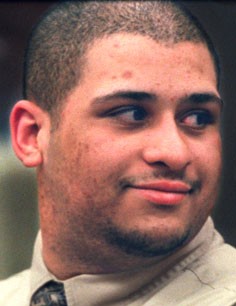
Raymond Oscar Butler
Murderer Dr. Wouter Basson
Murderer · 1992
Wouter Basson (born July 6, 1950) was a South African cardiologist and the form…
230 victims
Dr. Wouter Basson
Murderer · 1992
Wouter Basson (born July 6, 1950) was a South African cardiologist and the form…
230 victims
 Ershad Sikder
Murderer · Bangladesh · 1990
Ershad Sikder was an influential political figure in the south-western city of…
30 victims
Ershad Sikder
Murderer · Bangladesh · 1990
Ershad Sikder was an influential political figure in the south-western city of…
30 victims
 Brian Kevin Rosenfeld
Murderer · USA · 1985
Brian Kevin Rosenfeld Brian Kevin Rosenfeld was sentenced to three concurrent l…
23 victims
Brian Kevin Rosenfeld
Murderer · USA · 1985
Brian Kevin Rosenfeld Brian Kevin Rosenfeld was sentenced to three concurrent l…
23 victims
 Russell Ellwood
Murderer · USA · 1991
Russell Ellwood was a former taxi driver. Authorities suspected him of killing…
20 victims
Russell Ellwood
Murderer · USA · 1991
Russell Ellwood was a former taxi driver. Authorities suspected him of killing…
20 victims
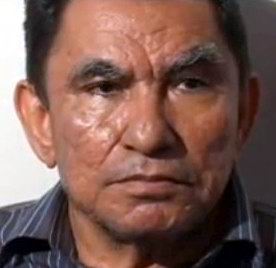 Anisio Ferreira de Sousa
Murderer · Brazil · 1989
September 4, 2003 — Anísio Ferreira de Sousa was sentenced to 77 years in priso…
19 victims
Anisio Ferreira de Sousa
Murderer · Brazil · 1989
September 4, 2003 — Anísio Ferreira de Sousa was sentenced to 77 years in priso…
19 victims
 Roger Severs
Murderer · United Kingdom · 1993
Roger Severs was sentenced to two life sentences in prison on December 6, 1994.…
2 victims
Roger Severs
Murderer · United Kingdom · 1993
Roger Severs was sentenced to two life sentences in prison on December 6, 1994.…
2 victims
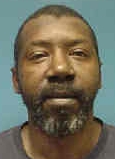 Jay Scott
Murderer · USA · 1983
Jay D. Scott (August 21, 1952 - June 14, 2001) was executed by the state of Ohi…
2 victims
Jay Scott
Murderer · USA · 1983
Jay D. Scott (August 21, 1952 - June 14, 2001) was executed by the state of Ohi…
2 victims
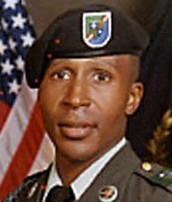 Louis Jones
Murderer · USA · 1995
Louis Jones Jr. — defendant; a decorated Army veteran and airborne ranger Louis…
1 victim
Louis Jones
Murderer · USA · 1995
Louis Jones Jr. — defendant; a decorated Army veteran and airborne ranger Louis…
1 victim
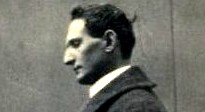 Steinie Morrison
Murderer · United Kingdom · 1911
Steinie Morrison was a 30-year-old, 6' 3 tall professional burglar at the time…
1 victim
Steinie Morrison
Murderer · United Kingdom · 1911
Steinie Morrison was a 30-year-old, 6' 3 tall professional burglar at the time…
1 victim
- Gender
- male
- Country
- of Los Angeles
- Location
- Western Avenue at Capitol Drive, San Pedro, county jail Victims: Takuma Ito and Go Matsuura, both 19 of Japan; Tyrone Flemming, 23, of Los Angeles
- Date of birth
- 1975
- Age at first offence
- 19
- Characteristics
- carjacking, robbery
- Victim profile
- Takuma Ito and Go Matsuura ( 19-year-old film students ) / Tyrone Flemming, 23 (fellow inmate)
- Method of murder
- Shooting / St abbing with homemade knife Loca tion : Los Angeles County, California, USA
- Date(s) of murder
- March 25, 1994/ March 26, 1995
- Years active
- 1994–1995
- Date of arrest
- —
- Status
-
Sentenced to death
Sentenced to death on July 29, 1996
Case record
Overview
Raymond Oscar Butler was sentenced to death on July 29, 1996.
The killings involved two Marymount College exchange students, 15-year-old Rancho Palos Verdes college students who were studying filmmaking. Butler’s actions devastated students at the Rancho Palos Verdes college and touched off an international incident.
In Japan, U.S. Ambassador Walter F. Mondale called it “the saddest day in my time here as ambassador” and issued an apology on behalf of President Clinton.
The offence
Butler carjacked and killed two exchange students in the parking lot of a Ralphs supermarket on Western Avenue in San Pedro. The victims had stopped in the parking lot after dining at a Gardena restaurant with two friends. They were trying to decide where the friends would stay during spring break while their campus in Rancho Palos Verdes was closed.
Butler approached the victims and demanded Ito’s wallet. Butler ordered Takuma Ito to kneel down, and Butler shot Ito “execution-style.” Ito was shot in the back of the head.
After shooting Ito, Butler fired several times into the car, striking Go Matsuura in the head at close range. Ito sat in the driver’s seat and was also shot in the head at point-blank range. Butler then drove off in the 1994 Honda Civic belonging to Ito, which was found the next day.
Butler’s convictions were described as involving carjacking and killing two Marymount College exchange students.
Butler received a second death penalty sentence in 1997 for helping two other men stab fellow county jail inmate Flemming to death.
The sentence in the March 26, 1995, slaying of Tyrone Flemming remained on appeal.
Investigation and arrest
Butler drove away in Ito’s 1994 Honda Civic. The 1994 Honda Civic was found the next day. Butler was arrested a few days later.
Trial
A Long Beach Superior Court jury of seven men and five women convicted Butler of two counts each of first-degree murder, second-degree robbery and carjacking, along with special allegations of multiple murders and that the crimes were committed during the commission of a robbery.
The convictions followed defense claims that Judge James Pierce erred when he directed jurors to continue deliberations on two occasions when they said they were deadlocked. One of the 12 jurors was holding out for a not-guilty verdict when the panel was sent back after the second deadlock. A unanimous verdict was reached the next morning.
Judge James Pierce imposed the jury’s later recommendation that Butler, now 34, should face the death penalty.
A separate matter later involved Butler’s prosecution for the murder of Tyrone Flemming while Butler was awaiting trial for the carjacking and murders of Takuma Ito and Go Matsuura.
In 1995, while awaiting trial for those murders, Butler was charged with the first degree murder of Tyrone Flemming. Flemming was beaten and stabbed multiple times as he and other inmates were being moved to showers the morning of March 26.
Witnesses said that Butler started the fight, then Paul Gornick began stabbing Flemming, and that Butler then took the same knife and stabbed Flemming several more times.
Butler admitted being involved in the fight. The fight stemmed from an ongoing feud between Gornick and Flemming over an allegedly stolen address book and supposed threats by Flemming against Gornick’s family.
Butler said Gornick was planning to attack Flemming and had used a fabricated handcuff key to keep his stabbing hand free. Butler said he only participated in the fight because he would have been seen as a coward otherwise, and that he had not stabbed anyone.
Although Butler was represented by counsel at his first trial, he filed a handwritten motion asserting his “unconditional constitutional right to represent himself without counsel.”
The judge hearing the case at the time granted the motion.
The prosecutor said Butler might be seeking pro per status in order to gain additional jail privileges, but acknowledged that he had a right to defend himself.
In January 1996, citing the Flemming stabbing and other disciplinary violations, including three incidents of possessing razor blades, the county moved to terminate Butler’s use of the law library, saying he was too dangerous to be allowed contact with other inmates and staff.
The judge agreed that Butler could continue to defend himself through access to legal forms and supplies, a legal runner, and advisory counsel.
In October 1996, subsequent to Butler’s conviction in the first case, Butler appeared before Los Angeles Superior Court Judge J.D. Smith, who was newly assigned to the Flemming murder case.
The judge expressed doubt that Butler could continue to defend himself, saying it was “pretty obvious with this type of situation that pro per status is probably going to be revoked,” but put the matter over for about six weeks.
At the next hearing, after the prosecutor recounted all of the incidents involving Butler at the jail, including a recent one in which a knife was found in his rectum, Smith revoked Butler’s pro per status and appointed his advisory/standby counsel to represent him in the balance of the proceeding.
Butler sought, in written papers and at court hearings, to regain his right of self-representation. In September 1997, the judge agreed. But a month later, at a hearing at which Butler complained he had not received all of his discovery material, Smith again revoked his pro per status.
The defendant’s standby lawyer explained that while Butler had received all of the discovery relating to the stabbing, which was a major part of the penalty phase in the previous trial, jail personnel had insisted that the rest of the material was too voluminous to be given to Butler at one time.
Smith responded that this illustrated why the defendant could not represent himself: “It is not unique to your client. This is the pro per problem. You have a pro per that is in for another case; and the jail is a jail, it is not a law library. They restrict what you can do there. That is why it just doesn’t make sense to do that. In any event, I will just put you back on the case. You have had some time to work on at least the guilt phase. You can take a look at that and if we need to . . . we will take a short delay to look at the penalty phase. We will not be starting that right away.”
Jury selection began a week later. Butler was convicted of first degree murder and sentenced to death.
Sentencing
Butler was convicted in the Ito and Matsuura case and received a death-penalty verdict after the jury’s later recommendation.
Judge James Pierce imposed the jury’s later recommendation that Butler should face the death penalty.
Butler received a second death sentence in 1998 for helping two men kill a fellow inmate in county jail while awaiting his trial in the Ito and Matsuura case.
Butler also received a second death penalty sentence in 1997 described in the record.
A photo caption indicated that Raymond Oscar Butler gave his family a smile April 19, 1996, after hearing death-penalty verdict in Long Beach Superior Court.
Appeals and legal proceedings
The California Supreme Court upheld Butler’s death sentence in the Ito and Matsuura case in a decision announced June 18, 2009, rejecting defense claims challenging the sentence.
The Supreme Court in another matter reversed the jail inmate murder conviction due to self-representation issues.
A California Supreme Court ruling in a case described as People v. Butler (2009) 46 Cal.4th 847 reversed and ordered a new trial for a man convicted of killing a fellow Los Angeles County Jail inmate because the judge wrongfully prevented him from representing himself.
Justice Carol Corrigan wrote in a 5-2 decision that Butler was denied his Sixth Amendment right to counsel, under the self-representation standard set forth in Faretta v. California (1975) 422 U.S. 806.
The decision also referenced that in June, the high court unanimously affirmed Butler’s conviction and death sentence in a separate case, People v. Butler (2009) 46 Cal.4th 847.
Corrigan stated that while pro per status may be denied or terminated due to “serious and obstructionist misconduct,” failure to make a timely and unequivocal request for self-representation, acquiescence in appointment of counsel, or severe mental illness, the trial judge based his order solely on the restrictive conditions of the defendant’s confinement.
Corrigan wrote: “Restrictions on pro. per. privileges in custody are not unusual,” and added: “They have never been deemed a justification for depriving inmates of the right to represent themselves.”
Corrigan further noted that the restrictions did not preclude Butler from representing himself, given that he had advisory counsel and access to legal documents and discovery materials.
Corrigan wrote: “It is established that the effectiveness of a self-represented defendant’s preparation is ordinarily irrelevant,” and stated: “Defendants untrained in the law may well provide themselves with inept representation,” while Faretta gave them the right to make a “thoroughly disadvantageous decision to act as their own counsel, so long as they are fully advised and cognizant of the risks and consequences of their choice.”
Chief Justice Ronald M. George and Justices Joyce L. Kennard, Kathryn M. Werdegar and Carlos Moreno concurred.
Justice Ming Chin, joined by Justice Marvin Baxter, dissented.
Chin argued that the trial judge acted properly “under the extreme circumstances the case presents.” Chin emphasized that the restrictive conditions of Butler’s confinement were the result of the defendant’s own actions, as proven during the penalty phase of the first trial.
Chin cited Indiana v. Edwards (2008) 128 S.Ct. 2379, stating that a defendant who was severely mentally ill, but competent to stand trial, could be denied the right to represent himself.
Chin acknowledged that the case was not directly on point, and referenced the statement that “self-representation at trial will not ‘affirm the dignity’ of a defendant who lacks the mental capacity to conduct his defense without the assistance of counsel.”
Chin argued that the court “should be similarly unconcerned with affirming the dignity of a defendant who is already under a sentence of death, and who is personally responsible for the actions that made him such a security risk that he could not effectively defend himself.”
Corrigan stated in a footnote that counsel for both sides had agreed that Edwards was irrelevant to Butler’s situation, and Corrigan wrote: while the U.S. Supreme Court might be “well advised” to reconsider its precedent, “this court is not empowered to narrow the established scope of a federal constitutional right.”
The case was argued by Deputy State Public Defender Jessica K. McGuire for the defendant and Deputy Attorney General Jason C. Tran for the state.
The case was identified as People v. Butler, 09 S.O.S. 7001.
Outcome
The California Supreme Court announced it had upheld Butler’s death sentence in the Ito and Matsuura case by rejecting defense claims challenging the sentence.
In the Flemming inmate murder case, the California Supreme Court ruled that Butler was entitled to a new trial because the judge wrongfully prevented him from representing himself, reversing the conviction in that matter.
A sentence for the March 26, 1995, slaying of Tyrone Flemming remained on appeal.
Aftermath and international incident
The killings created headlines in Japan, shocking Japanese citizens and embarrassing the United States.
President Bill Clinton apologized to Japanese Prime Minister Morihiro Hosokawa for the deaths on Japan’s soil.
Other details
Butler was convicted in 1996 of killing 19-year-old film students Takuma Ito and Go Matsuura on March 24, 1994.
The record also indicated that Ito was a Japanese citizen and Matsuura was American but grew up in Japan.
Butler’s killings were described as having occurred in the Ralphs supermarket parking lot on Western Avenue in San Pedro.
Butler drove away in Ito’s 1994 Honda Civic, which was found the next day.
Butler helped two other men stab fellow county jail inmate Flemming to death while awaiting his trial, and the record described the Flemming killing as taking place on March 26.
The record identified a long-haul trucker and a babysitter only as part of the allowed characteristics vocabulary, and no such facts about Butler were stated in the case details provided.
Spotted an error, or have more information about this case?