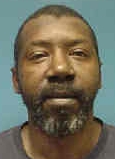
Jay Scott
Murderer Brian Kevin Rosenfeld
Murderer · USA · 1985
Brian Kevin Rosenfeld Brian Kevin Rosenfeld was sentenced to three concurrent l…
23 victims
Brian Kevin Rosenfeld
Murderer · USA · 1985
Brian Kevin Rosenfeld Brian Kevin Rosenfeld was sentenced to three concurrent l…
23 victims
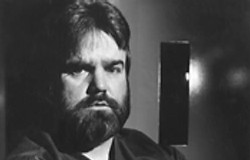 Marvin Gray
Murderer · USA · 1975
Marvin Gray was convicted killer who claimed responsibility for 23 slayings and…
23 victims
Marvin Gray
Murderer · USA · 1975
Marvin Gray was convicted killer who claimed responsibility for 23 slayings and…
23 victims
 Yahweh ben Yahweh
Murderer · USA · 1980
Yahweh ben Yahweh was born and legally named Hulon Mitchell Jr. (October 27, 19…
23 victims
Yahweh ben Yahweh
Murderer · USA · 1980
Yahweh ben Yahweh was born and legally named Hulon Mitchell Jr. (October 27, 19…
23 victims
 Russell Ellwood
Murderer · USA · 1991
Russell Ellwood was a former taxi driver. Authorities suspected him of killing…
20 victims
Russell Ellwood
Murderer · USA · 1991
Russell Ellwood was a former taxi driver. Authorities suspected him of killing…
20 victims
 Lisl Auman
Murderer · USA · 1997
Lisl Auman (defendant) · Bruce VanderJagt (Denver police officer; victim) · Ann…
1 victim
Lisl Auman
Murderer · USA · 1997
Lisl Auman (defendant) · Bruce VanderJagt (Denver police officer; victim) · Ann…
1 victim
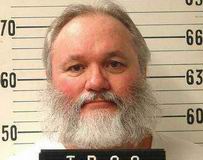 Dennis Suttles
Murderer · USA · 1996
Dennis Wade Suttles was convicted of premeditated first degree murder and sente…
1 victim
Dennis Suttles
Murderer · USA · 1996
Dennis Wade Suttles was convicted of premeditated first degree murder and sente…
1 victim
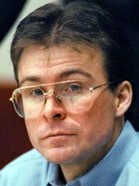 Robert James Acremant
Murderer · USA · 1995
Robert James Acremant was 29 years old when he pleaded guilty last year to aggr…
3 victims
Robert James Acremant
Murderer · USA · 1995
Robert James Acremant was 29 years old when he pleaded guilty last year to aggr…
3 victims
- Gender
- male
- Country
- USA
- Location
- Cuyahoga County, Ohio, USA
- Date of birth
- August 21, 1952
- Age at first offence
- 31
- Characteristics
- robbery
- Victim profile
- Vinnie M. Prince, 74 ( delicatessen owner) / Alexander Jones (security guard
- Method of murder
- Shooting ( .38-caliber handgun)
- Date(s) of murder
- May 6/7, 1983
- Years active
- 1983
- Date of arrest
- November 10, 1983
- Status
-
Executed
Executed by lethal injection in Ohio on June 14, 2001
Case record: Jay Scott
Background
Jay D. Scott (August 21, 1952 - June 14, 2001) was executed by the state of Ohio for the 1983 murder of a delicatessen owner in Cleveland. He was the second man put to death by Ohio since it reinstated the death penalty in 1981.
Scott’s case involved arguments about his mental illness and competence to be executed. He was diagnosed as schizophrenic and his attorneys argued that he was incompetent to be executed because of chronic schizophrenia, and that execution would violate the 8th Amendment prohibition against cruel and unusual punishment. The state argued that no court had ruled that executing an inmate with his condition violated the law, and that two lower courts had found no reason to spare him.
The offence
Jay Scott robbed the V & E Delicatessen on Cleveland's East Side. Scott and an accomplice entered the deli and placed an order for food from the eldery female owner, Vinnie M. Price (also referred to as Vinnie M. Prince and Vinney Prince / Vinnie Price in the case material). After the owner had prepared their food, she was shot in the chest from a distance of less than 12 inches.
Scott was also sentenced to death for the murder of security guard Alexander Jones the day after Vinnie's murder. Alexander was a security guard at another restaurant that Scott was robbing, The Shrimp Boat. The sentence in the Jones case was reversed and later reduced to life when the 8th District Ohio Court of Appeals ruled that the jurors' decision may have been tainted because some of them learned of Scott's other death sentence when they saw a newspaper headline.
At trial, Defendant claimed the owner was reaching for a gun.
Investigation
A nearby resident testified that while walking back to her home after shopping at a local market, she noticed a greenish-blue Cadillac without a rear license plate pull up across from her house. She observed two men inside the car; one behind the wheel and the other in the back seat. She later observed another man come over a nearby fence and dive through the open window of the Cadillac. The car then drove away.
Police received a telephone call from Ricky Tramble and arranged a meeting. As a result, police began looking for the Cadillac used in the crime and several suspects.
At trial, Ricky Tramble testified that on the day Vinnie Prince was killed, he was with Edward O'Neal, Michael Streeter, Danny Jones and Jay D. Scott at O'Neal's girlfriend's. Tramble stated that he had overheard Scott say:
“Well, I did what I had to do. She shouldn't have made me move like that. Fuck it. It's over with.”
T ramb le also related that Scott professed to be "a stick-up man." Tramble stated that O'Neal informed him the next day of their involvement in the V & E Delicatessen incident, including the shooting of Prince.
T wo co-defendants identified Scott as the triggerman.
Arrest
On November 10, 1983, Scott was apprehended in Philadelphia.
During the trip back to Cleveland, Scott inquired who was using his name in connection with a homicide and robbery. Up to that point, the arresting officers had informed Scott that he was wanted in connection with a homicide, but had made no mention of the fact that he was also charged with aggravated robbery. Scott maintained that he had been in Reading, Pennsylvania when the incident occurred.
Trial
On May 17, 1983, the grand jury charged Scott with aggravated murder with an aggravated robbery specification and a firearm specification and aggravated robbery. Co-defendants in the same indictments were Danny Jones, Edward O'Neal and Michael Streeter.
On March 23, 1984, Scott entered a plea of not guilty at his arraignment.
After a trial by jury, he was found guilty as to all counts and specifications.
Scott’s co-conspirators in the robbery and killing all received life prison terms.
The jury recommended the sentence of death on March 28, 1984.
A Cleveland jury convicted Scott after deliberating 20 minutes, and he was sent to death row in April 1984.
Sentencing
On April 4, 1984, Judge Joseph McManamon accepted the jury's recommendation and ordered that Scott be put to death.
Appeals
Scott's attorneys took his case through the appellate system four times, going all the way to the U.S. Supreme Court, unsuccessfully arguing that Scott should not be executed because he suffered from chronic schizophrenia and that the execution would violate the 8th Amendment prohibition against cruel and unusual punishment.
Courts ordered delays on April 17 and May 15 over questions about his competence. The U.S. Supreme Court refused his appeal and clemency was denied.
On April 16, a Cuyahoga County Common Pleas judge ruled that Scott was competent to face execution. On April 17, 2001, the Ohio Supreme Court postponed his execution 65 minutes before it was to take place so that the 8th Ohio District Court of Appeals could have time to consider the case.
On April 20, the appeals court upheld the lower court. The Ohio Supreme Court set the new execution date on April 25.
UPDATE: On 5/12/01, the Ohio Supreme Court ruled that Scott was competent to be executed for the 1983 murder of a Cleveland delicatessen owner. The ruling was 6-1, with Justice Paul Pfeifer dissenting, upholding the Cuyahoga County Common Pleas judge's decision. The majority acknowledged that schizophrenia was a mental illness but said the lower court correctly ruled that the illness did not prevent Scott from understanding the proceedings against him. The trial court fully considered defense medical testimony of Scott's illness.
On May 15, 2001, the 6th U.S. Circuit Court of Appeals stepped in and the execution was halted at 8:57 p.m. In its procedural background section, the opinion described that Jay Scott was convicted by an Ohio jury of aggravated robbery and aggravated murder on March 21, 1984 and sentenced to death, and it described later procedural steps including the denial of a supplemental petition for habeas corpus.
The 6th Circuit concluded that Scott’s third claim—execution of the severely mentally ill—is procedurally barred, and that his first and second claims may be considered on their merits but were not meritorious. It affirmed the district court’s denial of the writ and denied Scott’s motion for a stay of his execution.
United States Supreme Court — petition denied
In Jay D. Scott v. Ohio, No. 86-5953, the U.S. Supreme Court denied the petition for writ of certiorari. Justice MARSHALL, with whom Justice BRENNAN joins, dissented from denial of certiorari, stating that the trial judge’s statement to prospective jurors deprived petitioner of a fair trial.
The dissent included this trial judge statement during voir dire:
“Not only was Mr. Scott-at least from the newspaper reports that I think that I had read-was involved in this, there were three other . . . individuals who . . .”
It also included the trial court’s cautionary instruction:
“[Y]ou must not take any impression from anything I have done or said as to what your decision should be.”
Amnesty International declarations by jurors
Amnesty International condemned Ohio Governor Bob Taft's denial of clemency on April 11, 2001. Amnesty International stated that five jurors from the trial signed declarations under oath that they might have voted differently if mitigating evidence of mental disorders and an extremely abusive childhood had been presented.
Michael Manley, AI's Ohio death penalty coordinator, said:
“The Governor says he read the juror's declarations, but he did not respond to the fact that nearly half the jurors say they may have voted differently. If this goes forward, these people will have to live their lives knowing they could have prevented this execution.”
Juror John J. Patten stated in his declaration:
“had I known about Mr. Scott's past, especially about his history of mental illness dating back prior to the time of his commission of the crime, it would have made a difference to me - that is, I would have voted for a life sentence.”
Outcome
Jay D. Scott was executed by lethal injection in Ohio on June 14, 2001.
His execution occurred shortly after 9 p.m. and he was pronounced dead at 9:08 p.m. Scott addressed three members of his family witnessing his execution and said:
“Spook, George, Randy. I love you all. Tell my family and friends I send my love. Don't worry. Tell them I'm all right.”
Afterward, an unidentified member of Scott's family remarked to media witnesses:
“I really think the Lakers are going to win tomorrow.”
Aftermath
According to one description, Scott met with family, an Islamic spiritual adviser, and his lawyers during the final day and a half before execution at the Death House at the Southern Ohio Correctional Facility. He ate a last meal of fish, hot sauce, and Pepsi.
The execution process involved three chemicals that first sedated him, paralyzed his lungs, and then stopped his heart, and it was described as taking eight minutes.
The case material stated that Scott had come within minutes of being put to death twice before and that his attorneys had surrendered the legal fight after the U.S. Supreme Court rejected his latest appeals.
His co-conspirators in the robbery and killing all received life prison terms.
The case material also described that Scott had racked up over 40 major conduct infractions in prison, including stabbing another inmate, abducting a death row guard and setting fire to his cell.
The material further stated that Ohio prison officials reversed a 1997 policy prohibiting condemned prisoners from speaking their last words, and it described a lawsuit by the ACLU filed in July 1999 to defend inmates' rights to say last words on behalf of two Death Row inmates—Fred Treesh of Lake County and Melvin Bonnell of Cuyahoga County. It also stated that Wilford Berry, the Cleveland killer known as "The Volunteer," declined to write his last words before his execution on Feb. 19, 1999 and went to his death silently.
The material included statements from Ohio officials about reasons for revising last-words policy and included remarks by Ohio Public Defender David Bodiker:
“It really serves no purpose to anyone,” and remarks by State Treasurer Joseph T. Deters: “state-sponsored victim harassment.”
Dori Moore of Wheelersburg said:
“Killing people is wrong, whether the state does it or an individual does it,” and “I'm afraid this makes it easier for them to do the next one.”
Father Kookoothe said:
“I'll stop anything [I'm doing] to do this,”
Timeline
- May 6, 1983 — Vinnie M. Price/Prince/Vinney Prince/Vinnie Price was shot in the chest from a distance of less than 12 inches during an attempted armed robbery of the V & E Delicatessen in Cleveland’s East Side.
- May 17, 1983 — A grand jury charged Scott with aggravated murder with an aggravated robbery specification and a firearm specification and aggravated robbery.
- November 10, 1983 — Scott was apprehended in Philadelphia.
- March 23, 1984 — Scott entered a plea of not guilty at arraignment.
- March 21, 1984 — A jury convicted Scott of aggravated robbery and aggravated murder (as described in later procedural background).
- March 28, 1984 — The jury recommended the sentence of death.
- April 4, 1984 — Judge Joseph McManamon accepted the jury’s recommendation and ordered that Scott be put to death.
- April 16, 2001 — A Cuyahoga County Common Pleas judge ruled Scott was competent to face execution.
- April 17, 2001 — The Ohio Supreme Court postponed Scott’s execution 65 minutes before it was to take place.
- April 20, 2001 — The 8th Ohio District Court of Appeals upheld the lower court ruling.
- May 15, 2001 — The 6th U.S. Circuit Court of Appeals halted the execution at 8:57 p.m.
- May 15, 2001 — The 6th Circuit denied a motion for stay of execution and affirmed the denial of a supplemental habeas petition (as described in the opinion).
- June 13, 2001 — The U.S. Supreme Court refused Scott’s appeal; Governor Taft denied clemency.
- June 14, 2001 — Scott was executed by lethal injection in Ohio; he was pronounced dead at 9:08 p.m.
Other details
- Scott was described as bragging he was the "baddest man in town," according to Cleveland homicide detectives who arrested him in Philadelphia after he fled.
- Vinnie had worked at the V&E Confectionery for 30 years and became co-owner in 1963.
- Scott was described as the fifth of eleven children of Willie and Sadie Scott in one account, and as the sixth of eleven children in another account; the material also described Willie and Sadie Scott as alcoholics who reportedly beat and abused their children.
- The case material described Scott’s family as involving 11 children and included that his siblings included a brother and sister who were shot to death and another brother who was paralyzed; it also stated that his older brother Willie spent most of his life in psychiatric hospitals.
- The material described Scott’s final words to relatives as “Don't worry. Tell them I'm alright.” and also included the family witnessed remark about “the Lakers.”
- The material described Wilford Berry as executed in 1999 and said he was the only prisoner put to death in Ohio since 1963 prior to Scott.
- The material described Scott twice being delayed before execution: April 17 and May 15.
Spotted an error, or have more information about this case?