Robert Butler
Murderer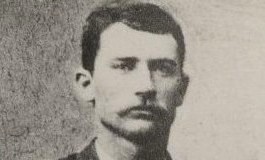 Henry Newton Brown
Murderer · USA · 1870
Henry Newton Brown — 19th century gunman; orphan; raised by relatives in Rolla,…
6 victims
Henry Newton Brown
Murderer · USA · 1870
Henry Newton Brown — 19th century gunman; orphan; raised by relatives in Rolla,…
6 victims
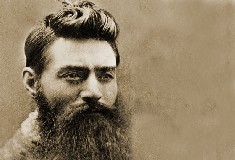 Ned Kelly
Murderer · Australia · 1878
Edward “Ned” Kelly (June 1854 or 1855 – 11 November 1880) was an Irish Australi…
6 victims
Ned Kelly
Murderer · Australia · 1878
Edward “Ned” Kelly (June 1854 or 1855 – 11 November 1880) was an Irish Australi…
6 victims
 Charles Peace
Murderer · United Kingdom · 1876
Charles Peace was executed by hanging in Leeds on February 25, 1879. Charles Pe…
2 victims
Charles Peace
Murderer · United Kingdom · 1876
Charles Peace was executed by hanging in Leeds on February 25, 1879. Charles Pe…
2 victims
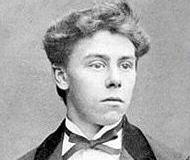 Hendrik Jut
Murderer · Netherlands · 1872
Hendrik Jut (July 19, 1851 – June 12, 1878) was a murderer from The Hague. He k…
2 victims
Hendrik Jut
Murderer · Netherlands · 1872
Hendrik Jut (July 19, 1851 – June 12, 1878) was a murderer from The Hague. He k…
2 victims
 Joseph LaPage
Murderer · USA · 1874
Joseph LaPage was described as a French-Canadian trapper who donned a bearskin…
2 victims
Joseph LaPage
Murderer · USA · 1874
Joseph LaPage was described as a French-Canadian trapper who donned a bearskin…
2 victims
 Jean Ann James
Murderer · Canada · 1992
Jean Ann James was an elderly Richmond woman who was convicted of the 1992 murd…
1 victim
Jean Ann James
Murderer · Canada · 1992
Jean Ann James was an elderly Richmond woman who was convicted of the 1992 murd…
1 victim
 Piper Rountree
Murderer · USA · 2004
Piper Rountree was convicted of first-degree murder for the shooting death of h…
1 victim
Piper Rountree
Murderer · USA · 2004
Piper Rountree was convicted of first-degree murder for the shooting death of h…
1 victim
 Rodney Gray
Murderer · USA · 1994
Rodney Gray was convicted of capital murder for killing Grace Blackwell, a 79-y…
1 victim
Rodney Gray
Murderer · USA · 1994
Rodney Gray was convicted of capital murder for killing Grace Blackwell, a 79-y…
1 victim
 Charles Bussell
Murderer · USA · 1990
Charles Bussell (DOB 3-11-55) was sentenced to death on January 17, 1992. Busse…
1 victim
Charles Bussell
Murderer · USA · 1990
Charles Bussell (DOB 3-11-55) was sentenced to death on January 17, 1992. Busse…
1 victim
 Shane Ragland
Murderer · USA · 1994
Shane Ragland was convicted of murder for the sniper-style shooting death of Un…
1 victim
Shane Ragland
Murderer · USA · 1994
Shane Ragland was convicted of murder for the sniper-style shooting death of Un…
1 victim
- Gender
- male
- Country
- New Zealand / Australia
- Location
- New Zealand / Australia
- Date of birth
- 1845
- Age at first offence
- 35
- Characteristics
- arson, robbery, attempt to collect insurance money
- Victim profile
- James Murray Dewar, his wife and their little baby / William Munday
- Method of murder
- Beating with an axe / Shooting
- Date(s) of murder
- March 14, 1880 / March 23, 1905
- Years active
- 1880–1905
- Date of arrest
- March 23, 1905
- Status
-
Executed
Executed by hanging in Australia on June 30, 1905
Case record: Robert Butler
Background
Robert Butler was discharged from gaol prior to the murder.
Butler later went to South America and then to Australia.
The offence
A murder and arson took place in Cumberland Street, Dunedin. In a house in Cumberland Street, a young married couple and their little baby were murdered, and an unsuccessful attempt was made to fire the scene of the crime.
The victims were Mr. and Mrs. Dewar and their baby. Dewar was a butcher by trade.
In addition, Butler committed a burglary and set fire to the residence of a Mr. Stamper, a solicitor of Dunedin. Some articles of value were stolen from Mr. Stamper’s house, including a pair of opera glasses, and the house was set on fire and burned to the ground.
Investigation
The investigation of the Cumberland Street murder was placed in the hands of Detective Bain. Bain had a duty to keep an eye on Robert Butler before the murder and did not at first associate his charge with the commission of the murder.
Detective Bain learned from a hotel landlord at the Scotia Hotel that a servant, Sarah Gillespie, was anxious to see him, and Gillespie provided a story about Butler’s movements.
Police built up circumstances to connect Butler to the Cumberland Street crime.
Arrest
Two police constables, Townsend and Colborne, arrested Butler after observing a suspected man who went into the bush and then produced a revolver. The suspected man was rushed before he could fire. The man was later found to be Robert Butler, alias Donnelly, alias Medway, alias Lee.
When Butler was later interviewed by Inspector Mallard in the lock-up at Waikouaiti, Mallard told him that he would be charged with the murder in Cumberland Street.
Butler made statements during his arrest and detention, including that if he was hanged for it, he would be an innocent man “whatever other crimes” he might have committed. Mallard told him there was evidence to convict him, including that “the fire was put out.”
A ranger on the Town Belt found a coat, a hat, and a silk striped cravat. A few days later, a pair of trousers were folded up and placed under a bush. These articles were identified as those Butler had been seen wearing on the Saturday and Sunday morning. There were bloodstains on the clothes.
A salmon tin was found on the Town Belt. Behind a seat in the Botanical Gardens, from which there was a partial view of the Dewars’ house in Cumberland Street, two more salmon tins were found. These tins were similar to those purchased by Butler on the Sunday morning.
Trial
Butler was charged with, and tried in the Supreme Court at Dunedin for the murder of Dewar. The trial was before Mr. Justice Williams and a jury of twelve.
Mr. B. C. Haggitt prosecuted for the Crown.
Butler insisted on defending himself. At the end of the opening speech of the prosecution, Butler asked the judge’s leave to ask him something. Butler said:
“You said just now that you were sorry I have not had counsel to defend me. Whilst the adage says ‘The man who is his own counsel has a fool for a client.’ I can only say there is another, which says that ‘Thrice armed is he who has his quarrel just.’ I have to ask your Honour's assistance and beg that you will not allow any irregularities to go against me.”
The judge replied:
“Certainly I shall take care that you have fair play. I do not think that the Crown will press unduly against you; but if there is anything that you would wish brought out—any points that you think are in your favour—I shall certainly see that it is done.”
The Crown’s evidence included facts showing that Butler had stayed at the Scotia Hotel, had been wearing described clothing, and that he had left certain items behind before leaving the hotel.
Sarah Gillespie described Butler entering the hotel, appearing restless, excited and pale, and afraid as if someone was coming after him. Gillespie also said Butler went out with a parcel and drank beer after returning to the hotel. Gillespie said Butler told the barman that he had had no breakfast that morning and that Butler went to a store near the corner of Dundas and Cumberland Streets and bought tins of salmon.
The Crown’s case included an examination of the victims and their home. It stated that the murderer had struck five blows and that Dewar had been killed in his sleep. It stated that Mrs. Dewar had tried to get out of bed when she was struck. It identified the axe used as Dewar’s own axe taken from the coal cellar.
The Crown’s case also included that drawers were disturbed, that robbery may have been the original motive, and that there were nail traces from the intruder’s boots. The evidence included that Butler had had “clumpsoles” on his boots prior to the murder and that after the murder these soles had been removed and were never traced.
When Butler was arrested, he was not wearing the lavender-coloured suit. The lavender-coloured suit was found and, under chemical analysis, certain minute spots were declared to be blood marks.
The medical witnesses rejected Butler’s explanation that the blood spots came from scratches on his hands, and said the spots had been spurted on. The Crown also relied on an allegation that Butler had shaved off his moustache on the day following the murder to facilitate flight.
Butler delivered a defence address lasting six hours. He said the evidence was purely circumstantial, reminded the jury that the onus of proof was on the Crown, and argued that he had relied on his own poor ability to defend himself. He used multiple proverbs and included the following words:
“Another proverb occurs to me now which is as apt as the others. ‘It is easier to attack than to defend,’ and against this, I will try to console myself with another old saying which is, ‘God defends the right.’ Gentlemen, I shall endeavour to rest upon the force of truth alone.”
He also delivered his final words to the jury:
“Finally, one word more, I stand in a terrible position; so do you. See that in your way of disposing of me you deliver yourselves of your responsibilities.”
In the judge’s summing up, Mr. Justice Williams admonished the jury to consider what they had heard at the trial and warned them against so-called public opinion. He told them to convict if they felt constrained on the evidence. He said there was no evidence to show that robbery was the motive.
The judge made the following comment on the police evidence:
“Then we have the evidence of the arresting constables and of Inspector Mallard, and the prisoner in his address to the jury made a remark on the value of the evidence given by a policeman. Well you distinctly understand me, gentlemen, that I do not wish to apply it particularly to the present case. I may say that the remark the prisoner made is one that is found in all the legal text books, ‘That all men are guilty till they are proved to be innocent’ is naturally the creed of the police, but it is not a creed that finds sanction in a Court of Justice. In taking the evidence of the constables into consideration you must take that into consideration.”
The judge’s final words included:
“If you think there is no other intelligible way of explaining the murder than that the prisoner committed it, then it would be a duty, altogether irrespective of consequences, to find him guilty. If, however, you think either that the evidence does not establish that, and, further, that the evidence does not sufficiently connect the prisoner with the murder or that there are other reasonable ways for accounting for the murder, then—however unsatisfactory it may be to leave a crime of such an atrocious nature undiscovered and unpunished—it will be your duty to acquit him.”
The jury retired and returned in three hours with a verdict of not guilty.
Sentencing
After the acquittal for murder, Butler pleaded guilty to the burglary at Mr. Stamper’s house and was sentenced to eighteen years’ imprisonment.
He later served that term in Littleton Jail.
In Queensland, after his arrest for the murder of Mr. Munday, Butler was arraigned at Brisbane before the Supreme Court of Queensland and faced a sentence of death. The sentence of death was confirmed by the Executive on June 30 (1905).
Appeals
No appeal was described.
Outcome
The jury acquitted Butler of the murder of Dewar. The verdict was not guilty.
After his later conviction for the murder of Mr. Munday, Butler was executed by hanging in Australia on June 30, 1905.
Aftermath
After the murder of the Dewars and his release, Butler went to South America and then to Australia.
In Queensland, on the evening of March 23, 1905, Mr. William Munday was walking toward Toowong to attend a masonic gathering and was shot by a middle-aged bearded man in a white overcoat. Munday’s bullet passed through his left arm and lodged in his stomach. Munday was taken to a neighbouring hospital and died within a few hours.
A search for the assailant followed. Constable Hennessy, riding a bicycle, saw a man in a white coat, asked for a match, and the man produced a large revolver. Hennessy struck him under the jaw, secured him after a sharp struggle, and later the man gave the name of James Wharton. James Wharton was hanged at Brisbane, and it was later ascertained beyond doubt that Wharton was Robert Butler.
Butler’s execution occurred on June 30, 1905.
Before his execution, Butler wrote a final confession of faith to a Freethought advocate that included the following:
“I shall have to find my way across the harbour bar without the aid of any pilot. In these matters I have for many years carried an exempt flag, and, as it has not been carried through caprice or ignorance, I am compelled to carry it to the last. There is an impassable bar of what I honestly believe to be the inexorable logic of philosophy and facts, history and experience of the nature of the world, the human race and myself, between me and the views of the communion of any religious organisation. So instead of the `depart Christian soul' of the priest, I only hope for the comfort and satisfaction of the last friendly good-bye of any who cares to give it.”
The day before execution, Butler played hymns on the prison church organ for half an hour. On the scaffold, he expressed sorrow for what he had done and hope that, if there were a heaven, mercy would be shown him.
Other details
Butler had an earlier conviction history described as: sentenced under the name of James Wilson to twelve months’ imprisonment for vagrancy; during sixteen years in Victoria he spent thirteen in prison, first for stealing, then in steady progression for highway robbery and burglary.
Butler had opened a “Commercial and Preparatory Academy” at Cromwell, Otago under the name “C. J. Donelly, Esq.” The programme described included a list of subjects such as reading, writing, arithmetic, euclid, algebra, mensuration, trigonometry, book-keeping, geography, grammar, spelling and dictation, composition, logic and debate, French, Latin, shorthand, history, music, and general lectures on astronomy, natural philosophy, geology, and other subjects.
A suspicion of theft cut short the fulfilment of the academy programme and Butler left Cromwell for Dunedin. In Dunedin he was sentenced to four years’ hard labour for several burglaries committed in and about the city.
On the 18th of February, 1880, Butler was released from prison and received a suit of clothes and a small sum of money from the Governor of the Dunedin Jail.
Bain tried to find employment for Butler. Butler acted as a reporter on the Dunedin Evening Star. Bain arranged for publication of “Prison Sketches” in the Sunday Advertiser, but Butler failed to appear.
Bain searched for Butler when he missed the manuscript delivery and described Butler as found “looking wild and haggard,” claiming he found the work “too much for his head,” torn up what he had written, had nowhere to go, and had gone to the end of the jetty with the intention of drowning himself. Bain replied:
“...it a pity he had not done so, as nothing would have given him greater joy than going to the end of the jetty and identifying his body.”
In a reported conversation, Butler said:
“You speak very plainly,” said Butler. “Yes, and what is more, I mean what I say,” replied Bain.
Bain arranged manual labour for Butler, getting him a job at levelling reclaimed ground near Dunedin. Butler started on Wednesday, March 10, but after three hours relinquished the effort.
Bain saw Butler on the evening of Saturday, March 13, and made an appointment to meet him, but Butler did not keep it. Bain searched the town for him and Butler could not be found.
In the early morning of Saturday, March 13, the house of Mr. Stamper was broken into and set on fire, and valuables among them a pair of opera glasses were stolen. On the morning of Sunday, March 14, the Cumberland Street killings were discovered.
Butler discussed famous criminals with Inspector Mallard prior to the Dewars murder, including Charles Peace and Scott. Butler told Inspector Mallard:
“Supposing now you were to wake up one morning and find some brutal murder committed, you would at once put it down to me; would you not?”
The Inspector replied:
“No, Butler, certainly not. The first thing I should do would be to look for suspicious facts and circumstances, and most undoubtedly, if they pointed to you, you would be looked after.”
After Butler’s arrest in Waikouaiti, Butler asked to speak to Mallard and said:
“I want to ask the press not to publish my career. Give me fair play. I suppose I shall be convicted and you will see I can die like a man.”
In a later account, Butler’s defence in the Dunedin murder trial was described as being advised outside court by three distinguished members of the New Zealand bar, who were later judges of the Supreme Court.

Spotted an error, or have more information about this case?