Benjamin Franklin Miller
Serial killer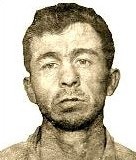 Donald Henry Gaskins
Serial killer · USA · 1969
Donald Henry Gaskins, also known as Donald “Pee Wee” Gaskins, was a serial kill…
200 victims
Donald Henry Gaskins
Serial killer · USA · 1969
Donald Henry Gaskins, also known as Donald “Pee Wee” Gaskins, was a serial kill…
200 victims
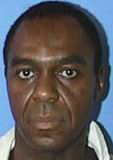 Carl Eugene Watts
Serial killer · USA · 1974
Carl Eugene Watts (born November 7, 1953; died September 21, 2007), also known…
100 victims
Carl Eugene Watts
Serial killer · USA · 1974
Carl Eugene Watts (born November 7, 1953; died September 21, 2007), also known…
100 victims
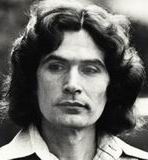 Rodney Alcala
Serial killer · USA · 1977
Rodney James Alcala (born August 23, 1943) was also known as Rodrigo Jacques Al…
100 victims
Rodney Alcala
Serial killer · USA · 1977
Rodney James Alcala (born August 23, 1943) was also known as Rodrigo Jacques Al…
100 victims
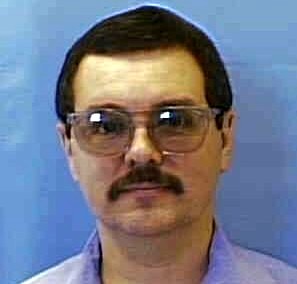 Donald Harvey
Serial killer · USA · 1970
Donald Harvey was known as an American serial killer and a self-professed “Ange…
87 victims
Donald Harvey
Serial killer · USA · 1970
Donald Harvey was known as an American serial killer and a self-professed “Ange…
87 victims
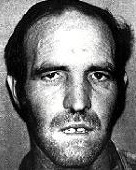 Ottis Toole
Serial killer · USA · 1961
Ottis Elwood Toole (sometimes misspelled as “Otis”) was an American serial kill…
65 victims
Ottis Toole
Serial killer · USA · 1961
Ottis Elwood Toole (sometimes misspelled as “Otis”) was an American serial kill…
65 victims
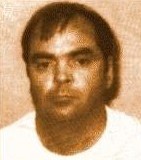 Donald Leroy Evans
Serial killer · USA · 1975
Donald Leroy Evans (born July 5, 1957) was an American serial killer who murder…
60 victims
Donald Leroy Evans
Serial killer · USA · 1975
Donald Leroy Evans (born July 5, 1957) was an American serial killer who murder…
60 victims
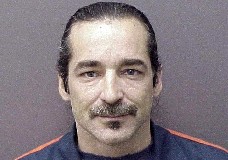 John Jerry Jancar
Homicide · USA · 1983
John Jerry Jancar was a 17-year-old high school student when he was convicted i…
2 victims
John Jerry Jancar
Homicide · USA · 1983
John Jerry Jancar was a 17-year-old high school student when he was convicted i…
2 victims
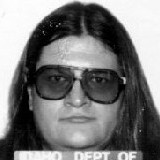 Paul Ezra Rhoades
Serial killer · USA · 1985
Paul Ezra Rhoades was a male Idaho inmate who was born on January 18, 1957, in…
6 victims
Paul Ezra Rhoades
Serial killer · USA · 1985
Paul Ezra Rhoades was a male Idaho inmate who was born on January 18, 1957, in…
6 victims
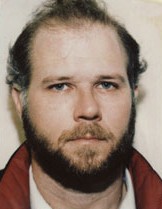 Glenn Barker
Murderer · USA · 1982
Glenn Haslam Barker was a basketball coach for the South Brunswick Family YMCA.…
3 victims
Glenn Barker
Murderer · USA · 1982
Glenn Haslam Barker was a basketball coach for the South Brunswick Family YMCA.…
3 victims
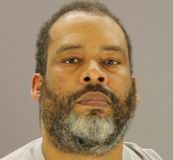 Erbie Bowser
Mass murderer · USA · 2013
Erbie Bowser was 44 years old and was described as a former special education t…
4 victims
Erbie Bowser
Mass murderer · USA · 2013
Erbie Bowser was 44 years old and was described as a former special education t…
4 victims
- Gender
- male
- Country
- USA
- Location
- Stamford, Connecticut, USA
- Date of birth
- 1930
- Age at first offence
- 37
- Characteristics
- history of mental illness
- Victim profile
- Rose Ellen Pazda, 29 / Donna Roberts, 22 / Gloria Conn, 21 / Gail Thompson, 19 / Alma Henry, 34 (black prostitutes)
- Method of murder
- Strangulation
- Date(s) of murder
- 1967 - 1971
- Years active
- 1967–1971
- Date of arrest
- March 17, 1972
- Status
-
Acquitted / overturned
Found not guilty by reason of insanity for certain murders; committed to the custody of the Commissioner of Mental Health of the State of Connecticut in 1973 after a hearing; habeas corpus relief was granted conditionally on the writ unless the State elects to bring Miller to trial
Case information
Benjamin Franklin Miller
Timeline
- 1967-08-04 — The body of Rosell (“Sissy”) Rush, a young black woman, was found strangled near River Bank Road in a wooded area off the Merritt Parkway in Stamford.
- 1968-05-03 — The similarly strangled body of Donna Roberts, age 22, was discovered in the same area in Stamford.
- 1968-09-08 — The similarly strangled body of Gloria Kahn was discovered in the same area in Stamford.
- 1968-09-07 — Gloria Conn was strangled to death; her body was recovered next day.
- 1969-04 — Rose Ellen Pazda’s skeletal remains were recovered.
- 1971-07-10 — The strangled body of Gail Thompson was found.
- 1971-08-22 — The strangled body of Alma Henry was found.
- 1971 — Evidence indicated a car backing into the places where bodies were found, and the killer hauled victims in the trunk.
- 1972-01 — By January 1972, a special team of state and local police detectives was assigned full-time to the cases.
- 1972-02-16 — During an interrogation session, detectives suggested Miller speak with Dr. Robert Miller; Miller refused to see Dr. Miller but agreed to see Dr. Shirley Williams.
- 1972-02-17 — Miller was committed to Fairfield Hills Hospital.
- 1972-02-29 — Dr. Robert Miller called detectives and reported Miller wished to speak with them; after detectives arrived and advised Miller of his rights, Miller wrote on a pad that he had killed seven women and later described killings including Thompson and Henry.
- 1972-03-01 — Miller signed typed versions of statements made on February 29 and reenacted the Thompson murder and led officers to spots where three other bodies had been found.
- 1972-03-02 — Miller signed a detailed statement admitting the murder of Henry and accompanied officers to the Merritt Parkway, pointing out the spot where Henry’s body had been found.
- 1972-03-10 — Miller signed a detailed statement admitting the murder of Roberts.
- 1972-03-17 — Miller was placed under arrest.
- 1972-05-15 — Miller was indicted for the murders of Rush, Roberts, Kahn, Thompson, and Henry.
- 1972-07-29 — Police arrested Robert Lupinacci as he was attempting to strangle a black prostitute in the same area in which Miller’s alleged victims had been found.
- 1972-12 — Bundock received a report from a court-appointed psychiatrist stating Miller was chronically psychotic and delusional and totally incapable of discerning right from wrong, while also stating there was “no certain idea” whether Miller had actually committed the murders.
- 1973-01 — The State withdrew charges with regard to Rush and Kahn; Miller pleaded not guilty by reason of insanity on the charges that he had killed Roberts, Thompson, and Henry.
- 1973 (after January) — A one-day trial was held before a three-judge panel of the Connecticut Superior Court for Fairfield County; the panel found Miller not guilty by reason of insanity.
- 1973 (March) — A hearing was held to determine whether Miller’s current mental state warranted confinement in a mental hospital; the court found by a preponderance of the evidence that Miller was currently mentally ill to such an extent that he posed a danger to himself and to others and committed him to the custody of the commissioner of mental health for a term of confinement not to exceed 25 years.
- 1982 — Miller sought habeas relief in state court.
- 1983-10-13 — The state habeas court issued its Memorandum of Decision Re: Petition for Writ of Habeas Corpus.
- 1985 — The Connecticut Court of Appeals rejected the habeas court’s view that Miller was barred from pursuing his habeas claims but affirmed denial of the writ on the merits (4 Conn.App. 406, 494 A.2d 1226).
- 1985 (leave denied) — Leave to appeal to the Connecticut Supreme Court was denied (197 Conn. 809, 499 A.2d 59).
- 1986 — Miller filed his present petition for habeas corpus in the district court pursuant to 28 U.S.C. Sec. 2254 (1982).
- 1987-07-28 — The district court issued a ruling denying the petition for a writ of habeas corpus.
- 1987 — The petition was denied and the appeal followed.
- 1988-01-19 — The case was argued in the United States Court of Appeals, Second Circuit.
- 1988-05-20 — The United States Court of Appeals, Second Circuit decided the appeal (Benjamin F. Miller, Jr. v. Colin C.J. Angliker, M.D.).
Background
During the period 1967 through 1971, young black prostitutes were found strangled in a wooded area of Stamford, Connecticut, adjacent to the Merritt Parkway.
Miller was indicted in 1972 for five such murders. In 1973, pursuant to an agreement between prosecution and defense, two counts were withdrawn, and Miller pleaded not guilty by reason of insanity. The State joined in urging the three-judge panel before which the case was tried to accept the insanity defense, and Miller was found not guilty by reason of insanity.
Miller’s constitutional claims on appeal stemmed from evidence the State possessed but did not disclose to him before the plea agreement leading to his decision to rest on the insanity defense. The undisclosed evidence connected another individual, Robert Lupinacci, at pertinent times and places, with at least four of the five women alleged to have been killed by Miller.
Miller had been committed to the custody of the Commissioner of Mental Health of the State of Connecticut in 1973 after being found not guilty of certain murders by reason of insanity. He remained confined since 1973.
Miller spent a great deal of his time preaching to blacks on street corners in Stamford, and especially to black women. He claimed to be an ordained minister. He had a history of mental illness and had been hospitalized at Fairfield Hills State Hospital (“Fairfield Hills”) as early as 1953. He was described by his former pastor as “almost a fanatic.” Miller’s church expelled him, and he moved to Connecticut from Illinois at eighteen years of age, in 1948. He was employed at the post office for ten years, talked religion on the job, ignored fellow workers, and kept to himself whenever possible.
The offence
Five murders in Stamford, Connecticut were alleged during 1967 through 1971:
- Rosell (“Sissy”) Rush was found strangled near River Bank Road in a wooded area off the Merritt Parkway in Stamford on 1967-08-04.
- Donna Roberts, age 22, was found on 1968-05-03, the day after her disappearance from Stamford.
- Gloria Kahn / Gloria Conn, aged 21, was strangled to death on 1968-09-07, and her body was recovered next day; her similarly strangled body was discovered on 1968-09-08.
- Gail Thompson’s strangled body was found on 1971-07-10.
- Alma Henry’s life was claimed on 1971-08-22; her body was discarded.
Police evidence indicated that the killer hauled victims in the trunk, with evidence of a car backing into the places where bodies were found.
In addition, one victim was reported missing from nearby Mount Vernon, New York.
Four of the five victims were from Stamford, with one reported missing from nearby Mount Vernon, New York.
Investigation
Crimes were not quickly solved, and there was substantial publicity in the Stamford area with respect to a series of killings. The black community and other groups expressed anger at lack of progress.
After initial bodies were discovered, the first time Miller came to police attention was after a Reverend James Miller (apparently not related to petitioner) reported receiving an anonymous telephone call in April 1969 from someone having the voice of a black male, describing the location of an as yet unfound body and expressing a wish that the deceased woman receive “a Christian burial.”
Investigators sought to list all Millers who were clergymen in the area and included Miller’s name among them. After three more bodies were discovered, police invited Miller to be interviewed. Police did not pursue Miller further when he responded that he was too busy with church work to be interviewed.
By 1972-01, a special team of state and local police detectives was assigned full-time. Detectives began following up on earlier mention of Miller, learned of his psychiatric history, and learned of his contacts with black women. Over the next few weeks, detectives interrogated Miller several times and at length.
Miller denied that he had committed the murders but admitted having “had sexual relations with Gail Thompson in [his] car in North Stamford.” A polygraph test of Miller’s denial proved inconclusive, apparently because of his erratic behavior.
When detectives showed Miller a picture of Thompson’s body and asked what he thought was around her neck, Miller responded, correctly, that it was a handkerchief; the public information had been that Thompson had been strangled with a brassiere.
Miller agreed to see Dr. Shirley Williams at Norwalk Hospital after refusing to see Dr. Robert Miller. After Miller was seen by Dr. Williams and another psychiatrist, Miller was involuntarily committed to Fairfield Hills. On admission, Miller was found to be suffering from chronic undifferentiated schizophrenia, was placed on suicide watch at times, and was regularly administered medication. The hospital records indicated that “he is delusional, religiosity [sic ] is in evidence, low self-esteem, flat affect, thought disorders, poor judgment and insight.”
During Miller’s stay at Fairfield Hills, Dr. Robert Miller interviewed Miller. Dr. Miller told the investigators he believed Miller had committed the murders and encouraged the investigators to continue investigating Miller.
On 1972-02-29, after detectives advised Miller of his rights, Miller wrote on a pad that he had killed seven women. Miller later stated he had killed Thompson, Henry, Rush, and others he could not remember. He described the murder of Thompson in detail and made a more general statement about killing three others.
Miller reenacted the Thompson murder and led them to spots where three other bodies were found on 1972-03-01. He signed statements admitting murders of Henry on 1972-03-02 and Roberts on 1972-03-10.
Arrest
Miller was placed under arrest on 1972-03-17.
Trial
Following Miller’s arrest, Herbert J. Bundock, a public defender appointed in Fairfield County since 1962, represented Miller. Joseph T. Gormley, Jr. was the State’s attorney in charge of prosecution. Bundock was informed by Gormley that Dr. Robert Miller believed Miller could be found not guilty by reason of insanity.
Bundock interviewed Miller, Miller’s father (“Miller Sr.”), and Dr. Williams, and reviewed Miller’s psychiatric records.
Miller Sr. told Bundock that Miller had telephoned Miller Sr. in February and said he had signed a confession but that he was sick and would have signed anything.
Miller told Bundock that during the first several interrogations, detectives had repeatedly tried to get him to confess to the murders, but he had denied killing the women. Miller also told Bundock that Dr. Robert Miller had tried to get him to confess and had shown him a statement he could sign in order to plead not guilty by reason of temporary insanity, and that Miller asked whether Dr. Miller “want[ed Miller] to ... confess to something I didn't do.”
Miller stated that he eventually confessed while under the influence of the medication given him and that Dr. Miller and another doctor had broken him down.
Miller told Bundock he was frightened and feared receiving a beating when he provided confessions on 1972-02-29, 1972-03-02, and 1972-03-10. He said detectives told him he would lose his job and his family would suffer unless he confessed. He also said he was concerned that because he had admitted adulterous conduct with black women, the police would arrest him for adultery and his wife would divorce him. He further said detectives asked leading questions and that he gave them the right answers, and that they had shown him pictures of the murder scenes many times. He said that when they drove him to the site of the murders and asked if they were in the right place, he said “I think so” to please them.
Bundock had Miller evaluated by a court-appointed psychiatrist in mid-December 1973. The report stated Miller “is and has been chronically psychotic and delusional and totally incapable of discerning right from wrong,” and that “[t]he force of his insanity drove him into the midst of the daily life of the people he is accused of having murdered,” while stating the psychiatrist had “no certain idea” whether Miller had actually committed the murders.
Robert Lupinacci was arrested on 1972-07-29 while attempting to strangle a black prostitute in the same area. Miller Sr. sent Bundock a packet of clippings and ideas for investigation, including articles describing the arrest of Lupinacci and indicating investigation might be reopened. Bundock believed Miller’s confessions revealed details he would have known only if he were the killer and did not investigate that possibility further or pursue investigation regarding Lupinacci.
Bundock moved for production of exculpatory information in June 1972. Gormley agreed Bundock could have free access to the State’s file on Miller but never formally responded, and the State did not offer access to its file on Lupinacci and never turned over any information on Lupinacci.
A one-day trial was held in January 1973 on three remaining charges against Miller before a three-judge panel of Connecticut Superior Court for Fairfield County. Two counts had been withdrawn (Rush and Kahn). Miller pleaded not guilty by reason of insanity on charges that he had killed Roberts, Thompson, and Henry.
Under Connecticut law, the trier of fact could not enter a verdict of not guilty by reason of insanity unless it found beyond a reasonable doubt that the defendant had in fact committed the acts charged. The State presented a prima facie case primarily consisting of Miller’s confessions.
Miller presented his insanity defense through testimony of Dr. Robert Miller and Miller’s court-appointed psychiatrist. Both Gormley and Bundock urged the court to accept the insanity defense. After a brief recess, the court found Miller not guilty by reason of insanity.
Sentencing
After the trial finding, in March 1973 pursuant to Conn. Gen. Stat. Ann. Sec. 53a-47 (West 1972) (repealed by 1985), the three-judge panel held a hearing to determine whether Miller’s current mental state warranted confinement in a mental hospital.
The court found it established by a preponderance of the evidence that Miller was currently mentally ill to such an extent that he posed a danger to himself and to others. The court committed him to the custody of the commissioner of mental health for a term of confinement not to exceed 25 years. Miller remained so confined since 1973.
Appeals
Miller filed a petition for a writ of habeas corpus seeking relief in 1982 in state court. He contended principally that:
- Bundock’s failure to pursue the Lupinacci line of inquiry and certain other procedural strategies violated his Sixth Amendment right to effective assistance of counsel and affected his decision to plead insanity rather than simply not guilty, and
- the State’s failure to turn over to Bundock its file on Lupinacci violated his due process right to be provided with exculpatory information in possession of the State, see Brady v. Maryland.
After an eight-day evidentiary hearing where Bundock, Gormley, and others testified, the state habeas court made exhaustive findings and denied relief in a Memorandum of Decision dated 1983-10-13.
The state habeas court expressed “substantial doubt” whether the Lupinacci information possessed by the State would have been admissible at trial, quoting:
- “‘[o]rdinarily, evidence concerning a third party's involvement is not admissible until there is some evidence which directly connects that third party with the crime.' ... ‘[I]t is within the sound discretion of the trial court to refuse to admit such evidence when it simply affords a possible ground of possible suspicion against another person.'” (State Habeas Court Decision at 44, quoting State v. Kinsey and State v. Renteria, quoted in State v. Giguere).
The state habeas court rejected ineffective assistance because it concluded Bundock’s performance had not been ineffective and that Bundock acquired sufficient information to make an informed recommendation.
The state habeas court rejected the Brady v. Maryland claim on the ground that:
- “the information in the hands of the State's Attorney was [not] sufficient to create a reasonable doubt that did not otherwise exist.” (State Habeas Court Decision at 38.)
It apparently believed the withheld information showed “mere[ ] similarities in crimes committed by two different individuals” and that it was not proper Brady material. It also believed public information available to Bundock provided an opportunity for Bundock to discover information allegedly suppressed.
The state habeas court ruled Miller was not entitled to attack alleged constitutional deprivations occurring before his January 1973 trial because he was not aggrieved by events leading to that trial since he “was acquitted.”
It also treated Miller’s habeas petition as an improper attack on his confinement because the commitment was separate from the trial and focused on mental state in 1973. It noted Miller had not appealed from the March 1973 confinement order and ruled claims were barred.
The Connecticut Court of Appeals rejected the view that Miller was barred from pursuing habeas claims but affirmed denial on the merits (4 Conn. App. 406, 494 A.2d 1226 (1985)). It found the Lupinacci evidence was “clearly” and “obvious[ly]” exculpatory (494 A.2d at 1235 n. 4). It believed the Agurs test was not technically applicable because Miller was found not guilty by reason of insanity, but applied more general principles: whether it was reasonably certain the Lupinacci file would have caused Bundock to change his mind about recommending an insanity plea and that a trial after a not guilty plea would have created reasonable doubt by the Lupinacci material. It concluded no error and denied relief. Leave to appeal to the Connecticut Supreme Court was denied (197 Conn. 809, 499 A.2d 59 (1985)).
Miller then filed his present petition for habeas corpus in federal district court in 1986 pursuant to 28 U.S.C. Sec. 2254 (1982), pursuing Brady v. Maryland and ineffective assistance. The district court deferred to state factual findings under Sec. 2254(d). It agreed with the materiality standard applied by the state appellate court and its conclusion that Miller failed to prove the outcome would have been different if the prosecutor disclosed evidence relating to Lupinacci. Judgment was entered denying the writ, and Miller appealed.
In the United States Court of Appeals, Second Circuit, the panel agreed with Miller’s Brady contention, reversed the district court’s dismissal of the petition, and remanded for entry of judgment conditionally granting the writ. The judgment was to provide that the writ would be granted unless the State elected to bring Miller to trial.
Outcome
The United States Court of Appeals, Second Circuit concluded that Miller’s Brady v. Maryland claim had merit. It reversed the district court’s judgment dismissing Miller’s petition and remanded for entry of a judgment conditionally granting the writ, stating that the writ would be granted unless within a reasonable time the State brings Miller to trial.
Other details
Police reported victims included “junkies,” and three were known prostitutes. The series of killings caused a community under siege.
A Reverend James Miller received an anonymous telephone call in April 1969 from someone having the voice of a black male, describing the location of an as yet unfound body and expressing a wish that the deceased woman receive “a Christian burial.”
The state appellate and federal discussion included that evidence about a third party’s involvement requires some evidence directly connecting that third party with the crime, and that the trial court has discretion to refuse evidence when it affords a possible ground of possible suspicion.
People involved
- Benjamin Franklin Miller — defendant; committed to Fairfield Hills in 1972-02-17; found not guilty by reason of insanity; committed for mental health confinement.
- Colin C.J. Angliker, M.D. — respondent-appellee; Director, Whiting Forensic Institute.
- Ellen Bree Burns — judge in the United States District Court for the District of Connecticut.
- Herbert J. Bundock — public defender appointed to represent Miller.
- Joseph T. Gormley, Jr. — State’s attorney in charge of prosecution.
- Dr. Robert Miller — psychiatrist at Fairfield Hills; interviewed Miller; told investigators he believed Miller had committed the murders.
- Dr. Shirley Williams — psychiatrist Miller agreed to see at Norwalk Hospital.
- Miller Sr. — Miller’s father; communicated with Bundock about Miller’s confessions and fears.
- Robert Lupinacci — arrested on 1972-07-29 while attempting to strangle a black prostitute; alleged as possible alternative perpetrator connected by undisclosed evidence.
- Rosell (“Sissy”) Rush — victim found strangled 1967-08-04.
- Donna Roberts — victim, age 22; found 1968-05-03.
- Gloria Kahn / Gloria Conn — victim, age 21; strangled to death 1968-09-07; body recovered 1968-09-08.
- Gail Thompson — victim; strangled body found 1971-07-10.
- Alma Henry — victim; body discarded and claimed 1971-08-22.
- Rose Ellen Pazda — victim whose skeletal remains were recovered during April 1969 after being reported missing on 1967-08-04.
- Reverend James Miller — reported receiving an anonymous telephone call in April 1969.
Spotted an error, or have more information about this case?