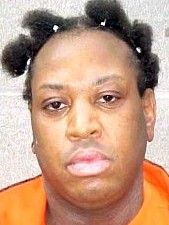
Sherman Rutledge
Murderer Russell Ellwood
Murderer · USA · 1991
Russell Ellwood was a former taxi driver. Authorities suspected him of killing…
20 victims
Russell Ellwood
Murderer · USA · 1991
Russell Ellwood was a former taxi driver. Authorities suspected him of killing…
20 victims
 Robert Martines Perez
Murderer · USA · 1994
Name: Robert Martines Perez · Other name used in proceedings: Robert Martinez P…
15 victims
Robert Martines Perez
Murderer · USA · 1994
Name: Robert Martines Perez · Other name used in proceedings: Robert Martinez P…
15 victims
 Billy Frank Vickers
Murderer · USA · 1993
Billy Frank Vickers Vickers was executed by lethal injection in Texas on Januar…
14 victims
Billy Frank Vickers
Murderer · USA · 1993
Billy Frank Vickers Vickers was executed by lethal injection in Texas on Januar…
14 victims
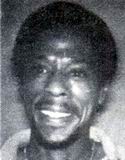 John Parish
Mass murderer · USA · 1982
John Parish (July 4, 1933 – August 9, 1982) was an American mass murderer. He s…
6 victims
John Parish
Mass murderer · USA · 1982
John Parish (July 4, 1933 – August 9, 1982) was an American mass murderer. He s…
6 victims
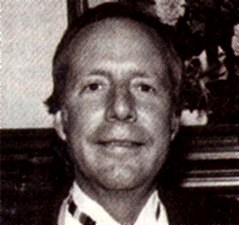 John Eleuthère DuPont
Homicide · USA · 1996
John Eleuthère duPont (November 22, 1938 – December 9, 2010) was an American bi…
1 victim
John Eleuthère DuPont
Homicide · USA · 1996
John Eleuthère duPont (November 22, 1938 – December 9, 2010) was an American bi…
1 victim
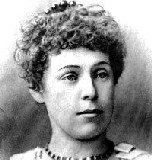 Florence Maybrick
Murderer? · United Kingdom · 1899
Florence Elizabeth Maybrick (Florence Maybrick) was an American woman convicted…
1 victim
Florence Maybrick
Murderer? · United Kingdom · 1899
Florence Elizabeth Maybrick (Florence Maybrick) was an American woman convicted…
1 victim
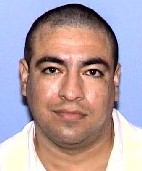 Abel Revilla Ochoa
Mass murderer · USA · 2002
Abel Revilla Ochoa (TDCJ number 999450), born 01/23/1973, was convicted of capi…
5 victims
Abel Revilla Ochoa
Mass murderer · USA · 2002
Abel Revilla Ochoa (TDCJ number 999450), born 01/23/1973, was convicted of capi…
5 victims
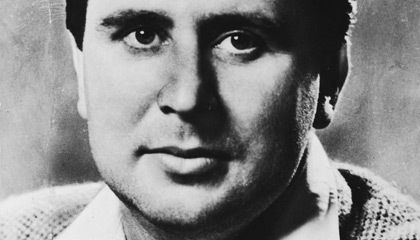 Brian Donald Hume
Murderer · United Kingdom/Switzerland · 1949
Brian Donald Hume partnered in illegal activities with Stanley Setty. Hume had…
2 victims
Brian Donald Hume
Murderer · United Kingdom/Switzerland · 1949
Brian Donald Hume partnered in illegal activities with Stanley Setty. Hume had…
2 victims
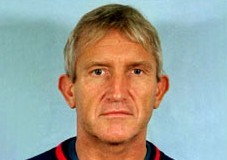 Kenneth Noye
Homicide - Murderer · United Kingdom · 1983
Kenneth Noye was a British criminal. Noye was involved in laundering the procee…
2 victims
Kenneth Noye
Homicide - Murderer · United Kingdom · 1983
Kenneth Noye was a British criminal. Noye was involved in laundering the procee…
2 victims
- Gender
- male
- Country
- USA
- Location
- Maricopa County, Arizona, USA
- Date of birth
- November 25, 1971
- Age at first offence
- 26
- Characteristics
- armed robbery
- Victim profile
- Ryan Harris
- Method of murder
- Shooting
- Date(s) of murder
- May 13, 1997
- Years active
- 1997
- Date of arrest
- —
- Status
-
Life imprisonment
Sentenced to death on April 12, 2001; resentenced to life in prison on March 3, 2004
Case overview
Sherman Rutledge was charged with armed robbery, first degree murder of Ryan Harris, and attempted second degree murder of Chase Clayton. Rutledge was sentenced to death, and later was resentenced to life in prison.
Timeline
- May 13, 1997 — Rutledge, who had recently been released from prison, lured Chase Clayton and Ryan Harris to Madison Park with the intent of stealing Clayton's vehicle; Rutledge shot and killed Ryan Harris, attempted to kill Chase Clayton by shooting him in the back as he fled, and then pulled Ryan Harris' body from the vehicle; Rutledge and his younger brother drove the truck for several days in Mesa and set the truck on fire to destroy evidence of the crime.
- Next day (after May 13, 1997) — Rutledge was arrested.
- September 7, 1999 — Start of trial.
- September 21, 1999 — Verdict.
- April 12, 2001 — Sentencing; Rutledge was sentenced to death.
- March 3, 2004 — Resentenced to life in prison.
- Aug. 12, 1996 — Submitted (Ninth Circuit matter regarding habeas petition).
- Aug. 16, 1996 — Decided (Ninth Circuit matter regarding habeas petition).
Background
Sherman Rutledge had recently been released from prison before May 13, 1997.
The offence
On May 13, 1997, Rutledge met Clayton and Harris while walking near 40th Street and Camelback. The victims offered Rutledge and his companions a ride. The group went to a nearby apartment while Rutledge tried to locate some drugs. The group left the apartment on two occasions, once to pick up Rutledge’s brother, and a second time to buy drugs at Madison Park at 26th Street and Campbell. Once at Madison Park, Rutledge got out of the vehicle.
Rutledge’s brother hit Clayton over the head with a beer bottle. The two struggled with a knife. Rutledge pulled Clayton out of the vehicle, pointed a gun at him and pulled the trigger. When the gun failed to fire, Clayton ran from the park and climbed over a chain link fence to reach safety.
Rutledge fired three or four shots at Clayton as he ran, hitting him once in the shoulder. Rutledge then shot Harris while Harris sat terrified in the passenger’s seat of the vehicle. Rutledge pulled Harris from the vehicle. The bullet passed through Harris’ pulmonary artery and lodged in his left lung causing him to bleed to death.
Rutledge and his brother left in Clayton’s Ford Explorer. Later that morning, Rutledge burned the Explorer, completely destroying the vehicle. Rutledge then pulled Ryan Harris' body from the vehicle. Rutledge, with his younger brother, drove the truck for several days in Mesa, where they then set the truck on fire, in an attempt to destroy evidence of the crime.
Investigation and arrest
Rutledge was arrested the next day. Upon questioning by the Phoenix Police Department, Rutledge denied any involvement in the crimes and denied having met Clayton and Harris.
Trial
Presiding Judge: Frank T. Galati. Prosecutor: Vince H. Imbordino and Elizabeth B. Ortiz. Defense Counsel: Carmen L. Fischer & Joanne Landfair. Sentencing: Mark W. Kennedy & John E. Hudson.
Start of Trial: September 7, 1999. Verdict: September 21, 1999.
The State charged Sherman Rutledge with armed robbery, first degree murder of Ryan Harris, and attempted second degree murder of Chase Clayton.
All but one witness testified that Rutledge committed the crimes. Jason Ellis testified that an unknown black male committed the crimes. However, in a videotaped interview with a Phoenix Police Department detective, Ellis identified Rutledge as the person who committed the crimes. At trial, Ellis claimed to have named Rutledge as the shooter because he was intoxicated and confused during the interview. The videotaped interview was admitted into evidence and was played at trial for the jury.
Based on the facts, the jury found Rutledge guilty of all charges, and the trial judge sentenced him to death.
Rutledge argued on appeal that the trial court’s admission of Jason Ellis’ videotaped interview denied him a fair trial. Rutledge argued that the trial court’s ruling ignored Arizona Rule of Evidence 613(b), requiring that admission of extrinsic evidence of a prior inconsistent statement made by a witness must be inconsistent with that witness’s trial testimony. Rutledge contended that Ellis admitted making inconsistent statements and therefore there was no reason for the trial court to allow admission of the videotaped statement at trial.
The State argued that the videotaped interview was properly admitted to allow the jury to determine the overall credibility of Ellis’ trial testimony.
Rutledge also argued that he was denied a fair trial because the prosecutor made an impermissible reference to Rutledge’s decision not to testify. During closing arguments, the prosecutor questioned why Rutledge had not been more forthcoming with police as to the names of some people he claims to have been with at the time of the crimes. Rutledge argued that the comment led the jury to speculate why he did not take the stand, in violation of his Fifth Amendment rights. The State argued that the comments were not directed at Rutledge’s decision not to testify, but rather to his police interview.
Finally, Rutledge argued that he was entitled to a new trial because the jury instructions given on accomplice liability and its relationship to his alibi defense were erroneous in light of recent Arizona case law. The State argued that there had been no change in accomplice liability in Arizona and therefore a new trial was not warranted.
Sentencing
Sentencing: April 12, 2001. Aggravating Circumstances: Pecuniary gain. Mitigating Circumstances: None. Rutledge was sentenced to death.
Proceedings referenced: Proceedings included consolidation of numerous death penalty cases, including Rutledge’s, to consider death penalty sentencing issues in light of Ring v. Arizona, a recent U.S. Supreme Court decision; those sentencing issues were not determined as part of the proceeding.
Appeals
Direct appeal and resentencing
The case was referenced as: “STATE OF ARIZONA, Appellee v. SHERMAN RUTLEDGE, Appellant.” It was identified as “Direct Appeal pending before the Arizona Supreme Court.” The proceedings included “(Resentenced to Life, March 3, 2004) CR-01-0129-AP.”
Parties/Counsel: The State was represented by the Arizona Attorney General’s Office, by Kent E. Cattani, Chief Counsel, Capital Litigation Section and John Pressley Todd, Assistant Attorney General, Capital Litigation Section. Sherman Rutledge was represented by Robert W. Doyle.
Facts and Procedural History on appeal: the State charged armed robbery, first degree murder of Ryan Harris, and attempted second degree murder of Chase Clayton. The appellate discussion included the videotaped interview issue involving Jason Ellis, the claim of an impermissible reference to Rutledge’s decision not to testify, and the jury instruction claims related to accomplice liability and alibi defense.
Federal habeas
Ninth Circuit: 94 F.3d 652. Caption: Sherman RUTLEDGE, Petitioner-Appellant, v. Samuel A. LEWIS, Director; Grant Woods, Attorney General of the State of Arizona, Respondents-Appellees. No. 94-16778. United States Court of Appeals, Ninth Circuit. Submitted Aug. 12, 1996. Decided Aug. 16, 1996. Before: BROWNING, SCHROEDER, and RYMER, Circuit Judges.
Rutledge appealed pro se the district court’s denial of his 28 U.S.C. § 2254 habeas petition challenging his 1986 conviction and sentence for first-degree murder and aggravated assault. He contended:
- Statements made by him and admitted at trial were involuntary because he was under the influence of drugs.
- There was insufficient evidence to support his convictions.
- His trial counsel was ineffective for failing to call an expert witness in support of Rutledge’s voluntary intoxication defense.
The court affirmed.
Voluntariness of statements (habeas)
The court stated it disagreed with Rutledge’s argument that his statements were involuntary due to drug influence. It addressed de novo review and presumptions regarding underlying historical or subsidiary factual findings. It stated that a confession was voluntary if it was “product of a rational intellect and a free will.” The court reviewed the circumstances surrounding the confession to determine whether free will was overcome by effects of drug intoxication. It described laboratory analysis of Rutledge’s blood as revealing only a small amount of narcotics and stated there was no indication that Rutledge experienced adverse effects from narcotic ingestion during the police interview. It concluded Rutledge failed to identify circumstances overbearing his free will or ability to think rationally.
Sufficiency of evidence (habeas)
Rutledge argued the state failed to present sufficient evidence of aggravated assault and first degree murder. The court stated it disagreed and referenced the standard under Jackson v. Virginia.
Aggravated Assault (habeas) The court stated Rutledge contended conviction for assaulting Johnny Birdine could not stand because evidence showed he only pointed his gun at Diane Zapata. The court stated this contention lacked merit. It stated there was sufficient evidence to support the jury’s conclusion that Rutledge placed Johnny Birdine in reasonable apprehension of imminent physical injury while armed with a deadly weapon. It quoted Birdine’s testimony that while Rutledge appeared to be pointing the gun at Zapata’s head, he may have been also pointing it at Birdine’s head, and that Birdine feared for his life when he saw Rutledge pointing the gun in his direction. It stated based on this testimony the jury could have reasonably found Rutledge intended to place Birdine in apprehension of imminent physical injury.
First Degree Murders (habeas) The court stated Rutledge argued the state failed to present sufficient evidence of the “premeditation” element. It stated this argument lacked merit and described evidence presented of premeditation. It described Birdine’s testimony that moments before Rutledge fired a shot, he sat in a chair loading the weapon. It stated Birdine testified that after Zapata implored Rutledge not to shoot, he spun around and proceeded to fire a shot into the dining room which struck Dean Calvin. It stated that if jurors believed Birdine’s testimony, they could have concluded Rutledge had sufficient time to contemplate the murder of Calvin. It stated Birdine testified that as he was escaping through the window, he heard another shot ring out, and that Rutledge again had time to reflect before firing the second shot. It stated the court found that Rutledge fired the weapon at least six times, since five bullets were recovered from Dean Calvin’s body and one from Diana Zapata’s body. It stated the jury could have reasonably rejected Rutledge’s testimony that he “blacked out” during the murders and concluded that he premeditated the murders of Dean Calvin and Diane Zapata.
Ineffective assistance of counsel (habeas)
The court stated Rutledge contended his trial counsel was ineffective for failing to call an expert witness to support voluntary intoxication. It disagreed. It described the Strickland v. Washington standard, including objective reasonableness and prejudice.
The court stated a reasonable tactical decision not to call a particular witness would not constitute ineffective assistance even if the defendant disagreed. It stated counsel had a duty to make reasonable investigations or make reasonable decisions that investigations were unnecessary.
It stated defense counsel testified at the state post-conviction relief hearing that he decided not to call an expert on drug intoxication because the laboratory analysis of Rutledge’s blood revealed a very small amount of phencyclidine (PCP). It stated counsel allowed Rutledge to testify regarding his drug “black out” and argued the voluntary intoxication defense to the jury. It stated that during cross-examination of the state’s forensic pathologist, defense counsel elicited that some people could have severe reactions from relatively low doses of the drug. It concluded counsel’s decision was reasonable and counsel was not ineffective.
The court’s disposition included statements that the panel unanimously found the case suitable for decision without oral argument, and it cited Fed.R.App.P. 34(a) and 9th Cir.R. 34-4. It stated that because it affirmed denial of relief under the former version of 28 U.S.C. § 2254, it did not consider whether the Antiterrorism and Effective Death Penalty Act of 1996 applied. It stated the disposition was not appropriate for publication and may not be cited except as provided by 9th Cir.R. 36-3.
The court stated it did not review Rutledge’s contention raised for the first time in his reply brief that his statements were admitted in violation of Miranda v. Arizona. It cited United States v. Birtle. The court also stated it did not review due to procedural posture and referenced that it was not precluded from reviewing because the Arizona Supreme Court addressed a claim on the merits without clearly indicating a procedural bar independently barred the claim.
Other details
The case record included discussion of potential sentencing issues in light of Ring v. Arizona, and it stated those sentencing issues were consolidated and not determined as part of the proceeding. It also included PUBLISHED OPINIONS references and case numbering: CR-01-0129-AP; STATE OF ARIZONA, Appellee v. SHERMAN RUTLEDGE, Appellant.
Spotted an error, or have more information about this case?