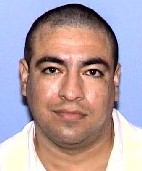
Abel Revilla Ochoa
Mass murderer Gameel Al-Batouti
Mass murderer · USA · 1999
Gameel Al-Batouti (also rendered “Gamil ElBatouty” or “El Batouty” in U.S. offi…
216 victims
Gameel Al-Batouti
Mass murderer · USA · 1999
Gameel Al-Batouti (also rendered “Gamil ElBatouty” or “El Batouty” in U.S. offi…
216 victims
 Timothy McVeigh
Mass murderer · USA · 1995
Timothy James McVeigh (April 23, 1968 – June 11, 2001) was a United States Army…
168 victims
Timothy McVeigh
Mass murderer · USA · 1995
Timothy James McVeigh (April 23, 1968 – June 11, 2001) was a United States Army…
168 victims
 Seung-Hui Cho
Mass murderer · USA · 2007
Seung-Hui Cho was a mass murderer who shot and killed 32 people and wounded man…
32 victims
Seung-Hui Cho
Mass murderer · USA · 2007
Seung-Hui Cho was a mass murderer who shot and killed 32 people and wounded man…
32 victims
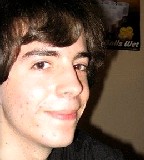 Adam Lanza
Mass murderer · USA · 2012
Adam Lanza, 20, fatally shot twenty children and six adult staff members in a m…
27 victims
Adam Lanza
Mass murderer · USA · 2012
Adam Lanza, 20, fatally shot twenty children and six adult staff members in a m…
27 victims
 Eric Harris
Mass murderer · USA · 1999
Eric Harris committed suicide by gunshot to the roof of the mouth on April 20,…
13 victims
Eric Harris
Mass murderer · USA · 1999
Eric Harris committed suicide by gunshot to the roof of the mouth on April 20,…
13 victims
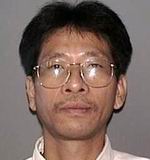 Jiverly Wong
Mass murderer · USA · 2009
December 8, 1967 — Jiverly Antares Wong was born. · late 1980s — Wong first cam…
13 victims
Jiverly Wong
Mass murderer · USA · 2009
December 8, 1967 — Jiverly Antares Wong was born. · late 1980s — Wong first cam…
13 victims
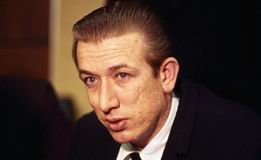 Richard Speck
Mass murderer · USA · 1966
Richard Speck (December 6, 1941–December 5, 1991) was a mass murderer who syste…
8 victims
Richard Speck
Mass murderer · USA · 1966
Richard Speck (December 6, 1941–December 5, 1991) was a mass murderer who syste…
8 victims
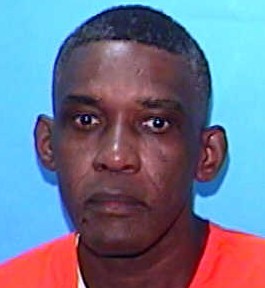 Lyndford Blackwood
Murderer · USA · 1995
Name: Lyndford Blackwood Date of birth: 01/18/57 Court: Supreme Court of Florid…
1 victim
Lyndford Blackwood
Murderer · USA · 1995
Name: Lyndford Blackwood Date of birth: 01/18/57 Court: Supreme Court of Florid…
1 victim
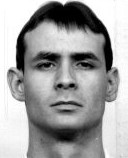 Samuel Clark Gallamore
Murderer · USA · 1992
Samuel Clark Gallamore was executed by lethal injection in Texas on January 14,…
3 victims
Samuel Clark Gallamore
Murderer · USA · 1992
Samuel Clark Gallamore was executed by lethal injection in Texas on January 14,…
3 victims
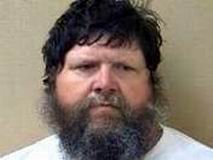 Robert Kenneth Stewart
Mass murderer · USA · 2009
Robert Kenneth Wayne Stewart carried out a mass murder at the Pinelake Health a…
8 victims
Robert Kenneth Stewart
Mass murderer · USA · 2009
Robert Kenneth Wayne Stewart carried out a mass murder at the Pinelake Health a…
8 victims
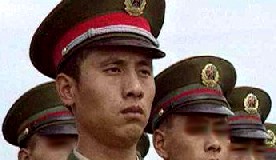 Tian Mingjian
Mass murderer · China · 1994
Tian Mingjian (Chinese: 田明建) was an Army officer with the rank of First Lieuten…
23 victims
Tian Mingjian
Mass murderer · China · 1994
Tian Mingjian (Chinese: 田明建) was an Army officer with the rank of First Lieuten…
23 victims
- Gender
- male
- Country
- USA
- Location
- Dallas County, Texas, USA
- Date of birth
- January 23, 1973
- Age at first offence
- 29
- Characteristics
- parricide, rape, drug addict, crack addict, domestic violence, torture
- Victim profile
- His wife, Cecelia, 32; their daughters, Crystal, 7, and Ana, 9 months; his father-in-law, Bartolo Alivizo, 56; and his sister-in-law Jacqueline Saleh, 20
- Method of murder
- Shooting
- Date(s) of murder
- August 4, 2002
- Years active
- 2002
- Date of arrest
- Same day
- Status
-
Sentenced to death
Sentenced to death on May 15, 2003
Case overview
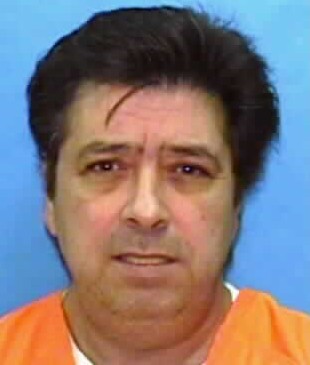
Abel Revilla Ochoa (TDCJ number 999450), born 01/23/1973, was convicted of capital murder and was sentenced to death pursuant to the jury’s answers to the special issues submitted at the punishment phase. The conviction was affirmed on direct appeal by the Court of Criminal Appeals of Texas.
Background
Abel Revilla Ochoa lived with his wife and two daughters and with his wife’s father. He had been a heavy equipment operator/laborer and had previously worked for about eleven years. His prior prison record was none, and he had no criminal record presented at trial.
Ochoa and his wife were married in December 1993. Their first daughter (Crystal) was born in November 1994. Ochoa and his wife separated for about six months after Ochoa found out that his wife had another child (Jonathan) out of wedlock before they met.
Ochoa testified that he had “put the Jonathan issue behind him by the time he murdered his family.”
Ochoa had been addicted to crack cocaine for about two years. His addiction to crack cocaine caused stress in his marriage.
About four months before the murders, Ochoa walked away from what many would consider a good job that he had kept for about eleven years.
Before the murders, Ochoa had purchased the murder weapon in December 1995 for home protection.
The offence
On Sunday, August 4, 2002, in Dallas, Texas, Ochoa fatally shot his wife, his 7-year-old daughter, and his 9-month-old daughter, along with his father-in-law and his sister-in-law.
The victims were his wife, Cecelia, 32; their daughters, Crystal, 7, and Ana, 9 months; his father-in-law, Bartolo Alivizo, 56; and his sister-in-law Jacqueline Saleh, 20. Alma Alivizo, 27, was wounded and survived to testify.
The evidence showed that Ochoa shot his wife, two of his sisters-in-law, his father-in-law, and his 18-month-old daughter. Ochoa reloaded his gun and shot his seven-year-old daughter.
Ochoa carried out the shootings in the home where he lived with his wife, his two daughters, and his father-in-law. Everyone was killed except for Alma, who testified at Ochoa’s trial that Ochoa looked “[v]ery mean, very angry” when the shooting began.
During testimony, the following questions and answers were given:
- Q. [PROSECUTION]: Are you able to look at his face when he starts shooting? A. [ALMA]: Yes.
- Q. What’s the expression on his face? A. Very mean, very angry, yes- [THE REPORTER]: I’m sorry? Very mean- A. Yes. Angry, yes.
- Q. Does he look like he’s crazy, or does he look like he’s mad? A. He looks like he’s mad.
Ochoa’s written statement to the police described the following sequence:
- He said he lived at an address with his wife and two daughters and that his wife’s father also lived with them.
- He said he had had a drug problem for about two years and that about two months earlier he spent two months in a drug rehab house.
- He said that before going into the rehab house he used crack cocaine about once every three to four days and that after coming out he used once every seven to ten days.
- He said that on the day of the shootings he went to church with his wife and daughters and that after leaving church at about 2:00 p.m. he asked his wife for ten dollars to buy a dime bag of crack.
- He said his wife did not want to give it to him at first, but that he talked her into it.
- He said he drove his wife and daughters to the dope house and went in and bought the dime bag of crack.
- He said that when they got home he went into the back yard and smoked the crack.
- He said that while he was lying on the bed with the television on, his body started wanting more crack, and that he knew that if he asked his wife for more money, she would argue with him about the money “just like we did in the past.”
- He said he got a Ruger 9mm gun from his closet, that the gun was already loaded, and that he walked into the living room where his family was and started shooting while they were sitting on the couch.
- He said he ran out of bullets, returned to the bedroom to get another clip, walked back into the living room, and that when he came back into the living room his daughter Crystal saw him with the gun and started running away; he said he chased after her and shot her.
- He said after he shot Crystal he went back into the bedroom and got his wife’s small plastic purse, then got into his car and drove over to the Wynnewood Shopping Center.
- He said he tried to get some money from an ATM machine but did not have the right code.
- He said he drove out of the shopping center onto Zang and then drove back into the shopping center where the police stopped him.
In the punishment phase, Ochoa testified that he had never had any memory (including when he confessed to the police) of shooting his family.
Investigation and arrest
Five family members were shot to death in their house. Ochoa was arrested after being seen at a nearby shopping center. He was arrested on murder charges and jailed on $2 million bail.
Police said they had not established a motive for the shootings. Sgt. Hollis Edwards of the police said:
- “The only thing we know at this point is that he got upset with his wife about something,”
- “Exactly what it was, we don't know yet.”
After Ochoa was arrested, he told the arresting officer that he “couldn't handle the stress anymore.” During the questioning, Officer Cox asked where the gun was:
- Q. [PROSECUTION]: What? A. [OFFICER COX]: I asked him where was the gun-I said-or where was the gun at. Q. And why did you ask him that? A. To make sure it wasn't-he hadn't thrown it out the window, make sure it wasn't like a threat to somebody if it was thrown out of a window, or in the shopping center somewhere. Q. And did he respond to that question? A. Yes, he did. Q. What did he say? A. He said, It's at my house on the table. Q. What else did he say? A. Right after he said, It's at the house on the table, he said he-I couldn't handle the stress anymore. Q. And what did he say about-did he make any comment about his life? A. Maybe a minute later he said something like, I got tired of my life.
Trial
A jury convicted Ochoa of capital murder. The trial court sentenced Ochoa to death pursuant to the jury’s answers to the special issues submitted at the punishment phase.
Punishment phase: future dangerousness and expert testimony
Ochoa argued that the evidence was legally insufficient to support the jury’s affirmative answer to the future dangerousness special issue. The appellate court reviewed the evidence under the standard requiring a determination of whether a rational trier of fact could find beyond a reasonable doubt that there was a probability Ochoa would commit criminal acts of violence constituting a continuing threat to society.
The prosecution presented evidence that Ochoa threatened to shoot his wife during the separation period. Alma testified that Ochoa became “more aggressive” and “more mean” to his wife after Ochoa found out about Jonathan.
Ochoa presented expert testimony (Simon) that Ochoa suffered “mild” brain damage from crack cocaine ingested over about two years.
Ochoa presented another expert (Nace) who testified that the shootings were the result of a “cocaine-induced delirium” during which Ochoa was not fully aware and not in control of what he was doing. Nace also testified he did not think Ochoa would be a continuing threat to society.
During expert testimony by Nace:
- Q. [PROSECUTION]: Doctor, what happened to [appellant] when he took cocaine back on August 4 th of 2002. A. [NACE]: He had not used cocaine for 10 days prior to August the 4 th , and this was a Sunday. Went to church with his family, and at some point after church-he had been struggling with the desire for cocaine for days, and asked his wife could he just get $10 worth. She eventually relented, gave him $10. She kept all the money because he knew that, and she knew that if he had money, then the temptation to buy cocaine would be there which is common in the case with people caught up in this. So he didn't keep any of the money. Anyway, she gave him $10. He bought the crack cocaine. And she said, You have to smoke it outside. Okay? So he smoked it outside. I think it was around about 5:30 or so, walked back into the house to the bedroom, then his wife came in the bedroom and said, You didn't [say] hello to my sisters, and said-he said, Well, I don't-I don't want them to see me like this. And he had described that his-he felt his face was puffy and he felt he looked funny from smoking the cocaine so she left the room and then shortly thereafter-and he doesn't have memory for a good bit of this-got the gun that was in the house, and the shootings took place after that. And what he recalled was hearing gunshots in his head, and then after he left the house and got in his truck, he felt some-something-knew something had gone wrong and he should return home. What he could recall, shooting one daughter, couldn't recall whether people were exactly what-how it happened. And he was in a-cocaine-induced delirium, delirious state produced by the cocaine where there was a serious change in brain functioning.
- Q. Doctor, a cocaine-induced delirium, is that a medically recognized decease [sic]? A. Yes, it is.
- Q. And is it found in the DSM IV? A. It is.
- Q. Would you explain to the jury briefly what the DSM IV is? A. The DSM IV is a book that catalogues all the different psychiatric disorders, from depression, schizophrenia addictions and so on. They're all kind of listed there and described and kind of the criteria for each disorder are laid out.
- Q. And that is a medically recognized diagnosis? A. Yes, it is.
- Q. All right. Doctor, a delirium is not a rational state, is it, or- A. No, a delirium is a very serious mental state provoked by different things, but certainly drugs of abuse can produce a delirium. Cocaine is well known to do that. What happens is the person's level of consciousness is-is disrupted. It's changed. And they are in a position where they aren't as aware of what they're doing. They're not as aware of their environment. They are not able to sometimes shift their attention from what they're doing. They're-they get irritated, excited, aggressive with certain types of delirium. Their thinking processes change at the same time. Typically, they won't have good memory for parts of what's going on or what has happened. They will also have perceptual disturbances. For example, in his case, he was hearing gunshots for-going off in his head, the noise of the gunshot for days and had some other sort of flashes going through his mind which he couldn't quite understand. Delirium typically does not last very long, at least not a cocaine delirium.
- Q. Did I hear you say that he heard the gunshots in his head for days afterward? A. Yes.
Nace testified he did not think Ochoa was a continuing threat. When asked for a conclusion on whether Ochoa was a continuing threat to society:
- Q. Doctor, as a result of your interviews, of various documents that you have read, as a result of your experience and training in the field of addictive behavior in the general field of psychiatry, have you reached a conclusion as to whether [appellant] is a danger, a continuing threat to society? A. I don't think he is a continuing threat.
- Q. Why is that, sir? A. What happened on August 4 th was the result of his cocaine addiction and triggering brain events beyond his control. And he has no history of being a danger to society. Prior to that he had a good work record for the most part, at least prior to his addiction. He was not-he didn't have a criminal history. He wasn't presenting a danger to anybody, and there is no reason to think he would, if he's not addicted to cocaine.
On cross-examination, Nace testified:
- “would expect bad things could happen to” appellant if appellant “got back to a repetitive pattern of cocaine use.”
Nace also testified, in response to a hypothetical about obtaining cocaine again:
- “We don't know that for sure because he's been off cocaine for eight to nine months now.”
- “If he got back to a repetitive pattern of cocaine use, I would expect bad things could happen to him.”
The prosecution expert (Coons) testified to the contrary and attributed the murders to frustration and anger rather than to a “cocaine-induced delirium.” Coons testified in detail about how the timing and statements reflected perception and recollection against a delirium explanation and concluded he did not think the events were delirium.
During closing jury arguments, the prosecution argued that anyone capable of murdering his family “is capable of anything.” The appellate record includes the following closing argument statement:
- “Anybody capable of murdering his family "is capable of anything." Is he going to be dangerous in the future? I mean, you know, Mr. Miller, [appellant] is not a violent man. That is just unbelievable. These people, these bodies, the holes, his own flesh and blood, willing to do that just because you're mad. Frustrated, stressful, willing to do this, murder people like that. Anybody capable of doing that is capable of anything, you know.”
Ochoa argued that no rational jury could find beyond a reasonable doubt that there was a probability he would commit criminal acts of violence constituting a continuing threat because the offense was an aberration.
The appellate court decided that a rational jury could find beyond a reasonable doubt that there was a probability Ochoa would commit criminal acts of violence constituting a continuing threat to society, and it concluded the murder was not an aberration or isolated incident and that it was the culmination of a pattern of abuse and threats directed by Ochoa against his wife.
Confession, statement, and challenge to police-provided details
Ochoa’s written statement described shooting while family members were sitting on a couch, reloading, shooting Crystal, leaving, driving to the shopping center, and attempting to get money from an ATM.
Ochoa testified at the punishment phase that he had no memory of shooting his family, including when he confessed to police.
During defense questioning, the following sequence occurred:
- Q. [DEFENSE]: Abel, this is State's Exhibit either 2A or 2, voluntary statement. You're familiar with this, aren't you? A. [APPELLANT]: Yes, sir.
- Q. You've gone over this many times with your attorneys, haven't you? A. Yes, sir.
- Q. Do you remember going to the closet and getting the gun? A. No, sir.
- Q. ... So when I ask you if you remember getting the gun, are you saying that you have no-you did not have a present memory of that when it happened? A. No, sir.
- Q. Is that what you're saying? A. Yes, sir.
- Q. Do you remember loading that gun? A. No, sir.
- Q. Remember cocking the gun, arming it, pulling the slide back? A. No, sir.
- Q. Do you remember walking from the bedroom to the living room? A. No, sir.
- Q. Do you remember discharging that firearm at [appellant's father-in-law]? A. No, sir.
- Q. Do you remember discharging that firearm at [Alma]? A. No, sir.
- Q. Do you remember discharging the firearm at [the murdered sister-in-law] and your baby Anahi? A. No, sir.
- Q. Do you remember discharging that firearm at your wife? A. No, sir.
Ochoa testified that he remembered reloading the gun:
- Q. Do you have any independent recollection of going back and reloading the gun? A. Reloading the gun, yes.
- Q. You remember that from the time? A. Yes.
On cross-examination, Ochoa suggested that the police provided details known only to him to put into his statement. When asked whether Detective Lusty told him things:
- Q. [PROSECUTION]: So let me get this straight. You're saying that Detective Lusty told you some of the things to put in your own statement? A. [APPELLANT]: He would tell me stuff.
- Q. Like what? A. Like if I was in the 4Runner, if I drove it. And I would just say, Yeah, yeah, that's-that's what happened.
When asked about parts of the statement, Ochoa testified he did not recall saying it to Detective Lusty and did not recall saying it in response to whether Detective Lusty knew how his wife would react to money for crack.
Ochoa was asked about whether Detective Lusty made up the statement and got him to sign it. After an overruled objection to argumentative questioning, Ochoa testified:
- A. I don't believe he's a crooked cop.
On additional cross-examination, Ochoa testified he remembered where he went when he got in the vehicle, but not the confession details “on paper.”
Admission of the August 1997 tape and hearsay issues
Ochoa raised five points of error on direct appeal.
On point of error one, Ochoa argued that the trial court erred at the punishment phase by overruling his objection to admission of hearsay evidence and thereby deprived him of his Sixth and Fourteenth Amendment right to confrontation of the witnesses. The challenged evidence was an August 1997 tape-recorded telephone conversation between Ochoa and his wife while they were separated over the Jonathan issue. The tape contained many statements; about half of Ochoa’s statements on the tape were inaudible.
Ochoa’s wife made statements including “Why do you want to kill us?” and “What do you mean killed [sic] us? We haven't done anything to you. You're the one that [sic] left.”
The record included Ochoa’s statement on the August 1997 tape threatening to shoot his wife:
- “You want me to go shoot you right now?”
- “What's wrong with you man? Why do you act that way? Why do you say these words to me? Jerk. Witch. ”
At trial, Ochoa did not deny he made the statement threatening to shoot his wife. Ochoa testified that his wife probably said something that caused him to threaten to shoot her.
Ochoa’s trial objection to the tape included the following argument:
“Judge, first of all, it's hearsay. Second of all, it's not complete. You cannot hear the entire recording. And without the other end of the recording, we have no way of knowing the context or what was said or anything else, because on at least the first-more than 50 percent of this recording there's no voice that's audible on the other end that can be identified. Furthermore, there's a voice somewhere in the middle of the tape, sounds like a child. That voice has not been identified. We've got no evidence in the record with regard to the recording device, how it was used, who made it, whether it's been altered or anything else. And she comes on at the very end and says when this conversation occurs, August 12 th , 1997, on a Tuesday. You can obviously hear the tape has been cut off and then that it is added at the end. We don't have any way of knowing it was made at the same time. And there has been no testimony with regard to that either. Furthermore, Judge, this conversation is completely out of context. It was made more than 5 years-or 5 years prior to the events of August the 4 th , 2002. It's strictly done for inflammatory purposes. I submit that the jury is going to be free to surmise the meaning behind these words without an explanation. For instance, on page 6 of the transcript that has been provided to the Court where there is the mention of the word "Why do you want to kill us? What do you mean killed us," I submit to the Court that the meaning behind that has to do with the relationship and the marriage. It has nothing to do with bodily harm or a threat to commit bodily harm. But taken out of context on this tape or whatever, whatever, without anybody to explain it, the jury is free to presume that has to do with a physical threat to commit harm, and I do not believe that's what the meaning of this conversation is at that point. And there's no way for that to be explained. The State's free to argue its interpretation without us knowing the true meaning behind that portion of the tape or the words. We don't believe the predicate has been laid for the admission of the tape. It is rank hearsay. We are aware of the fact that the Court of Criminal Appeals in [citation omitted] has basically stated that the previous requirements that were mentioned in [citation omitted] were not necessarily valid or to be followed now. Their interpretation was that those predicates have been subsumed in Rule 901 of the Texas Rules of Evidence and it doesn't mean they've been taken away. It just means the rule is going to control rather than the plain language of case law in [citation omitted] which established the predicate for recording; that is, the device is capable of taking the testimony, the operator of the device was competent, the authenticity of the correctness of the recording, no changes, additions, or deletions have been made. The manner and preservation of the recording and of speakers and the testimony elicited was voluntarily made without any kind of inducement. We will submit to the Court that even that has not been satisfied. For all these reasons we object to the admission of this rank hearsay that has no way of being verified.”
Ochoa argued on appeal that admitting his wife’s out-of-court statements violated confrontation rights, and the appellate court held the specific federal confrontation claim was not preserved because the trial objection did not comport with that raised on appeal.
Ochoa’s defense also argued under Rule 106 that the tape was incomplete, because portions were inaudible. The appellate court disagreed and held the inaudible portions did not make the tape incomplete for purposes of Rule 106, and it held it could not conclude the inaudible portions were so substantial as to render the recording as a whole untrustworthy.
Admission of Alma’s testimony about gun-pointing
On point of error three, Ochoa argued that the trial court erred during the punishment phase by overruling a hearsay objection to Alma’s redirect examination testimony.
Alma testified that appellant’s wife told her about three weeks before the offense that Ochoa held a gun (the murder weapon) to his wife’s head. Alma testified:
- Q. What did your sister tell you that he started doing with this gun of his? A. That he would point it to her head.
- Q. She would tell you that [appellant] would point this gun to her head. When did she start telling you this? A. Like three weeks after this happened. Q. Three weeks before this happened? A. Yes.
- Q. And why would he be pointing this gun to her head? A. She just told me that if ever-something ever happened to her, that it was him.
- Q. Did that upset you when you heard this? A. Yes.
- Q. And was she upset when she would tell you about this? A. She was scared and upset.
The State argued multiple theories for admissibility, including excited utterance, and argued the redirect testimony was offered to show the basis of Alma’s opinion about Ochoa being violent rather than for the truth of the gun-pointing. The appellate court also noted that Ochoa’s father provided substantially similar evidence without objection.
Ochoa’s father testified:
- Q. Thirty-two years. Do you recall a time when [appellant's wife] told you that [appellant] was pointing a gun at her? A. No.
- Q. Told you and - A. No, she never told me that.
- Q. Never told you that? A. Not to me, no.
- Q. Not to you? A. Yes, she told her.
- Q. Okay. And your wife told you about it? A. Yes, sir.
- Q. Did this upset you, Mr. Ochoa? A. Yes.
- Q. Do you recall about when this was in relation to the shootings that your wife told you what [appellant's wife] had told her? A. About three months
The appellate court found the admission of the out-of-court statement was not reversible error.
Crime-scene photograph at guilt/innocence
On point of error five, Ochoa argued the trial court erred at the guilt/innocence phase by admitting a crime-scene photograph (State’s Exhibit 35) showing his murdered seven-year-old daughter’s hip and arm in a pool of blood on the kitchen floor with a television remote control in her hand. Ochoa argued the probative value was substantially outweighed by the danger of unfair prejudice under Tex. R. Evid. 403, and that it inflamed the jury.
Ochoa objected on Rule 403 grounds and also argued it was cumulative of State’s Exhibit 34 (which he did not object to) and was “just egregious in the amount of blood that's shown and that it does not go to wounds and that it goes to no material contested issue.”
The trial court overruled the defense objection. The prosecution responded that Exhibit 35 was a clearer picture than Exhibit 34, explaining:
- “Judge, 35 is finally a clear picture. This other one [State's Exhibit 34] is dim, and you can't actually make out what's on the other side, the far side of her body. This is just a different perspective to show what she is actually holding and you get a picture from that angle. Right now you just have a-the right side of her body. This one you see the left side and what is she actually holding. I just say in 34 it's just hard to make that out, the dim lighting in that picture. ”
The trial court stated:
- “I'll overrule the Defense's objection to State's 35.”
The appellate court concluded any error in the admission of State’s Exhibit 35 did not harm Ochoa.
Sentencing
After the jury convicted Ochoa of capital murder, the trial court sentenced him to death pursuant to the jury’s answers to the special issues submitted at the punishment phase.
Appeals
Ochoa appealed to the Court of Criminal Appeals of Texas. The appellate court’s opinion was delivered January 26, 2005. Hervey, J. delivered the opinion, with Meyers, Price, Womack, Keasler, and Holcomb, JJ., joining. Keller, P.J., concurred in point of error one and otherwise joined. Johnson and Cochran, JJ., concurred.
Ochoa raised five points of error:
- Point of error two challenged the sufficiency of evidence to support the jury’s affirmative future dangerousness special issue.
- Point of error one challenged admission of hearsay evidence at the punishment phase and asserted confrontation rights violations.
- Point of error three challenged admission of hearsay through Alma’s redirect testimony.
- Point of error four challenged admission of the August 1997 tape under Rule 106 due to inaudible portions.
- Point of error five challenged admission of crime-scene photograph State’s Exhibit 35.
The appellate court affirmed the trial court’s judgment and overruled the challenged points, resulting in the conviction being affirmed.
Outcome
The Court of Criminal Appeals of Texas affirmed the judgment of the trial court.
The trial court’s death sentence remained in place, and Ochoa’s current status is that he was sentenced to death on May 15, 2003.
Spotted an error, or have more information about this case?