James Raulerson
Murderer Ervil LeBaron
Murderer · USA · 1972
Ervil Morrell LeBaron (1925 to August 16, 1981) was the leader of a polygamous…
35 victims
Ervil LeBaron
Murderer · USA · 1972
Ervil Morrell LeBaron (1925 to August 16, 1981) was the leader of a polygamous…
35 victims
 Brian Kevin Rosenfeld
Murderer · USA · 1985
Brian Kevin Rosenfeld Brian Kevin Rosenfeld was sentenced to three concurrent l…
23 victims
Brian Kevin Rosenfeld
Murderer · USA · 1985
Brian Kevin Rosenfeld Brian Kevin Rosenfeld was sentenced to three concurrent l…
23 victims
 Marvin Gray
Murderer · USA · 1975
Marvin Gray was convicted killer who claimed responsibility for 23 slayings and…
23 victims
Marvin Gray
Murderer · USA · 1975
Marvin Gray was convicted killer who claimed responsibility for 23 slayings and…
23 victims
 Yahweh ben Yahweh
Murderer · USA · 1980
Yahweh ben Yahweh was born and legally named Hulon Mitchell Jr. (October 27, 19…
23 victims
Yahweh ben Yahweh
Murderer · USA · 1980
Yahweh ben Yahweh was born and legally named Hulon Mitchell Jr. (October 27, 19…
23 victims
 Ali Ben Yanes
Murderer · Franc e · 1971
Ali Ben Yanes was executed by guillotine on May 12, 1973. He and his cousin Hoc…
1 victim
Ali Ben Yanes
Murderer · Franc e · 1971
Ali Ben Yanes was executed by guillotine on May 12, 1973. He and his cousin Hoc…
1 victim
 Mark William Hofmann
Murderer · USA · 1985
Mark William Hofmann (born December 7, 1954) was an American counterfeiter, for…
2 victims
Mark William Hofmann
Murderer · USA · 1985
Mark William Hofmann (born December 7, 1954) was an American counterfeiter, for…
2 victims
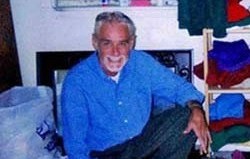 Paul Bateson
Murderer · USA · 1977
September 14, 1977 — Film critic Addison Verrill was beaten and stabbed to deat…
7 victims
Paul Bateson
Murderer · USA · 1977
September 14, 1977 — Film critic Addison Verrill was beaten and stabbed to deat…
7 victims
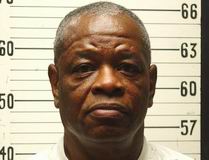 Sidney Porterfield
Murderer · USA · 1985
Sidney Porterfield was convicted in 1986 and sentenced to death for the killing…
1 victim
Sidney Porterfield
Murderer · USA · 1985
Sidney Porterfield was convicted in 1986 and sentenced to death for the killing…
1 victim
 Dean Phillip Carter
Spree killer · USA · 1984
Dean Phillip Carter was sentenced to death in 1985. He was an inmate at San Que…
5 victims
Dean Phillip Carter
Spree killer · USA · 1984
Dean Phillip Carter was sentenced to death in 1985. He was an inmate at San Que…
5 victims
- Gender
- male
- Country
- USA
- Location
- Duval County, Florida, USA
- Date of birth
- 1951
- Age at first offence
- 24
- Characteristics
- robbery, rape
- Victim profile
- Michael Stewart (Jacksonville police officer)
- Method of murder
- Shooting
- Date(s) of murder
- April 27, 1975
- Years active
- 1975
- Date of arrest
- Same day
- Status
-
Executed
Executed by electrocution in Florida on January 30, 1985
Other names
James David Raulerson
Background
James David Raulerson was a death row inmate at Florida State Prison.
The offence
On April 27, 1975, Raulerson and his accomplice, Jerry Leon Tant, robbed the Sailmaker Restaurant in Jacksonville, Florida. During the course of the robbery, Raulerson forced a female employee into a back room and raped her. Upon arrival of two police officers, James English and Michael Stewart, a gun battle ensued during which Tant and Officer Stewart were killed. The evidence disclosed that the bullets that killed Officer Stewart came from Raulerson’s gun.
Investigation
Evidence disclosed that the bullets that killed Officer Stewart came from Raulerson’s gun.
Arrest
Raulerson surrendered to the police at the scene of the crime.
Trial
On August 6, 1975, following indictment and jury trial, Raulerson was convicted of first degree murder in the Circuit Court of the Fourth Judicial Circuit, in and for Duval County, Florida. On August 7, 1975, the jury rendered an advisory sentence, recommending death by electrocution, and on August 20, 1975, the trial judge entered a judgment of conviction and sentence of death by electrocution. Raulerson was convicted in August of 1975 of first degree murder and sentenced to death.
Raulerson protested to the end that a stray police bullet killed a rookie Jacksonville police officer in a 1975 gunfight.
Sentencing
During a second sentencing hearing, Raulerson called a host of witnesses who testified to his troubled childhood, excellent work record, devotion to family, religious beliefs and prospects for rehabilitation. In pronouncing sentence, the court stated that it found five aggravating circumstances but no mitigating ones, statutory or otherwise.
On direct appeal, the Florida Supreme Court affirmed Raulerson’s conviction and sentence in Raulerson v. State, 358 So.2d 826 (Fla.1978). The United States Supreme Court denied certiorari in Raulerson v. State, 439 U.S. 959, 99 S.Ct. 364, 58 L.Ed.2d 352 (1978).
Subsequently, a federal district court found that Raulerson had been denied the opportunity to rebut the contents of his presentence report in violation of Gardner v. Florida, and ordered a new sentencing hearing. Raulerson v. Wainwright, 508 F.Supp. 381 (M.D.Fla.1980). Raulerson was again sentenced to death at a second sentencing hearing, with judgment entered on August 12, 1980.
After the second sentencing, the Florida Supreme Court affirmed the judgments in Raulerson v. State, 420 So.2d 567 (Fla.1982), cert. denied, --- U.S. ----, 103 S.Ct. 3572, 77 L.Ed.2d 1412 (1983).
During the second sentencing hearing, Raulerson requested that he be permitted to act as co-counsel with his attorney, David Busch, during a status hearing prior to the second sentencing hearing on July 15, 1980. The court denied the request. On July 18, 1980, Raulerson sent a letter to the judge requesting permission to appear pro se. The court did not immediately act on this second request.
At the resentencing hearing on August 11-12, 1980, the court granted Raulerson permission to act as co-counsel, relying on the Florida appeals court’s decision in Tait v. State, 362 So.2d 292 (Fla.Dist.Ct.App.1978). During the course of the hearing, the Florida Supreme Court overruled Tait, striking down “hybrid” representation in State v. Tait, 387 So.2d 338 (Fla.1980). The trial court withdrew its earlier grant of permission to act as co-counsel.
After his removal as co-counsel, Raulerson did not immediately renew his request to appear pro se. At a hearing on February 6, 1981, he made a request in open court to represent himself. The judge began a “Faretta” inquiry into Raulerson’s understanding of the potential danger inherent in his action, but subsequently terminated the hearing when Raulerson abruptly walked out of the courtroom.
The trial court stated:
“The Court has examined and considered the evidence to determine whether there are circumstances, other than those specified [in the Florida statute], which would mitigate the murder committed by the Defendant herein. The Court finds that there are no such non-statutory mitigating circumstances within the meaning of Lockett v. Ohio....”
At the time of the second sentencing hearing, Raulerson was represented by David Busch, the state public defender who had represented him for the five years preceding the hearing.
Appeals
United States Court of Appeals for the Eleventh Circuit (732 F.2d 803)
Raulerson appealed the denial of a petition for a writ of habeas corpus in the United States District Court for the Middle District of Florida. The case was James David Raulerson, Petitioner-appellant, v. Louie L. Wainwright, Secretary, Florida Department Ofoffender Rehabilitation, Richard Dugger, Superintendent Of Florida State Prison at Starke, Florida, and Jim Smith, attorney General of the State of Florida, Respondents-appellees, in the United States Court of Appeals for the Eleventh Circuit. The appeal was from the United States District Court for the Middle District of Florida (May 1, 1984 appeal).
In August of 1975, Raulerson was convicted of first degree murder and sentenced to death; the conviction and sentence were affirmed on appeal (Raulerson v. State, 358 So.2d 826 (Fla.), cert. denied, 439 U.S. 959, 99 S.Ct. 364, 58 L.Ed.2d 352 (1978)). A district court ordered a new sentencing hearing due to Gardner v. Florida (Raulerson v. Wainwright, 508 F.Supp. 381 (M.D.Fla.1980)), and Raulerson was again sentenced to death. The Florida Supreme Court affirmed both judgments in Raulerson v. denied, --- U.S. ----, 103 S.Ct. 3572, 77 L.Ed.2d 1412 (1983).
Raulerson filed a second petition for post conviction relief in the Circuit Court of Duval County under Rule 3.850 of the Florida Rules of Criminal Procedure, and the circuit court denied both the petition and a motion for a stay of execution. The Florida Supreme Court affirmed in Raulerson v. State, 437 So.2d 1105 (Fla.1983). On September 2, 1983, Raulerson filed a habeas corpus petition in the United States District Court for the Middle District of Florida. The court held an evidentiary hearing on September 6, 1983, and granted a temporary stay of execution. Ultimately, the district court denied the writ and lifted the stay but granted a certificate of probable cause to appeal.
In the appeal, Raulerson urged five grounds of error:
- the state trial court’s failure to consider nonstatutory mitigating evidence;
- the denial of his right to represent himself at trial;
- the denial of effective assistance of counsel during several stages of the proceedings;
- the trial court’s refusal to grant a continuance to enable him to gather favorable evidence for his sentencing hearing; and
- the district court’s expeditious resolution of his habeas corpus petition.
The appellate court affirmed the denial of Raulerson’s petition for a writ of habeas corpus.
753 F.2d 869 (January 28, 1985) per curiam
Petitioner is a death row inmate; his execution was scheduled for Tuesday, January 29, 1985, at 7:00 a.m. On January 27, 1985, the district court, sitting in Jacksonville, Florida, following an evidentiary hearing denied petitioner's application for writ of habeas corpus on the ground that his application constituted an abuse of the writ (Rule 9(b), Rules Governing Section 2254 Cases, 28 U.S.C. fol. Sec. 2254 (1982)). The district court granted a certificate of probable cause to prosecute this appeal, but denied a stay of execution. The panel assembled in Jacksonville, Florida, and heard oral argument, and affirmed the judgment of the district court on the basis of its opinion, annexed as Exhibit A. The panel stayed petitioner's execution until 7:00 a.m. Wednesday, January 30, 1985, with the stay expiring at that time or at such other time as the Supreme Court ordered.
Exhibit A opinion and order (District Court)
In the third petition for federal habeas corpus relief, Petitioner alleged three grounds he claimed entitled him to relief: (1) ineffective assistance of counsel; (2) concealment of material facts on voir dire; and (3) unconstitutional application of FLA.STAT. Sec. 921.141(6) at the initial sentencing hearing to limit the mitigating circumstances considered on Petitioner's behalf to factors enumerated in (a) through (g) of FLA.STAT. Sec. 921.141(6). Respondents contended the petition was a successive petition barred pursuant to Rule 9(b) of the Rules Governing 28 U.S.C. Sec. 2254.
The court held a hearing on the applicability of Rule 9(b) on Sunday, January 27, 1985, commencing at 1:00 p.m. and denied the petition for writ of habeas corpus, denied the motion for a stay of execution, and rendered moot additional motions.
Outcome
Raulerson’s execution proceeded in Florida’s electric chair.
On the day of execution, police officers stood near the death house and cheered the execution, some wearing t-shirts with the words “Crank up Old Sparky” under a drawing of the electric chair.
Raulerson was pronounced dead at 7:11 A.M. from a 2,000-volt, 90-second surge of electricity in the electric chair.
Aftermath
A Federal appeals court had granted an indefinite stay of execution on September 9, 1983, to a man scheduled to die in Florida’s electric chair for the fatal shooting of a policeman. The United States Court of Appeals for the 11th Circuit agreed to review a denial by a Florida district judge of a petition for a new trial from the convicted man, James David Raulerson. A Federal District Judge John H. Moore turned down Mr. Raulerson's appeal, rejecting his arguments that he received “ineffective assistance of counsel” at his trial. The appeals panel said “petitioner's allegations raise nonfrivolous issues which must be considered on their merits.” Mr. Raulerson said he was “elated” and insisted again that he was not guilty.
The Supreme Court refused to halt the execution of James Raulerson early on January 30, 1985, but a second condemned killer got an indefinite reprieve from Florida's electric chair. The Court denied Mr. Raulerson a stay by a 6-to-2 vote, clearing the way for his execution at the Florida State Prison near Starke for killing a Jacksonville policeman in a 1975 robbery.
People
- James Raulerson — defendant
- James David Raulerson — defendant
- Jerry Leon Tant — accomplice; was killed during the gun battle
- James English — police officer dispatched to the scene
- Michael Stewart — Jacksonville Police Officer; killed during the gun battle
- Walter Stedeford — trial attorney for Raulerson in the original proceedings
- David Busch — attorney for Raulerson during the second sentencing hearing
- Louie L. Wainwright — Secretary, Florida Department of Offender Rehabilitation
- Richard Dugger — Superintendent of Florida State Prison at Starke, Florida
- Jim Smith — attorney General of the State of Florida
- John H. Moore — Federal District Judge
- FAY and HENDERSON — Circuit Judges
- TUTTLE — Senior Circuit Judge
- ALBERT J. HENDERSON — Circuit Judge
- TJOFLAT, HILL and ANDERSON — Circuit Judges (per curiam panel)
- Faretta — referenced constitutional standard case
- Gardner — referenced constitutional standard case
Other details
Raulerson was also described as protesting to the end that a stray police bullet killed a rookie Jacksonville police officer in a 1975 gunfight.
Spotted an error, or have more information about this case?