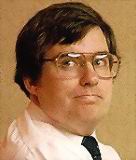
Mark William Hofmann
Murderer Brian Kevin Rosenfeld
Murderer · USA · 1985
Brian Kevin Rosenfeld Brian Kevin Rosenfeld was sentenced to three concurrent l…
23 victims
Brian Kevin Rosenfeld
Murderer · USA · 1985
Brian Kevin Rosenfeld Brian Kevin Rosenfeld was sentenced to three concurrent l…
23 victims
 Marvin Gray
Murderer · USA · 1975
Marvin Gray was convicted killer who claimed responsibility for 23 slayings and…
23 victims
Marvin Gray
Murderer · USA · 1975
Marvin Gray was convicted killer who claimed responsibility for 23 slayings and…
23 victims
 Yahweh ben Yahweh
Murderer · USA · 1980
Yahweh ben Yahweh was born and legally named Hulon Mitchell Jr. (October 27, 19…
23 victims
Yahweh ben Yahweh
Murderer · USA · 1980
Yahweh ben Yahweh was born and legally named Hulon Mitchell Jr. (October 27, 19…
23 victims
 Russell Ellwood
Murderer · USA · 1991
Russell Ellwood was a former taxi driver. Authorities suspected him of killing…
20 victims
Russell Ellwood
Murderer · USA · 1991
Russell Ellwood was a former taxi driver. Authorities suspected him of killing…
20 victims
 Daniel Wilson
Murderer · USA · 1991
May 4, 1991 — Daniel Wilson killed Carol Lutz by locking her in the trunk of he…
1 victim
Daniel Wilson
Murderer · USA · 1991
May 4, 1991 — Daniel Wilson killed Carol Lutz by locking her in the trunk of he…
1 victim
 Dennis Stockton
Murderer · USA · 1978
Dennis Waldon Stockton was convicted in Virginia for the capital murder of Kenn…
1 victim
Dennis Stockton
Murderer · USA · 1978
Dennis Waldon Stockton was convicted in Virginia for the capital murder of Kenn…
1 victim
 Jamaal Howard
Murderer · USA · 2000
Name: Jamaal Howard · TDCJ Number: 999383 · Date of Birth: 02/08/1980 · Convict…
1 victim
Jamaal Howard
Murderer · USA · 2000
Name: Jamaal Howard · TDCJ Number: 999383 · Date of Birth: 02/08/1980 · Convict…
1 victim
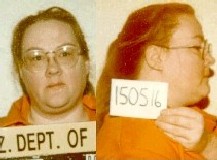 Doris Carlson
Murderer · USA · 1996
Doris Ann Carlson was sentenced to death on March 31, 2000. The sentence was re…
1 victim
Doris Carlson
Murderer · USA · 1996
Doris Ann Carlson was sentenced to death on March 31, 2000. The sentence was re…
1 victim
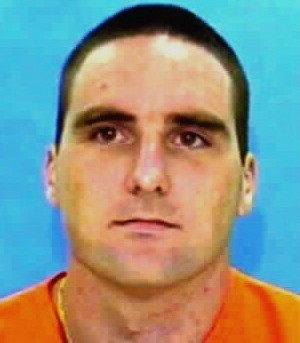 Brett Bogle
Murderer · 1991
Supreme Court of Florida opinion 81345 · DC# 110365 · Date of birth: 05/01/69 ·…
1 victim
Brett Bogle
Murderer · 1991
Supreme Court of Florida opinion 81345 · DC# 110365 · Date of birth: 05/01/69 ·…
1 victim
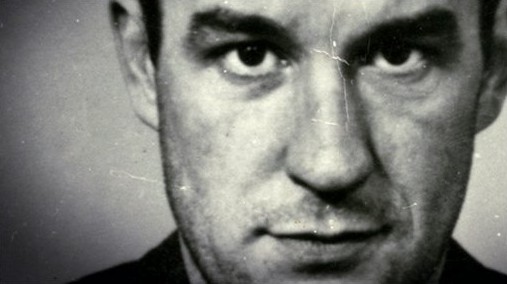 Peter Manuel
Serial killer · United Kingdom · 1956
Peter Manuel (born in the United States; died July 11, 1958) committed crimes i…
12 victims
Peter Manuel
Serial killer · United Kingdom · 1956
Peter Manuel (born in the United States; died July 11, 1958) committed crimes i…
12 victims
- Gender
- male
- Country
- USA
- Location
- Salt Lake City, Utah, USA
- Date of birth
- December 7, 1954
- Age at first offence
- 31
- Characteristics
- —
- Victim profile
- Steven F. Christensen / Kathy Sheets
- Method of murder
- Homemade bombs
- Date(s) of murder
- October 15, 1985
- Years active
- 1985
- Date of arrest
- February 1986
- Status
-
Life imprisonment
Sentenced to life in prison in January 1988
Case record: Mark William Hofmann
Identity
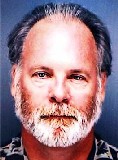
Mark William Hofmann (born December 7, 1954) was an American counterfeiter, forger and convicted murderer.
Legal status and incarceration
Hofmann was sentenced to life in prison in January 1988. As of 2009, he was serving a life sentence at Utah State Prison in Draper.
Timeline
- April 1980 — Hofmann said he had found a seventeenth-century King James Bible with a folded paper gummed inside.
- October 13 — The LDS Church purchased the “Anthon Transcript” from Hofmann for more than USD$20,000, appraised at $25,000, in exchange for several artifacts the church owned in duplicate, including a $5 gold Mormon coin, Deseret banknotes, and a first edition of the Book of Mormon.
- January 27, 1865 — The forged “Joseph Smith III blessing” cover letter was dated and marked “private” and “not sent.”
- September 4, 1981 — Hofmann gave Elder Gordon B. Hinckley another forgery related to the Joseph Smith III blessing.
- April — The LDS Church announced the discovery of the Anthon Transcript.
- October 15, 1985 — Hofmann killed document collector Steven Christensen with a bomb.
- October 15, 1985 — A second bomb killed Kathy Sheets, the wife of Christensen’s former employer.
- October 16, 1985 — Hofmann was severely injured when a bomb exploded in his car.
- February 1986 — Hofmann was arrested for murder and forgery.
- January 1987 — Hofmann pled guilty to second-degree murder and theft-by-deception to avoid the death penalty, confessing his forgeries in open court.
- January 1988 — Hofmann was sentenced to life in prison.
- January 1988 — Hofmann attended a hearing before the Utah Board of Pardons regarding the homicides.
- August 1988 — Hofmann attempted suicide and was unsuccessful.
- August 1990 — Hofmann attempted suicide and was unsuccessful.
Background
Hofmann was a sixth-generation Mormon and was reared in The Church of Jesus Christ of Latter-day Saints by two devoutly religious parents.
He was described as a below-average high school student with hobbies including magic, electronics, chemistry, and stamp and coin collecting. Friends reported that he built a metal detector out of household items and could “figure stuff out.” Friends were also said to have made bombs for fun on the outskirts of Murray, Utah.
Hofmann claimed that while still a teenage coin collector he forged a rare mint mark on a dime, was told by an organization of coin collectors it was genuine, and later voluntarily spent two years as an LDS missionary.
In 1973, the Church sent him to the England Southwest Mission, where he was based in Bristol.
After returning from his mission, he enrolled as a premed major at Utah State University.
In 1979, Hofmann married Doralee Olds. The couple eventually had four children. Doralee Olds Hoffman filed for divorce in 1987 and became co-founder of a holistic healing company. There was speculation that Olds knew more about the forgeries than she admitted.
Another account described Hofmann as an Eagle Scout, raised in Salt Lake City and in Buena Park, California, and that he married Doralee Olds in 1979 in the Salt Lake Temple. It also stated he fathered four children, the last as an accused murderer.
Hofmann attempted suicide in his cell by taking an overdose of antidepressants. He was revived but spent twelve hours lying on his right arm, blocking its circulation and causing muscle atrophy. His forging hand was permanently disabled.
Forgeries and document schemes
Hofmann was widely regarded as one of the most accomplished forgers in history. He specialized in documents related to the Latter Day Saint movement and also forged and altered coins, books, and historical banknotes.
He became noted among LDS Church history buffs for discoveries of previously unknown materials pertaining to the movement, and these fooled members of the First Presidency, document experts, and distinguished historians, including Gordon B. Hinckley.
His reputation included a claim that Dean Jessee concluded that one document was a Joseph Smith holograph.
The Anthon Transcript
In April 1980, Hofmann said he found a seventeenth-century King James Bible with a folded paper gummed inside. He presented the paper as the transcript that Joseph Smith’s scribe Martin Harris had presented to Charles Anthon, a Columbia classics professor, in 1828.
Hofmann constructed his version to fit Anthon’s description of the document, including its unusual “reformed Egyptian” characters.
Dean Jessee concluded that the document was a Joseph Smith holograph.
The LDS Church announced the discovery of the Anthon Transcript in April and purchased it from Hofmann for more than USD$20,000. It was appraised by the LDS Church for $25,000 and was purchased on October 13 in exchange for several artifacts the church owned in duplicate, including a $5 gold Mormon coin, Deseret banknotes, and a first edition of the Book of Mormon.
Hugh Nibley predicted the discovery promised “as good a test as we’ll ever get of the authenticity of the Book of Mormon” because he thought the paper might be translated.
Barry Fell claimed to have decoded the text.
Business as a dealer in rare books
Hofmann promptly dropped out of school and went into business as a dealer in rare books, fabricating other historically significant documents thereafter.
“Joseph Smith III blessing” forgery
During the early 1980s, a significant number of new Mormon documents came into the marketplace, received either as donations or purchased by the Church.
A forged cover letter arrived in 1981. It purported to provide evidence that Joseph Smith designated his son Joseph Smith III as his successor rather than Brigham Young.
The forged cover letter was dated January 27, 1865 and was marked “private” and “not sent.” In the forged letter, Thomas Bullock chastised Brigham Young for having all copies of the blessing destroyed. Bullock wrote that although he believed Young was the legitimate leader of the LDS church, Bullock would keep his copy of the blessing.
In September 1981, Hofmann gave the letter to Hinckley as a “faithful Mormon.” Hofmann stated that Hinckley filed the letter away in a safe in the First Presidency’s offices. The letter was also later given to the RLDS Church.
Hofmann expected the church to “buy the blessing on the spot and bury it.” When the church archivist balked at the price, Hofmann offered it to the Missouri Church (the Reorganized Church of Jesus Christ of Latter Day Saints). A scramble to acquire the blessing then occurred.
Hofmann presented the blessing to his church in exchange for items worth more than $20,000. Nevertheless, Hofmann ensured the document would be made public. The next day, a New York Times headline read, “Mormon Document Raises Doubts on Succession of Church’s Leaders,” and the LDS Church was forced to confirm the discovery and publicly present the document to the RLDS Church.
A Salt Lake County District Attorney’s investigator, Michael George, believed that after Hofmann had successfully forged the blessing, his ultimate goal was to create the lost 116 pages of the Book of Mormon, sell them to the church to be hidden away, and then make “sure its contents were made public.”
Salamander letter
The Salamander letter appeared in 1984.
The letter was presented as having been written by Martin Harris to William Wines Phelps and contrasted with the church-sanctioned version of events. It presented Joseph Smith as practicing “money digging” through magical practices, and it described that instead of an angel, “a white salamander” had appeared to Smith.
Apostle Dallin Oaks asserted to Mormon educators that the words “white salamander” could be reconciled with Joseph Smith’s Angel Moroni because, in the 1820s, the word salamander might refer to a mythical being thought to be able to live in fire, described as “a being that is able to live in fire is a good approximation of the description Joseph Smith gave of the Angel Moroni.”
Jerald and Sandra Tanner declared the letter a forgery in 1984.
Document expert Kenneth W. Rendell later said that while there was “the absence of any indication of forgery in the letter itself, there was also no evidence that it was genuine.”
Other Mormon forgeries
Hofmann created a letter from Joseph Smith’s mother, Lucy Mack Smith, describing the origin of the Book of Mormon.
He also created letters each from Martin Harris and David Whitmer, two of the Three Witnesses, giving personal accounts of visions.
Other items included:
- a contract between Smith and Egbert Bratt Grandin for printing the first edition of the Book of Mormon;
- two pages of the original Book of Mormon manuscript taken in dictation from Joseph Smith by Oliver Cowdery.
In 1983, Hofmann sold to the Church, through Gordon B. Hinckley, an 1825 Joseph Smith holograph letter confirming that Smith had been treasure hunting and practicing black magic five years following his First Vision. Charles Hamilton confirmed the signature. Hofmann sold it to the Church for $15,000 and said no one else had a copy. Hofmann leaked its existence to the press, and the church was forced to release the letter to scholars for study despite previously denying it possessed the letter.
Oath of a Freeman
Hofmann forged the Oath of a Freeman. The one-page oath had been printed in 1639, the first document printed in Britain’s American colonies, and only about fifty copies had been made, with none extant.
A genuine example was described as probably worth over a million dollars in 1985, and Hofmann’s agents began negotiating a sale to the Library of Congress. Authentication of these prints was underway as Hofmann committed his murders.
It was also described that Hofmann produced a second copy of the document of lesser technical quality.
Murders connected to the scheme
Hofmann became deeply in debt, in part due to his lifestyle and purchases of genuine first-edition books.
He attempted to broker a sale of the “McLellin collection,” described as purportedly extensive documents written by William E. M’Lellin, an early Mormon apostle who broke with the LDS church.
Because Hofmann did not know where the McLellin collection was and did not have time to forge a suitably large group of documents, those who had been promised documents or repayments of debts hounded him. The sale of the Oath of a Freeman was delayed by questions about its authenticity.
In a desperate effort to buy more time, Hofmann began constructing bombs.
Bombings and victims
On October 15, 1985, the first bomb killed document collector Steven Christensen, described as the son of a locally prominent clothier.
Later the same day, a second bomb killed Kathy Sheets, described as the wife of Christensen’s former employer.
Police initially suspected that the bombings were related to the impending collapse of an investment business involving J. Gary Sheets, who was described as the principal, and Christensen as his protégé.
The following day, Hofmann himself was severely injured when a bomb exploded in his car. Police quickly focused on Hofmann as the suspect in the bombings. Some business associates went into hiding out of fear they might also become victims.
A further account described:
- Kathy Sheets was killed rather than her husband, and Hofmann linked the motive with the failing CFS Financial Corporation;
- Christensen had left a floundering investment company and faced bankruptcy;
- the closing for the next day was rescheduled after a church leader replaced Christensen in the McLellin deal;
- Hofmann drove ninety miles under several aliases and returned with a third motion-sensitive bomb.
Investigation and evidence
During the bombing investigation, police discovered evidence of the forgeries in Hofmann’s basement and found the engraving plant where the forged plate for the Oath of a Freeman had been made.
It was stated that Hofmann made two significant errors in his Oath, creating a version impossible to have been set in type.
Forensic history was described as being made in detecting Hofmann’s method for chemically aging ink applied to old paper.
Investigators learned that Hofmann used a formula for ink first developed in the 16th century using excretions of an oak tree as an ingredient. They also said he applied ammonium hydroxide to the documents to prevent ink from running on paper, a described “feathering” technique. The paper used was said to have been taken from fly-leaves or other blank pages from books of the time.
Arrest and charges
Hofmann was arrested for murder and forgery in February 1986.
A preliminary hearing resulted in him being bound over for trial on thirty felonies, including two capital murders.
Trial and guilty plea
In January 1987, Hofmann pled guilty to second-degree murder and theft-by-deception to avoid the death penalty. He confessed his forgeries in open court.
In a further account, prosecutors agreed to dismiss other charges and accept a reduced sentence on the Sheets homicide, and to allow concurrent sentences, after Hofmann agreed to plead guilty to two counts of second-degree murder and to discuss his crimes.
Sentencing and parole-related decisions
In January 1988, Hofmann was sentenced to life in prison.
A further account stated he was sentenced to serve one five-years-to-life sentence in the Utah State Penitentiary, and that parole was indicated at seven years for someone with his first-offender status.
Hofmann attended a hearing before the Board of Pardons in January 1988. When the board explored his thinking regarding the homicides, it refused to set a parole date.
Within the hour the parole board decided Hofmann would indeed serve his natural life in prison. The decision was described as being impressed by Hofmann’s “callous disregard for human life.”
After the hearing, it was described that coded letters threatening the board were found in Hofmann’s cell, and investigators learned that before the hearing he had threatened their lives in conversations with other inmates.
Statements and confessions about the killings
Before the Utah Board of Pardons, Hofmann confessed that he thought planting the bomb that killed Kathy Sheets was “almost a game… at the time I made the bomb, my thoughts were that it didn’t matter if it was Mrs. Sheets, a child, a dog… whoever.”
Aftermath
Hofmann was imprisoned and his wife filed for divorce.
A further account stated Hofmann twice attempted to commit suicide in prison, including overdosing on drugs obtained from other inmates, and it described unsuccessful attempts in August 1988 and August 1990.
It was stated that an unknown number of his forgeries may still be in circulation.
Legacy and impact on historical and document collecting
Hofmann fooled a number of renowned document experts during his short career, and it was stated that his forgeries of Mormon documents had the greatest historical significance.
In August 1987, the sensationalist aspects of the case led Apostle Dallin Oaks to believe that church members had witnessed “some of the most intense LDS Church-bashing since the turn of the century.”
Student of Mormonism Jan Shipps agreed that press reports contained “an astonishing amount of innuendo associating Hofmann’s plagiarism with Mormon beginnings,” and stated that press reports included allegations of secrecy and cover-up and that writers referred to a culture vulnerable to offerings of con-artists.
Robert Lindsey suggested that Hofmann “stimulated a burst of historical inquiry regarding Joseph Smith’s youthful enthusiasm for magic [that] did not wither after his conviction,” despite “even harsher barriers to scholars’ access to [LDS Church] archives… The Mark Hofmann affair had emboldened many scholars to penetrate deeper and deeper into recesses of the Mormon past that its most conservative leaders wanted left unexplored, and it was unlikely that the Church Administration Building would ever be able to contain fully the fires of intellectual curiosity that Hofmann had helped fan.”
It was also said that after Hofmann’s exposure, the Church tried to correct the record, but “public relations damage as well as the forgery losses meant the church was also a Hofmann victim.”
A separate incident described Daniel Lombardo, a curator for a library of material written by Emily Dickinson, purchasing a “newly discovered” manuscript copy of an unpublished Dickinson poem for $24,000 in 1997 that was later determined to be one of Hofmann’s many fakes still in circulation. Lombardo remarked: “Hofmann was one of the most skilled forgers in this century. The lengths he went to fool all the experts were extraordinary.”
Other details
Hofmann’s forgeries included signatures of many famous non-Mormons, including George Washington, John Adams, John Quincy Adams, Daniel Boone, John Brown, Andrew Jackson, Mark Twain, Nathan Hale, John Hancock, Francis Scott Key, Abraham Lincoln, John Milton, Paul Revere, Myles Standish, and Button Gwinnett, described as the rarest and therefore most valuable signer of the Declaration of Independence.
He also forged a previously unknown poem in the hand of Emily Dickinson.
A further account described coded letters threatening the parole board and that investigators learned Hofmann had threatened their lives in conversations with other inmates.
Hofmann was described as “considered by forensic experts to be the best forger yet caught.”
Spotted an error, or have more information about this case?