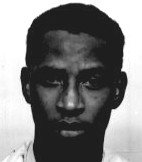
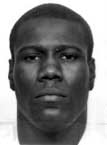
Kenneth Ray Ransom
Mass murderer Julio Gonzalez
Mass murderer · USA · 1990
Julio Gonzalez was sentenced to 174 twenty-five-year sentences (a total of 4,35…
87 victims
Julio Gonzalez
Mass murderer · USA · 1990
Julio Gonzalez was sentenced to 174 twenty-five-year sentences (a total of 4,35…
87 victims
 David Burke
Mass murderer · USA · 1987
David Augustus Burke (May 18, 1952–December 7, 1987) was an employee of USAir,…
43 victims
David Burke
Mass murderer · USA · 1987
David Augustus Burke (May 18, 1952–December 7, 1987) was an employee of USAir,…
43 victims
 George Jo Hennard
Mass murderer · USA · 1991
George Jo Hennard carried out a mass killing at a Luby’s Cafeteria in Killeen,…
23 victims
George Jo Hennard
Mass murderer · USA · 1991
George Jo Hennard carried out a mass killing at a Luby’s Cafeteria in Killeen,…
23 victims
 James Huberty
Mass murderer · USA · 1984
James Oliver Huberty was a 41-year-old unemployed security guard. He was born i…
21 victims
James Huberty
Mass murderer · USA · 1984
James Oliver Huberty was a 41-year-old unemployed security guard. He was born i…
21 victims
 Ronald Gene Simmons
Mass murderer · USA · 1987
Ronald Gene Simmons was a retired United States Air Force sergeant. Over the Ch…
16 victims
Ronald Gene Simmons
Mass murderer · USA · 1987
Ronald Gene Simmons was a retired United States Air Force sergeant. Over the Ch…
16 victims
 Teófilo Medina
Murderer · USA · 1984
Teofilo Medina, Jr. stole a gun from a pawn shop in Santa Ana, California. In t…
4 victims
Teófilo Medina
Murderer · USA · 1984
Teofilo Medina, Jr. stole a gun from a pawn shop in Santa Ana, California. In t…
4 victims
 Charles Manson
Murderer · USA · 1969
Charles Milles Manson (born November 12, 1934) was an American criminal and mus…
9 victims
Charles Manson
Murderer · USA · 1969
Charles Milles Manson (born November 12, 1934) was an American criminal and mus…
9 victims
 Clarence Gardner
Homicide · USA · 1993
October 28, 1993 — Joseph Waites was shot dead after a street scuffle involving…
1 victim
Clarence Gardner
Homicide · USA · 1993
October 28, 1993 — Joseph Waites was shot dead after a street scuffle involving…
1 victim
 Lillie Stanton
Murderer · USA · 2012
Lillie Stanton was 49 and lived at a house on Vaught Road in Winchester, where…
2 victims
Lillie Stanton
Murderer · USA · 2012
Lillie Stanton was 49 and lived at a house on Vaught Road in Winchester, where…
2 victims
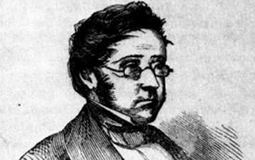 John White Webster
Murderer · USA · 1849
John White Webster (May 20, 1793–August 30, 1850) was born in Boston, Massachus…
1 victim
John White Webster
Murderer · USA · 1849
John White Webster (May 20, 1793–August 30, 1850) was born in Boston, Massachus…
1 victim
- Gender
- male
- Country
- USA
- Location
- Harris County, Texas, USA
- Date of birth
- May 15, 1963
- Age at first offence
- 20
- Characteristics
- robbery
- Victim profile
- Anil Varughese, 18, Rod Harris, 22, Arnold Pequeno, 19, and his brother Joerene Pequeno, 18 ( Malibu Grand Prix Race Center employees)
- Method of murder
- St abbing with knife
- Date(s) of murder
- July 1, 1983
- Years active
- 1983
- Date of arrest
- 4 days after ( surrenders )
- Status
-
Executed
Executed by lethal injection in Texas on October 28, 1997
Case information
Kenneth Ray Ransom was executed by lethal injection in Texas on October 28, 1997.
Ransom had the inmate number #772. He was 34 years old at the time of execution and had spent 13 years on death row. He was a high school graduate or GED holder.
Status and last statement
Ransom was executed by lethal injection at 6 p.m. on October 28, 1997. He did not request a last meal.
In his final statement, Ransom said:
First and foremost I would like to tell the victims’ families that I am sorry because I don’t feel like I am guilty. I am sorry for the pain all of them have gone through during holidays and birthdays. They are without their loved ones. I have said from the beginning and I will say it again that I am innocent. I did not kill no one. I feel like this is the Lord’s will that will be done. I love you all. You know it. Don’t cry. Tell my brothers I love them. You all be strong. Kenneth Ray Ransom
During the execution, Ransom was strapped to the gurney in Huntsville’s Walls Unit and professed his innocence. He also said he wanted his death to be “an instrument to abolishing the death penalty forever.” He was pronounced dead at 6:20 p.m. He sang a Muslim prayer, smiled at his mother, Pearlie, and cousin, Jocelyn Gums, and awaited the lethal shot.
As the drugs flowed into his arms, he took a deep breath, and his lips sputtered on the exhale.
Ransom’s mother, Pearlie Ransom, attended the execution from the observation room. As Ransom began to lose consciousness after being lethally injected, Pearlie Ransom collapsed, pleaded “Oh, Jesus,” and was taken from the observation room in a wheelchair, screaming “Oh Jesus” repeatedly. Ransom’s cousin, Jocelyn Gums, attended the execution from the observation room. There were no witnesses from the victims’ families.
The offence
Ransom was executed for his involvement in a July 1, 1983, robbery that left four people dead at the Malibu Grand Prix game room in southwest Houston.
The victims were:
- Anil Varughese, 18, a manager.
- Rod Harris, 22, an employee.
- Arnold Pequeno, 19, an employee.
- Joerene Pequeno, 18, Arnold Pequeno’s brother.
A manager was found lying dead in his office. The others were found in the restroom.
The 18-year-old manager, Anil Varughese, and the three other employees, Rod Harris, Arnold Pequeno, and his brother Joerene Pequeno, were repeatedly stabbed with kitchen knives in the chest, abdomen, neck, and face. The throats of the manager and two of the victims were slashed with a 4-inch-long knife taken from Ransom’s girlfriend dishes drainer.
Ransom had previous prison terms for burglary and auto theft.
Investigation and factual background
Time and location
The Malibu Grand Prix Race Center in Houston contained numerous video games inside and had a racetrack for go-carts outside. The race center was open for business from ten o’clock a.m. until midnight.
Ransom was with his girl friend, Wanda Phillips, at her home for most of June 30, 1983. After seven o’clock p.m., James Randle, a friend of Ransom, came to Phillips’ home to talk with him. Ransom and Randle went outside away from Wanda and her small daughter and talked for about fifteen minutes. Randle left and Ransom came back into the home. Later, Randle returned for a second time and they again went outside to talk for about fifteen minutes. Between nine thirty and nine forty-five p.m., Randle returned a third time and Ransom and Randle went outside again to talk. They both went into the kitchen after the third discussion and removed a butcher knife from the dish drainer.
Phillips asked Ransom where he was going and said she needed her knife. Ransom responded that they were going to pick up Randle’s cousin’s paycheck. Randle told her, “Hold on you’re going to get your knife back. We’ll bring the knife back.”
Between nine thirty and ten o’clock p.m. that night, Randle’s mother saw Randle with Richard James Wilkerson, Randle’s cousin, and “another boy” at her home.
Randle’s younger brother, Jessie, saw Ransom leave with Randle and Wilkerson before midnight. Earlier that day, Randle’s mother had borrowed a butcher knife from one of her neighbors but was later unable to find it.
At approximately ten o’clock that night, Wilkerson’s sister saw Ransom standing outside her home when she unlocked the screendoor to let her brother inside. Wilkerson went into the kitchen and rummaged through the drawer where the family kept the butcher knives. Randle waited in the kitchen doorway. After going through the drawer, Wilkerson went into the bedroom with Randle. The two men went outside five or ten minutes after arriving. When Wilkerson’s sister locked the door behind them, she saw Ransom speaking with Wilkerson and Randle. The three left together.
Participants and their roles
Richard James Wilkerson had also been employed by the race center but his employment was terminated on June 20, 1983. Wilkerson could not pick up his last paycheck until June 30, 1983. Before Wilkerson could get the check, he had to appear in person at the race center and sign his time card indicating that he had received it. As of two-thirty p.m., on June 30, 1983, Wilkerson had not picked up his check.
The men returned to Phillips’ home at three o’clock a.m. on July 1, 1983. Ransom, Randle, and Wilkerson returned with blood on their clothing. Ransom tended to a severe cut on the inside of his right hand. Wilkerson poured the contents of a black satchel—currency, a wallet, a calculator, and a watch—onto the bed. Some of the money was bloody. The three men counted the money together; Randle gave Ransom a share. Phillips estimated Ransom’s share to be around three hundred and twenty-five dollars. Ransom counted the money, put it into his pocket, and began watching television with the two other men.
Randle and Wilkerson talked of how they had “slashed” somebody’s throat and “put the knife in someone['s] temple.”
Method and robbery proceeds
The offences at the Malibu Grand Prix involved a safe containing about $1,300, which was forced open by Wilkerson. Wilkerson made the manager open a safe containing about $1,300, robbed the money, and then killed Varughese in his office while Randle and Ransom slaughtered other employees in the bathroom.
The men arrived at the arcade between midnight and 1 a.m. so that Wilkerson could pick up his last paycheck. After arriving at closing time, they packed butcher knives and herded three workers—Rod Harris, Arnold Pequeno, and Joerene Pequeno—into a bathroom and locked them in the stalls. They then pulled the victims out one by one and stabbed them repeatedly. A fourth victim, Anil Varughese, was forced to open a safe containing the approximately $1,300 taken in the robbery. Varughese was found dead in the arcade’s office where Wilkerson slashed his throat so violently that he broke the 6-inch blade on his knife.
Ransom, accompanied by his girlfriend, had a class ring and watch that were identical to the ones Arnold Pequeño had been wearing before his murder.
Arnold’s watch and class ring were missing along with a black satchel in which he carried his school books.
The money missing included over thirteen hundred dollars from the race center’s safe and petty cash drawers. Wilkerson’s last paycheck was also missing; his time card was signed and was found lying on the manager’s desk.
Wilkerson and Randle were arrested on July 1, 1983. They both admitted their participation in the murders of the four employees while questioned at police headquarters.
Ransom told a jury that he was not aware of his friends’ intentions to rob the arcade and kill the employees. He said that he tried to stop them from killing the victims, but they had threatened to kill him.
Evidence at trial
Victim injuries
At the time of their deaths, Rod Harris was 22, Arnold Pequeno was 19, and Joerene Pequeno was 18.
Anil Varughese’s body was discovered in the manager’s office. He was stabbed at least eight times—five times in the chest and three times in the abdomen.
Rod Harris’s body was found in one of the stalls; he had been stabbed at least seven times in the chest.
Joerene Pequeno’s body was found in the other stall; he had been stabbed eleven times—once in the chest, once in the neck, once in the back, and once in the right hand. He had been stabbed seven times in the neck area with one cut severing his jugular vein.
Arnold Pequeno’s body was in the bathroom corner with his head under one of the urinals. He had been stabbed and cut twenty-two times in the neck, chest, abdomen, back and right hand. One of the cuts to his neck severed his jugular vein.
Crime scene forensic items
The three victims’ blood covered the bathroom floor and was splattered on the walls and ceiling. Blood not matching the victims was found on the sink’s counter, on a paper towel, and on the bathroom door. A trail of blood led out of the bathroom, through the race center and into the parking lot area.
Analysis revealed that this blood could not have come from any of the victims or from either Randle or Wilkerson; only appellant’s blood was genetically compatible.
The fingerprint to appellant’s left index finger was lifted from the door to the bathroom stall where Harris’s body was found; the print was discovered on the inside of the door at the top. Randle’s fingerprint was lifted from the inside of the door to the bathroom stall where Joerene Pequeno’s body was found.
The knife taken from Phillips’ home was discovered near the racetrack area; the knife was broken into pieces.
Missing items and later recovery
When Phillips discovered a billfold, some credit cards, and a driver’s license had been discarded in the garbage, she found the driver’s license had the name “Roddy Harris” on it. Randle took the billfold, credit cards, and license away from Phillips and threw them into the dumpster.
Ransom’s mother later attended the execution with Ransom’s cousin.
Arrest and surrender
Ransom was with Phillips watching television late that evening on the day that the bodies were discovered, and a news story about the murders was broadcast. Upon seeing the story, Ransom was visibly upset.
Ransom turned himself into the police on July 5, 1983, accompanied by his mother, stepfather, and attorney. He was wearing a class ring and watch that had belonged to Arnold Pequeño and were taken after his death.
Trial
Jury and court
Ransom was the last to be tried. He told a jury composed of four women and eight men that he was not aware of his friends’ intentions to rob the arcade and kill the employees.
On June 15, 1984, a jury in State District Judge William Hatten’s court found Ransom guilty of capital murder for the murder of Arnold Pequeño.
A state finding stated that Ransom was indicted for, and convicted of, capital murder because he murdered Arnold Pequeno in the course of robbing him. The applicable Texas statute provided that a person committed capital murder if he committed murder in the course of committing or attempting to commit robbery, and that murder occurred when a person intentionally or knowingly caused the death of an individual.
Sentencing
Ransom was sentenced to death.
In his federal appeal, the court noted that Ransom’s conviction and sentence were upheld by the Texas Criminal Court of Appeals. Ransom v. State, 789 S.W.2d 572 (Tex.Crim.App.1989). The United States Supreme Court denied certiorari. Ransom v. State, 497 U.S. 1010, 110 S.Ct. 3255, 111 L.Ed.2d 765 (1990).
Appeals and post-conviction proceedings
State court appeals
Ransom v. State, 789 S.W.2d 572 (Tex.Crim.App.1989) affirmed the conviction.
Ransom first appealed on June 14, 1989, raising 14 points of error in his trial. The conviction was affirmed, “finding all points of error to be without merit.”
His second appeal was on Oct. 21, 1997, seven days before his scheduled execution date. Ransom filed motions for a stay of execution and for Certificate of Probable Cause. His application for CPC and the motion for stay of execution were denied and the appeal was dismissed.
Federal proceedings
Following unsuccessful post conviction actions in Texas state court, Ransom petitioned the federal district court for a writ of habeas corpus. The district court denied habeas relief and subsequently refused to grant a Certificate of Probable Cause.
Ransom v. Johnson, No. H-96-0344 (S.D.Tx.1997).
Ransom filed motions for a stay of execution and for CPC in the United States Court of Appeals for the Fifth Circuit. The case title was Kenneth Ray Ransom, Petitioner-appellant, v. Gary L. Johnson, Director, Texas Department of Criminal Justice, Institutional Division, Respondent-appellee, 126 F.3d 716.
The United States Court of Appeals issued its decision on Oct. 21, 1997. The appeal was from the United States District Court for the Southern District of Texas. The panel included KING, JOLLY and DENNIS, Circuit Judges, and the opinion was by Circuit Judge DENNIS.
The court denied the motions for stay of execution and certificate of probable cause and dismissed the appeal.
Ransom’s federal appeal also included discussion of two constitutional arguments:
- Ineffective assistance of counsel during the penalty phase due to failure to discover and present mitigating evidence.
- Due process rights violated when the trial court refused to instruct the jury on a lesser included offense.
Other co-defendants’ outcomes
One of Ransom’s accomplices, Richard Wilkerson, was executed. Wilkerson was charged with capital murder in the death of Varughese and died by injection on Aug. 31, 1993.
The other co-defendant was James Edward Randle, who was 16 at the time of the slayings. Randle was sentenced to life in prison on March 1984. He did not face capital punishment because he was 16 at the time of the slayings. Randle was said to be eligible for parole in 2003 (and later stated as eligible for parole in January 2003).
Federal appeal: ineffective assistance and lesser included offence
The Fifth Circuit applied pre-AEDPA standards and explained that the merits could be reviewed only if the court granted a CPC.
Ransom argued ineffective assistance in the penalty phase because counsel failed to discover and present mitigating evidence. The argument included that a childhood abuse case file existed and included information that Ransom was subjected to physical, emotional, and possibly sexual abuse at the hands of his mother and older siblings; that he was shuttled between his mother and a foster parent; and that he had positive traits.
The decision discussed affidavits by Ransom’s trial counsel, Wesley Hocker and Roy Jerue, and detailed the scope of Jerue’s investigation for the penalty phase, including that Jerue traveled to Wharton, Texas to interview unnamed persons, interviewed Ms. Ransom, and interviewed one of Ransom’s brothers.
The court concluded that the claim did not satisfy the prejudice prong of Strickland and stated that Ransom had not met the burden required to show prejudice sufficient to render sentencing fundamentally unfair or unreliable.
The decision also addressed Ransom’s Beck claim regarding due process and lesser included offences. The court discussed Cordova v. Lynaugh, Beck v. Alabama principles, and whether the jury could have convicted Ransom of a lesser included, noncapital offense.
The court described testimony by Ransom and by Wanda Phillips, including that Ransom testified co-defendant Randle came to Phillips’ apartment three times, and that Ransom had no knowledge of Randle taking a knife from Phillips’ apartment, had no knowledge that anyone had a knife, and did not know they were going to do anything but pick up co-defendant Wilkerson’s check. The court also recounted that Ransom testified he played arcade games for about twenty minutes, then went to the restroom; saw Randle stabbing a man in the restroom; tried to prevent the stabbing; left and hid in a ditch; and took proceeds from the robbery only because he was scared.
The court concluded that in this case the evidence did not support a middle view and that the trial court did not commit constitutional error by refusing a lesser included, noncapital instruction. The court therefore denied the application for certificate of probable cause and the motion for stay of execution.
Other details
Prison history and education
Attendees and family involvement
Comments attributed to family of a victim
Donnie Trent, mother of victim Roddy Harris, said by telephone it was time for Ransom to die, including: “It’s time for it to be over,” and “Of course, I’m sorry for his family, too, but I think he got what he deserved. I see no reason for keeping a murderer in jail all these years, and we have to pay for it.”
Testimony and evidence disputes in appeals
Ransom’s attorney was Jim Marcus. It was stated that Marcus said Randle recently signed a statement that he did the killing and tried to kill Ransom when he tried to stop the bloodshed, and that an appeal was filed but rejected on procedural grounds. Marcus said: “I feel frustrated, and I don’t think anyone should feel good about this execution because it’s a travesty,”
Harris’ sister, Wendy Steele, watched the trial and doubted Ransom’s story, stating that one of the murder weapons came from Ransom’s girlfriend’s apartment. Steele said: “If he really wanted to stop it he wouldn’t have taken the knife from his girlfriend’s apartment or he would have called the police,”
Spotted an error, or have more information about this case?