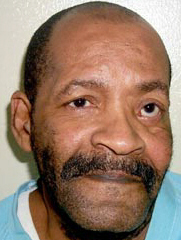
James Edward Reid
Murderer Russell Ellwood
Murderer · USA · 1991
Russell Ellwood was a former taxi driver. Authorities suspected him of killing…
20 victims
Russell Ellwood
Murderer · USA · 1991
Russell Ellwood was a former taxi driver. Authorities suspected him of killing…
20 victims
 Robert Martines Perez
Murderer · USA · 1994
Name: Robert Martines Perez · Other name used in proceedings: Robert Martinez P…
15 victims
Robert Martines Perez
Murderer · USA · 1994
Name: Robert Martines Perez · Other name used in proceedings: Robert Martinez P…
15 victims
 Billy Frank Vickers
Murderer · USA · 1993
Billy Frank Vickers Vickers was executed by lethal injection in Texas on Januar…
14 victims
Billy Frank Vickers
Murderer · USA · 1993
Billy Frank Vickers Vickers was executed by lethal injection in Texas on Januar…
14 victims
 Raymond Fernandez
Serial killer · USA · 1947
Raymond Martinez Fernandez was executed by electrocution at Sing Sing prison in…
17 victims
Raymond Fernandez
Serial killer · USA · 1947
Raymond Martinez Fernandez was executed by electrocution at Sing Sing prison in…
17 victims
 Alexandra Tobias
Murderer · USA · 2010
Alexandra Tobias was 22 when she pleaded guilty and was sentenced to 50 years i…
1 victim
Alexandra Tobias
Murderer · USA · 2010
Alexandra Tobias was 22 when she pleaded guilty and was sentenced to 50 years i…
1 victim
 Cal Coburn Brown
Murderer · USA · 1991
Cal Coburn Brown (born April 16, 1958) was convicted and sentenced to death in…
1 victim
Cal Coburn Brown
Murderer · USA · 1991
Cal Coburn Brown (born April 16, 1958) was convicted and sentenced to death in…
1 victim
 Lowell Lee Andrews
Murderer · USA · 1958
Name: Lowell Lee Andrews Date of execution: November 30, 1962 Status: Executed…
3 victims
Lowell Lee Andrews
Murderer · USA · 1958
Name: Lowell Lee Andrews Date of execution: November 30, 1962 Status: Executed…
3 victims
 Amy Lee Black
Homicide · USA · 1990
Amy Lee Black was 16 years and six months old at the time of the crime. She was…
1 victim
Amy Lee Black
Homicide · USA · 1990
Amy Lee Black was 16 years and six months old at the time of the crime. She was…
1 victim
- Gender
- male
- Country
- USA
- Location
- Montgomery County, Virginia, USA
- Date of birth
- October 10, 1945
- Age at first offence
- 51
- Characteristics
- alcohol, alcoholic, rape, attempted rape, attempt to collect insurance money
- Victim profile
- Annie Lester (female, 87)
- Method of murder
- St abbing with scissors 22 times
- Date(s) of murder
- October 12, 1996
- Years active
- 1996
- Date of arrest
- —
- Status
-
Executed
Executed by lethal injection in Virginia on September 9, 2004
Case overview
James Edward Reid was executed by lethal injection in Virginia on September 9, 2004.
The body of 87-year-old Annie Lester was discovered in the bedroom of her home. An autopsy revealed that she had suffered 22 scissor stab wounds. One of the wounds punctured a lung and another punctured her heart. Annie had also been beaten about her head with a can of condensed milk, and a bone in her throat had been crushed by strangulation or being struck with a hard object. A trail of blood led from Annie’s kitchen to her bedroom.
Reid was acquainted with Annie Lester and had received an automobile ride to her house. Forensics later determined that Lester had been hit on the head in the kitchen and dragged to the bedroom, where she was stabbed with scissors and strangled with the cord of a heating pad. Reid was seen walking from the area of Annie’s lifelong home, drunk and covered in blood. Blood on his clothes matched Lester’s DNA, his saliva was found on a cigarette butt left in her room, his handwriting was found on a card that said “I’ve gotta kill you,” and Reid’s bloody fingerprints were found on the telephone in Annie’s bedroom. Reid entered a guilty plea to the murder.
Timeline
- 1968 — Reid was involved in an automobile accident and suffered a serious head injury.
- October 12, 1996 — Annie Lester was killed at her home; she was stabbed 22 times and suffered additional injuries including being beaten about her head with a can of condensed milk and strangulation-related injury to a bone in her throat.
- December 3, 1997 — James Edward Reid pled guilty to capital murder, attempted rape, and attempted robbery; the trial court found Reid guilty as charged after accepting the pleas and hearing evidence.
- February 20, 1998 — The trial court reconvened the sentencing-phase penalty hearing.
- February, 1998 — Reid was sentenced to death for the capital murder conviction, and two ten-year sentences were imposed for attempted rape and attempted robbery.
- 1997 — Reid was convicted of capital murder, attempted rape, and attempted robbery.
- 2002 — Reid’s trial attorney was forced to surrender his law license by the Virginia Disciplinary Board in 2002 for making materially false representations regarding his experience in this case.
- September 9, 2004 — Reid was executed by lethal injection in Virginia at Greensville Correctional Center; he was pronounced dead at 9:12 p.m.
The offence
Reid killed Annie Lester, an elderly woman, in her home. The killing involved 22 scissor stab wounds. Several wounds were described as lethal, including wounds that punctured a lung and punctured her heart. Annie Lester was also beaten about her head with a can of condensed milk, and a bone in her throat had been crushed by strangulation or being struck with a hard object.
A trail of blood led from Annie’s kitchen to her bedroom, where her body was found. The bedroom was described as in disarray and ransacked, and a wine bottle was found on the floor at the foot of the bed. Some of Lester’s clothing had blood on it, and the bedroom contained debris and items described as being present at the scene, including a wig lying on the kitchen floor and scissors lying on a chair in the television room.
In the afternoon on October 12, 1996, witnesses observed Reid walking from the direction of Lester’s house with blood on him; he was described as staggering.
Court documents and testimony described that Lester had been hit on the head in the kitchen and dragged to the bedroom, where she was stabbed with scissors and strangled with the cord of a heating pad.
Investigation and forensic findings
Police recorded the scene and a tape was admitted into evidence, with Officer Tommy Lawson narrating what was being seen as the trial court watched it. Blood was present throughout Lester’s home on items including the kitchen floor, back door and back door trim, refrigerator, a can of milk, a wig on the kitchen floor, the door from the kitchen into a television room, scissors lying on a chair in the television room, the bed and headboard in the bedroom where Lester’s body was found, the cord of an electric heating pad under Lester’s head, and the seat of a chair beside her body.
An assistant chief medical examiner performed an autopsy and testified regarding the wounds. He observed stab wounds to the neck and chin and stab wounds to the chest, and he testified that several chest wounds went into Lester’s left lung and into her heart. He described the stab wounds as having a Z-shaped or H-shaped configuration consistent with injuries caused by two blades superimposed on one another or scissors blades.
Evidence connecting Reid to the commission of the crimes included witness testimony placing him at or near Lester’s house on the day of the murder, including:
- Around 10:30 a.m. on October 12, Reid secured a ride to Lester’s house with Haywood Alexander and Robert Smith. His stated purpose was to do some work there. En route, Reid asked Alexander and Smith to stop at a store where Reid purchased a bottle of wine.
- Alexander and Smith left after Reid arrived and exited the vehicle. Reid walked around to the back of the house with his bottle of wine.
- Around 4:30 p.m. on October 12, George Eanes, working at Eanes Body Shop across the street from Lester’s house, observed Reid walking across the street. Eanes said he had blood on him and was staggering. When Eanes asked how Reid got in that condition, Reid referred to a former lover and said: “he did it for love.”
- George W. Eanes, father of George Eanes, also saw Reid and confirmed Reid had blood all over him. George Eanes’s father stated that Reid smelled like a “brewery.”
- During the drive home, Reid told Eanes’s father that some person had given him some drugs and that they had gotten into an argument or fight.
Forensic tests established that Reid’s DNA matched a stain abstracted from a cigarette butt found in Lester’s home, and Lester’s DNA was consistent with blood recovered from Reid’s jacket. Fingerprints were identified in blood on the handset of a rotary telephone in Lester’s bedroom, and Reid’s handwriting was found on papers recovered in Lester’s house.
Blood on Reid’s clothes matched Lester’s DNA, his saliva was found on a cigarette butt left in her room, and his handwriting was found on a card that said “I’ve gotta kill you.” Reid’s bloody fingerprints were found on the telephone in Annie’s bedroom.
Arrest and detention
Reid was incarcerated in Virginia and was scheduled for execution in September 2004.
Trial and plea
On December 3, 1997, James Edward Reid pled guilty to three charges:
- capital murder of Annie V. Lester during the commission of attempted rape and/or attempted robbery in violation of Code § 18.2-31;
- attempted rape in violation of Code § 18.2-67.5; and
- attempted robbery in violation of Code § 18.2-58.
Reid entered his guilty pleas pursuant to North Carolina v. Alford, 400 U.S. 25, 91 S.Ct. 160, 27 L.Ed.2d 162 (1970). After accepting the pleas and hearing evidence about the commission of the offenses, the trial court found Reid guilty as charged.
The trial court then held sentencing proceedings. The trial court heard evidence from both sides and received a pre-sentence report. It imposed the death penalty for the capital murder conviction and imposed two ten-year sentences for the attempted rape and attempted robbery convictions.
In imposing the death penalty, the trial court found that Reid’s conduct in committing capital murder was “outrageously vile, horrible and inhuman in that it involved such aggravated battery to the victim, that is ... qualitatively and quantitatively ... more culpable than the minimum necessary to accomplish an act of murder.”
Reid later claimed that he did not remember the killing and that he “blacked out” during the relevant period, according to his statements described during preparation of the pre-sentence report.
During the sentencing phase, the trial court heard testimony from medical and psychiatric experts including Dr. Pogos H. Voskanian, Dr. Stephen Herrick, and Dr. Randy Thomas. They testified that Reid experienced “blackout” periods and that his medical and psychiatric conditions affected his ability to form intent.
The medical and psychiatric testimony included:
- Reid had major head trauma from an automobile accident in 1968 and had been in a coma for at least five days, with damage described as to the left temporal lobe and part of the frontal lobe affecting personality and ability to control impulses.
- Reid developed a seizure disorder shortly after the head injury, and repeated seizures occurred because of noncompliance with seizure medication.
- Reid had a family history of alcoholism, had abused alcohol since age 15, and had numerous admissions to psychiatric hospitals and alcohol abuse rehabilitation centers.
- Dr. Voskanian opined that Reid experienced “blackout” episodes when intoxicated and that during those episodes Reid may not remember what he did five minutes ago but would retain memory for established information such as his name and residence.
- The experts testified that Reid would not be susceptible to violent outbursts if he were in a structured setting with no access to alcohol.
Reid’s attorneys presented mitigating evidence based on these impairments, which the trial court considered in its sentencing decision.
Sentencing
The trial court sentenced Reid to death for the capital murder conviction and imposed two ten-year sentences for attempted rape and attempted robbery.
Appeals and postconviction proceedings
Direct appeal
Reid appealed the imposition of the death sentence. The Supreme Court of Virginia concluded that the sentence of death was neither excessive nor disproportionate, and it found no error in the trial court’s imposition of death. It also concluded that the trial court did consider Reid’s mitigating evidence.
Reid v. Commonwealth, 506 S.E.2d 787 (Va. 1998).
Certiorari petition
Reid v. Virginia, 120 S.Ct. 91 (1999) (Cert. Denied).
Federal habeas
Reid v. True, 349 F.3d 788 (4th Cir. Va. 2004) (Habeas). The Court of Appeals affirmed the denial of federal habeas relief.
Execution and final statement
Reid was executed by lethal injection in Virginia on September 9, 2004. He was pronounced dead at 9:12 p.m. at Greensville Correctional Center.
The intravenous line carrying the lethal dose of drugs was placed in Reid’s upper groin because veins in his arms had deteriorated from years of drinking. Medical technicians took 12 minutes to place the IV lines, described as three times longer than usual.
When asked if he had a final statement, Reid said:
“I forgive you for what you are doing but I don't forgive you for what you think, or for what you feel, or what you say, or what you do. I forgive you because God has forgiven me.”
Other details
Reid’s age at execution was 58.
Reid was described as an alcoholic and having a seizure disorder following his 1968 car accident. He had been affected by alcoholism as an adult.
A federal judge, Henry E. Hudson, rejected a contention by Reid that Virginia’s lethal injection method should delay his execution, concluding that the procedure would kill the defendant within five to ten minutes and reduce the chance of consciousness to less than 6/1000 of 1 percent.
Gov. Mark R. Warner rejected Reid’s clemency petition, citing “overwhelming” evidence of Reid’s guilt and exhaustive court reviews.
Ida Reid, Reid’s sister, and Radford lawyer James C. Turk Jr. urged a stay of execution, stating that Reid’s state-appointed lawyers botched his defense. Ida Reid said Peter Theodore, Reid’s lead counsel at his 1997 trial in Christiansburg, slept on and off in court and falsely advised her brother that an Alford plea probably would result in a sentence of 20 or fewer years. She also stated that Theodore was forced to surrender his Virginia law license by the Virginia Disciplinary Board in 2002 for making false statements about his representation of Reid, and that the Virginia State Bar ruled Theodore’s status should be changed to disabled.
A spokesman for the Virginia Department of Corrections, Larry Traylor, described Reid’s execution details at Greensville Correctional Center.
Spotted an error, or have more information about this case?