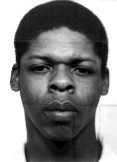
James Davis Richardson
Murderer Brian Kevin Rosenfeld
Murderer · USA · 1985
Brian Kevin Rosenfeld Brian Kevin Rosenfeld was sentenced to three concurrent l…
23 victims
Brian Kevin Rosenfeld
Murderer · USA · 1985
Brian Kevin Rosenfeld Brian Kevin Rosenfeld was sentenced to three concurrent l…
23 victims
 Yahweh ben Yahweh
Murderer · USA · 1980
Yahweh ben Yahweh was born and legally named Hulon Mitchell Jr. (October 27, 19…
23 victims
Yahweh ben Yahweh
Murderer · USA · 1980
Yahweh ben Yahweh was born and legally named Hulon Mitchell Jr. (October 27, 19…
23 victims
 Russell Ellwood
Murderer · USA · 1991
Russell Ellwood was a former taxi driver. Authorities suspected him of killing…
20 victims
Russell Ellwood
Murderer · USA · 1991
Russell Ellwood was a former taxi driver. Authorities suspected him of killing…
20 victims
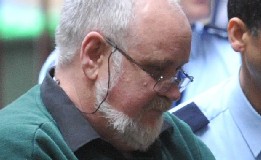 John Coombes
Serial killer · Australia · 1984
John Leslie Coombes was convicted of murdering and dismembering childcare worke…
3 victims
John Coombes
Serial killer · Australia · 1984
John Leslie Coombes was convicted of murdering and dismembering childcare worke…
3 victims
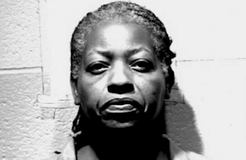 Robin Johnson
Murderer · USA · 2008
Robin Johnson was a 300-pound homeless woman in her 40s who was involved in a d…
1 victim
Robin Johnson
Murderer · USA · 2008
Robin Johnson was a 300-pound homeless woman in her 40s who was involved in a d…
1 victim
 Ann Bilansky
Murderer · USA · 1859
Ann Bilansky was executed by hanging in Minnesota on March 23, 1860 for the ars…
1 victim
Ann Bilansky
Murderer · USA · 1859
Ann Bilansky was executed by hanging in Minnesota on March 23, 1860 for the ars…
1 victim
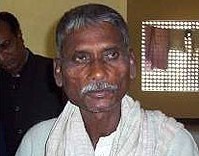 Sadashiv Sahu
Serial killer? · India · 2000
Sadashiv Sahu was identified as the suspect in a series of mystery killings of…
22 victims
Sadashiv Sahu
Serial killer? · India · 2000
Sadashiv Sahu was identified as the suspect in a series of mystery killings of…
22 victims
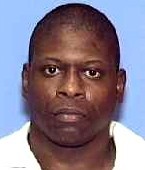 Rodney Reed
Murderer · USA · 1996
Rodney Reed (TDCJ Number 999271) was born on 12/22/67 and was received into cus…
1 victim
Rodney Reed
Murderer · USA · 1996
Rodney Reed (TDCJ Number 999271) was born on 12/22/67 and was received into cus…
1 victim
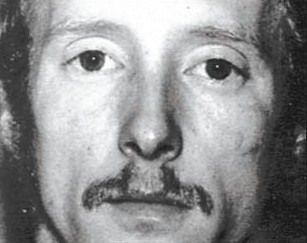 Richard Boggs
Murderer · USA · 1984
Richard T. Boggs was convicted and sentenced to death for the capital murder of…
2 victims
Richard Boggs
Murderer · USA · 1984
Richard T. Boggs was convicted and sentenced to death for the capital murder of…
2 victims
- Gender
- male
- Country
- USA
- Location
- Navarro County, Texas, USA
- Date of birth
- September 7, 1967
- Age at first offence
- 19
- Characteristics
- robbery
- Victim profile
- Gerald Abay, 35 (liquor store clerk)
- Method of murder
- Shooting ( .25 caliber pistol)
- Date(s) of murder
- December 17, 1986
- Years active
- 1986
- Date of arrest
- Same day
- Status
-
Executed
Executed by lethal injection in Texas on May 23, 2000
Name and identity
James Davis Richardson
Status / outcome
Richardson was executed by lethal injection in Texas on May 23, 2000.
Timeline
- December 17, 1986 — Gerald Abay was found dead on the floor behind the counter of his liquor store in Corsicana, Texas. Abay had been shot in the neck and chest, and over $100,000 and Abay's .25 caliber pistol, kept behind the counter, were taken from the store.
- February 12, 1987 — Richardson was indicted for capital murder of Gerald Abay, committed during the course of committing and attempting to commit robbery.
- April 21, 1987 — Richardson was convicted of capital murder and sentenced to death.
- Nov. 1, 1988 — A jury found Richardson guilty as charged in the indictment.
- Dec. 1, 1993 — The Texas Court of Criminal Appeals affirmed Richardson's second conviction and sentence of death.
- Nov. 28, 1994 — The United States Supreme Court denied certiorari review.
- March 28, 1995 — A federal district court stayed Richardson's execution and appointed counsel for a federal habeas proceeding.
- Oct. 31, 1995 — The district court dismissed Richardson's federal habeas corpus proceedings without prejudice so he could return to state court to exhaust state remedies.
- March 7, 1997 — Richardson, through court-appointed counsel, filed an application for state writ of habeas corpus.
- Sept. 24, 1997 — The Court of Criminal Appeals denied Richardson's application for habeas corpus relief.
- Nov. 17, 1997 — A federal district court again stayed the execution and appointed counsel.
- Feb. 17, 1998 — Richardson filed his second petition for writ of habeas corpus.
- April 14, 1999 — The district court denied Richardson's petition.
- June 9, 1999 — The district court denied permission to appeal.
- Nov. 22, 1999 — The Fifth Circuit Court of Appeals denied Richardson permission to appeal.
- Feb. 2, 2000 — The trial court set Richardson's execution for May 23, 2000.
- April 24, 2000 — Richardson filed a petition for writ of certiorari in the United States Supreme Court.
- May 23, 2000 — Richardson was executed by lethal injection in Texas.
Background
Richardson previously convicted of aggravated robbery and burglary of a building.
Disciplinary reports admitted at trial revealed that while Richardson was in prison on the aggravated robbery conviction, he was disciplined for destroying state property, striking an officer by throwing hot water on him, and creating a disturbance.
Richardson's juvenile record reflected 10 prior arrests that included theft, truancy, and fighting.
While awaiting trial for capital murder, Richardson smuggled two hacksaw blades into the Navarro County Jail and attempted to escape.
While awaiting trial for capital murder, Richardson sexually assaulted another inmate in the Navarro County Jail and threatened him with subsequent assaults if he told anyone.
There was no evidence of drug or alcohol use connected with the instant offense.
The offence
On the evening of December 17, 1986, Gerald Abay was found dead on the floor behind the counter of his liquor store in Corsicana, Texas.
Abay had been shot in the neck and chest.
Over $100,000 and Abay's .25 caliber pistol, which he kept behind the counter for protection, were taken from the store.
The glass in the front doors of the liquor store was shattered, and there was blood on the floor near the front door.
A .38 caliber pistol that Abay was known to carry was found near his body.
Michael Ellison testified at trial that on Dec. 17, 1986, he asked James McHenry if he would take him to a liquor store. McHenry agreed and Richardson went with them.
At the liquor store, Ellison and McHenry went inside and Richardson waited in the car.
While Ellison was paying for some beer, Richardson entered the store.
As McHenry walked out of the store, Richardson suddenly shot Abay in the neck with a .25 caliber pistol.
Richardson then shot Abay a second time in the chest.
Abay pulled out his .38 caliber pistol and shot at Richardson several times.
Abay shot Richardson in the thumb and shattered the glass in the front doors of the liquor store.
Ellison took money out of the cash register, as well as Abay's .25 caliber pistol, kept behind the cash register.
Ellison testified that Richardson drove the car after the robbery and handed his own .25 caliber pistol to McHenry, who put it in the glove compartment.
Investigation and forensics
Don Sullivan, a fingerprint examiner, while en route to the crime scene, saw an abandoned car matching the radio broadcast description of the getaway car.
Sullivan approached the car and saw blood on the steering wheel, front door handle, door panel, and carpet on the driver's side.
A fingerprint on the front door handle matched Richardson's fingerprint.
A .25 caliber pistol was found in the glove compartment of the getaway car.
A thumbprint matching the thumbprint of James McHenry was taken from the pistol.
Shortly after the murder, a Navarro County sheriff's deputy arrested Richardson. Richardson's left hand was wounded and wrapped in a bloody towel.
The deputy took Richardson to the hospital for treatment and the towel was bagged and sent to the laboratory for analysis.
Both McHenry and Ellison gave information leading to the recovery of Abay's .25 caliber pistol and some money.
Dr. Grady Shaw treated Richardson for a gunshot wound to his left hand.
Forensics experts matched the blood found on the getaway car to that of Richardson.
Dr. Vincent Matthews, deputy chief medical examiner for Dallas County, determined that Abay's death was caused by gunshot wounds to the neck and chest.
Two .25 caliber bullets were recovered from Abay's body and were submitted for ballistics testing.
Larry Fletcher, a firearms examiner, examined the .25 caliber pistol found in the glove compartment of the getaway car and the two .25 caliber bullets taken from Abay's body.
The test rounds fired from the .25 caliber pistol and the bullets taken from Abay's body were identical and were fired from the same firearm.
Arrest
Richardson was arrested shortly after the murder. He had a gunshot wound to his left hand and it was wrapped in a bloody towel.
Trial
Richardson was originally tried for this offense and convicted of capital murder and sentenced to death on April 21, 1987.
The Texas Court of Criminal Appeals reversed the conviction and ordered a retrial because the court reporter misplaced a portion of the trial transcription.
At the second trial, Richardson pleaded not guilty to the charged offense.
On Nov. 1, 1988, the jury found Richardson guilty as charged in the indictment.
After a separate punishment hearing, the jury sentenced Richardson to death.
Richardson's conviction and sentence were automatically appealed to the Texas Court of Criminal Appeals.
At the second trial, the accomplices were identified as Michael Ellison and James McHenry.
Richardson was treated for a gunshot wound to the hand.
Sentencing
Richardson was sentenced to death after a separate punishment hearing at the second trial.
Richardson's first death sentence was reversed because the court reporter misplaced a portion of the trial transcription.
On retrial, Richardson was again convicted and sentenced to death.
Appeals
On Dec. 1, 1993, the court affirmed Richardson's second conviction and sentence of death.
On Nov. 28, 1994, the United States Supreme Court denied certiorari review.
Richardson's execution was set for April 11, 1995, but on March 28, 1995, a federal district court stayed Richardson's execution and appointed counsel to represent Richardson in a federal habeas proceeding.
On Oct. 31, 1995, the district court dismissed Richardson's federal habeas corpus proceedings without prejudice so that he could return to state court to exhaust his state remedies.
Through court-appointed counsel, Richardson filed an application for state writ of habeas corpus on March 7, 1997.
On Sept. 24, 1997, the Court of Criminal Appeals denied Richardson's application for habeas corpus relief.
Richardson's execution was then set for Dec. 10, 1997, but on Nov. 17, 1997, a federal district court again stayed the execution.
Richardson filed his second petition for writ of habeas corpus on Feb. 17, 1998.
On April 14, 1999, the district court denied Richardson's petition.
The district court denied permission to appeal on June 9, 1999.
On November 22, 1999, the Fifth Circuit Court of Appeals also denied Richardson permission to appeal.
Richardson filed a petition for writ of certiorari in the United States Supreme Court on April 24, 2000, and that petition was pending.
Prior criminal history and parole
Richardson had been paroled three months before the murder after serving 4 months of a 5 year sentence for a burglary conviction.
At the time of the arrest, Richardson was on parole after serving four months of a five-year prison term for burglary and robbery.
Richardson served 4 and a half months of a five-year sentence for burglary and was paroled three months before committing capital murder.
While in prison on the earlier conviction, Richardson was written up for throwing hot water on an officer and for creating a disturbance.
Accomplices
Michael Ellison was Richardson's accomplice and testified at trial about the events.
James McHenry was Richardson's accomplice and participated in going to the liquor store; he was also named by Ellison in testimony.
Both McHenry and Ellison received Life Sentences.
Official communications / district attorney commentary
Texas Attorney General John Cornyn offered information on James Davis Richardson scheduled to be executed after 6 p.m., Tuesday, May 23rd.
A quote appeared in the material from Pat Batchelor, the Navarro County district attorney who won the conviction that sent Richardson to death row: “I'm really not a big death penalty advocate,” and “But I think certain people who commit bad enough crimes give up the right to live.”
Statements and quotes (verbatim)
Richardson said in a final statement while strapped to a gurney:
“Heavenly father, I truly repent, really I do,” he said.
“Dear heavenly father, please bring me home.”
Richardson also said:
“Heavenly father, I truly repent, really I do,”
“I ask you lift me up, you bring me home, and hold my family safe.”
Richardson said before becoming unconscious:
Richardson's final statement included the following additional lines:
“Heavenly father, I repent my sins, really I do,” he said.
“I ask God that he take all the hate out of my heart and away from soul.”
Richardson said in a recent interview on death row:
“I was in the car,”
“I've never denied being on the property. But I didn't know they were going to rob the place. If I had known, I would have avoided it.”
Richardson said regarding remorse:
“Remorse for what?” he said.
“I'm not the one who done it. Why have remorse for something I haven't done? “I was never a killer,” he said, but added that he wished he could meet up with his two imprisoned former companions.
Richardson also said:
“If I could ever get my hands on them, I'd kill them,” he said.
“Because that's what they're doing to me. If I have to die, they should go before me.”
Richardson said about execution:
“For some reason, it's almost if I have peace in my heart,” he said.
“I've been trying to pray, but I'm not big on praying.”
Aftermath
At execution time, the material described Richardson as the first of three executions scheduled in Texas that week.
The material described the accomplices as having received life prison terms.
Richardson was pronounced dead 10 minutes after his final prayer.
Spotted an error, or have more information about this case?