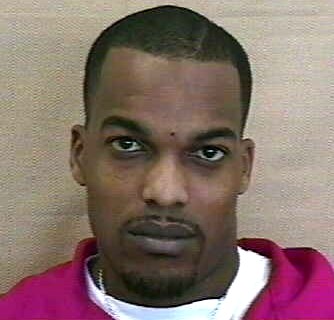
Darryl Richley
Murderer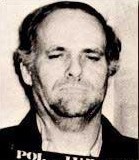 Ervil LeBaron
Murderer · USA · 1972
Ervil Morrell LeBaron (1925 to August 16, 1981) was the leader of a polygamous…
35 victims
Ervil LeBaron
Murderer · USA · 1972
Ervil Morrell LeBaron (1925 to August 16, 1981) was the leader of a polygamous…
35 victims
 Brian Kevin Rosenfeld
Murderer · USA · 1985
Brian Kevin Rosenfeld Brian Kevin Rosenfeld was sentenced to three concurrent l…
23 victims
Brian Kevin Rosenfeld
Murderer · USA · 1985
Brian Kevin Rosenfeld Brian Kevin Rosenfeld was sentenced to three concurrent l…
23 victims
 Marvin Gray
Murderer · USA · 1975
Marvin Gray was convicted killer who claimed responsibility for 23 slayings and…
23 victims
Marvin Gray
Murderer · USA · 1975
Marvin Gray was convicted killer who claimed responsibility for 23 slayings and…
23 victims
 Yahweh ben Yahweh
Murderer · USA · 1980
Yahweh ben Yahweh was born and legally named Hulon Mitchell Jr. (October 27, 19…
23 victims
Yahweh ben Yahweh
Murderer · USA · 1980
Yahweh ben Yahweh was born and legally named Hulon Mitchell Jr. (October 27, 19…
23 victims
 Russell Ellwood
Murderer · USA · 1991
Russell Ellwood was a former taxi driver. Authorities suspected him of killing…
20 victims
Russell Ellwood
Murderer · USA · 1991
Russell Ellwood was a former taxi driver. Authorities suspected him of killing…
20 victims
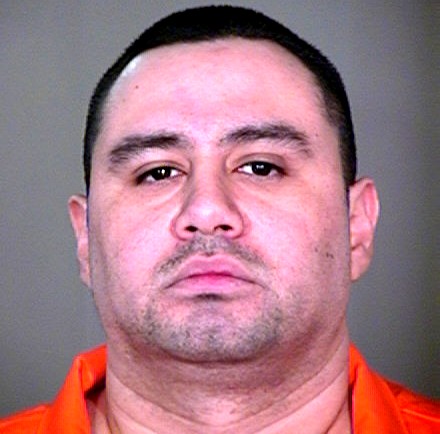 John Cruz
Murderer · USA · 2003
John Cruz was sentenced to death on May 10, 2005. Officer Patrick Kent Hardesty…
1 victim
John Cruz
Murderer · USA · 2003
John Cruz was sentenced to death on May 10, 2005. Officer Patrick Kent Hardesty…
1 victim
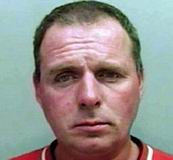 Stephen Farrow
Murderer · United Kingdom · 2012
Stephen Farrow (born c. 1964) was an English vagrant who served a whole-life ta…
2 victims
Stephen Farrow
Murderer · United Kingdom · 2012
Stephen Farrow (born c. 1964) was an English vagrant who served a whole-life ta…
2 victims
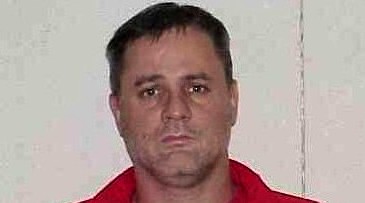 Karu White
Murderer · USA · 1979
Karu White was sentenced to death on March 29, 1980 in Powell County for the mu…
3 victims
Karu White
Murderer · USA · 1979
Karu White was sentenced to death on March 29, 1980 in Powell County for the mu…
3 victims
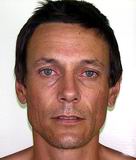 Brett Cowan
Murderer · Australia · 2003
Brett Peter Cowan (born 18 August 1969) was sentenced in the Supreme Court of Q…
1 victim
Brett Cowan
Murderer · Australia · 2003
Brett Peter Cowan (born 18 August 1969) was sentenced in the Supreme Court of Q…
1 victim
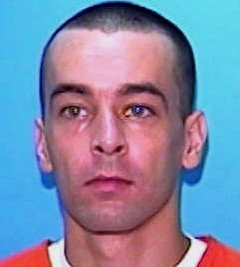 Thomas Lee Gudinas
Murderer · USA · 1994
Thomas Lee Gudinas (DOB: 02/27/74) was tried in the Ninth Judicial Circuit, Ora…
1 victim
Thomas Lee Gudinas
Murderer · USA · 1994
Thomas Lee Gudinas (DOB: 02/27/74) was tried in the Ninth Judicial Circuit, Ora…
1 victim
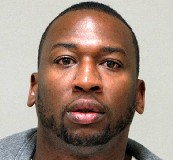 Rodrick Dantzler
Mass murderer · USA · 2011
Rodrick Shonte Dantzler was the suspected gunman in a mass murder in Grand Rapi…
7 victims
Rodrick Dantzler
Mass murderer · USA · 2011
Rodrick Shonte Dantzler was the suspected gunman in a mass murder in Grand Rapi…
7 victims
- Gender
- male
- Country
- USA
- Location
- Benton County, Arkansas, USA
- Date of birth
- 1950
- Age at first offence
- 31
- Characteristics
- robbery
- Victim profile
- Don ald Lehman (contractor)
- Method of murder
- Shooting
- Date(s) of murder
- March 25, 1981
- Years active
- 1981
- Date of arrest
- 2 days after
- Status
-
Executed
Executed by lethal injection in Arkansas on August 3, 1994
Status
Darryl Richley was executed by lethal injection in Arkansas on August 3, 1994.
Background
Darryl Richley was scheduled for execution on August 3, 1994. He pending before the court a motion for a stay of execution and also filed a notice of appeal from a judgment of the district court denying his second petition for a writ of habeas corpus under 28 U.S.C. Sec. 2254.
In October 1981, Richley and three others were found guilty of murdering Don Lehman and were sentenced to be put to death. Richley’s conviction and death sentence were affirmed, and his motion for post-conviction relief was denied:
- Clines v. State, 280 Ark. 77, 656 S.W.2d 684 (1983), cert. denied, 465 U.S. 1051, 104 S.Ct. 1328, 79 L.Ed.2d 723 (1984)
- Clines v. State, 282 Ark. 541, 669 S.W.2d 883 (1984)
The offence
Don Lehman was murdered in a robbery at his home in Rogers, in northwest Arkansas. His wife Virginia and their daughter Vicki were at their home during the killing. Four men wearing ski masks rang the doorbell and forced their way inside.
Don Lehman was shot three times and severely beaten with a motorcycle drive chain in front of his family. More than $1,000 and several guns were stolen.
Vicki Lehman was dragged through the house during the search for money and guns. The men threatened to kill Don Lehman’s wife and daughter.
Discussion of the murder during the robbery included that it was never definitively established who pulled the trigger. Arkansas law called for all four to be tried for first-degree murder. Prosecutors stated that before the robbery, the men discussed the need to commit a murder if they met resistance. Defense lawyers failed to win separate trials for them.
Investigation and pretrial developments
Vicki Lehman testified in great detail about the murder-robbery and gave the police two statements that were recorded and transcribed: one within hours after the murder and another several days later. There were variations between her trial testimony and her two pretrial statements, but there were many similarities.
Vicki Lehman consistently stated that at approximately 9:45 on the evening of January 8, 1981, she heard the front doorbell ring and got out of bed to go to the door. She met her father in the hall on the way to the door and followed closely behind him. When her father unlocked the door, four men wearing ski masks forced their way into the house and attacked him.
Vicki was held at gunpoint by one of the men while two or three others attempted to subdue her father. She was ordered to kneel down, face the wall, and put her head in her hands. She sensed that the fight had moved down the hall and into the bedroom, and she then heard two gunshots.
Moments later, one of the men grabbed her by the back of the hair and led her through the house, searching for money and other valuables. Vicki consistently described the four attackers as:
- The tallest man who wore wire rim glasses visible through the ski mask, later identified as petitioner Richley.
- The heavy or biggest man, later identified as petitioner Holmes.
- The short or smallest man, later identified as petitioner Orndorff.
- The medium-sized man who removed his mask during the robbery, later identified as petitioner Clines.
Vicki said she got a very good look at the man who removed his mask and helped an investigator create a composite drawing within hours after the murder. Several days later she positively identified petitioner Clines in a line-up.
After a couple of days, Holmes, Richley, Clines, and Ray Orndorff were arrested. All four petitioners were arrested within several days of the murder. The police solved the case quickly partly because Hoyt Franklin Clines pulled his mask off during the robbery and Vicki saw his face clearly.
After Vicki Lehman and her mother Virginia gave statements to authorities, the prosecutors hired a hypnotist to help them remember the events more clearly. The prosecutors failed to tell defense lawyers that the Lehmans had been hypnotized.
Trial
After a joint trial, petitioners were convicted of armed robbery and capital murder. The death penalty was imposed on all four.
In their habeas petitions, petitioners claimed they were denied their sixth amendment right to confront the witnesses against them because they were denied the opportunity to cross-examine Vicki Lehman about the hypnosis.
The district court found that at trial petitioners were denied their sixth amendment right to confront the witnesses against them. The court granted petitioners partial relief, finding that this error was harmless with respect to their convictions and affected only their death sentences.
The district court found that the prosecutor failed to inform the defendants or the trial court that Vicki Lehman had been hypnotized before trial. The court granted relief as to the death sentences after finding the error was not harmless as to sentencing.
The death sentence for Michael Orndorff was struck down in 1990. The decision was upheld on appeal in the cases of all the men except Mr. Orndorff.
Bill Clinton, as Governor, set executions for the three men three times: once in 1983 and twice in 1984.
Sentencing
Petitioners received death sentences at trial.
The U.S. Supreme Court rejected arguments that they were treated like "hogs at a slaughter." Lawyers for the prisoners had filed last-minute appeals arguing that the scheduled triple execution reduced the men to "hogs at a slaughter."
The case involved a complicated history:
- In 1988, Judge Henry Woods, a Federal judge in the Eastern District of Arkansas, threw out the death penalty, ruling that the men’s Sixth Amendment rights to confront witnesses had been denied.
- The appeals court told Judge Woods to rule on whether or not there were significant differences in Vicki Lehman’s testimony before and after the hypnosis.
- Finding no "significant variation," the judge reinstated the death penalties.
- The decision was upheld on appeal in the cases of all the men except Orndorff.
During the penalty phase of the trial, a jury found that statutory aggravating circumstances existed and that no mitigating circumstances existed for Richley and Holmes, while Clines had mitigating circumstances by virtue of electrocution and excessive drinking. The jury unanimously found mitigating circumstances existed by virtue of Clines’ electrocution and his excessive drinking, and that one or more jurors found a personality change after the electrocution.
At Richley’s trial, the jury found that all three applicable statutory aggravating circumstances existed and that no mitigating circumstances existed.
At Clines’ penalty phase, evidence submitted included that in 1979 Clines was accidentally electrocuted while at work, began drinking excessively, and experienced a drastic personality change as a result of the accident. Even before the accident, Clines drank excessively and had been convicted of robbery.
At Orndorff’s penalty phase, the jury found that only two of the three aggravating circumstances existed, and one or more jurors found two mitigating circumstances existed.
Appeals
Habeas corpus and federal appeals
Petitioners exhausted their state remedies and filed petitions for habeas corpus relief in federal court.
In the first habeas appeal, the district court denied relief except for granting relief on the Confrontation Clause error affecting only death sentences, and the appeals court later affirmed denial of relief as to convictions but remanded for further consideration regarding death sentences.
On remand from the court of appeals, the district court held the error was harmless with respect to the petitioners’ sentences and denied their requests for habeas relief.
The petitioners appealed after remand. The United States Court of Appeals for the Eighth Circuit affirmed in part and reverse and remanded in part. It:
- Affirmed the district court’s denial of habeas relief to petitioners Richley, Holmes, and Clines.
- Reversed the denial of habeas relief to petitioner Orndorff and remanded with instructions that the state have the option of conducting a new sentencing proceeding or reducing the sentence to life without parole.
The court applied harmless error analysis, referencing Chapman v. California and Brecht v. Abrahamsom. It concluded that Chapman harmless error standard was appropriate in this case and that the error was harmless beyond a reasonable doubt as to Richley, Holmes, and Clines, while it could not say the error was harmless beyond a reasonable doubt for Orndorff.
The opinion included extensive discussion of Vicki Lehman’s pre- and post-hypnotic statements, including that the district court found “remarkable consistency” and that there was enough variation to warrant examination under Van Arsdall factors. The appellate court described the prosecution’s case and the effect of the variations.
A separate opinion included a dissent by Richard S. Arnold.
Specific appellate materials and quotations
The court described the relevant Confrontation Clause error as the denial of the chance to cross-examine Vicki Lehman about her hypnosis. It quoted counsel and others in the procedural history, including references to arguments about being treated like "hogs at a slaughter."
Law enforcement officials said the multiple executions made sense because the three men committed the same crime, were tried together and pursued their appeals together. The officials stated that the schedule reduced stress on employees and saved money.
A quoted statement by Alandone Ables, a spokesman for the Arkansas Department of Correction, read: "Our overriding concern is that the executions are done properly, with some decorum."
A quoted statement by Mark Cambiano, Mr. Richley’s lawyer, read: "I'm ashamed to live in the state of Arkansas, the only state in the union where they carry out mass executions,"
Richley also told the prison panel earlier that week: "Kill me and get this comedy over"
During the appeal narrative about the triple execution, the last words were also quoted.
The court’s legal discussion included quotation marks and references to legal standards, including:
- "the beneficiary of a constitutional error to prove beyond a reasonable doubt that the error complained of did not contribute to the verdict obtained"
- "whether the error 'had substantial and injurious effect or influence in determining the jury's verdict.'"
- "the error is not harmful simply because the jury might have found her testimony less credible had defense counsel been able to probe the issue of her hypnosis on cross-examination."
- "significant variation"
- "beyond a reasonable doubt"
- "assuming the damaging potential of the cross-examination were fully realized"
- "the correct inquiry is whether, assuming that the damaging potential of the cross-examination were fully realized, a reviewing court might nonetheless say that the error was harmless beyond a reasonable doubt."
Timeline
- January 8, 1981 — Vicki Lehman heard the front doorbell ring at approximately 9:45 p.m. and the robbery-murder occurred at the Lehman home.
- October 1981 — Richley and three others were found guilty of murdering Don Lehman and were sentenced to be put to death.
- 1983 — Execution was set for the three men once as Governor Bill Clinton set executions for Richley, Clines, and Holmes.
- 1984 — Execution was set for the three men twice as Governor Bill Clinton set executions for Richley, Clines, and Holmes.
- 1988 — Judge Henry Woods threw out the death penalty, ruling Sixth Amendment rights to confront witnesses had been denied.
- 1990 — The death sentence for Michael Orndorff was struck down.
- July 25, 1994 — Richley filed a second petition for a writ of habeas corpus.
- August 3, 1994 — The triple execution by lethal injection occurred in Arkansas; Richley was executed on the same date.
Outcome
Richley’s second petition for a writ of habeas corpus was denied. A motion for a stay of execution was denied and the judgment denying the habeas petition was affirmed.
In federal appellate proceedings, Richley’s conviction and death sentence were affirmed in earlier stages, and his request for relief was not granted at the later stage that preceded his execution.
Execution
On August 3, 1994, Arkansas put to death three men for the murder of Don Lehman in a triple execution by lethal injection.
At 7:11 p.m., Hoyt Franklin Clines was pronounced dead. Fifty-eight minutes later, Darryl V. Richley died on the same gurney. Fifty-eight minutes after Clines died, Richley died; he was asked if he had any last words and said: "No."
Richley was executed after Clines and before James William Holmes. The last words for Holmes were: "No."
Richley and the other men declined to make final statements besides responding "No" when asked about last words. Clines was pronounced dead at 7:11 p.m.; Richley died on the same gurney; Holmes was pronounced dead at 9:24 p.m.
The executions took place beginning at 7 P.M., about an hour apart in a small concrete-block room at the Cummins Unit of the state prison system.
Richard S. Arnold, Chief Judge, also issued an opinion with a concurrence in part and dissent in part in related proceedings.
Other details
The Eighth Circuit case identifiers and procedural details included:
- 998 F.2d 1426
- 39 Fed. R. Evid. Serv. 283
- Michael Ray Orndorff, Appellant, v. A.L. Lockhart, Director, Arkansas Department of Correction, Appellee
- James William Holmes, Appellant, v. A.L.
- Hoyt Franklin Clines, Appellant, v. A.L.
- Darryl Richley, Appellant, v. A.L.
- Nos. 91-3510 and 91-3512 to 91
Spotted an error, or have more information about this case?