
Debra Gindorf
Murderer Bobbie Sue Terrell
Murderer · USA · 1984
Bobbie Sue Dudley Terrell was a Pinellas County nurse and worked as the night s…
12 victims
Bobbie Sue Terrell
Murderer · USA · 1984
Bobbie Sue Dudley Terrell was a Pinellas County nurse and worked as the night s…
12 victims
 Angela Johnson
Murderer · USA · 1993
Angela Jane Johnson was convicted in federal court of aiding and abetting the m…
5 victims
Angela Johnson
Murderer · USA · 1993
Angela Jane Johnson was convicted in federal court of aiding and abetting the m…
5 victims
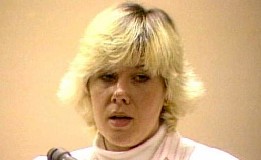 Catherine May Wood
Murderer · USA · 1987
Catherine May Wood was an American caregiver who worked at the Alpine Manor Nur…
5 victims
Catherine May Wood
Murderer · USA · 1987
Catherine May Wood was an American caregiver who worked at the Alpine Manor Nur…
5 victims
 Amy Bishop
Murderer · USA · 1986
Amy Bishop — biology professor and perpetrator · James Anderson — Bishop’s husb…
4 victims
Amy Bishop
Murderer · USA · 1986
Amy Bishop — biology professor and perpetrator · James Anderson — Bishop’s husb…
4 victims
 Martha Ann Johnson
Murderer · USA · 1977
Martha Ann Johnson (also known as Martha Ann Bowen) was an American serial kill…
4 victims
Martha Ann Johnson
Murderer · USA · 1977
Martha Ann Johnson (also known as Martha Ann Bowen) was an American serial kill…
4 victims
 Michael Shellito
Murderer · USA · 1994
Michael Shellito was tried in the Fourth Judicial Circuit, Duval County, in Cas…
1 victim
Michael Shellito
Murderer · USA · 1994
Michael Shellito was tried in the Fourth Judicial Circuit, Duval County, in Cas…
1 victim
 Bernard Eugene Amos
Murderer · USA · 1998
Bernard Eugene Amos was a Texas death row prisoner. He made a final statement b…
1 victim
Bernard Eugene Amos
Murderer · USA · 1998
Bernard Eugene Amos was a Texas death row prisoner. He made a final statement b…
1 victim
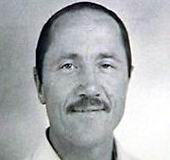 Patrick Tissier
Murderer · Franc e · 1971
Patrick Tissier was born on 24 August 1952 in Bourges. He was one of six childr…
3 victims
Patrick Tissier
Murderer · Franc e · 1971
Patrick Tissier was born on 24 August 1952 in Bourges. He was one of six childr…
3 victims
 Ahmad Musa Dakamseh
Mass murderer · Jordan · 1997
Ahmad Musa Dakamseh Ahmad Dakamseh served as a Jordanian soldier. His family sa…
7 victims
Ahmad Musa Dakamseh
Mass murderer · Jordan · 1997
Ahmad Musa Dakamseh Ahmad Dakamseh served as a Jordanian soldier. His family sa…
7 victims
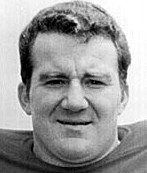 James Efflo Tyrer
Murderer · USA · 1980
James Efflo Tyrer (February 25, 1939 – September 15, 1980) was an American foot…
1 victim
James Efflo Tyrer
Murderer · USA · 1980
James Efflo Tyrer (February 25, 1939 – September 15, 1980) was an American foot…
1 victim
- Gender
- female
- Country
- USA
- Location
- Zion, Lake County, Illinois, USA
- Date of birth
- 1964
- Age at first offence
- 21
- Characteristics
- —
- Victim profile
- H er two children, Christina, age 23 months, and Jason, age 3 months
- Method of murder
- Poisoning ( overdose of sleeping pills)
- Date(s) of murder
- March 29, 1985
- Years active
- 1985
- Date of arrest
- Same day
- Status
-
Life imprisonment
Commuted to 48 years in prison on May 31, 2009; released on May 8, 2009; originally found guilty but mentally ill of two counts of murder and sentenced to life in prison without parole in 1986.
Case overview
Debra Lynn Gindorf was charged by indictment with six counts of murder for intentionally and knowingly causing her two children, Christina and Jason, to ingest an overdose of sleeping pills. Following a bench trial, she was found guilty but mentally ill of two counts of murder and was sentenced to the mandatory term of natural life imprisonment required by section 5-8-1(a)(1)(c) of the Unified Code of Corrections (Illinois Rev. Stat. 1985). Her sentencing in 1986 was life in prison without parole. Her sentence was later commuted to 48 years in prison on May 31, 2009 and she was released on May 8, 2009.
Timeline
- June 1, 2009 — HuffingtonPost.com reported that Illinois Gov. Pat Quinn commuted Debra Lynn Gindorf’s life sentence to 48 years.
- May 31, 2009 — Gindorf’s life sentence was commuted to 48 years.
- May 8, 2009 — Gindorf was released.
- May 1, 1986 — Gindorf received a sentence of life in prison without parole (as stated in the case narrative).
- March 29, 1985 — Gindorf walked into the Zion police station and turned herself in; she described that she had killed her infant and small child at about 2 a.m. the prior morning.
- January 3, 1985 — Gindorf went to an emergency room at Victor Memorial Hospital complaining she had been assaulted by her husband five days earlier; she was 30 weeks pregnant and had contusions and abrasions.
- June 2001 — (Narrative context) Andrea Yates killed her five children (included in the case narrative for comparison).
- August 10, 1987 — The Illinois Appellate Court, Second District, issued its opinion in People v. Gindorf: judgment affirmed.
The offence
On March 29, 1985, at approximately 6:30 p.m., Debra Lynn Gindorf walked into the Zion police station and told Diane Schroeder, a telecommunicator with the Zion police department, that she wanted to turn herself in. She appeared nervous with hands shaking, was glassy-eyed, and appeared to be trying to control her behavior.
After being directed to Ray Nichols, a Zion police detective, and after waiving constitutional rights, she stated that at about 2 a.m. she took three boxes of Unisom sleeping capsules purchased at a local Jewel store, crushed the tablets, and placed the substance in three piles. She then put a small amount in a baby bottle containing baby formula, gave an unknown amount to her little girl in a small juice container, and took the rest herself in a drink of Southern Comfort, of which she already had five shots. She described that the children became sick and began vomiting, and she laid them in bed afterwards. She stated she passed out, woke at 7:30 a.m. and realized the children were deceased, then turned on the gas stove, placed a towel over her head and inhaled the fumes, passed out again, and awoke at 2 p.m. realizing she was still alive. She then cut her right wrist with a steak knife and attempted to smother herself with a pillow before going to the police.
She also stated that she purchased one of the three boxes of Unisom on March 21, 1985, crushed the 32 tablets at that time, and purchased the other two boxes the night before the incident. She indicated that she knew what she was doing and planned to kill herself and her two children for about a month.
Three Zion police officers went to her apartment and smelled a strong odor of natural gas. They entered and discovered the children in the bed with no vital signs. The cause of death of the two children was later determined as acute overdoses of the drug doxylamine succiate, the active ingredient in Unisom sleeping pills. The children were identified as Christina, age 23 months, and Jason, age 3 months.
Background
Personal and family circumstances described at trial and in the case narrative
Neighbors indicated that prior to March 28, 1985, they saw Gindorf regularly, that they ate with her and her children, that they had reciprocal baby-sitting arrangements, and that Gindorf kept her apartment very clean and took good care of her children, keeping them well fed and properly clothed. Neighbors also indicated that Gindorf was frequently depressed and became increasingly withdrawn and isolated after giving birth to Jason on January 3, 1985.
Gindorf’s marriage was dissolved in June 1984, though she lived with her ex-husband until December 7, 1984. Her ex-husband admitted coming home drunk and getting into verbal and physical altercations with her, stated he had hit her in the past, and acknowledged that physical cruelty was the ground upon which their marriage was dissolved. Neighbors testified that he violently attacked Gindorf, who was eight months pregnant at the time, two weeks before Christmas 1984 while her daughter watched and cried.
Gindorf’s behaviour before the incident was described differently by different neighbors: one neighbor who drove Gindorf unknowingly to purchase the two boxes of Unisom capsules stated that Gindorf seemed normal and was not depressed, though the neighbor admitted not knowing her well; other neighbors who saw her in the evening prior to the incident observed she seemed more depressed than usual, not as talkative, unusually quiet, and looked tired. They also noted as unusual her telling her daughter to hug and kiss a neighbor good-bye because they were going home.
Letters and notes were recovered from Gindorf, her apartment, and her ex-husband’s address and were introduced into evidence. These included letters to her ex-husband expressing sorrow for the failed marriage and her decision to do something that might upset him, though that action was not revealed; a self-written will; a letter to her parents apologizing for her actions; and letters to her children expressing affection. A letter to a friend reflected her mood, a detailed account of what occurred, and reasons why she committed the act.
In the narrative describing her clemency and later comments, Gindorf reported depression after the birth of her first child and stated she had attempted to kill herself on March 29, 1985, and decided to take her children with her. The narrative describes that she swallowed lethal doses of alcohol and sleeping pills, then spiked formula and juice with crushed sleeping pills and got into bed with her children; she awoke the next day to find them dead, tried to kill herself again, and finally turned herself in.
Investigation and arrest
On March 29, 1985, at approximately 6:30 p.m., Debra Lynn Gindorf entered the Zion police station and told Diane Schroeder that she wanted to turn herself in. She was directed to Ray Nichols, a Zion police detective. After waiving constitutional rights, she provided a detailed account to Nichols and gave information including the names and birth dates of her children, the address of her apartment, and the key to her apartment.
Three Zion police officers then went to her apartment, smelled strong natural gas, entered, and discovered the children in the bed with no vital signs.
Trial
Charges and verdict
Gindorf was charged by indictment with six counts of murder for intentionally and knowingly causing her two children, Christina and Jason, to ingest an overdose of sleeping pills.
Following a bench trial, she was found guilty but mentally ill of two counts of murder and sentenced to the mandatory term of natural life imprisonment required by section 5-8-1(a)(1)(c) of the Unified Code of Corrections.
Insanity and expert testimony
Debra Lynn Gindorf’s appeal raised issues including whether the evidence established she was legally sane when she committed the offenses; whether she should have been found guilty of voluntary manslaughter instead of murder under the principle of necessity; whether refusal to take judicial notice of two court files was reversible error; whether application of the mandatory natural life sentence violated the eighth amendment protection against cruel and unusual punishment; and whether a guilty but mentally ill finding rendered sentencing discretionary.
At trial, the relevant evidence presented included lay witness observations of her depression and behaviour before and after the incident, the children’s deaths following an overdose of doxylamine succinate (Unisom), and the letters and notes recovered from her and her ex-husband.
Lenore Walker, Ed.D., a psychologist with background in domestic violence and battered woman syndrome, testified on behalf of Gindorf after interviewing her on May 10, 1985 and reviewing police reports, witnesses’ statements, letters, will and notes, hospital records, police records, records of prior assaults, social and family history, psychological test data, and the results of Dexamethasone Suppression Tests. Walker asserted three diagnoses:
- post-traumatic stress disorder, specifically battered woman’s syndrome, as a result of the situational disorder of an abusive relationship with her ex-husband;
- a major affective disorder, specifically major psychotic depression, recurrent type; and
- an underlying borderline personality disorder.
Walker explained that the latter condition involved a weak and fragile sense of self leading to slips into psychotic episodes. She said major affective disorder was caused by outside stresses such as death or divorce and by biochemical factors. She testified that she observed both dramatic improvement after drug therapy and that test results went from positive to negative, which she took as indicating physiological components in her depression at the time of the offense. Walker opined that on March 29, 1985, Gindorf was suffering from more than one mental disease and that she was not able to conform her conduct to the requirements of the law.
Sharon Strauss, Ph.D., a clinical psychologist, interviewed Gindorf and reviewed the same materials considered by Walker. Strauss concluded Gindorf had a mental disease on March 29, 1985, labeled as major depression with psychotic features accompanied by underlying borderline personality disorder. Strauss explained that major depression combined with personality disorder could cause extreme psychosis and episodic lapses from reality, and she joined Walker’s view that Gindorf was not malingering or faking. Strauss opined that on March 29, 1985 she was experiencing a psychotic episode and was not able to conform her conduct to the requirements of the law.
In rebuttal, Dr. Ronald Baron, a psychiatrist, testified that he gathered data from Gindorf on October 30 and November 5, 1985 and reviewed her letters, police reports, and reports of other doctors and mental health professionals. Baron opined that Gindorf suffered from severe mental illness at the time of the offense, specifically major depression disorder, recurrent type, and that she had a mixed type personality disorder with borderline antisocial and avoidant features. He attributed onset to her stormy marriage and dissolution and agreed that beatings inflicted by her ex-husband resulted in post-traumatic stress disorder. Baron testified that even though she suffered from severe mental illness on March 29, 1985, she was able to recognize right from wrong and to conform her conduct to the requirements of the law.
Trial court findings
Following final arguments and based on the record, the trial court determined Gindorf failed to meet her burden on the insanity issue and found her guilty but mentally ill of murder. The trial court found it had no discretion in sentencing under section 5-8-1(a)(1)(c) and section 5-2-6(a), that section 5-8-1(a)(1)(c) was constitutional, and sentenced her to a term of natural life imprisonment.
The appellate opinion detailed that the trial court:
- found she was not insane at the time of the incident but was suffering from mental illness;
- found she had a substantial disorder of thought, mood and behaviour affecting her at the time, but not to the extent that she was unable to appreciate wrongfulness or unable to conform her conduct to requirements of the law;
- gave less weight to expert testimony regarding conduct and reached conclusions primarily from testimony of witnesses who saw her before and after the incident, writings, and her personal history and stormy marriage.
Appeals
The appeal to the Illinois Appellate Court, Second District, was People v. Gindorf, 159 Ill. App.3d 647, 512 N.E.2d 770, No. 2-86-0147. Opinion was filed on August 10, 1987, and the court affirmed the circuit court’s judgment.
The appellate court addressed multiple issues, including:
- whether the trial court’s finding of sanity was supported by the record;
- the argument that evidence supported voluntary manslaughter under necessity;
- whether refusal to judicially notice ex parte orders of protection in related civil proceedings was reversible error;
- whether mandatory natural life sentencing for murder of more than one victim violated the eighth amendment;
- whether sentencing was discretionary due to the guilty but mentally ill verdict.
Outcome and later developments
Original sentence and subsequent clemency/commutation
Gindorf was sentenced to life in prison without parole in 1986. She later sought clemency and received commutation from Illinois Gov. Pat Quinn.
On May 31, 2009, Gov. Pat Quinn commuted Gindorf’s life sentence to 48 years in prison. The narrative reports that this likely made her eligible for immediate release on parole because she had served 24 years and could qualify for day-for-day good-conduct time, as her lawyer said.
Gindorf was released on May 8, 2009.
Quotes included in the case narrative
Kathleen Hamill, of the state appellate defender’s office, said:
"It sends a message to the criminal justice system that these sorts of cases should be examined carefully," Hamill said.
A spokesman, Bob Reed, said:
"Action speaks for itself."
Gindorf’s clemency-support narrative includes statements attributed to Gindorf:
"She saw death as a mode of transportation to heaven. They would all be together in heaven," Hamill said. "I don't ever say 'when I killed my kids,'" she said during a long conversation in a meeting room at Dwight Correctional Center 90 miles southwest of Chicago, where she has spent 17 years. "Even though it happened with my own hands, it wasn't me who killed them. It was the illness." "I should apologize for having an illness?" she said. "Excuse me, but I didn't ask for this. I loved my kids."
The narrative also includes Dr. Ronald Baron’s statement in a letter, quoted verbatim:
"This is a special situation, which needs your humanitarian touch to correct."
Additionally, the narrative included a quote attributed to Dr. Ronald Baron:
"was a miscarriage of justice," wrote Dr. Ronald Baron in a letter to then-Gov. George Ryan.
State’s Atty. Michael Waller said:
"I looked at the case thoroughly with three of my top supervisors," Waller said. "In the end, I decided not to object to the governor granting relief to Debra Gindorf."
At another point in the narrative, Gindorf said:
"Anyone who doubts [postpartum mental illness] is real, I want to say to them, 'Look at me!'" "How much more proof do you need?"
Other details
Prisoner review board, prosecutors, and experts in the clemency narrative
The case narrative described that:
- Ronald Baron, a psychiatrist who testified for the state at the trial, later supported clemency;
- the Lake County State’s Attorney’s office prosecuted Gindorf and offered no objection to her release when she had a hearing in front of the Illinois Prisoner Review Board in 2003;
- a chairman of the Illinois Prisoner Review Board waived a customary one-year waiting period for Gindorf to reapply for executive clemency after former Gov. George Ryan disregarded her petition;
- Prisoner Review Board recommendations were described as confidential;
- State’s Atty. Mike Waller (Michael Waller referenced in one narrative segment) said he did not object to the governor granting relief.
Documented prior medical and related incidents
The appellate opinion included stipulated evidence that:
- on January 3, 1983, Gindorf went to the emergency room of Victor Memorial Hospital complaining she was assaulted by her husband five days earlier, with contusions and abrasions on her head, arms and right knee, and she was 30 weeks pregnant;
- on September 15, 1983, she was brought to St. Therese Hospital emergency room following a miscarriage; her husband was loud, obnoxious, had a strong odor of alcohol, and she said she was frightened of him;
- during interviews with a social worker at the Lake County jail on April 1, 3 and 5, 1985, she showed no signs of stress and was coherent and oriented, stated she wanted to commit suicide, believed if her children remained alive they would lead lives like her own, and believed her children were in heaven and wanted to join them;
- results of the first Dexamethasone Suppression Test were abnormal, suggesting a major depressive episode.

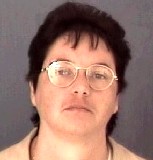
Spotted an error, or have more information about this case?