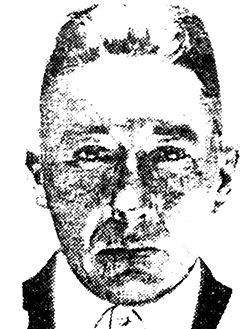
Arnold Sodeman
Serial killer John Justin Bunting
Serial killer · Australia · 1992
John Justin Bunting (born 4 September 1966 in Inala, Queensland) was an Austral…
11 victims
John Justin Bunting
Serial killer · Australia · 1992
John Justin Bunting (born 4 September 1966 in Inala, Queensland) was an Austral…
11 victims
 John Lynch
Serial killer · Australia · 1835
John Lynch murdered multiple people in the Berrima district in New South Wales,…
10 victims
John Lynch
Serial killer · Australia · 1835
John Lynch murdered multiple people in the Berrima district in New South Wales,…
10 victims
 Robert Joe Wagner
Serial killer · Australia · 1992
Robert Joe Wagner (born 28 November 1971 in Parramatta, New South Wales) was an…
10 victims
Robert Joe Wagner
Serial killer · Australia · 1992
Robert Joe Wagner (born 28 November 1971 in Parramatta, New South Wales) was an…
10 victims
 Eric Edgar Cooke
Serial killer · Australia · 1959
Eric Edgar Cooke (25 February 1931 – 26 October 1964) was an Australian serial…
8 victims
Eric Edgar Cooke
Serial killer · Australia · 1959
Eric Edgar Cooke (25 February 1931 – 26 October 1964) was an Australian serial…
8 victims
 Christopher Worrell
Serial killer · Australia · 1976
Christopher Worrell was described as a rapist and was later killed in a car acc…
7 victims
Christopher Worrell
Serial killer · Australia · 1976
Christopher Worrell was described as a rapist and was later killed in a car acc…
7 victims
 Ivan Milat
Serial killer · Australia · 1989
Ivan Milat was convicted of seven murders and received multiple life sentences.…
7 victims
Ivan Milat
Serial killer · Australia · 1989
Ivan Milat was convicted of seven murders and received multiple life sentences.…
7 victims
 Josephine Gray
Murderer · USA · 1974
Josephine Virginia Gray, also known as Josephine Stribbling and Josephine Mills…
3 victims
Josephine Gray
Murderer · USA · 1974
Josephine Virginia Gray, also known as Josephine Stribbling and Josephine Mills…
3 victims
 Albert Patrick
Murderer · USA · 1900
Albert Patrick was convicted in New York, New York for the murder of William M.…
1 victim
Albert Patrick
Murderer · USA · 1900
Albert Patrick was convicted in New York, New York for the murder of William M.…
1 victim
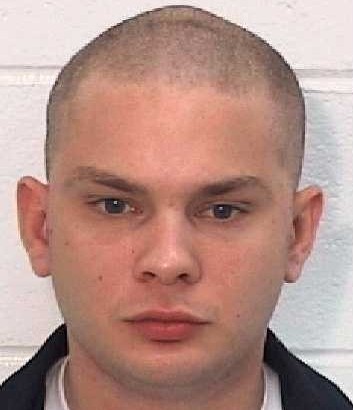 John Anthony Esposito
Murderer · USA · 1996
John Anthony Esposito was convicted in Georgia of murdering Lola Davis and rela…
3 victims
John Anthony Esposito
Murderer · USA · 1996
John Anthony Esposito was convicted in Georgia of murdering Lola Davis and rela…
3 victims
 Andrew Allen Cook
Murderer · USA · 1995
Andrew Allen Cook was convicted in the Superior Court of Monroe County, Georgia…
2 victims
Andrew Allen Cook
Murderer · USA · 1995
Andrew Allen Cook was convicted in the Superior Court of Monroe County, Georgia…
2 victims
 Doil Edward Lane
Homicide · USA · 1980
Doil Edward Lane was sentenced to death in Texas on February 25, 1994. His deat…
2 victims
Doil Edward Lane
Homicide · USA · 1980
Doil Edward Lane was sentenced to death in Texas on February 25, 1994. His deat…
2 victims
 Stephen Trattner
Murderer · USA · 2006
Stephen L. Trattner was a project manager for Erin Hills Golf Course in the Tow…
1 victim
Stephen Trattner
Murderer · USA · 2006
Stephen L. Trattner was a project manager for Erin Hills Golf Course in the Tow…
1 victim
- Gender
- male
- Country
- Australia
- Location
- Melbourne, Victoria, Australia
- Date of birth
- December 12, 1899
- Age at first offence
- 31
- Characteristics
- rape, alcohol
- Victim profile
- Mena Griffiths, 12 / Hazel Wilson, 16 / Ethel Belshaw, 12 / June Rushmer, 6
- Method of murder
- Strangulation
- Date(s) of murder
- 1930 - 1935
- Years active
- 1930–1935
- Date of arrest
- —
- Status
-
Executed
Executed by hanging at Pentridge Prison, Melbourne, on June 1, 1936
Overview
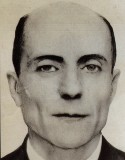
Arnold Karl Sodeman (12 December 1899 – 1 June 1936), also known as the School-girl Strangler, targeted children in killings for which he was found guilty of murder. He confessed to four killings before being executed by hanging at Pentridge Prison in 1936.
Early life
Arnold Karl Sodeman was born on 12 December 1899 in Victoria. He was also known as the School-girl Strangler.
Sodeman’s mother suffered from bouts of amnesia. His father and grandfather both died in mental institutions. As a child, he was treated severely by his father and frequently witnessed his father beating Violet Sodeman.
Arnold ran away from home at age 13 and worked in the coal mines at Wonthaggi, South Gippsland. At 18, he was sent to a reformatory for 12 months for fraud. Soon after his release from the reformatory, he was in trouble with police again for armed robbery and wounding of the station master at Surrey Hills train station, and he was imprisoned to serve three years hard-labour.
While in prison, Sodeman escaped, and he received an additional 12 months of hard-labour to add to his existing sentence.
Released in 1922, Sodeman was described as a well-seasoned criminal. Released in 1926, he settled down to various labouring jobs, first in Melbourne and later in Gippsland.
On 17 July, Sodeman married Bernice Cecilia Pope at Collingwood with Congregational forms. A daughter was born in 1928.
He was described as hard-working, mild and amiable with a generous disposition, and as having occasional bouts of depression and frequent drunkenness while never being violent to his family. He led a normal, law-abiding existence until 1930.
The offences
Sodeman abducted and strangled multiple children. The killings were characterized by gagging and binding the victims.
First killing: Mena Griffiths (12-year-old)
On 9 November 1930, Arnold Sodeman abducted a 12-year-old schoolgirl, Mena Griffiths. He came upon her at the local playground playing with a group of friends. He gave the other girls some money and told them to go to the shop to get candy. Meanwhile, he told Griffiths that he had a different errand for her to run.
By the time Griffiths’ friends returned to the playground, there was no sign of Sodeman or Griffiths. Griffiths’ body was discovered two days later at Ormond, in an abandoned building. She had been gagged, bound and strangled to death.
Second killing: Hazel Wilson (16-year-old)
On 10 January 1931, Sodeman abducted a 16-year-old, Hazel Wilson, and strangled her to death. Her body was found in the suburb of Ormond.
He gagged both girls and tied their hands behind their backs with portions of their clothing.
Third killing: Ethel Belshaw (12-year-old)
Sodeman struck for the third time on 1 January 1935. His victim, Ethel Belshaw, was a 12-year-old girl whom he strangled at the seaside town of Inverloch. Belshaw was intending to buy an ice cream when she disappeared.
Fourth killing: June Rushmer (6-year-old)
On 1 December 1935, Sodeman killed his fourth victim, a 6-year-old girl named June Rushmer. He met her while she was walking home from a local park.
Her body was found the following day, on 2 December 1935, less than 2 kilometres (1.2 mi) from her Leongatha home, in the scrub on December 2. She was bound, gagged and strangled. Her hands were tied behind her back with a piece of cloth, a bloodstained garment was pushed into her mouth, and a piece of torn sock was tied around her neck. The body bore bruises. Death was thought to be due to suffocation.
Witnesses stated that they had seen the child with a man on a bicycle shortly before her disappearance. At the time, Sodeman was working with a crew fixing the shires roads. During morning smoko, a fellow co-worker had jokingly stated that he had seen Sodeman on his bike near the crime scene. Sodeman replied angrily that he was not there, and his anger was described as very out of character. Workers told police about his reaction, and police rushed to Sodeman’s worksite and took him away for questioning.
Sodeman confessed to the crimes after police took him into custody. Police had initially been skeptical, but they were convinced after he gave details that only the killer could have known, including describing how he would link his thumbs together to simplify choking his victims.
June Rushmer inquest
The inquest on June Rushmer, aged 6, was resumed in a little courthouse at Leongatha. Arnold Sodeman, 36, of Leongatha who had been charged with murder, was present in court.
The Government Pathologist, Dr. Mollison, said that June Rushmer’s hands were tied behind her back with a piece of cloth, and a bloodstained garment was pushed into her mouth. A piece of torn sock was tied around her neck, and the body bore bruises. Dr. Mollison thought that death was due to suffocation.
Nancy Viola Smith, aged 12, said she played with June Rushmer on the Leongatha reserve on 1 December 1935. June Rushmer left the park at 7.15 p.m.
William Henry Money, of Leongatha, said that at 7.15 p.m. on 1 December 1935 he saw Sodeman riding his bicycle in the direction of the reserve. Sodeman had a strange look on his face, and the witness thought it peculiar. Sodeman did not speak to him.
Vincent Desmond Ryan of Leongatha said that between 7.15 and 7.30 p.m. on 1 December 1935 he saw a man with a little girl on the front of his cycle. The child was similar in build to June Rushmer, but the witness was 90 yards away and could not see him properly.
Senior Detective O’Keefe said that Detective Delminico said to Sodeman:
"If you care to tell us what you had to do with the death of the girl, I will leave the room. "
Sodeman replied:
"No you can stay."
He continued:
"there is not only this one."
Sodeman made a statement that included:
"I saw June Rushmer on the footpath walking towards her home near the tennis court and she said, 'Give us a ride.' I knew her and she knew me. I agreed, and rode down the stock route and turned down the road leading to the sanitary depot. About 100 yards from the corner, she said, 'This is far enough.' I got off the bike and said 'You can walk home.' I made a run towards her and she ran into the bush. I ran after her, and caught her round the neck, and she started to scream. I held her by the neck and she went limp all of a sudden. I then took off her bloomers and jammed them into her mouth. I got a belt from her frock and tied it over her mouth and round the back of her neck."
Sodeman was committed for trial by the Coroner.
Trial
At the conclusion of the two-day trial in February 1936, the jury found Sodeman guilty of murder. In February 1936, he was found guilty of murder for the killing of Rushmer. The judge sentenced him to death for the murder of Rushmer.
Judge Charles Gavan Duffy advised the jury to distinguish between opinions given by expert medical witnesses on matters relating to the physical body, which could be proved by surgery, and those concerning the mind.
The defence relied on insanity.
The government medical officer Dr A. J. W. Philpott, his assistant Dr R. T. Allan, and a psychiatrist Dr Reginald Ellery gave evidence that Sodeman had a disorder of the mind which created an “obsessional impulse” of such power that—under the influence of alcohol—he was no longer responsible for his behaviour.
Since Sodeman was intoxicated on all four occasions, the doctors concluded that he was insane at the times of the murders. Their conclusion was reinforced by Sodeman’s family medical history: both his father and grandfather had died insane.
Sodeman’s defence of insanity was rejected, and the jury found him guilty of murder.
Appeals
Sodeman’s appeal against his conviction was unsuccessful.
The grounds of appeal were:
- That the learned trial judge wrongly admitted evidence, namely, the evidence of the deaths of Mena Griffiths, Hazel Wilson, and Ethel Belshaw.
- That the learned trial judge misdirected the jury (a) as to the onus of proof in a case of insanity, (b) as to the requirements of the law in relation to insanity, and (c) as to the law relating to drink, insanity, and manslaughter.
- That the prosecution and the learned trial judge made comments on the failure of the accused to give evidence.
Prior to the execution fixed for 1 June 1936, an extract from the Argus, Friday 24 April 1936, described arrangements for counsel and an application involving the Judicial Committee of the Privy Council of Arnold Sodeman. The extract also reported that Sodeman’s solicitor, Mr C H. Auty, said he had arranged by cable message for Mr D. N Pritt, K C, to appear for Sodeman in a proposed application for special leave to appeal following the refusal of the High Court of Australia to grant special leave to appeal against conviction. The extract further reported:
"An English King's Counsel has now been engaged to plead the case before the Judicial Committee of the Privy Council of Arnold Sodeman, who has been condemned to death for the murder of June Rushmer at Leongatha. Sodeman's solicitor (Mr. C H. Auty) said yesterday that he had arranged by cable message for Mr D. N Pritt, K C, a leading Kings Counsel, and a member of the House of Commons, to appear for Sodeman in the proposed application by him for special leave to appeal against the refusal of the High Court of Australia to grant him special leave to appeal against his conviction. Mr Auty said that his agents in London would instruct Mr. Pritt and another barrister, who would act as Mr Pritt's Junior, regarding the details of the application Meanwhile, Mr. Auty has addressed a written request to the Premier Mr. Dunstan) that the Government should grant a further reprieve to Sodeman until such time as the condemned man's application to the Privy Council has been determined Mr Auty said yesterday that he was now 'preparing the petition for special leave to appeal and other necessary documents. He expected that those documents would be ready in time to be despatched to England next week'. One of the documents which must shortly go forward to London is an affidavit in support of the application. This must be signed by Sodeman, whose present reprieve expires on May 4, for which day the execution has been fixed. It is expected that the Executive Council will grant the reprieve now asked for by Mr. Auty It is expected that a report will be received from the Crown Law Department next week, and if the Cabinet decides that the request should be granted the necessary action will be taken immediately by the Executive Council."
The extract reported that Sodeman had expected preparation of documents for dispatch to England and mentioned a reprieve expiring on May 4, when execution had been fixed.
Sodeman did not want a reprieve because of fear that if he lived he may have committed more murders.
During the period before execution, Sodeman spent time playing draughts with Edward Cornelius, who was under sentence of death for the murder of the Rev. Cecil in Fitzroy in November of the previous year.
Execution
Arnold Karl Sodeman was hanged and buried at Pentridge Prison, Coburg, on 1 June 1936.
His last words to the Governor of the Gaol last night were:
"I am glad it is nearly over."
Asked by the Sheriff whether he had anything to say, Sodeman replied:
"Nothing, sir."
He walked to the scaffold apparently unmoved.
An autopsy disclosed that he was suffering from leptomeningitis, a degenerative disease which could cause serious congestion of the brain when aggravated by alcohol.
Other details
Sodeman was described as a serial killer who confessed to four killings before being executed. The four killings were Mena Griffiths, Hazel Wilson, Ethel Belshaw, and June Rushmer.
A later interview published on the seventh-fifth anniversary of the murder of Ethel Belshaw included Maureen Lewis (née Keighery), described as Sodeman’s neighbour in 1935. The interview reported that Maureen travelled with the Sodemans from Leongatha for a fun day in the sun and that she was friends with the Sodemans’ child, Joan. It reported:
"On the day Ethel was murdered he wanted to take me for an ice cream. It could have been me that day," she said.
"I went down there with them to Inverloch on that day with the Sodemans. They lived next door. He wanted to take me for an ice cream and Mrs Sodeman wouldn’t let him take me unless he took Joan, his daughter."
"But Maureen, like many others in Leongatha, always suspected there was something not quite right about the man."
"We were always frightened of him. In those days you didn’t call anyone ‘Old Sodeman,’ because your dad would pull you up and insist you call him Mr Sodeman. But to us kids he was always Old Sodeman," she said.
"He wore sandshoes and he was sort of creepy."
The interview also reported that Ethel was last seen buying an ice cream from a Beach Road milk bar in the town.
A separate biographical entry reported that Sodeman was born at Hawthorn, Melbourne, on 12 December 1899, son of Karl Sodeman, a German-born engineer, and Violet Esther, née Wood. It reported that as a child he was treated severely by his father and frequently witnessed Karl beating Violet. It also stated he twice was brought before the courts as a youth: at 17 he was convicted of theft and forgery and sent to a reformatory; and in 1920, he was convicted in Melbourne of attempted robbery under arms and given three years hard labour. It reported that after escaping from French Island, he was apprehended and sentenced to another year. It also reported he married Bernice Cecilia Pope at Collingwood with Congregational forms on 17 July, and a daughter was born in 1928.
It further described that on the morning of 2 December 1935, the body of 6-year-old June Rushmer was discovered face-down in a patch of swordgrass outside the township of Leongatha in Gippsland. It reported that as a result of information received from a suspicious workmate, Sodeman was arrested and questioned about Rushmer’s death, and that after twelve hours interrogation broke down he confessed to all four murders. It stated he was tried in February 1936 for the murder of Rushmer and that after exhausting all avenues of appeal, he was hanged and buried in Pentridge Gaol, Coburg, on 1 June 1936. It also reported that an autopsy disclosed leptomeningitis, described as a degenerative disease which could cause serious congestion of the brain when aggravated by alcohol.
Additional narrative material described police interviews of over 10,000 people and reported that Sodeman had said, when questioned by police, “I’ve had enough,” before confessing to all four crimes. It also reported that Sodeman was known to have taken to alcohol in the last few years of his life.

Spotted an error, or have more information about this case?