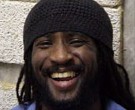
Walanzo Robinson
Murderer Brian Kevin Rosenfeld
Murderer · USA · 1985
Brian Kevin Rosenfeld Brian Kevin Rosenfeld was sentenced to three concurrent l…
23 victims
Brian Kevin Rosenfeld
Murderer · USA · 1985
Brian Kevin Rosenfeld Brian Kevin Rosenfeld was sentenced to three concurrent l…
23 victims
 Yahweh ben Yahweh
Murderer · USA · 1980
Yahweh ben Yahweh was born and legally named Hulon Mitchell Jr. (October 27, 19…
23 victims
Yahweh ben Yahweh
Murderer · USA · 1980
Yahweh ben Yahweh was born and legally named Hulon Mitchell Jr. (October 27, 19…
23 victims
 Russell Ellwood
Murderer · USA · 1991
Russell Ellwood was a former taxi driver. Authorities suspected him of killing…
20 victims
Russell Ellwood
Murderer · USA · 1991
Russell Ellwood was a former taxi driver. Authorities suspected him of killing…
20 victims
 Robert Martines Perez
Murderer · USA · 1994
Name: Robert Martines Perez · Other name used in proceedings: Robert Martinez P…
15 victims
Robert Martines Perez
Murderer · USA · 1994
Name: Robert Martines Perez · Other name used in proceedings: Robert Martinez P…
15 victims
 Wallace Fugate
Murderer · USA · 1991
Wallace Fugate was executed by lethal injection in Georgia on August 16, 2002.…
1 victim
Wallace Fugate
Murderer · USA · 1991
Wallace Fugate was executed by lethal injection in Georgia on August 16, 2002.…
1 victim
 David Camm
Justice miscarriage · USA · 2000
David R. Camm was a former Indiana State Trooper who was acquitted after three…
0 victims
David Camm
Justice miscarriage · USA · 2000
David R. Camm was a former Indiana State Trooper who was acquitted after three…
0 victims
 Ramil Safarov
Murderer · Hungary · 2004
Ramil Safarov was a lieutenant in the Azerbaijani Army. He was born in 1977 in…
1 victim
Ramil Safarov
Murderer · Hungary · 2004
Ramil Safarov was a lieutenant in the Azerbaijani Army. He was born in 1977 in…
1 victim
 Michael Slobodian
Homicide · Canada · 1975
Michael Slobodian committed suicide by shooting himself on the same day as the…
2 victims
Michael Slobodian
Homicide · Canada · 1975
Michael Slobodian committed suicide by shooting himself on the same day as the…
2 victims
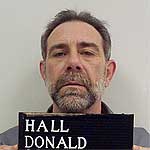 Donald J. Hall
Murderer · USA · 1992
Donald J. Hall (DOC ID 990113) · Donald Hall was sentenced to death on November…
1 victim
Donald J. Hall
Murderer · USA · 1992
Donald J. Hall (DOC ID 990113) · Donald Hall was sentenced to death on November…
1 victim
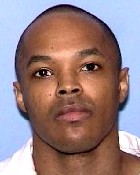 Terry Darnell Edwards
Murderer · USA · 2002
Name: Terry Darnell Edwards TDCJ Number: 999463 Date of birth: 08/10/1973 Gende…
2 victims
Terry Darnell Edwards
Murderer · USA · 2002
Name: Terry Darnell Edwards TDCJ Number: 999463 Date of birth: 08/10/1973 Gende…
2 victims
- Gender
- male
- Country
- USA
- Location
- Oklahoma County, Oklahoma, USA
- Date of birth
- April 12, 1971
- Age at first offence
- 18
- Characteristics
- drug dealer, drugs, gang
- Victim profile
- Dennis Hill (male, 26)
- Method of murder
- Shooting ( .38-caliber revolver)
- Date(s) of murder
- May 19, 1989
- Years active
- 1989
- Date of arrest
- September 7, 1989
- Status
-
Executed
Executed by lethal injection on March 18, 2003 in Oklahoma
Timeline
- May 19, 1989 — Walanzo Deon Robinson and Dennis Eugene Hill argued in northeast Oklahoma City over money, drug turf, or both, and Hill was shot and killed.
- September 7, 1989 — Robinson was arrested in California on an outstanding Oklahoma City murder warrant.
- January 2002 — The U.S. 10th Circuit Court of Appeals ruled that the testimony of the holdout juror could not be used to overturn the sentence.
- March 12, 2003 — Oklahoma Pardon and Parole Board members denied clemency; three voted against it, one abstaining, and the other recusing herself.
- March 18, 2003 — Robinson was executed by lethal injection in Oklahoma.
- March 18, 2003 — The Oklahoma Court of Criminal Appeals had set execution dates for Larry Kenneth Jackson and Walanzo Deon Robinson; Robinson’s execution date was March 18.
Background
Walanzo Robinson was a member of the Van-Ness Gangster Bloods, a violent street gang active in the crack cocaine trade. Robinson had been staying with friends in Oklahoma City and had come to Oklahoma City from Los Angeles. Robinson had been a gang member and was described by an arresting officer as a dangerous man. Robinson also admitted to police that during his violent life, he had been the victim of five drive-by shootings and was a gang member. Robinson professed to be a Muslim minister and referred to himself as Walanzo Shabaka. Robinson was 18 at the time of the murder and 31 at execution.
Dennis Eugene Hill was 26 years old and sold crack cocaine for a living.
The offence
In the early morning hours of May 19, 1989, Dennis Eugene Hill was shot and killed on a street in northeast Oklahoma City. The shooting took place in the vicinity of a popular bar and an area known for drug trafficking, with many people present at the shooting, and the time was between 1:30 and 2:00 a.m.
Earlier that evening, Hill and a man identified as “Bandit” argued with each other over either money, drug turf or both. According to eyewitness testimony, Bandit had a gun during that confrontation. The final confrontation was preceded by an argument over which of the two would get the other “busted”. As the argument ended, Bandit fired a warning shot into the ground and Hill turned and ran. Hill was shot twice in the back, falling forward into the street.
Bandit walked over to Hill and shot him twice more, once in the shoulder and once in the chest, while Hill asked why Bandit was shooting him. Testimony placed Bandit at the scene and Bandit was identified by no fewer than four witnesses. Although there were some inconsistencies in the clothing descriptions, Robinson was positively identified as “Bandit” and as the person who shot Hill.
The jury recommended sentencing to death, finding that Robinson’s murder of Hill was especially heinous, atrocious or cruel. The trial court sentenced accordingly.
Investigation
Robinson was alleged to have had a handgun and to have shot Hill multiple times while Hill was trying to run away and after Hill fell in the street. Four witnesses with prior criminal records identified Robinson as the man who shot Hill. The witnesses did not identify Robinson by his real name, but by his street nickname of “Bandit”.
Police officers in Los Angeles testified at trial that Robinson was a member of the Van-Ness Gangster Bloods, a violent street gang active in the crack cocaine trade. One witness testimony described how witnesses had given differing accounts of the crime, and that there was no physical evidence linking Robinson to the shooting.
Former Los Angeles police officer Daniel Mathieu described Robinson as a “hardcore member of the Van-Ness Gangsters” and wrote to the Oklahoma Pardon and Parole Board:
"I have been in contact with hundreds of gang members in my career,"
"Some are considered 'hardcore' while I have heard the term 'wanna-bes' or less hard core with others."
"Robinson was a hardcore member of the Van-Ness Gangsters. This gang was very active in murders, drive-by shootings and drug sales. They were known for their violence."
Mathieu said he had been threatened by gang members after Robinson’s arrest.
Arrest
Robinson fled to California after the slaying. He was arrested in California on September 7, 1989, on an outstanding Oklahoma City murder warrant.
Trial
Robinson was tried by jury and convicted of First Degree Murder in violation of 21 O.S.1981, § 701.7. The case was CRF-89-4791 in the District Court of Oklahoma County before Honorable Bana Blasdel, District Judge.
The trial court sentenced Robinson to death after the jury recommended death. On appeal, the court described that the jury finding of the heinous, atrocious and cruel aggravator was supported by sufficient evidence, considering the manner of the killing, the suffering of the victim, the attitude of the killer, and the pitiless nature of the crime.
The prosecution presented evidence and argument that included identification of Robinson as “Bandit” and evidence relating to the heinous, atrocious or cruel aggravator. The direct appeal opinion addressed multiple issues and stated that the conviction and sentence were affirmed.
Sentencing
The jury recommended the death sentence, finding Robinson’s murder of Hill was especially heinous, atrocious or cruel. The trial court sentenced Robinson accordingly.
Appeals
Robinson appealed his conviction and sentence. The Oklahoma Court of Criminal Appeals affirmed. Robinson later sought post-conviction relief. The Oklahoma Court of Criminal Appeals denied post-conviction relief.
The post-conviction relief holding included that:
- defendant waived constitutional claim concerning misconduct and prejudice of jury;
- defendant waived claim of factual innocence based on newly discovered evidence;
- ineffective assistance of trial counsel claims were not properly raised on postconviction appeal; and
- allegation of ineffective assistance of appellate counsel evidenced solely by failure to present argument or claim on direct appeal was not enough for the Court to find that counsel was ineffective.
In January 2002, the U.S. Robinson alleged racial bias in jury deliberations and alleged the evidence used to convict him was circumstantial and filled with discrepancy. The allegations included claims that a lone black juror switched her vote in favor of death only after being intimidated and referred to with racial slurs, including “Little Miss Slave Trader”. The clemency hearing included mention that juror Marcia Davidson did not testify, leaving Robinson to rely on second-hand accounts of the allegations. The Attorney General Drew Edmondson responded that other jurors’ testimony indicated they heard no such abuse during deliberations.
Robinson v. State, 900 P.2d 389 (Okl.Cr. 1995) addressed direct appeal propositions of error and held that the evidence sustained the conviction; gang name testimony was not highly prejudicial; prosecutorial statements were based on facts in evidence; counsel was not ineffective; and evidence was sufficient for the jury to find the aggravating circumstance that the murder was heinous, atrocious or cruel.
Robinson v. State, 937 P.2d 101 (Okl.Cr. 1997) described the denial of post-conviction relief.
Outcome
The U.S. Supreme Court denied Robinson’s last-ditch appeal without comment. Previous appeals had also all been denied. Oklahoma Pardon and Parole Board members denied clemency on March 12, 2003 with three voting against clemency, one abstaining, and the other recusing herself.
Robinson was executed by lethal injection at the Oklahoma State Penitentiary on March 18, 2003. Robinson died at 6:10 p.m. after receiving a lethal dose of drugs. Lethal chemicals began flowing at 6:07 p.m., and corrections officials said his two-minute final statement was inaudible through the prison sound system, but Robinson maintained his innocence to the end.
The Attorney General Drew Edmondson said:
"Walanzo Robinson was properly convicted and sentenced,"
"His appeals have been exhausted and the Pardon and Parole Board has rightfully denied clemency. It is time the execution is carried out."
Hill’s brother Anthony Lee said:
"It's been a long 13 years of waiting, pain and stress for me,"
"And now the time has come when my mind can be free, but Dennis can still be in my heart."
Hill’s sister Helen Lee-Hawkins wrote in a letter:
"Walanzo showed no emotions, no sympathy or a care in the world for his behavior,"
Lee-Hawkins wrote in a letter to the Oklahoma Pardon and Parole Board.
Other details
Robinson’s Oklahoma Department of Corrections inmate information included ODOC# 189399 and a birthdate of 04/12/1971.
An Amnesty International urgent action item described Robinson as “a black, aged 32” and stated he was scheduled to be executed on 18 March and sentenced to death in June 1990 for the murder of Dennis Eugene Hill in May 1989, and that he had reached his 18th birthday a month before the murder.
A statement about Robinson’s appeal alleged racial bias and that the evidence used to convict him was circumstantial and filled with discrepancy. Another statement described that Robinson alleged a lone black juror switched her vote in favor of death after intimidation by white jurors and racial slurs such as “Little Miss Slave Trader”.
Robinson denied involvement in Hill’s death and maintained innocence to the end.
A last meal was described as cucumber salad, beef sausage pizza, a chocolate fudge sundae with nuts and a small jar of dill pickle halves.
The Governor set execution dates for Larry Kenneth Jackson and Walanzo Deon Robinson. Jackson was scheduled to be executed Feb. 18 for the Sept. 6, 1994, murder of his girlfriend Wendy Cade; Cade picked Jackson up at the Jim Thorpe Building in Oklahoma City where Jackson was on a prison work crew. A confrontation ensued in the bathroom, and Jackson later confessed to killing Cade with a box knife, cutting her throat about 30 times and severing her jugular vein.
Other Oklahoma death row inmates mentioned as scheduled for execution were Bobby Joe Fields (Feb. 13), John Michael Hooker (March 25), David Jay Brown (March 27), and Scott Allen Hain (April 3). An execution date was requested for Don Wilson Hawkins, Jr.
Spotted an error, or have more information about this case?