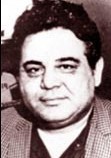
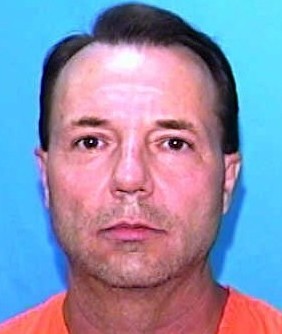
Samuel Byck
Murderer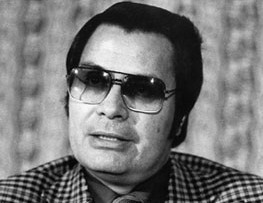 Jim Jones
Murderer · Guyana · 1978
James Warren "Jim" Jones (May 13, 1931 – November 18, 1978) was the American fo…
900 victims
Jim Jones
Murderer · Guyana · 1978
James Warren "Jim" Jones (May 13, 1931 – November 18, 1978) was the American fo…
900 victims
 Ervil LeBaron
Murderer · USA · 1972
Ervil Morrell LeBaron (1925 to August 16, 1981) was the leader of a polygamous…
35 victims
Ervil LeBaron
Murderer · USA · 1972
Ervil Morrell LeBaron (1925 to August 16, 1981) was the leader of a polygamous…
35 victims
 Marvin Gray
Murderer · USA · 1975
Marvin Gray was convicted killer who claimed responsibility for 23 slayings and…
23 victims
Marvin Gray
Murderer · USA · 1975
Marvin Gray was convicted killer who claimed responsibility for 23 slayings and…
23 victims
 Yahweh ben Yahweh
Murderer · USA · 1980
Yahweh ben Yahweh was born and legally named Hulon Mitchell Jr. (October 27, 19…
23 victims
Yahweh ben Yahweh
Murderer · USA · 1980
Yahweh ben Yahweh was born and legally named Hulon Mitchell Jr. (October 27, 19…
23 victims
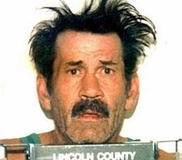 Bobby Jack Fowler
Murderer · Canada · 1973
Bobby Jack Fowler (June 12, 1939 – May 15, 2006) was an American who was a nati…
20 victims
Bobby Jack Fowler
Murderer · Canada · 1973
Bobby Jack Fowler (June 12, 1939 – May 15, 2006) was an American who was a nati…
20 victims
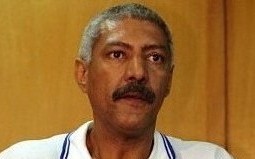 Edson Isidoro Guimaraes
Serial killer · Brazil · 1999
Edson Isidoro Guimarães was a Brazilian nursing assistant and nurse’s aide at S…
131 victims
Edson Isidoro Guimaraes
Serial killer · Brazil · 1999
Edson Isidoro Guimarães was a Brazilian nursing assistant and nurse’s aide at S…
131 victims
 Parveen Bibi
Murderer · Pakistan · 2016
Parveen Bibi was convicted of murdering Zeenat Rafiq by burning her to death in…
1 victim
Parveen Bibi
Murderer · Pakistan · 2016
Parveen Bibi was convicted of murdering Zeenat Rafiq by burning her to death in…
1 victim
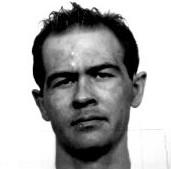 Noble Mays
Murderer · USA · 1979
Noble Mays had been convicted once for burglary and once for assault, which was…
1 victim
Noble Mays
Murderer · USA · 1979
Noble Mays had been convicted once for burglary and once for assault, which was…
1 victim
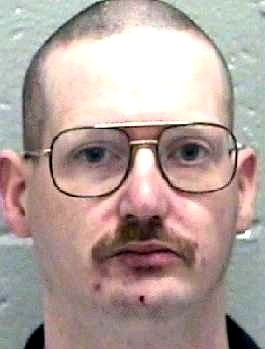 William David Riley
Murderer · USA · 2000
William David Riley, Sr. was a 32-year-old married man with three children. His…
3 victims
William David Riley
Murderer · USA · 2000
William David Riley, Sr. was a 32-year-old married man with three children. His…
3 victims
 Benjamin Stone
Murderer · USA · 1995
Benjamin Stone was executed by lethal injection in Texas on September 25, 1997.…
2 victims
Benjamin Stone
Murderer · USA · 1995
Benjamin Stone was executed by lethal injection in Texas on September 25, 1997.…
2 victims
 Daniel Joe Hittle
Mass murderer · USA · 1973
Daniel Joe Hittle was executed by lethal injection in Texas on December 6, 2000…
7 victims
Daniel Joe Hittle
Mass murderer · USA · 1973
Daniel Joe Hittle was executed by lethal injection in Texas on December 6, 2000…
7 victims
- Gender
- male
- Country
- —
- Location
- —
- Date of birth
- January 30, 1930
- Age at first offence
- 44
- Characteristics
- —
- Victim profile
- George Neal Ramsburg (Maryland Aviation Administration Police Officer) / Fred Jones (copilot)
- Method of murder
- Shooting Loca tion : Baltimore, Maryland, USA
- Date(s) of murder
- February 22, 1974
- Years active
- 1974
- Date of arrest
- —
- Status
-
Died in custody
Committed suicide by shooting himself in the head on February 22, 1974.
Case overview
Samuel Joseph Byck attempted to hijack a plane with the intention of crashing it into the White House in hopes of killing U.S. President Richard Nixon. He committed suicide by shooting himself in the head on the aircraft during the police response. During the attempted hijacking, Maryland Aviation Administration Police Officer George Neal Ramsburg and pilot Reese (Doug) Loftin and Fred Jones were involved; the account describes Jones as dying instantly and Loftin as surviving the attack. The copilot was later described as dying from gunshot wounds.
Timeline
- January 30, 1930 — Samuel Byck was born in Philadelphia, Pennsylvania.
- 1954 — Byck joined the United States Army.
- 1956 — Byck was discharged from the United States Army.
- 1972 — Byck admitted himself to a psychiatric clinic and began sending audio tapes threatening Richard Nixon; the Secret Service was notified but considered him generally harmless.
- 1973 — Byck began developing a plot to kill Richard Nixon.
- Early 1974 — Byck decided to enact his plan, including stealing a .22 caliber pistol and making a bomb using two gallons of gasoline.
- February 22, 1974 — Byck drove to the Baltimore International Airport, was stopped by George Ramsburg, shot him, boarded Delta Air Lines Flight 523, shot both pilots after they refused to take off until wheel blocks were removed, ordered a random passenger to fly the plane at gunpoint, was shot by police, and then shot himself in the head.
- February 27, 1974 — Jack Anderson’s column was referenced in connection with a picket sign calling for the impeachment of the President and with Byck revealing his plans in a tape recording mailed to Anderson.
- 1987 — An FAA document titled Troubled Passage: The Federal Aviation Administration During the Nixon-Ford Term 1973-1977 was produced and mentioned Byck’s failed hijacking.
- 1991 — Byck was portrayed in the musical Assassins.
- 2000 — A DOJ memo titled Aerial Intercepts and Shoot-downs: Ambiguities of Law and Practical Considerations dated Mar. 30, 2000, was produced and mentioned Byck.
- 2004 — A movie based on his story, The Assassination of Richard Nixon, was released; it starred Sean Penn as Bicke.
- 2004 — A History Channel special on Byck entitled “The Plot to Kill Nixon” was referenced.
- After — The 9/11 Commission Report mentioned Byck’s attempt to fly a plane into the White House on page 537.
Background
Samuel Joseph Byck was born on January 30, 1930 in Philadelphia, Pennsylvania. His parents were quite poor, and he dropped out of high school. In 1954, he joined the United States Army for two years and was discharged in 1956. After the army, he married a woman and fathered four children.
After attempting to start several businesses that failed, Byck developed a severe case of depression. When he tried to get a loan from the Small Business Administration to start a new business, he was turned down, and he developed a strong hatred for Richard Nixon.
In 1972, he admitted himself at a psychiatric clinic, where he revealed his ideas that the government conspired to oppress the poor in the United States. That same year, he started sending out audio tapes of himself threatening Richard Nixon to public officials, and the Secret Service was notified but considered him generally harmless.
Byck began developing a plot to kill Richard Nixon in 1973. His idea was to hijack an airplane and crash it into the White House.
During the process, he recorded himself talking about his plans, stating that he believed he would be a hero after the assassination.
The offence
Byck planned to assassinate Richard Nixon by hijacking an airplane and crashing it into the White House. He drove to Baltimore International Airport with intent to hijack a plane on the morning of February 22, 1974.
The first step described was obtaining a weapon. Byck decided to steal a .22 caliber pistol from a friend and also made a bomb using two gallons of gasoline. He recorded audio explaining his motives and his plans, and he expected to be considered a hero.
Investigation and arrest
On February 22, 1974, Byck drove to the Baltimore International Airport. He was stopped by George Ramsburg, a security officer at the airport. Byck shot and killed George Neal Ramsburg before storming aboard a DC-9.
Byck boarded Delta Air Lines Flight 523 to Atlanta. On the plane, he went to the cabin and ordered the pilots to take off, but they refused and stated that the wheel blocks had to be removed before the plane could leave. In a fit of rage, he shot both pilots and ordered a random passenger to fly the plane at gunpoint.
After the order to pilots, he instructed a flight attendant to close the door or he would blow up the plane. The account includes that Jones died instantly and Loftin survived the attack.
Police officers managed to board the plane and fired shots through the door, injuring Byck. Charles Troyer, an Anne Arundel County police officer, stormed the plane via the jetway and fired four shots through the aircraft door at Byck with a .357 Magnum revolver taken from Ramsburg’s body. Two of the shots hit Byck after penetrating the thick window of the aircraft door and wounded him.
Death and aftermath
Before the police could gain entry to the aircraft, Byck committed suicide by shooting himself in the head. Paramedics managed to save the pilot of the flight, but the copilot died from the gunshot wounds.
A briefcase containing the gasoline bomb was found under his body. The plane never left the gate, and Nixon’s schedule was not affected by the assassination attempt.
It was subsequently discovered that Byck had sent a tape recording detailing his plan, which he called “Operation Pandora's Box”, to news columnist Jack Anderson prior to the attempted hijacking. Jonathan Dunder Samuel Joseph Byck was referenced in the account as part of identifying information.
The account further states that Byck had been arrested twice for protesting in front of the White House without a permit and later dressed in a Santa suit for another protest. The flight’s captain recovered and resumed flying airliners three years later.
The FAA document Troubled Passage: The Federal Aviation Administration During the Nixon-Ford Term 1973-1977 (produced in 1987) mentioned Byck’s failed hijacking and included the following quoted passage:
...though Byck lacked the skill and self-control to reach his target, he had provided a chilling reminder of the potential of violence against civil aviation. Under a more relaxed security system, his suicidal rampage might have begun when the airliner was aloft.
The account also noted that the news media reported on Byck’s actions but did not disclose the reason for the hijacking for fear it might inspire copycat crimes.
It stated that, as a direct result of the assassination attempt, it is believed the Secret Service took steps to provide MANPADS to its rooftop observation teams, and that preparations are kept up-to-date today, with the FIM-92 Stinger once having been the weapon selected for this purpose. It added the claim that MANPADS cannot instantly obliterate large-mass aircraft making suicidal attacks from close range and quoted another assertion about the potential effect:
At the very best, a hit by a MANPADS would turn one large incoming object into a number of only slightly smaller incoming objects, which would only serve to enlarge the area of damage and, possibly, cause more deaths than the original attack.
The account also stated that Byck was one of the (failed) assassins portrayed in Sondheim’s and Weidman’s 1991 musical Assassins. It further stated that a movie based on his story, The Assassination of Richard Nixon, was released in 2004, and that the History Channel ran a special on Byck entitled “The Plot to Kill Nixon”.
It also stated that the 9/11 Commission Report mentioned Byck’s attempt to fly a plane into the White House, and included this quoted passage from page 537:
As part of his 34-page analysis, the attorney explained why he thought that a fueled Boeing 747, used as a weapon, "must be considered capable of destroying virtually any building located anywhere in the world." DOJ memo, Robert D. to Cathleen C., "Aerial Intercepts and Shoot-downs: Ambiguities of Law and Practical Considerations", Mar. 30, 2000, p. 10.
People mentioned in connection with the incident
- Samuel Joseph Byck — would-be hijacker.
- U.S. President Richard Nixon — intended target.
- Jack Anderson — news columnist who received a tape recording detailing the plan.
- George Neal Ramsburg — Maryland Aviation Administration Police Officer who was shot and killed.
- Reese (Doug) Loftin — pilot described as surviving the shooting.
- Fred Jones — pilot described as dying instantly.
- Charles Troyer — Anne Arundel County police officer who stormed the plane and fired four shots through the aircraft door.
- Jonathan Dunder — named in the account in connection with Samuel Joseph Byck’s identification.
- Jonas Salk — public figure to whom audio tapes were sent.
- Abraham Ribicoff — U.S. Senator of Connecticut to whom audio tapes were sent.
- Leonard Bernstein — conductor whose name was included in connection with the tapes sent.
- Robert K. Preston — mentioned in connection with an account of a February 17, 1974 buzzing of the White House.
- Sean Penn — named as starring in the 2004 film as Bicke.

Spotted an error, or have more information about this case?