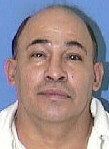
Leonard Eugene Rojas
Murderer Brian Kevin Rosenfeld
Murderer · USA · 1985
Brian Kevin Rosenfeld Brian Kevin Rosenfeld was sentenced to three concurrent l…
23 victims
Brian Kevin Rosenfeld
Murderer · USA · 1985
Brian Kevin Rosenfeld Brian Kevin Rosenfeld was sentenced to three concurrent l…
23 victims
 Russell Ellwood
Murderer · USA · 1991
Russell Ellwood was a former taxi driver. Authorities suspected him of killing…
20 victims
Russell Ellwood
Murderer · USA · 1991
Russell Ellwood was a former taxi driver. Authorities suspected him of killing…
20 victims
 Robert Martines Perez
Murderer · USA · 1994
Name: Robert Martines Perez · Other name used in proceedings: Robert Martinez P…
15 victims
Robert Martines Perez
Murderer · USA · 1994
Name: Robert Martines Perez · Other name used in proceedings: Robert Martinez P…
15 victims
 Billy Frank Vickers
Murderer · USA · 1993
Billy Frank Vickers Vickers was executed by lethal injection in Texas on Januar…
14 victims
Billy Frank Vickers
Murderer · USA · 1993
Billy Frank Vickers Vickers was executed by lethal injection in Texas on Januar…
14 victims
 Lloyd Donald Greeson
Murderer · USA · 1964
Lloyd Donald Greeson liked to see himself in uniform but could not follow milit…
2 victims
Lloyd Donald Greeson
Murderer · USA · 1964
Lloyd Donald Greeson liked to see himself in uniform but could not follow milit…
2 victims
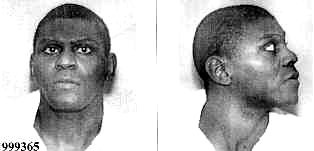 Exzavier Stevenson
Murderer · USA · 2000
Exzavier Lamont Stevenson (TDCJ Number 999365) was born on 06/06/1968. He was r…
2 victims
Exzavier Stevenson
Murderer · USA · 2000
Exzavier Lamont Stevenson (TDCJ Number 999365) was born on 06/06/1968. He was r…
2 victims
 Shi Yuejun
Spree killer · China · 2006
Shi Yuejun (b. 1970 in Liuhe, China - d. December 20, 2006 in Tonghua, China) w…
12 victims
Shi Yuejun
Spree killer · China · 2006
Shi Yuejun (b. 1970 in Liuhe, China - d. December 20, 2006 in Tonghua, China) w…
12 victims
 James Koedatich
Serial killer · USA · 1971
James Koedatich was born in 1948. Koedatich committed his first known murder in…
3 victims
James Koedatich
Serial killer · USA · 1971
James Koedatich was born in 1948. Koedatich committed his first known murder in…
3 victims
 Dennis Miller
Murderer · USA · 1995
Dennis "Chubb'' Miller Miller served jail time in 1995 for holding a gun to his…
1 victim
Dennis Miller
Murderer · USA · 1995
Dennis "Chubb'' Miller Miller served jail time in 1995 for holding a gun to his…
1 victim
- Gender
- male
- Country
- USA
- Location
- Johnson County, Texas, USA
- Date of birth
- J une 15, 1950
- Age at first offence
- 44
- Characteristics
- parricide, jealousy
- Victim profile
- David Rojas, 43 (his brother) and Jo Ann Reed, 34 ( his common-law wife/girlfriend )
- Method of murder
- Shooting ( .32-caliber revolver)
- Date(s) of murder
- December 27, 1994
- Years active
- 1994
- Date of arrest
- Same day (surrenders)
- Status
-
Executed
Executed by lethal injection in Texas on December 4, 2002
Background
Leonard Uresti Rojas lived in Alvarado, Texas, with his common-law wife/girlfriend, Jo Ann Reed, and his brother, David Rojas.
Rojas had a prior prison history for drug offenses. He served prison time in Germany while serving in the U.S. Army. In 1976, Rojas was committed in California as a narcotic drug addict following an arrest and conviction for the sale of heroin. In 1990, Rojas was convicted in Nevada and sentenced to serve five years for the possession and sale of cocaine. Records also indicated that Rojas served prison sentences in Germany, California, and Nevada for drug offenses.
Rojas was scheduled for execution after his sentence of death was affirmed and after federal habeas proceedings concluded and the U.S. Supreme Court denied certiorari.
The offence
During the early morning hours of Dec. 27, 1994, after a late night of playing dominoes and using drugs, Leonard Uresti Rojas fatally shot his common-law wife/girlfriend, Jo Ann Reed, and his brother, David Rojas, inside the double-wide trailer they all occupied.
Rojas was suspicious that Reed and David Rojas had slept together the night before. He was in the kitchen making coffee when he saw Reed emerge from David Rojas’ bedroom. After Reed denied Rojas’ accusation, Reed and Rojas went to the master bedroom where she disrobed and had a sexual encounter with Rojas. Rojas then shot Reed between the eyes with a .32-caliber gun.
Moments later, Rojas called his brother out of the bathroom and shot him three times, leaving him to die on the bathroom floor. After returning to his bedroom where he had shot Reed, Rojas noticed that she was still breathing. He tightly tied a plastic bag over her head and covered her with pillows and blankets.
Rojas then went to the kitchen, drank a cup of coffee, and during this time a friend of Reed’s called twice and a co-worker called once. Rojas told both of them that Reed was ill and could not talk on the phone.
Unable to find his car keys, Rojas left his house and hitchhiked to the bus station in Fort Worth. He bought a ticket to Atlanta, Georgia, and traveled only as far as Dallas. In Dallas, he confessed to security guards at the bus station. He later surrendered to authorities that same day and confessed to his crime, providing authorities with three substantially consistent confessions, including a detailed videotaped walk-through of the crime scene.
Assistant District Attorney James Cawthon, Jr. described Rojas’ account to authorities and told the story of what Rojas did after the killings:
"After he kills his brother he goes back and he can still hear her (Reed) breathing or gasping for air. He takes a plastic bag and sticks it over her head and ties it. That's how she died," Cawthon said.
Cawthon also stated:
"What he claimed and we never found any evidence of, is that his brother and this woman he was living with were having an affair and that they were going to kick him out," Cawthon said.
Cawthon further said:
"They had been doing speed for some period of time before this happened," he said.
Cawthon added:
"It was a pretty brutal murder and he was extremely cold-blooded about it. After he does this he calls a woman and makes some very sexually explicit offers to her and asks her if she wants to come over and smoke pot."
Cawthon said Rojas told investigators he hitchhiked to Fort Worth and took a bus to Dallas, and that in Dallas Rojas told security guards at the bus station that he was "involved in something." Cawthon said:
"George Turner (Texas Ranger) was lead investigator," Cawthon said.
Cawthon also said Rojas was:
"able to recall everything in vivid detail and very forthright with the police."
In contemporaneous reporting, the gun used was identified as a .38-caliber pistol in one account, while multiple other descriptions state the shootings were carried out with a .32-caliber gun.
Investigation
Rojas surrendered to authorities in Dallas after confessing to security guards at the bus station. The investigation involved the Dallas Police and the Texas Rangers.
said:
"George Turner (Texas Ranger) was lead investigator," Cawthon said. "And George went and picked him up and got statements from him. And started collecting evidence on the double homicide."
Rojas later provided additional confessions and led authorities through the crime scene, with authorities videotaping a walk-through.
Arrest
Rojas hitchhiked to the bus station in Fort Worth and bought a ticket to Atlanta, Georgia. After traveling to Dallas, Rojas confessed to security guards at the bus station. He surrendered to authorities that same day.
Trial
Rojas was indicted in the 18th Judicial District Court of Johnson County, Texas, for the capital offense of murder of David Rojas, while in the course of committing and attempting to commit the offense of murder of Jo Ann Reed.
Sentencing
Jan. 27, 1995 — Rojas was indicted in the 18th Judicial District Court of Johnson County, Texas, for the capital offense of murder of David Rojas, while in the course of committing and attempting to commit the offense of murder of Jo Ann Reed.
May 22, 1996 — Rojas was found guilty on his plea of not guilty in the 249th District Court of Johnson County, Texas.
May 31, 1996 — The punishment phase concluded with a sentence of death.
June 3, 1996 — the death penalty was assessed.
Appeals
Sept. 23, 1998 — the Court of Criminal Appeals affirmed Rojas’ conviction and sentence on direct appeal.
Dec. 9, 1998 — the Court of Criminal Appeals denied state application for writ of habeas corpus, filed during the pendency of direct appeal on June 22, 1998.
Feb. 2, 1999 — Rojas’ conviction became final and the one-year federal filing time frame began.
Feb. 2, 2000 — the federal filing deadline expired.
April 5, 2000 — Rojas filed a motion for appointment of federal habeas counsel in federal district court.
March 23, 2001 — Rojas filed an untimely federal petition for writ of habeas corpus.
Sept. 6, 2001 — the federal district court entered summary judgment denying the petition.
July 7, 2002 — the United States Court of Appeals for the Fifth Circuit denied certificate of appealability.
Nov. 18, 2002 — the United States Supreme Court denied certiorari review.
July 12, 2002 — the 18th District Court of Johnson County entered order setting the date of execution for Dec. 4, 2002.
A request for a stay of execution was sought based on claims about the adequacy of representation during state appeal and federal proceedings. A Texas Defender Service appeal effort alleged that the attorney appointed for the state habeas process, David Chapman, was incompetent and inexperienced and had issues with professional conduct, and that the federal filing was missed. Chapman disputed certain claims and said he prepared the state habeas appeal after reading the trial record, speaking to one of Rojas’ trial attorneys, and interviewing Rojas once.
The Texas Defender Service’s position included statements from its attorneys and discussion of Chapman’s alleged failure to preserve issues for federal review.
Gregory Wiercioch, an attorney with the Texas Defender Service who represented Rojas, made the following statements:
"You hate to single anybody out, but this case epitomizes the problems with appointments in habeas appeals," said Gregory Wiercioch, an attorney with the service who now represents Rojas.
Wiercioch also said:
"The state habeas appeal is supposed to be the place where issues not related to the trial are raised, things like the competency of defense, the behavior of prosecutors. Such evidence can be the difference between a death sentence or life in prison, Wiercioch said."
On a court-postponement request, Wiercioch said:
Wiercioch has asked the Court of Criminal Appeals to postpone Rojas' execution so that his case can be investigated.
Chapman made the following statements:
"I didn't make sure it got into federal court. That's the thing I did not do," Chapman said Monday.
Chapman also said:
"I played a very bad hand as well as I could," he told The Houston Chronicle. "The facts of Mr. Rojas' case were extraordinarily incriminating."
In an affidavit discussed in reporting, Chapman said he prepared the state habeas appeal after reading the trial record, speaking to one of Rojas’ trial attorneys, and interviewing Rojas one time. Chapman conceded that he did not ask Rojas about his background or interview Rojas’ family or friends, and that his law license was under the cloud of probated suspensions for failings with other clients at the time of the appointment.
Outcome
Leonard Uresti Rojas was executed by lethal injection in Texas on December 4, 2002.
He was described as declining to make a last statement when asked by the warden. He was asked by the warden if he had a final statement and responded:
"No."
Rojas was pronounced dead at 6:17 p.m., in one account eight minutes after receiving the lethal injection.
Michelle Lyons, a spokeswoman for the Texas Department of Criminal Justice, said Rojas spent his last night and morning reading a magazine and drawing, and that he requested a hearty last meal of extra crispy fried chicken, salad with Thousand Island dressing, French toast, French fries, apple pie, and two diet Cokes.
Rojas’ last meal was listed as: one whole extra crispy fried chicken, salad with Thousand Island dressing, French toast, two diet Cokes, one apple pie, and French fries.
Rojas’ last words were also described as a refusal to make a last statement at his execution.
Three of Rojas’ seven surviving brothers watched the execution. Rojas’ cousin, Maria Rojas, stood at the window looking into the death chamber. Soon after Rojas took his final gasp, she whispered:
"He's gone."
Timeline
- Dec. 27, 1994 — Leonard Uresti Rojas fatally shot Jo Ann Reed and David Rojas inside the double-wide trailer in Alvarado, Texas; after the killings he hitchhiked and traveled by bus to Dallas, where he confessed to security guards at the bus station and later surrendered.
- **Jan.
- **Sept.
- Dec. 9, 1998 — The Court of Criminal Appeals denied state application for writ of habeas corpus.
- Feb. 2, 1999 — Rojas’ conviction became final.
- **Feb.
- **Sept.
- 4, 2002.
- **Nov.
- Dec. 4, 2002 — Rojas was executed by lethal injection in Texas.
Other details
Reed and David Rojas were described with ages at the time of death in different places: Reed was 34 and David Rojas was 43. Another account described Rojas as 44 at the time of the shootings and 52 at the time of execution, with an additional identification of Leonard Uresti Rojas as 52 and as executed in Huntsville, Texas.
Rojas told reporters and made statements from death row reported in the material. In reporting, he said of the killings:
"I'll never regret it. Never,"
He said that his brother and wife taunted him and that when he confronted Reed about sleeping with David, she laughed and said:
"You can't prove nothing, Leo."
In one death row interview account, Rojas said:
"I just snapped ... I just said, no more abuse from these people."
In the same reporting, Rojas claimed poisoning and made the statement:
"These people, they were just basically evil," Rojas said. "They wanted my money, wanted my drugs, and they wanted to do me in."
Another reporting account described that he alleged the claims were never proven by the Johnson County assistant district attorney David Vernon. Vernon said:
"Leonard was an extremely possessive type of person," Vernon said.
Vernon added:
"He confronted her about having sex with his brother and she laughs at him."
In reporting about the adequacy of counsel and procedural issues, claims included that Chapman's mental state and prior practice issues affected representation, and that Chapman's law license had been under probated suspensions. Chapman disputed parts of the criticism, including that he made the best effort with limited information.
Reporting also described that the execution was the next-to-last scheduled in Texas for the year, and that Rojas was the 32nd person executed in Texas that year and the 288th since the state restored the death penalty in 1982. The information also mentioned that James Collier was scheduled to die Dec. 11 as the final execution scheduled for 2002, and that at least 13 executions were scheduled in the first three months of 2003.
Spotted an error, or have more information about this case?